
The Cenozoic Era: A Geological Foundation for Modern Economies
The Cenozoic Era, spanning the last 66 million years to the present day, represents a critical epoch in Earth’s history, profoundly shaping the planet’s geology, climate, and ecosystems. For investors and businesses operating within the vast landscape of natural resources, environmental services, and long-term infrastructure, understanding the Cenozoic is not merely an academic exercise; it is a foundational pillar for strategic financial planning and risk assessment. This era, often dubbed the “Age of Mammals,” saw the continents drift into their current positions, the rise of major mountain ranges, and dramatic shifts in global climate, all of which directly influence the distribution and accessibility of valuable commodities and the stability of modern financial systems reliant on these resources.
Defining the Cenozoic: An Overview for Resource Investors
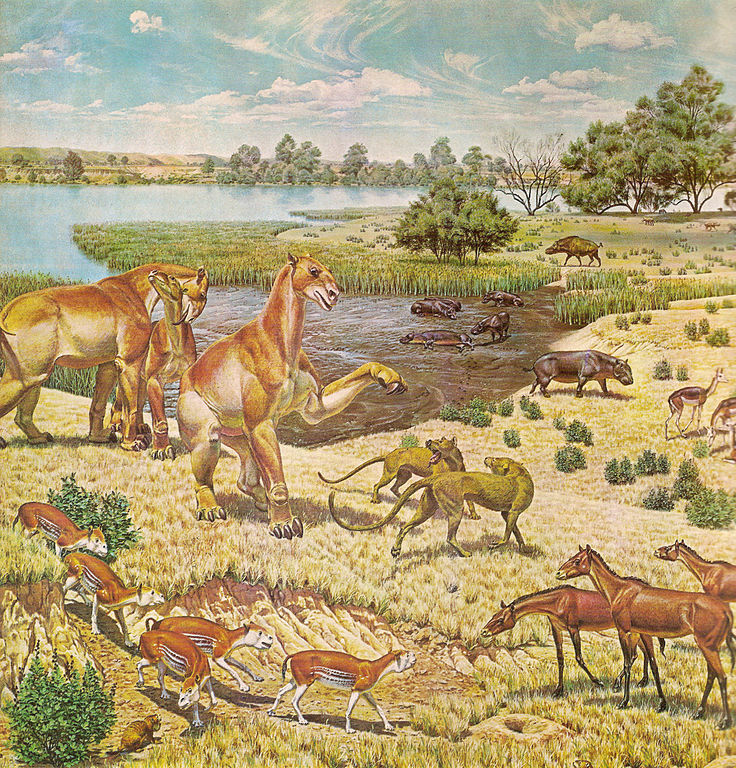
At its core, the Cenozoic era commenced immediately following the Cretaceous–Paleogene extinction event, which famously wiped out the non-avian dinosaurs. This catastrophic event cleared ecological niches, allowing for the rapid diversification of mammals, birds, and flowering plants. From a financial perspective, this period marks the onset of geological processes that have yielded many of the resources fundamental to contemporary economies. The sedimentation rates, volcanic activity, and tectonic movements throughout the Cenozoic have determined the formation and location of vast hydrocarbon reserves, significant mineral deposits, and fertile agricultural lands. Investors evaluating prospects in sectors such as oil and gas, mining, agriculture, and real estate must grasp the Cenozoic context to appreciate the origin, scale, and future viability of their assets. The geological features born during this era directly dictate extraction costs, supply chain logistics, and environmental impact assessments, all of which directly affect profitability and investment returns.
Key Epochs and Their Economic Significance
The Cenozoic is subdivided into three periods: the Paleogene, Neogene, and Quaternary, each with distinct geological and climatic characteristics that carry specific financial implications.
Paleogene: Foundations of Future Wealth
The Paleogene Period (66 to 23 million years ago) encompasses the Paleocene, Eocene, and Oligocene epochs. Following the K-Pg extinction, global temperatures were generally high, particularly during the Paleocene-Eocene Thermal Maximum. This warmth contributed to widespread lush vegetation, which, under specific burial conditions, became the precursor to vast coal deposits and some early oil and gas formations. Businesses involved in energy production, particularly those with legacy assets in older basins, often trace the geological provenance of their reserves back to conditions prevalent during the Paleogene. Understanding the anoxic deep-water conditions and rapid sediment accumulation characteristic of certain Paleogene marine environments can inform current exploration strategies for new hydrocarbon plays. Furthermore, the early stages of continental drift in this period began shaping the basins that would later become significant mineral traps, laying the groundwork for future mining operations.
Neogene: Shaping Modern Resource Landscapes
The Neogene Period (23 to 2.6 million years ago) includes the Miocene and Pliocene epochs. This period saw significant global cooling and the formation of modern ice caps, leading to a more pronounced seasonality. Tectonically, major mountain ranges like the Himalayas and Alps experienced significant uplift, which not only altered global climate patterns but also created conditions for rich mineral deposits, particularly in regions subject to intense hydrothermal activity. Many of the world’s most productive copper, gold, and silver mines are situated in geological settings that were active during the Neogene. For investors in precious metals and base metals, familiarity with Neogene-era tectonics and associated mineralization events is crucial for identifying promising exploration targets. Moreover, the Neogene saw the expansion of grasslands, which are fundamental to livestock farming and cereal crop production, thereby impacting agricultural land values and food supply chains globally.
Quaternary: Immediate Economic Relevance
The Quaternary Period (2.6 million years ago to the present) is characterized by cycles of glaciation and interglaciation, including the Holocene epoch (the last 11,700 years) in which human civilization developed. The repeated advance and retreat of ice sheets dramatically reshaped landscapes, creating the vast freshwater lakes, fertile floodplains, and gravel deposits that are vital for current infrastructure development and agriculture. Businesses involved in aggregates, construction materials, and water management rely heavily on Quaternary-era deposits and hydrological systems. Crucially, understanding Quaternary climate variability is paramount for managing climate-related financial risks, including insurance underwriting for extreme weather events, agricultural commodities trading, and real estate investment in coastal zones. The human impact on the planet, often termed the Anthropocene, is a recent extension of the Quaternary and presents its own complex financial challenges and opportunities related to sustainability, carbon markets, and resource depletion.
Geological Formations and Resource Investment
The geological processes active throughout the Cenozoic Era have endowed Earth with an unparalleled bounty of natural resources, directly influencing global commodity markets and providing foundational assets for numerous industries. Investors seeking to capitalize on these resources must understand their geological origins to make informed decisions regarding asset valuation, exploration potential, and long-term sustainability.
Hydrocarbon Reserves: Cenozoic’s Gift to Energy Markets

A significant portion of the world’s conventional oil and natural gas reserves, particularly those found in relatively young sedimentary basins, are derived from organic matter deposited during the Cenozoic. The rapid burial of marine organisms and terrestrial vegetation in basins formed by Cenozoic tectonics, coupled with the right pressure and temperature conditions, led to the generation and accumulation of hydrocarbons. Major oil provinces, such as those in the Gulf of Mexico, the North Sea, and various Pacific Rim basins, contain substantial Cenozoic-aged source rocks and reservoirs. For energy sector investors, identifying and evaluating Cenozoic sedimentary sequences is a primary focus for exploration and production (E&P) companies. Understanding the specific Cenozoic epochs where favorable conditions existed, and the subsequent tectonic activity that formed traps, is critical for assessing the economic viability and risk profile of hydrocarbon assets. The ongoing debate around peak oil and the transition to renewable energy sources further underscores the importance of efficient extraction from these geologically defined reserves.
Mineral Wealth and Strategic Commodities from Post-Dinosaur Eras
The dynamic tectonic activity of the Cenozoic, including intense volcanism and mountain-building (orogeny), was instrumental in concentrating a wide array of valuable minerals. Large porphyry copper deposits, significant gold and silver veins, and numerous other metallic and industrial mineral occurrences are directly associated with Cenozoic igneous and hydrothermal systems. For example, many of the world’s leading copper producers operate mines in regions that experienced intense Cenozoic volcanic arc activity. Strategic minerals, vital for modern electronics, batteries, and defense industries, such as rare earth elements, lithium, and cobalt, are often found in geological settings shaped or formed during the Cenozoic. Investing in mining companies or exploration ventures necessitates a deep understanding of these Cenozoic metallogenic provinces. The economic value of these deposits is not just in their existence but also in their geological context, which dictates ease of extraction, purity, and environmental considerations—all factors that impact financial returns and regulatory compliance.
Groundwater and Agricultural Land Value: A Cenozoic Legacy
The Cenozoic Era also played a crucial role in shaping the availability of two other vital resources: groundwater and fertile agricultural land. The large-scale continental sedimentation throughout the Cenozoic created extensive aquifer systems, which are now primary sources of fresh water for agriculture, industry, and human consumption. The value of agricultural land, a cornerstone of global food security and a significant asset class, is directly linked to the fertility of its soils and access to water. Many of the world’s most productive agricultural regions—such as the vast plains of North America, the Pampas of South America, and the river deltas of Asia—owe their rich, deep soils and accessible groundwater to the erosion, deposition, and climatic patterns that dominated the Quaternary and late Neogene periods. Investors in agricultural land, water rights, and related agribusinesses must understand the geological history of these resources to assess their long-term viability, especially in the face of climate change and increasing water scarcity, both rooted in Cenozoic trends.
Climate Dynamics and Long-Term Financial Planning
The Cenozoic Era is a chronicle of profound climate shifts, transitioning from a greenhouse world to an icehouse world, culminating in the alternating glacial and interglacial cycles of the Quaternary. These deep-time climate dynamics offer invaluable insights for contemporary financial planning, informing risk models, investment strategies, and the valuation of assets vulnerable to environmental change.
Understanding Cenozoic Climate Shifts for Modern Risk Assessment
The Cenozoic record provides a natural laboratory for studying rapid climate change, ocean circulation shifts, and their impact on ecosystems. Events such as the Paleocene-Eocene Thermal Maximum (PETM), a period of intense global warming driven by massive carbon release, offer analogues for current anthropogenic climate change. For financial institutions, particularly insurance companies and infrastructure investors, understanding the magnitudes and rates of past Cenozoic warming and cooling events helps in modeling future climate scenarios and quantifying associated risks. This paleoclimate data informs the assessment of potential losses from sea-level rise, extreme weather events, and shifts in agricultural productivity, allowing for more robust risk premiums and capital allocation decisions. The geological evidence of past climate resilience and vulnerability of ecosystems can guide investments in climate-adaptive technologies and infrastructure.
Investment Implications of Paleoclimate Data
Paleoclimate data from the Cenozoic is a critical input for investors focused on environmental, social, and governance (ESG) factors. It helps identify regions and assets that are inherently more resilient or vulnerable to long-term climate trends. For example, understanding past periods of drought or increased storm intensity in Cenozoic records can refine projections for water stress in agricultural regions or flood risk in coastal developments. Investments in renewable energy, water management, and sustainable land use are increasingly guided by insights derived from geological climate history. Financial firms developing climate-stress tests for their portfolios are leveraging paleoclimate reconstructions to build more comprehensive and historically informed models, evaluating everything from sovereign debt exposure to commodity price volatility under various climate futures.
Emerging Industries and Cenozoic Insights
The deep understanding of the Cenozoic Era is not only crucial for traditional resource industries but also opens doors for innovation and investment in emerging sectors, driving new avenues for economic growth and sustainable development.
Geo-Farming and Sustainable Resource Management
The Cenozoic’s influence extends to the burgeoning field of geo-farming and sustainable resource management. By studying the formation of fertile soils, the distribution of water resources, and the long-term impact of geological events on ecosystems, businesses can develop more sustainable agricultural practices. Investment in technologies that optimize water use based on aquifer recharge rates (informed by Quaternary hydrology), or practices that enhance soil health by mimicking natural geological processes, represent significant opportunities. Furthermore, understanding the Cenozoic geological controls on specific biomes allows for targeted conservation investments that yield both ecological and economic benefits, such as carbon sequestration projects in historically resilient forest ecosystems.

Paleontological Data for Biotech and Material Science Investments
The rich fossil record of the Cenozoic, documenting the evolution and diversification of life, holds untapped potential for biotech and material science. Paleontological data can inspire biomimicry—the design and production of materials, structures, and systems that are modeled after biological entities and processes. For instance, the study of ancient mammalian bone structures or plant adaptations from different Cenozoic climates could inform the development of novel lightweight materials, durable composites, or resilient crop varieties. Venture capitalists and angel investors are increasingly looking at cross-disciplinary research that bridges paleontology, biology, and engineering. Furthermore, the genetic material preserved in Cenozoic fossils, however fragmented, can provide insights into evolutionary pathways relevant to disease resistance or novel pharmaceutical compounds. Investing in research and development at this intersection could unlock significant long-term value in the biotech and advanced materials sectors. The Cenozoic era, therefore, is not just a chapter in Earth’s past; it is a dynamic blueprint for future economic innovation and strategic investment.
aViewFromTheCave is a participant in the Amazon Services LLC Associates Program, an affiliate advertising program designed to provide a means for sites to earn advertising fees by advertising and linking to Amazon.com. Amazon, the Amazon logo, AmazonSupply, and the AmazonSupply logo are trademarks of Amazon.com, Inc. or its affiliates. As an Amazon Associate we earn affiliate commissions from qualifying purchases.