
The world of parimutuel wagering, particularly in horse racing, offers a diverse array of betting options, each with its own risk profile and potential for return. Among these, the exacta wager stands out as a popular choice for those looking for a step up from basic win/place/show bets. However, mastering the exacta often involves understanding a crucial strategic variant: the exacta box. For individuals navigating the financial landscape of competitive wagering, comprehending the exacta box is not merely about rules; it’s about strategic capital allocation, risk mitigation, and maximizing potential profitability within a structured framework.

Understanding the Exacta Wager: The Basics
Before delving into the complexities of the exacta box, it’s essential to grasp the fundamental nature of a straight exacta. This wager requires the bettor to correctly select the horses that will finish first and second in a designated race, in their exact order of finish. The precision demanded by a straight exacta makes it a challenging proposition, often yielding substantial payouts due to its inherent difficulty.
The Straight Exacta: A High-Risk, High-Reward Proposition
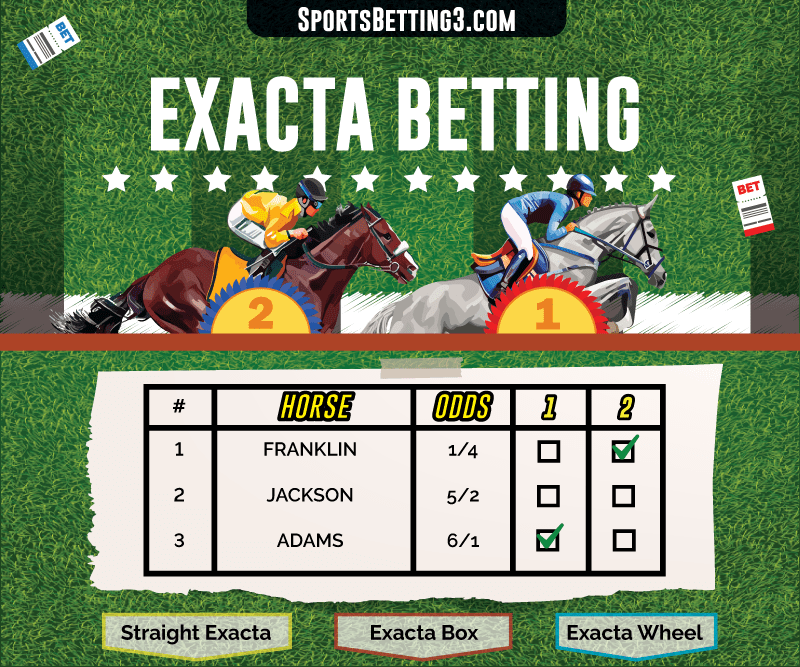
A straight exacta is a precise forecast. For instance, if you wager on a 3-1 exacta, you are predicting that horse #3 will win the race (finish first) and horse #1 will place second. If horse #1 wins and horse #3 finishes second, your straight exacta ticket is a loser, despite having identified the correct two horses. This stringent requirement highlights the significant risk involved, which, in turn, is often compensated by attractive odds and higher potential returns for successful wagers. From a financial perspective, it’s a high-leverage bet, demanding absolute accuracy for any return on investment.
Introduction to the Exacta Box Concept
The exacta box emerges as a pragmatic solution to mitigate the stringent order requirement of a straight exacta. By “boxing” a set of horses, you are essentially placing multiple straight exacta wagers that cover all possible finishing orders for those selected horses within the first two positions. If you box two horses, say #3 and #1, you are effectively placing two separate exacta bets: one on 3-1 and another on 1-3. This strategy transforms a single, precise prediction into a multi-outcome scenario, significantly increasing the probability of a payout, albeit at a higher initial cost. It’s a strategy focused on covering probabilities rather than absolute certainties, an important distinction in financial risk management.
The Strategic Advantage of an Exacta Box
The primary allure of the exacta box lies in its ability to manage and rebalance the inherent risks associated with predicting precise finishing orders. For astute financial participants in parimutuel markets, it represents a calculated approach to increasing the likelihood of a successful return when the exact sequence of events remains ambiguous.
Mitigating Risk and Increasing Win Probability
When handicapping a race, it is common to identify a strong pair or trio of horses that appear superior to the rest of the field, but where their specific finishing order is difficult to ascertain. Perhaps one horse has a slight edge on speed, but another has a stronger closing kick, making a definitive 1-2 prediction speculative. This is precisely where the exacta box shines. By boxing these horses, you eliminate the need to guess the exact order, allowing your wager to succeed if any of your selected horses finish first and second. This dramatically elevates your probability of a return compared to a single straight exacta, making it a powerful tool for risk diversification within a defined set of outcomes.
Consider a scenario where you are confident that horses A and B will fill the top two spots. A straight exacta requires you to choose A-B or B-A. If you choose A-B and B-A occurs, you lose. By boxing A and B, you cover both eventualities, turning a 50% chance of being right on the order into a 100% chance of having the correct horses in the correct positions if they finish 1-2. This strategic flexibility is paramount for consistent engagement in wagering, allowing for a more robust financial strategy.
When to Employ the Box Strategy
The decision to employ an exacta box should be guided by careful handicapping and a clear understanding of the race dynamics. It is particularly advantageous in races where:
- Two or three horses appear evenly matched for the top spots: Their individual strengths might make predicting their precise order challenging.
- A strong favorite is present, but a clear second choice is hard to distinguish from a third or fourth contender: Boxing the favorite with multiple contenders can provide coverage.
- The race outcome seems likely to produce a combination of a higher-priced horse and a lower-priced one: This can lead to a more lucrative payout even with the increased cost of the box.
From a financial perspective, the exacta box is a tool for strategic deployment of capital when certainty is low regarding precise sequencing but high regarding the pool of potential successful outcomes. It’s a method of betting on a cluster of outcomes rather than a singular event.
Calculating the Cost and Potential Payouts
Understanding the financial mechanics of an exacta box is critical for managing one’s wagering budget and assessing the viability of potential returns. The cost of an exacta box scales with the number of horses selected, directly impacting the overall investment required.
Permutations and Cost Calculation
The cost of an exacta box is determined by the number of unique straight exacta combinations it creates. The formula for calculating the number of combinations in an exacta box is:
- N * (N – 1)
- Where ‘N’ is the total number of horses you have selected to include in your box.
Let’s illustrate with common scenarios for a $1 unit wager:
- 2-Horse Exacta Box: You select two horses (e.g., #1 and #2).
- Combinations: 2 * (2 – 1) = 2. These are 1-2 and 2-1.
- Total cost for a $1 unit: 2 * $1 = $2.
- 3-Horse Exacta Box: You select three horses (e.g., #1, #2, and #3).
- Combinations: 3 * (3 – 1) = 6. These are 1-2, 1-3, 2-1, 2-3, 3-1, 3-2.
- Total cost for a $1 unit: 6 * $1 = $6.
- 4-Horse Exacta Box: You select four horses.
- Combinations: 4 * (4 – 1) = 12.
- Total cost for a $1 unit: 12 * $1 = $12.
- 5-Horse Exacta Box: You select five horses.
- Combinations: 5 * (5 – 1) = 20.
- Total cost for a $1 unit: 20 * $1 = $20.
As evident, the cost escalates rapidly with each additional horse, directly impacting the required capital outlay. A responsible financial approach demands a careful balance between the desire for coverage and the practical limits of one’s bankroll.
Understanding Payouts
When an exacta box hits, the payout is based on the official straight exacta payout for the specific winning combination, multiplied by your unit wager. For example, if you place a $1 three-horse exacta box for a total of $6, and the winning exacta turns out to be 2-1, you will receive the payout for a $1 straight exacta on 2-1. It is critical to understand that you do not receive payouts for all the combinations covered by your box; only the single winning combination yields a return.
The profitability of an exacta box hinges on the winning payout exceeding the total cost of the box. If you spend $12 on a 4-horse box and the winning exacta pays $15 for a $1 unit, you make a profit of $3. However, if the winning exacta pays only $10, you incur a $2 loss. This requires a sharp eye for value and a disciplined approach to selecting horses that, when combined, offer a reasonable expectation of a profitable return.
Strategic Applications and Financial Considerations
The exacta box is more than just a betting option; it’s a financial instrument within the parimutuel wagering framework that demands strategic thought regarding risk, cost, and potential return on investment.
Balancing Risk and Reward
An exacta box represents a middle ground in terms of risk and reward. It’s inherently less risky than a straight exacta because it covers multiple outcomes, thereby increasing your chances of a payout. However, this increased probability comes at a higher cost. A successful straight exacta on a single combination will always yield a higher return per dollar wagered than a successful exacta box covering the same combination. Therefore, the strategic decision involves weighing the higher probability of winning against the reduced potential profit margin per dollar invested.
For effective bankroll management, the exacta box can be a tool for generating smaller, more frequent returns, which can sustain a wagering fund over time, as opposed to chasing large, infrequent scores from highly speculative straight exactas. It’s about optimizing for consistency within acceptable risk parameters.
Handicapping Insights for Exacta Box Wagers
Effective use of the exacta box demands sophisticated handicapping. Look for races where your analysis points strongly to two or three horses being significantly better than the rest, but where their individual strengths, racing styles, or recent form make their precise order difficult to predict. This is common in races with evenly matched contenders, where post position, jockey strategy, or race pace could be decisive factors.
Additionally, consider using an exacta box when a strong favorite is in the race, but you also identify a promising longshot that could surprise and finish in the money. Boxing the favorite with this longshot can lead to a substantial payout if the longshot comes in, justifying the increased cost of the box. Conversely, be cautious about boxing too many horses, especially if one or more are significant longshots, as the increased cost can quickly erode any potential profit, turning a calculated risk into a financially imprudent gamble. The art is in selecting a tight group of horses with a genuine chance of forming the top two, thus keeping the cost manageable relative to the expected value.
Exacta Box vs. Other Exotic Wagers in the Money Landscape
Understanding where the exacta box fits within the broader spectrum of exotic wagers is key to developing a comprehensive financial strategy for parimutuel betting. Each wager type offers a different balance of risk, cost, and potential return.
Exacta Box vs. Quinella
The quinella is often confused with a two-horse exacta box, but there are crucial differences from a financial standpoint. A quinella requires you to pick two horses to finish first and second in any order, much like a two-horse exacta box. However, a quinella is a single wager covering both outcomes (e.g., 1-2 and 2-1) for a single price (e.g., $2 for a $2 quinella). An exacta box on two horses, conversely, is effectively placing two separate $1 exacta wagers (1-2 and 2-1), costing $2 for a $1 unit.
The key distinction lies in the payout structure. Quinellas typically have a separate, generally lower, payout pool compared to exactas. While a quinella is often cheaper to place for the same combination of horses, the resulting payout may be less than what you would receive from a winning exacta box (which pays out at the higher straight exacta odds for the winning combination). Financial strategists must weigh the lower initial cost of a quinella against the potentially higher payout of an exacta box covering the same two horses.

Exacta Box vs. Trifecta and Superfecta
Beyond the exacta, wagers like the trifecta (picking the first three finishers in exact order) and superfecta (picking the first four finishers in exact order) introduce even higher degrees of difficulty and, consequently, often much larger payouts. Boxing these wagers (e.g., a trifecta box, superfecta box) exponentially increases the number of combinations and thus the cost. For example, a three-horse trifecta box costs $6 for a $1 unit (321=6 combinations), while a four-horse trifecta box costs $24.
The exacta box typically represents a more conservative exotic wager compared to boxing trifectas or superfectas. While the latter offer the tantalizing possibility of life-changing scores, their significantly higher cost and lower probability of success demand a larger capital allocation and tolerance for risk. For many, the exacta box strikes a more pragmatic balance between increased probability of return and manageable investment, making it a cornerstone of a financially prudent wagering approach. It allows for a targeted investment in the top two positions without the massive permutation costs associated with deeper exotic wagers.
aViewFromTheCave is a participant in the Amazon Services LLC Associates Program, an affiliate advertising program designed to provide a means for sites to earn advertising fees by advertising and linking to Amazon.com. Amazon, the Amazon logo, AmazonSupply, and the AmazonSupply logo are trademarks of Amazon.com, Inc. or its affiliates. As an Amazon Associate we earn affiliate commissions from qualifying purchases.