
The term “nonparametric” might sound like jargon reserved for academic statisticians and deep dives into machine learning algorithms. However, the concept it represents – analysis and approaches that don’t rely on rigid, predefined assumptions about the underlying data – is far more pervasive and impactful than you might think. In fact, understanding nonparametric principles can offer fresh perspectives and more adaptable strategies across the very domains your interests lie in: Technology, Branding, and Money.
While the literal definition of nonparametric statistics focuses on methods that make minimal assumptions about the distribution of data (unlike parametric methods, which assume data follows a specific distribution like a normal curve), the underlying philosophy extends much further. It’s about flexibility, adaptability, and a willingness to let the data speak for itself, rather than forcing it into a preconceived mold. This is a powerful idea when navigating the ever-changing landscapes of tech trends, building authentic brands, and managing personal and business finances.

This article will delve into what nonparametric means, not just in its statistical sense, but as a guiding principle that can inform your approach to various challenges and opportunities within the realms of Tech, Branding, and Money. We’ll explore how this “no assumptions” or “minimal assumptions” mindset can lead to more robust, agile, and ultimately successful outcomes.
The Core Idea: Freedom from Preconceived Structures
At its heart, “nonparametric” signifies a departure from relying on specific, fixed structures or parameters to define a system or analyze data.
Parametric vs. Nonparametric: A Fundamental Distinction
To truly grasp nonparametric, it’s helpful to understand its contrast: parametric.
-
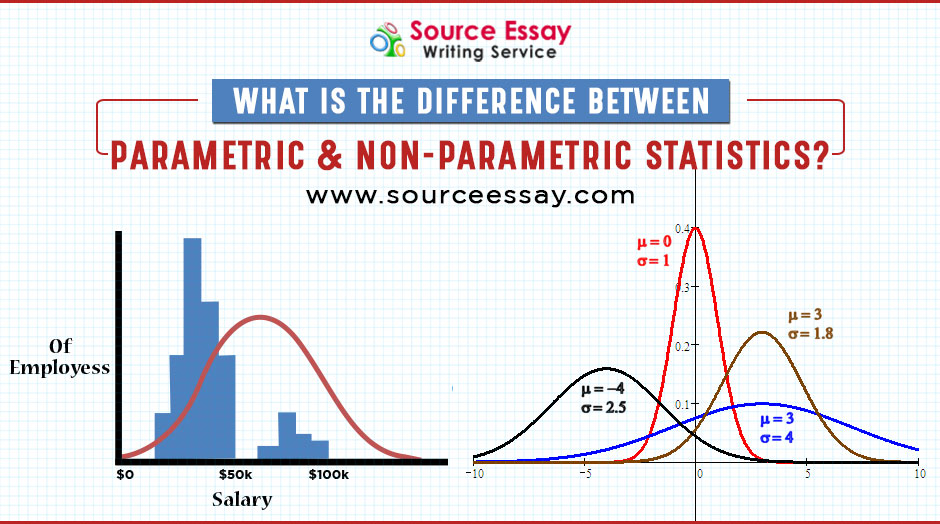
Parametric Methods: These approaches assume that the data you’re working with originates from a specific probability distribution, often a bell curve (normal distribution) or a similar well-defined shape. Once this distribution is assumed, you only need to estimate a few parameters (like the mean and standard deviation for a normal distribution) to describe the entire dataset. Think of it like fitting a predetermined shape (the distribution) to your data.
-
Nonparametric Methods: In contrast, nonparametric methods make very few, if any, assumptions about the underlying distribution of your data. They are distribution-free. Instead of estimating parameters of a known distribution, they often work with the ranks of the data, the order of observations, or directly with the data points themselves. This makes them incredibly versatile, as they can be applied to a much wider range of data types and situations where the underlying data’s distribution is unknown, complex, or simply not normal.
Why is this distinction important?
Imagine you have a dataset of customer satisfaction scores. A parametric approach might assume these scores are normally distributed, allowing you to use standard statistical tests based on that assumption. However, if your customer satisfaction scores are skewed (e.g., many happy customers and a few very unhappy ones), or if they are ordinal (e.g., “very dissatisfied” to “very satisfied”) and not truly continuous, a parametric test might yield misleading results. A nonparametric test, on the other hand, would be more robust, analyzing the ranks of satisfaction scores without assuming a specific distribution, thus providing a more accurate picture.
This principle of avoiding rigid assumptions and adapting to the data’s inherent characteristics is the essence of the nonparametric mindset. It’s about being open to the complexity and nuance that might exist within any given system or dataset.
Nonparametric in Tech: Agile Development, AI, and Unforeseen Trends
The technology landscape is characterized by rapid change, emergent behaviors, and the constant introduction of novel data. This makes a nonparametric approach incredibly relevant and beneficial.
H2: Embracing Agility and Adaptability in Software Development
In the world of software and technology development, the traditional, rigid, “waterfall” approach, which relies on detailed upfront planning and fixed specifications, is increasingly being replaced by agile methodologies. This shift mirrors the nonparametric principle of flexibility.
H3: Agile Methodologies: Letting the Code and Users Guide the Way
Agile development frameworks like Scrum and Kanban are inherently nonparametric in their philosophy. Instead of defining every feature and requirement upfront and adhering strictly to them (a parametric approach to project management), agile embraces:
- Iterative Development: Building software in small, manageable increments (sprints). This allows for constant feedback and adaptation.
- Flexibility and Responsiveness to Change: Embracing changes in requirements, even late in development. The plan is not set in stone.
- User-Centricity: Prioritizing feedback from end-users to shape the product. The users’ experience and needs are paramount, not a predefined notion of what the product “should” be.
In essence, agile methodologies don’t assume they know the “perfect” solution from the outset. They operate on the principle of continuous learning and adaptation, allowing the actual development process and user interactions to define the final product. This mirrors how nonparametric statistical methods let the data reveal patterns without imposing a pre-existing distribution.
H3: AI and Machine Learning: Learning from Unstructured Data
Artificial Intelligence (AI) and Machine Learning (ML) are prime examples where nonparametric principles are crucial. Many of the most powerful AI tools, especially in areas like natural language processing (NLP) and image recognition, often deal with vast amounts of unstructured or semi-structured data.
- Deep Learning Models: Neural networks, a cornerstone of modern AI, often function in a nonparametric fashion. While they have internal “parameters” that are learned, they don’t assume the input data follows a specific statistical distribution. They learn complex, nonlinear relationships directly from the data itself, allowing them to identify intricate patterns in images, text, and sound that would be impossible to model with traditional parametric assumptions.
- Unsupervised Learning: Techniques like clustering and dimensionality reduction (e.g., t-SNE, UMAP) are often nonparametric. They aim to find structure, group similar data points, or reduce complexity without making prior assumptions about how the data is organized. This is vital for discovering hidden insights in raw, unlabeled datasets – a common scenario in tech when exploring user behavior or identifying anomalies in system logs.

By not being bound by rigid assumptions about data distributions, nonparametric AI approaches can tackle real-world data in all its messy, unpredictable glory, leading to more powerful and generalized AI capabilities.
Nonparametric in Branding: Authenticity, Personalization, and Evolving Identity
In the realm of branding, a nonparametric approach champions authenticity, adaptability, and a deep understanding of the audience, rather than relying on rigid, one-size-fits-all strategies.
H2: Building Brands That Resonate: The Power of Data-Driven, Adaptive Strategies
A successful brand is not a static entity. It’s a dynamic relationship built on connection, relevance, and consistent value. A nonparametric perspective allows brands to evolve and respond to their audience in a more meaningful way.
H3: Personal Branding: Letting Your Unique Data Inform Your Narrative
For individuals building a personal brand, the nonparametric approach encourages authenticity and genuine self-expression over imitation or adherence to a pre-defined “successful person” mold.
- Focus on Unique Value: Instead of trying to fit into a generic template of what a “thought leader” or “influencer” should be, a nonparametric personal brand focuses on identifying and amplifying one’s unique skills, experiences, and perspectives. This is like letting your personal data (your skills, passions, history) dictate your brand rather than trying to impose a pre-existing brand structure onto yourself.
- Audience Feedback Loop: Actively listening to and responding to audience engagement (comments, questions, feedback) allows for an adaptive personal brand. This isn’t about pandering, but about understanding what resonates and adjusting your content and communication style accordingly. Your audience’s reactions are the “data” that informs your brand’s evolution.
- Experimentation and Evolution: Trying different content formats, platforms, and communication styles without being wedded to a single, rigid approach. The “success” metrics (engagement, reach, impact) become the nonparametric indicators guiding your next steps.
H3: Corporate Branding and Marketing: Adapting to Shifting Consumer Landscapes
For businesses, a nonparametric approach to branding and marketing means moving beyond static brand guidelines and broad-stroke marketing campaigns.
- Dynamic Segmentation and Personalization: Instead of relying on broad demographic segments, advanced marketing uses data to understand individual customer behavior and preferences. This allows for highly personalized messaging and offers that adapt to each customer’s journey. This is nonparametric because it doesn’t assume all customers in a segment will behave the same; it treats each customer’s interaction as unique data points.
- Brand Reputation Management: Monitoring online conversations and sentiment in real-time allows brands to respond to emerging issues and adapt their messaging proactively. This is a nonparametric approach to reputation management, as it doesn’t rely on a fixed understanding of public perception but rather on the continuously evolving “data” of public opinion.
- Brand Storytelling: Authentic brand storytelling often involves embracing imperfections and showing the human side of the business. This resonates more than a perfectly polished, inauthentic facade, aligning with the nonparametric idea of letting the genuine narrative emerge.
Nonparametric in Money: Flexible Investments, Personal Finance, and Adaptive Business Models
The financial world, often perceived as rigid and governed by strict rules, can also benefit immensely from a nonparametric mindset – one that prioritizes adaptability, risk management based on real-time data, and individualized approaches.
H2: Navigating Financial Landscapes with Adaptability and Insight
Whether it’s personal wealth management, business finance, or investment strategies, avoiding rigid assumptions can lead to more resilient and profitable outcomes.
H3: Investing: Beyond Fixed Asset Allocations
Traditional investment advice often relies on parametric models, prescribing fixed asset allocations based on age, risk tolerance, and time horizon, assuming a predictable market behavior. A nonparametric approach offers more flexibility.
- Adaptive Investment Strategies: Instead of rigidly sticking to a predetermined portfolio, adaptive strategies react to changing market conditions. This could involve algorithmic trading that adjusts positions based on real-time price movements and volatility, or thematic investing that shifts focus as new industries gain traction, without pre-existing assumptions about which sectors will perform best long-term.
- Alternative Data in Investment Analysis: Modern investment firms are increasingly using “alternative data” – satellite imagery of retail parking lots, credit card transaction data, social media sentiment – to make investment decisions. This data is often unstructured and doesn’t fit neatly into traditional parametric financial models. Analyzing it requires nonparametric techniques to uncover subtle market signals and predict performance, offering a more dynamic view than traditional financial statements alone.
- Risk Management: Nonparametric risk management techniques, such as Value at Risk (VaR) calculated using historical simulations rather than assuming a specific distribution, can provide more realistic estimates of potential losses, especially in volatile markets.
H3: Personal Finance and Side Hustles: Embracing Individualized Paths
For individuals managing their money or seeking online income opportunities, a nonparametric mindset means crafting a financial plan that’s as unique as they are, and being agile in pursuing income streams.
- Personalized Budgeting and Spending: Instead of rigid budgeting rules, modern personal finance apps use AI and machine learning to analyze spending habits and offer personalized recommendations. This is nonparametric because it learns from your specific spending patterns, not from a generalized “ideal” budget.
- Agile Side Hustles: The gig economy and online income opportunities are a prime example of nonparametric income generation. Success often comes from adapting to market demand, learning new skills quickly, and being willing to pivot from one opportunity to another based on what’s currently viable. This is about responding to the “data” of the job market, not adhering to a predefined career path.
- Financial Planning as an Evolution: Instead of a one-time financial plan, view personal finance as an ongoing, adaptive process. Regularly reviewing your goals, income, and expenses, and adjusting your strategies based on life events and changing economic conditions, is a nonparametric approach to financial well-being.
Conclusion: The Enduring Value of a Nonparametric Mindset
The concept of “nonparametric” is far more than a technical term. It represents a philosophy of approaching challenges with flexibility, adaptability, and a deep respect for the underlying reality of the situation, whether that reality is complex data, evolving customer needs, or fluctuating market conditions.
In Technology, it drives innovation through agile development and AI that learns from the messy, unpredictable nature of real-world data. In Branding, it fosters authenticity and resilience by allowing brands to evolve with their audiences and embrace their unique identities. In Money, it offers robust investment strategies, personalized financial planning, and agile income-generation methods that are more resilient to change.
By adopting a nonparametric mindset – one that prioritizes minimal assumptions, embraces adaptation, and lets the data and context guide decisions – you can unlock more effective, agile, and ultimately more successful approaches in all aspects of your professional and personal life. It’s about being less about fitting things into boxes, and more about understanding and working with what’s truly there.
aViewFromTheCave is a participant in the Amazon Services LLC Associates Program, an affiliate advertising program designed to provide a means for sites to earn advertising fees by advertising and linking to Amazon.com. Amazon, the Amazon logo, AmazonSupply, and the AmazonSupply logo are trademarks of Amazon.com, Inc. or its affiliates. As an Amazon Associate we earn affiliate commissions from qualifying purchases.