
In the dynamic and often unpredictable world of financial trading, managing risk is paramount to long-term success. Among the most fundamental tools for risk mitigation is the stop loss order, an essential mechanism designed to protect capital from excessive losses. Far from merely being a technical instruction to a broker, a stop loss represents a disciplined approach to trading, embedding a pre-defined exit strategy into every position. Understanding its mechanics, types, and strategic implementation is crucial for any serious investor or trader navigating the complexities of the market, safeguarding their financial well-being against unforeseen volatility and adverse price movements.

The Core Concept: Risk Management in Trading
At its heart, a stop loss order is a crucial component of sound risk management. It acts as an automatic safety net, ensuring that a position is closed before potential losses escalate beyond an acceptable threshold. This preventative measure is a cornerstone for maintaining capital and fostering emotional discipline within the often-stressful environment of active trading.
Defining the Stop Loss Order
A stop loss order is an instruction given to a broker to automatically buy or sell a security once its price reaches a specified level, known as the “stop price.” For a long position (where you own the asset), a stop loss order would be placed at a price below your purchase price. If the market price falls to or below this stop price, the order is triggered, selling your shares and limiting your loss. Conversely, for a short position (where you profit if the price falls), a stop loss would be set at a price above your entry, designed to buy back the shares and cover your short if the price unexpectedly rises.
The primary purpose of a stop loss is singularly focused: to limit potential loss on a position. It’s a pre-calculated risk-management tool that removes the emotion from decision-making during a trade, forcing an exit when market conditions turn unfavorable. By establishing this maximum acceptable loss before entering a trade, traders commit to a strategy that prioritizes capital preservation above all else.
Why Stop Losses Are Indispensable
The utility of stop losses extends beyond mere capital preservation; they are indispensable for several critical reasons:
- Protecting Capital: The most obvious and vital function is to prevent small, manageable losses from spiraling into catastrophic ones. Markets can move swiftly and drastically, and without a stop loss, a single adverse event could wipe out a significant portion of a trading account. By defining the maximum acceptable loss per trade, traders ensure their capital remains intact for future opportunities.
- Emotional Discipline: Trading often involves intense emotional swings, primarily fear and greed. When a trade goes against a trader, the natural inclination might be to hold on, hoping for a rebound, or to panic and exit at an even worse price. A stop loss removes this subjective decision-making. Once set, it executes automatically, ensuring that losses are cut without hesitation or emotional interference. This mechanical execution fosters disciplined trading habits.
- Freeing Up Time: For traders who cannot constantly monitor market movements, stop losses offer a valuable solution. Once placed, they act as an autonomous guardian for a position. This allows traders to step away from their screens, confident that their predefined risk limits will be enforced even in their absence, thereby reducing stress and freeing up time.
Types of Stop Loss Orders
While the fundamental concept remains the same, stop loss orders come in several variations, each suited to different trading styles and market conditions. Understanding these distinctions is key to implementing an effective risk management strategy.
Market Order Stop Loss
The most common type is the simple market order stop loss. When the market price of a security touches or crosses the predetermined stop price, the stop loss order is immediately converted into a market order. This market order is then executed at the best available price in the market.
- Pros: The primary advantage of a market order stop loss is its high probability of execution. Once triggered, the order will almost certainly be filled, ensuring that you exit the trade.
- Cons: The main drawback is the potential for “slippage.” In fast-moving or illiquid markets, the price at which your market order is actually filled might be significantly worse than your specified stop price. This means your actual loss could be greater than anticipated, as there’s no guarantee the execution price will be exactly the stop price.
Stop-Limit Order
A stop-limit order is a more refined version that addresses the slippage concern of a market order stop loss. It requires two price points: a “stop price” and a “limit price.” When the market price reaches the stop price, the order becomes active, but instead of turning into a market order, it transforms into a limit order to buy or sell at the specified limit price or better.
- Pros: The main benefit of a stop-limit order is that it guarantees the price at which the order will be filled. You will never be executed at a price worse than your limit price, providing greater control over your maximum potential loss.
- Cons: The critical disadvantage is that there’s no guarantee of execution. If the market moves very quickly past your limit price without stopping, your order may not be filled, leaving you in the trade with potentially larger losses than intended. This makes them less suitable for highly volatile securities or illiquid markets where large price gaps can occur.
Trailing Stop Loss
The trailing stop loss is a dynamic risk management tool that automatically adjusts as the price of a security moves in a favorable direction. Instead of a fixed stop price, a trailing stop is set at a specific percentage or fixed dollar amount below the market price (for long positions) or above it (for short positions). As the market price rises (for a long position), the trailing stop price also rises, maintaining the specified distance. However, if the price starts to fall, the trailing stop price remains fixed at its highest point reached, until the market price hits it, triggering an exit.
- Pros: Trailing stops are excellent for locking in profits while still allowing for further gains. They automate the process of moving your stop loss to protect accumulated profits, reducing the need for constant manual adjustments. They help capture maximum upside potential without exposing previously gained profits to undue risk.
- Cons: If set too tightly, a trailing stop can be triggered prematurely by normal market fluctuations or temporary pullbacks, causing you to exit a potentially profitable trade too early. The challenge lies in finding the optimal distance that balances profit protection with room for market movement.
Setting Effective Stop Loss Levels
Determining the ideal stop loss level is more of an art than a science, combining an understanding of market mechanics, risk tolerance, and individual trading strategy. Poorly placed stop losses can negate their benefits, leading to unnecessary exits or excessive risk exposure.
Percentage-Based Approach
A common and straightforward method involves setting a stop loss as a percentage of your trading capital or the specific trade’s value. For example, a trader might decide never to risk more than 1% or 2% of their total trading capital on any single trade. If the trade’s initial capital is $10,000, then the maximum loss on any given trade should not exceed $100-$200. This percentage then dictates where the stop loss price should be placed relative to the entry price, taking into account the position size. Alternatively, some traders set the stop as a percentage of the asset’s price, perhaps 5% or 10% below the entry point. The key consideration here is your personal risk tolerance and the inherent volatility of the asset being traded. Highly volatile assets may require wider percentage stops to avoid premature triggering.
Technical Analysis Approach
Many traders use technical analysis to inform their stop loss placement, leveraging market structure and indicators to identify logical exit points:
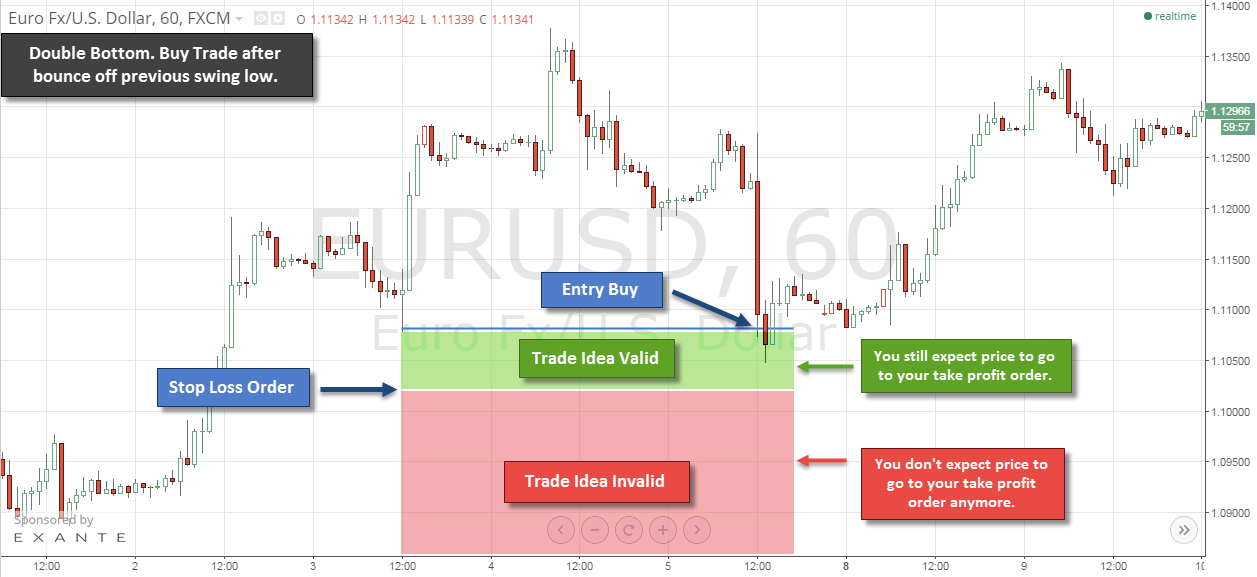
- Support and Resistance Levels: A popular strategy involves placing stop losses just below identifiable support levels (for long positions) or just above resistance levels (for short positions). These levels represent price points where buying or selling pressure has historically reversed the trend, making them natural barriers. If the price breaks these significant levels, it often signals a change in market dynamics, validating the stop loss trigger.
- Moving Averages: Dynamic indicators like moving averages can serve as flexible stop loss points. For a long trade, a stop might be placed just below a key moving average (e.g., the 20-period or 50-period simple or exponential moving average). As the moving average shifts, the stop loss can be adjusted accordingly.
- Volatility Indicators (e.g., ATR): The Average True Range (ATR) is an indicator that measures market volatility. Traders can use a multiple of the ATR (e.g., 1.5x or 2x ATR) to set a stop loss, ensuring that the stop is wide enough to accommodate the asset’s typical price fluctuations without being triggered by normal market noise. This adapts the stop loss to the current volatility environment of the asset.
Avoiding “Too Tight” or “Too Wide”
The art of setting effective stop losses lies in finding the balance between being too tight and too wide:
- Too Tight: A stop loss set too close to the entry price is highly susceptible to the “whipsaw” effect. Minor, temporary price fluctuations or routine market noise can easily trigger a premature exit, leading to small, accumulating losses and missing out on potentially profitable moves after the price recovers.
- Too Wide: Conversely, a stop loss set too far away from the entry price exposes an excessive amount of capital to risk, diminishing the very purpose of employing a stop loss. While it might prevent premature exits, the potential loss on a losing trade could be significant enough to severely impact your overall trading capital.
Advantages and Disadvantages of Stop Losses
While stop loss orders are indispensable for prudent risk management, it’s crucial to acknowledge both their profound benefits and their inherent limitations to integrate them effectively into a trading strategy.
Key Benefits
The strategic application of stop losses offers several compelling advantages:
- Capital Preservation: This is the primary and most significant benefit. Stop losses act as an insurance policy, ensuring that a predefined maximum amount of capital is at risk on any single trade. They prevent minor setbacks from becoming account-destroying events, safeguarding a trader’s ability to participate in future market opportunities.
- Emotional Control: Trading decisions are frequently clouded by strong emotions such as fear, greed, and hope. A stop loss, once set, removes the emotional component from the exit strategy. When the market moves against a position, the stop loss executes automatically, ensuring that losses are cut dispassionately, preventing impulsive decisions that often lead to larger losses.
- Pre-defined Risk: Before entering a trade, a trader knows the exact maximum potential loss. This allows for precise position sizing and risk budgeting, aligning each trade with an overarching risk management plan. This clarity fosters a disciplined approach and prevents “surprise” losses.
- Automation and Convenience: Stop loss orders automate a critical aspect of trade management. This allows traders to set their risk parameters and then monitor other opportunities or step away from their screens, confident that their downside is protected without the need for constant, vigilant market observation.
Potential Drawbacks and Considerations
Despite their numerous benefits, stop losses are not without their potential pitfalls, and traders must be aware of these limitations:
- Whipsaws: One of the most common frustrations for traders is being “stopped out” by a temporary price fluctuation, only for the market to reverse shortly after and move in the originally anticipated direction. This can lead to multiple small losses and missed profit opportunities, particularly if stop losses are set too tightly.
- Slippage: While a stop loss defines the trigger price, particularly with market order stop losses, there’s no guarantee that the order will be filled at that exact price. In volatile markets, during rapid price movements, or across market gaps (e.g., overnight), the execution price can be significantly worse than the stop price, leading to a larger actual loss than anticipated.
- “Hunting” by Large Players: A contentious but widely discussed theory suggests that large institutional traders or “smart money” can sometimes drive prices to commonly known stop loss levels (often near significant support/resistance) specifically to trigger these orders, creating liquidity for their own positions, before reversing the market. While difficult to prove, this highlights the risk of placing stops at overly obvious levels.
- Removing Upside Potential: If a stop loss is triggered and the trade is closed, any subsequent significant reversal in the asset’s price (moving back into the originally intended profitable direction) means the trader misses out on that potential gain. The decision to cut losses means sacrificing the chance for a comeback.
Best Practices for Integrating Stop Losses into Your Strategy
To maximize the effectiveness of stop loss orders and mitigate their drawbacks, it’s essential to adopt a disciplined approach and integrate them thoughtfully into your overall trading strategy.
Define Your Risk Tolerance
Before placing any trade, clearly articulate your personal and financial risk tolerance. This fundamental step will guide the percentage of capital you are willing to risk per trade and, consequently, the placement of your stop loss. Understanding your comfort level with potential losses is paramount to consistent and stress-free trading. Never risk more than you can comfortably afford to lose on any single position.
Never Move Your Stop Loss Further Away
This is a cardinal rule for disciplined trading. Once a stop loss is set, it should generally only be moved in one direction: to lock in profits (e.g., using a trailing stop or moving it to break-even once the trade is significantly profitable). Moving a stop loss further away from your entry price in a losing trade is a symptom of emotional decision-making, hoping for a recovery. This often leads to significantly larger, unintended losses and undermines the entire purpose of risk management. Stick to your initial risk assessment.
Consider Position Sizing
The effectiveness of a stop loss is inextricably linked to proper position sizing. Even with a well-placed stop, if your position is too large relative to your total trading capital, the potential loss, should the stop be hit, could still be devastating. Calculate your position size based on your defined risk percentage per trade and the distance to your stop loss. For instance, if you risk 1% of your $10,000 account ($100) and your stop loss is $1 away from your entry price, you should only trade 100 shares. This ensures that even if your stop is hit, the loss remains within your acceptable limits.
Review and Adjust
Trading is an iterative process of learning and adaptation. Regularly review your past trades, particularly those where your stop losses were triggered. Analyze whether the stop was too tight, too wide, or optimally placed. Did the market behavior justify the stop placement, or could a different approach have yielded a better outcome? Use these insights to refine your stop loss strategy for future trades, adapting to different market conditions, asset types, and personal performance.

Not a One-Size-Fits-All Solution
Recognize that there is no universal “perfect” stop loss strategy. Different asset classes (stocks, forex, commodities, crypto), varying volatility levels, and distinct trading styles (day trading, swing trading, long-term investing) each demand a tailored approach to stop loss placement. What works for a highly volatile small-cap stock might be entirely inappropriate for a stable blue-chip equity or a less liquid currency pair. Continuously educate yourself on the nuances of the markets you trade and adjust your stop loss tactics accordingly.
aViewFromTheCave is a participant in the Amazon Services LLC Associates Program, an affiliate advertising program designed to provide a means for sites to earn advertising fees by advertising and linking to Amazon.com. Amazon, the Amazon logo, AmazonSupply, and the AmazonSupply logo are trademarks of Amazon.com, Inc. or its affiliates. As an Amazon Associate we earn affiliate commissions from qualifying purchases.