
Chromatography stands as a foundational analytical technology, a cornerstone across countless scientific and industrial disciplines. Far from being a singular technique, it encompasses a diverse family of separation methods, all rooted in the ingenious principle of differential partitioning. At its core, chromatography is about separating mixtures into their individual components, enabling scientists and engineers to identify, quantify, and purify substances with remarkable precision. In an era increasingly reliant on sophisticated analysis for everything from drug discovery to environmental safety, understanding this critical tech is paramount.
The Core Principle: Separation Science in Action
The fundamental magic of chromatography lies in its ability to exploit subtle differences in how various components of a mixture interact with two distinct phases: a stationary phase and a mobile phase. Imagine a race where different runners have varying affinities for the track (stationary phase) and the air (mobile phase). Some runners might prefer to stick to the track, slowing down, while others prefer to glide through the air, moving faster. This analogy captures the essence of chromatographic separation.
Differential Partitioning
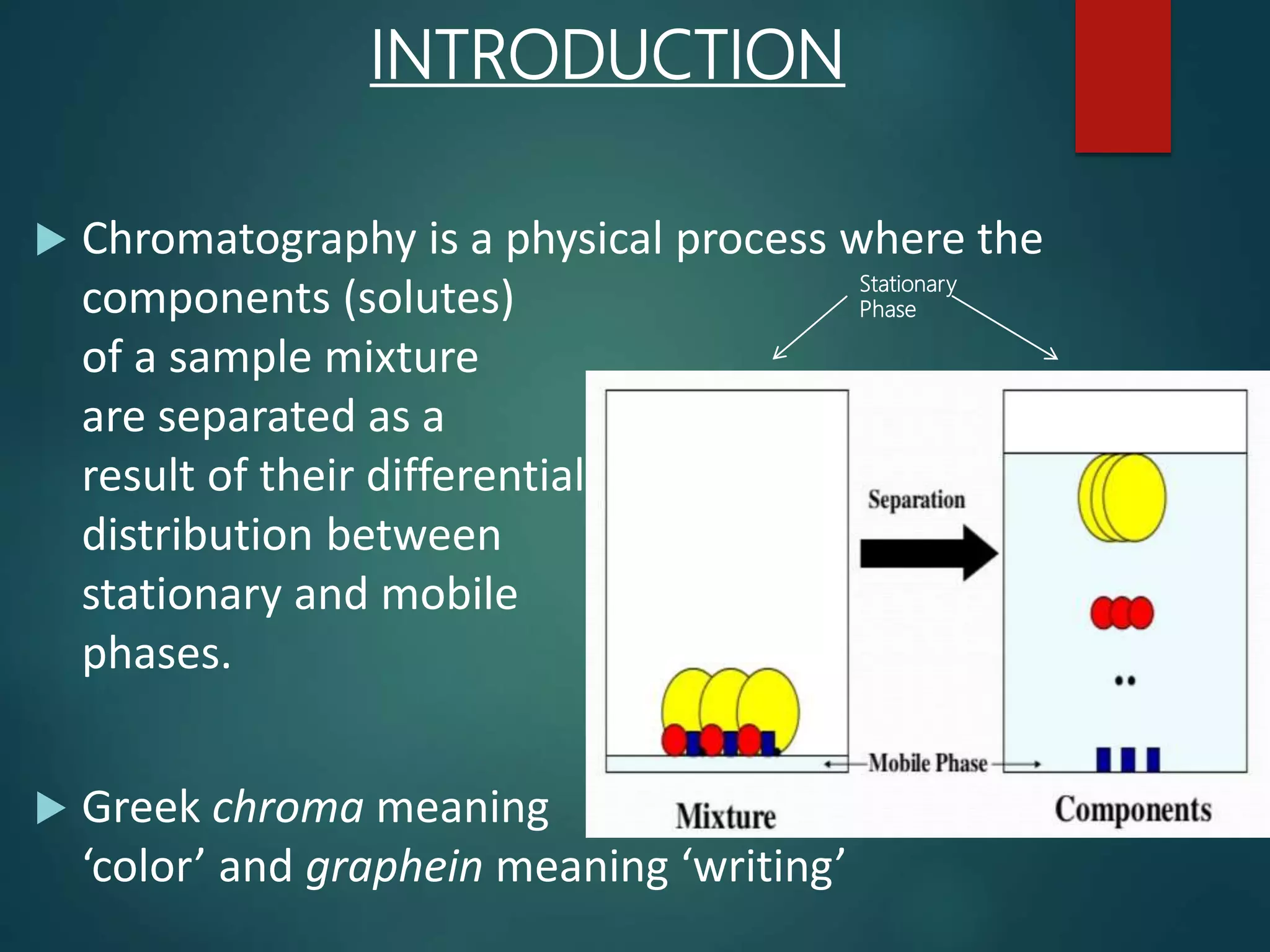
Every substance within a mixture possesses unique physical and chemical properties, such as polarity, size, charge, or volatility. When these substances are introduced into a chromatographic system, they constantly partition, or distribute themselves, between the stationary phase (which remains fixed) and the mobile phase (which moves through the system). Components that have a stronger affinity for the stationary phase will spend more time adsorbed to it and, consequently, travel more slowly through the system. Conversely, components with a weaker affinity for the stationary phase (and thus a stronger affinity for the mobile phase) will spend more time in the mobile phase and elute (exit the system) much faster. This differential partitioning leads to their eventual separation.
Stationary and Mobile Phases
The specific nature of these two phases defines the type of chromatography and dictates which interactions are exploited for separation.
- Stationary Phase: This can be a solid, a gel, or a liquid supported on a solid. It is typically packed into a column or spread as a thin layer on a surface. Its chemical composition is crucial, as it provides the specific interaction sites (e.g., polar groups, non-polar groups, ion-exchange sites) that drive separation.
- Mobile Phase: This is a fluid (either a liquid or a gas) that carries the sample mixture through the stationary phase. The choice of mobile phase (its composition, pH, flow rate) is equally critical, influencing the speed and efficiency of separation by optimizing the interaction balance for the analytes.
A Spectrum of Techniques: Key Chromatography Types
The versatility of chromatography stems from the wide array of stationary and mobile phase combinations, leading to diverse techniques tailored for specific analytical challenges. Each method leverages different physical or chemical properties for separation.
Gas Chromatography (GC)
In Gas Chromatography, the mobile phase is an inert gas (e.g., helium, nitrogen), and the stationary phase is a liquid film coated on a solid support inside a long, thin column, or a solid adsorbent. GC is ideal for separating volatile and thermally stable compounds. The sample is vaporized and carried by the gas through the column. Compounds separate based on their boiling points and their affinity for the stationary phase. Higher boiling point compounds and those with stronger interactions with the stationary phase take longer to elute. GC systems are sophisticated pieces of tech, featuring an injector, an oven to control column temperature, and a detector.
Liquid Chromatography (LC)
Liquid Chromatography utilizes a liquid mobile phase (solvent) to carry the sample through a stationary phase packed in a column. LC is incredibly versatile and suitable for separating a vast range of compounds, particularly those that are non-volatile or thermally unstable.
High-Performance Liquid Chromatography (HPLC) and Ultra-High Performance Liquid Chromatography (UHPLC)
HPLC represents a significant technological leap in LC. It employs high pressure to force the mobile phase through densely packed columns of very small particles, leading to much faster and more efficient separations with superior resolution. UHPLC takes this a step further, using even smaller particles and significantly higher pressures, delivering even faster analyses and enhanced separation power. These systems are complex gadgets, featuring pumps, auto-samplers, columns, and a variety of detectors.
Thin-Layer Chromatography (TLC)
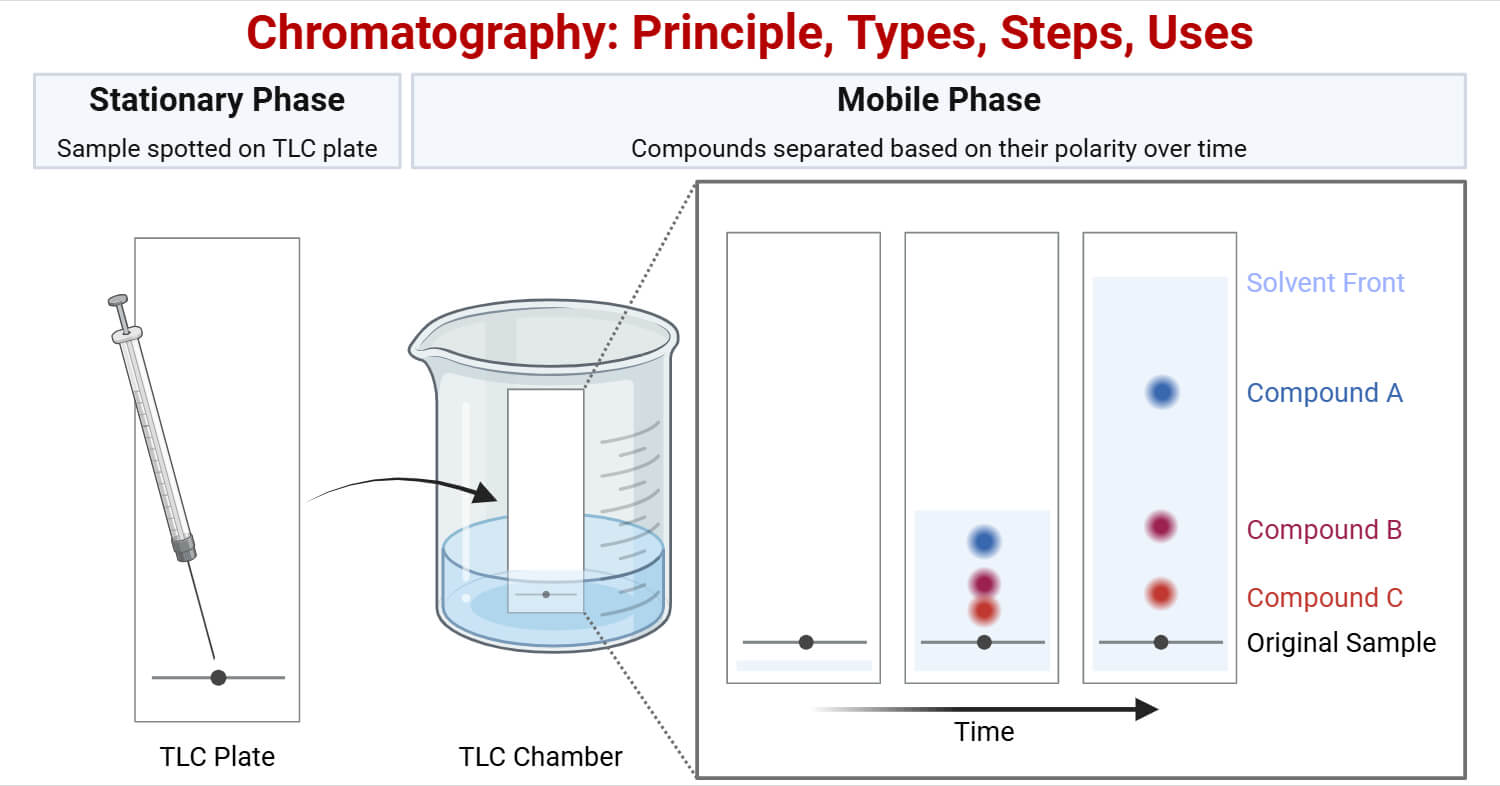
TLC is a simpler, qualitative or semi-quantitative technique. Here, the stationary phase is a thin layer of adsorbent material (like silica gel) spread on a flat, inert substrate (glass, plastic, or aluminum foil). A sample is spotted near one edge, and the plate is placed in a chamber with a solvent (mobile phase) that ascends the plate by capillary action. Components separate based on their differing affinities for the stationary phase and the mobile phase, resulting in distinct spots at varying heights. It’s often used for rapid screening and method development.
Ion-Exchange Chromatography
This technique separates ions and polar molecules based on their charge. The stationary phase contains charged functional groups that attract oppositely charged ions in the sample. The mobile phase is an aqueous buffer. By changing the pH or salt concentration of the mobile phase, specific ions can be eluted based on the strength of their ionic interaction with the stationary phase.
Size-Exclusion Chromatography (SEC)
Also known as gel filtration chromatography, SEC separates molecules based on their size. The stationary phase consists of porous beads. Smaller molecules can enter the pores of the beads, taking a longer, more tortuous path through the column, thus eluting later. Larger molecules are excluded from the pores and pass around the beads, traveling a shorter path and eluting earlier. It’s particularly useful for separating proteins and polymers.
The Instruments of Precision: Modern Chromatographic Gadgets
Contemporary chromatography is far more than just a tube and a solvent; it involves highly advanced instruments that automate processes, ensure precision, and generate massive amounts of data. These systems are at the forefront of analytical technology.
Detectors: The Sensory Organs
After separation, the individual components must be detected and quantified. A variety of sophisticated detectors are employed, each optimized for specific types of analytes:
- UV-Vis Detectors: Common in LC, they measure the absorption of ultraviolet or visible light by compounds as they elute.
- Mass Spectrometry (MS): Often coupled with GC (GC-MS) or LC (LC-MS), MS provides highly specific information about the molecular weight and structure of eluted compounds, offering unparalleled identification capabilities. It’s a powerful tool in chemical analysis.
- Flame Ionization Detectors (FID): Primarily used in GC, FIDs ionize organic compounds in a hydrogen flame, producing an electrical signal proportional to the amount of carbon.
- Refractive Index Detectors (RID): Used in LC for compounds that do not absorb UV light, RIDs measure changes in the refractive index of the eluent.
Automation and Software Integration
Modern chromatographic systems are highly automated. Auto-samplers inject precise volumes of samples, reducing manual error and increasing throughput. Robotic systems can prepare samples, load columns, and collect fractions. Crucially, these instruments are managed by sophisticated software packages that control parameters, acquire data, process results, and generate reports. These software tools often include data analysis algorithms, peak integration, and libraries for compound identification, truly making chromatography a digitally enhanced analytical technology.
Ubiquitous Applications Across Industries
The widespread applicability of chromatography underscores its importance as a critical analytical tool across numerous tech-driven industries.
Pharmaceutical Development and Quality Control
In the pharmaceutical sector, chromatography is indispensable. It’s used to purify drug compounds, verify the purity of raw materials, analyze drug formulations, detect impurities, and study drug metabolism. HPLC and LC-MS are central to ensuring the safety, efficacy, and quality of medicines, from discovery to market.
Environmental Monitoring
Chromatography plays a vital role in assessing environmental health. GC-MS and LC-MS are routinely used to detect and quantify pollutants in air, water, and soil samples, including pesticides, industrial chemicals, and trace contaminants. This data informs regulatory decisions and remediation efforts.
Food and Beverage Analysis
Ensuring food safety and quality relies heavily on chromatographic techniques. They are used to detect additives, preservatives, contaminants (like mycotoxins or heavy metals), and allergens. Furthermore, chromatography helps in profiling flavor compounds, ensuring product consistency, and verifying nutritional content.
Forensics and Toxicology
In forensic science, chromatography is critical for identifying substances at crime scenes, from illicit drugs and explosives to accelerants in arson cases. In toxicology, it’s used to detect drugs, poisons, and their metabolites in biological samples, aiding in overdose cases, anti-doping tests, and post-mortem investigations.
Chemical Research and Material Science
Researchers utilize chromatography for synthesizing and purifying novel compounds, analyzing reaction mixtures, and characterizing new materials. From polymers to nanomaterials, understanding the composition and purity of substances is fundamental to scientific discovery and technological innovation.
The Future Trajectory of Separation Tech
As technology advances, so too does chromatography. The future promises even more powerful, efficient, and accessible separation techniques.
Miniaturization and Portability
There’s a strong trend towards miniaturizing chromatographic systems, leading to smaller, more portable devices. This allows for on-site analysis, moving analytical power from centralized labs to the field, factory floor, or even directly to patient care settings. Microfluidic chips integrating entire chromatographic systems are becoming a reality.
Enhanced Data Analysis with AI
The sheer volume of data generated by modern chromatographs is immense. Artificial intelligence and machine learning algorithms are increasingly being integrated into chromatographic software to automate data processing, improve peak detection and integration, identify unknown compounds, and predict optimal separation conditions, thereby enhancing both efficiency and accuracy.

Greener Chromatography
Efforts are ongoing to develop “greener” chromatographic methods that reduce solvent consumption, use less toxic chemicals, and generate less waste. Supercritical fluid chromatography (SFC), which uses CO2 as a mobile phase, is one example gaining traction due to its environmental benefits.
Chromatography remains an indispensable analytical technology, constantly evolving to meet the complex demands of modern science and industry. Its principles of differential partitioning continue to inspire new innovations, pushing the boundaries of what can be separated, identified, and understood.
aViewFromTheCave is a participant in the Amazon Services LLC Associates Program, an affiliate advertising program designed to provide a means for sites to earn advertising fees by advertising and linking to Amazon.com. Amazon, the Amazon logo, AmazonSupply, and the AmazonSupply logo are trademarks of Amazon.com, Inc. or its affiliates. As an Amazon Associate we earn affiliate commissions from qualifying purchases.