
A 30-year jumbo mortgage represents a significant financial instrument for individuals seeking to finance higher-value properties that exceed conventional loan limits. At its core, it is a home loan designed for amounts considered “non-conforming” by government-sponsored enterprises (GSEs) like Fannie Mae and Freddie Mac. The “30-year” component refers to the repayment term, offering borrowers the stability of fixed monthly payments spread over three decades. Understanding the nuances of this specific mortgage product is crucial for those navigating the luxury real estate market or simply purchasing in high-cost areas.
Defining the Jumbo Mortgage: Beyond Conforming Limits
The defining characteristic of a jumbo mortgage is its loan amount, which surpasses the “conforming loan limits” established annually by the Federal Housing Finance Agency (FHFA). These limits dictate the maximum loan size that Fannie Mae and Freddie Mac are permitted to purchase or guarantee.

Conforming vs. Non-Conforming Loans
Conforming loans adhere to the FHFA’s limits and criteria, making them eligible for purchase by Fannie Mae and Freddie Mac. This eligibility simplifies their sale on the secondary mortgage market, which in turn typically allows lenders to offer them with less stringent requirements and often more competitive interest rates due to the reduced risk.
Conversely, a jumbo mortgage is a non-conforming loan. Because it cannot be bought or guaranteed by the GSEs, lenders must hold these larger loans in their own portfolios or sell them to private investors who are willing to take on the additional risk. This distinction leads to stricter underwriting standards and potentially different pricing structures compared to conforming loans. Lenders assume a greater risk with jumbo loans, as a default on a larger loan has a more significant financial impact. This increased risk translates into a more rigorous application process and higher eligibility hurdles for borrowers.
Understanding Loan Limits
Conforming loan limits are not static; they are adjusted each year based on changes in average U.S. home prices. For most of the United States, the baseline conforming loan limit for a single-family home in 2024 is $766,550. However, in designated high-cost areas, where 115% of the local median home value exceeds the baseline limit, the ceiling is higher, potentially reaching up to $1,149,825 in certain counties. Any mortgage amount that exceeds these specific regional limits is categorized as a jumbo loan. For instance, if a borrower seeks a $1 million mortgage in an area where the limit is $766,550, they would need a jumbo mortgage. These varying limits underscore the importance of understanding the specific financial landscape of the intended property location.
Why Choose a 30 Year Term? Stability and Affordability
While jumbo loans can come with various terms (e.g., 15-year, adjustable-rate), the 30-year fixed-rate jumbo mortgage remains a popular choice due to several key advantages related to cash flow and financial predictability.
Predictable Payments
A 30-year fixed-rate mortgage ensures that the principal and interest portion of your monthly payment remains constant for the entire three decades. This unwavering payment schedule provides exceptional stability for personal budgeting, allowing homeowners to plan their finances with certainty, regardless of fluctuations in interest rates or economic conditions. For high-net-worth individuals, this predictability can be particularly valuable in managing complex financial portfolios.
Lower Monthly Outlays
Extending the repayment period over 30 years significantly reduces the size of monthly mortgage payments compared to shorter terms like 15 or 20 years for the same loan amount. This allows borrowers to maintain greater liquidity and better cash flow each month. While the total interest paid over 30 years will be higher than with a shorter term, the lower monthly obligation can free up funds for other financial priorities, such as investments, retirement savings, or emergency funds. It offers a balance between homeownership aspirations and maintaining financial flexibility.
Long-Term Financial Planning
The reduced monthly payment associated with a 30-year term offers more flexibility for long-term financial planning. Borrowers can allocate the difference towards high-yield investments, paying down other higher-interest debts, or funding significant life events like college education or business ventures. It provides breathing room and strategic options for individuals who view their home not just as a primary residence but as one component of a broader investment strategy. This long-term horizon can also be beneficial for those who anticipate increasing income over time but prefer a more manageable initial payment.
Eligibility and Application: Navigating the Jumbo Landscape
Given the increased risk lenders assume with jumbo mortgages, the eligibility criteria and application process are considerably more stringent than for conforming loans. Borrowers must demonstrate exceptional financial strength and stability.
Higher Credit Score Requirements
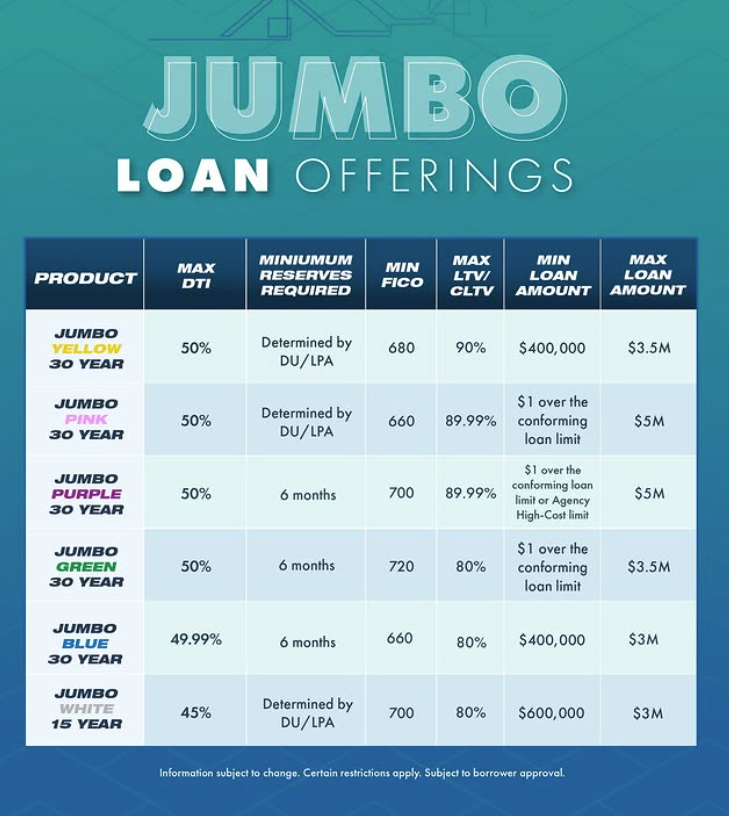
Lenders typically require a pristine credit history and a higher credit score for jumbo loan applicants. While conforming loans might accept scores in the mid-600s, jumbo lenders often look for a FICO score of 700 or higher, with many preferring scores in the 740 to 760-plus range. An excellent credit score signals a low risk of default and reflects a borrower’s consistent ability to manage debt responsibly.
Substantial Down Payments
Compared to conforming loans, which can sometimes be secured with as little as 3-5% down, jumbo mortgages typically demand significantly larger down payments. Lenders often require 10-20% down, and sometimes even more, particularly for very high loan amounts or properties in less liquid markets. A larger down payment reduces the loan-to-value (LTV) ratio, thereby decreasing the lender’s exposure to risk in the event of a default or a decline in property value.
Robust Income and Asset Verification
Lenders scrutinize a jumbo borrower’s income and assets with greater intensity. Applicants must provide extensive documentation, often including two years of tax returns, multiple recent pay stubs, W-2s, and comprehensive bank and investment account statements. Self-employed borrowers may face even more rigorous requirements, necessitating detailed profit-and-loss statements and business tax returns. The goal is to verify a stable, substantial income stream and sufficient liquid assets to comfortably cover the large monthly mortgage payments and associated costs, as well as to demonstrate significant reserves post-closing. Lenders often require several months’ worth of mortgage payments in reserve.
Debt-to-Income (DTI) Ratios
Jumbo lenders generally impose stricter debt-to-income (DTI) ratio limits. While conforming loans might allow DTIs up to 50% in certain cases, jumbo loans typically require a DTI below 43%, and often closer to 38-40%. This ratio, which compares your total monthly debt payments to your gross monthly income, ensures that a borrower is not overextended and has ample income remaining after debt obligations to manage their finances and the considerable costs of owning a high-value home.
Potential Benefits and Risks of Jumbo Mortgages
Like any major financial product, a 30-year jumbo mortgage comes with its own set of advantages and disadvantages that borrowers must carefully weigh.
Benefits: Accessing High-Value Properties
The primary benefit of a jumbo mortgage is its ability to finance properties that simply cannot be purchased with a conforming loan. This opens up opportunities for borrowers to buy luxury homes, properties in exclusive neighborhoods, or real estate in high-cost urban centers where median home prices far exceed conventional limits. Without jumbo financing, buyers would need to pay a much larger cash sum upfront, which might be impractical even for affluent individuals.
Benefits: Interest Rate Competitiveness
While historically jumbo loan rates were often higher than conforming rates due to the increased risk, market dynamics can sometimes lead to surprising competitiveness. For highly qualified borrowers with impeccable credit and substantial assets, lenders may offer jumbo rates that are on par with, or even occasionally lower than, conforming rates. This can be attributed to the larger loan amounts, which can be more profitable for lenders, and the exceptionally strong financial profiles of the borrowers they attract.
Risks: Market Sensitivity and Refinancing Challenges
Jumbo loans are more susceptible to economic downturns and fluctuations in the housing market. If property values decline, a borrower with a jumbo loan could find themselves “underwater,” owing more than the home is worth. This situation makes refinancing particularly challenging, as lenders are hesitant to refinance a loan where the loan-to-value ratio is unfavorable. Selling the property in a down market could also result in significant financial losses.
Risks: Higher Closing Costs and Lender Scrutiny
Due to their complexity and size, jumbo mortgages often incur higher closing costs compared to conforming loans. These can include larger appraisal fees (sometimes requiring two appraisals for very high-value properties), legal fees, and origination charges. Furthermore, the extensive due diligence required by lenders translates into a more exhaustive and potentially lengthier application process, requiring significant time and effort from the borrower to compile and submit the required financial documentation.
Key Considerations Before Committing
Before taking on a 30-year jumbo mortgage, a comprehensive self-assessment and meticulous planning are essential. Consider not just your immediate financial capacity, but also the long-term implications.
First, rigorously assess your overall financial health. Beyond meeting the lender’s stringent requirements, can you comfortably afford the substantial monthly payments, property taxes, homeowner’s insurance (which will be higher on a more expensive home), and potential homeowner’s association (HOA) fees? Factor in the ongoing costs of maintenance and utilities for a larger or luxury property, which can be considerably higher than average. Ensure that your emergency fund and liquid assets remain robust even after the down payment and closing costs.
Second, engage in thorough due diligence when choosing a lender. Not all lenders offer jumbo mortgages, and those who do may have varying rates, terms, and specific underwriting criteria. It is highly advisable to shop around, comparing offers from multiple banks, credit unions, and mortgage brokers specializing in jumbo loans. An experienced mortgage broker can be particularly valuable in navigating the complex jumbo loan market and finding the best fit for your unique financial profile.
Finally, consider your long-term financial goals and life plans. How does a 30-year jumbo mortgage fit into your broader wealth management strategy? Will the substantial monthly payment inhibit other critical financial objectives, such as retirement savings, investments, or funding children’s education? While the 30-year term offers lower monthly payments, it also means paying interest over a much longer period. A clear understanding of the total cost of ownership over the loan’s lifetime is paramount. Consulting with a financial advisor can provide invaluable perspective, helping to integrate this significant financing decision into your holistic financial plan.
aViewFromTheCave is a participant in the Amazon Services LLC Associates Program, an affiliate advertising program designed to provide a means for sites to earn advertising fees by advertising and linking to Amazon.com. Amazon, the Amazon logo, AmazonSupply, and the AmazonSupply logo are trademarks of Amazon.com, Inc. or its affiliates. As an Amazon Associate we earn affiliate commissions from qualifying purchases.