
In the vast landscape of technology, where data reigns supreme and algorithms dictate outcomes, the concept of numerical precision is paramount. Among the fundamental principles governing how numbers are represented and manipulated, significant figures stand as a critical benchmark. Understanding “3 significant figures” isn’t merely a mathematical exercise; it’s a foundational concept that underpins data integrity, computational accuracy, and the reliability of software, AI models, and digital tools across countless applications.
The Imperative of Precision in the Digital Age
The digital world operates on numbers. From the intricate calculations powering a machine learning algorithm to the display of sensor data on an IoT device, every numerical value carries an implicit or explicit level of precision. Significant figures provide a standardized way to express this precision, ensuring that numbers are not over-represented or misleadingly truncated.
Defining Significant Figures: A Foundational Concept
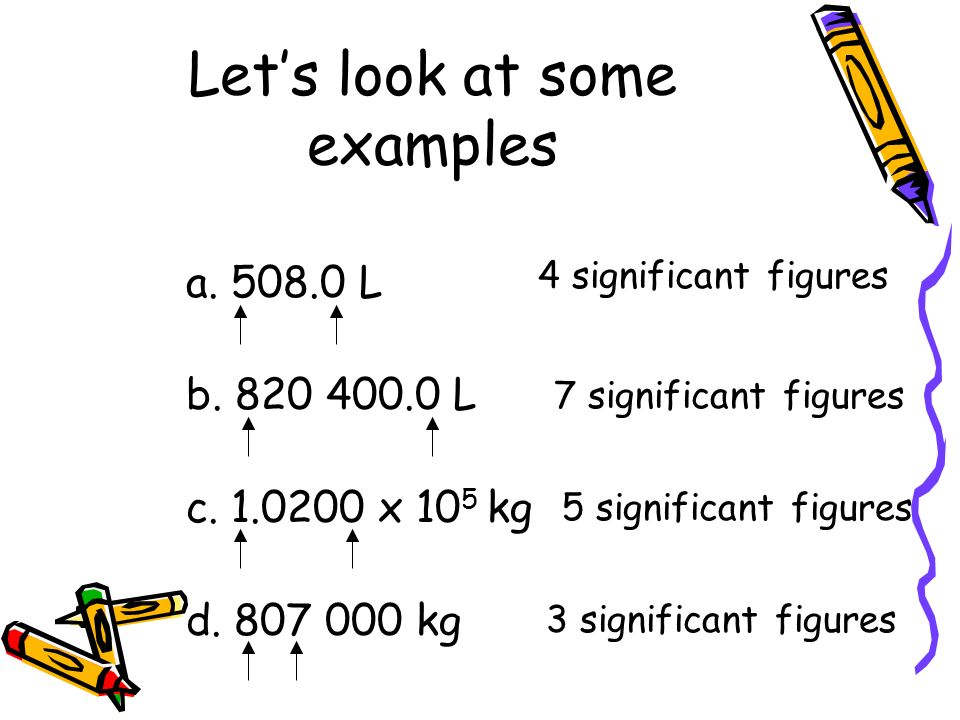
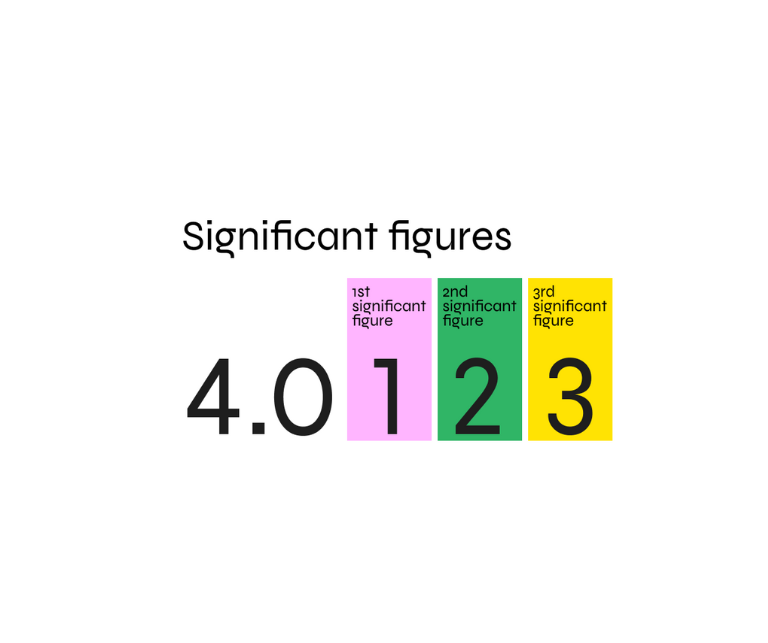
Significant figures (often abbreviated as ‘sig figs’) are the digits in a number that carry meaningful contribution to its measurement resolution. They include all non-zero digits, and certain zeros, providing an indication of how precisely a number is known or how accurately a value has been measured or computed. When we talk about “3 significant figures,” we are referring to a number that has three digits contributing to its precision.
Let’s break down the rules for identifying significant figures:
- Non-zero digits are always significant. For example, 123 has three significant figures.
- Zeros between non-zero digits are significant. For example, 103 has three significant figures.
- Leading zeros (zeros before non-zero digits) are NOT significant. They merely indicate the position of the decimal point. For example, 0.00123 has three significant figures (1, 2, and 3).
- Trailing zeros (zeros at the end of a number) are significant ONLY if the number contains a decimal point.
- For example, 12300 has three significant figures (1, 2, and 3) if there is no explicit decimal point. Its precision is ambiguous.
- However, 123.00 has five significant figures, and 123.0 has four significant figures, because the decimal point explicitly indicates the trailing zeros are measured or known values.
- If a number like 12300 needs to explicitly show 5 significant figures, scientific notation is often used: 1.2300 x 10^4.
When a number is rounded to “3 significant figures,” it means that the resulting number will have only three digits that convey precise information, with any subsequent digits either removed or replaced by non-significant zeros to maintain magnitude. For instance:
- 123.45 rounded to 3 significant figures becomes 123.
- 0.001238 rounded to 3 significant figures becomes 0.00124.
- 98765 rounded to 3 significant figures becomes 98800 (or 9.88 x 10^4 in scientific notation).
- 1.000 rounded to 3 significant figures becomes 1.00.
Why Numerical Precision Matters in Software
In computing, the precision of a number directly impacts the reliability and accuracy of calculations. Unlike theoretical mathematics, digital systems have finite memory and processing capabilities, leading to approximations and rounding errors. Understanding significant figures helps developers, data scientists, and engineers to:
- Prevent Misleading Results: Displaying a calculation with 10 decimal places when the input data only had 2 significant figures creates a false sense of accuracy.
- Manage Computational Resources: Storing and processing numbers with excessive, unwarranted precision consumes unnecessary memory and CPU cycles.
- Ensure Data Consistency: When data is exchanged between different systems or software components, maintaining consistent significant figures prevents discrepancies.
- Debug and Validate Algorithms: Tracing numerical errors often involves examining the precision at various steps of a computation.
Beyond Raw Data: Significant Figures in Software Development and AI
The relevance of significant figures extends far beyond simple rounding exercises. It fundamentally influences how software is designed, how data is processed, and how intelligent systems make decisions.
Data Integrity and Computational Limits
Modern software applications often deal with vast datasets, ranging from financial transactions to sensor readings and scientific measurements. Each piece of data comes with an inherent level of precision. Databases, for example, use various data types (e.g., FLOAT, DOUBLE, DECIMAL) that define the number of bits allocated to store a numerical value, thus dictating its maximum precision.
- Floating-Point Arithmetic: Computers use floating-point numbers (like
floatordoublein programming languages) to represent real numbers. These representations are inherently approximate, leading to potential rounding errors, especially in complex calculations. Understanding significant figures helps developers anticipate and manage these errors. For instance, repeatedly adding a tiny error can accumulate into a substantial discrepancy. - Data Validation: Ensuring that input data conforms to expected precision levels is crucial for data integrity. A system expecting temperature readings to two significant figures (e.g., 25°C) might encounter issues if fed values with excessive or insufficient precision.
Impact on Algorithms: From Financial Models to Scientific Simulations
Algorithms are the heart of software, and their robustness relies heavily on how they handle numerical data.
- Scientific and Engineering Software: Applications simulating physical phenomena (weather forecasting, structural analysis, drug discovery) demand high precision. Errors introduced by insufficient significant figures can lead to catastrophic inaccuracies, rendering models useless or even dangerous.
- Financial Applications: While financial calculations often prioritize exact decimal representations, the principles of significant figures still apply when dealing with external data feeds, market analysis, or risk modeling where precision dictates the reliability of forecasts and valuations. For instance, reporting bond yields to too many insignificant decimal places can obscure true market movements.
- Geospatial and Mapping Systems: Latitude and longitude coordinates, elevation data, and distances require specific levels of precision to accurately pinpoint locations and render maps. Rounding too aggressively can place a building on the wrong block or misdirect a navigation system.
AI and Machine Learning: Precision in Weights and Predictions

The world of Artificial Intelligence and Machine Learning is particularly sensitive to numerical precision.
- Neural Network Weights: Deep learning models consist of millions or even billions of parameters (weights and biases). These are floating-point numbers, and their precision directly impacts the model’s ability to learn complex patterns. While training often uses higher precision, deploying models sometimes involves quantizing weights to lower precision (e.g., 8-bit integers) to improve inference speed and reduce memory footprint. This process must be carefully managed to avoid significant loss of model performance.
- Gradient Descent: Optimization algorithms like gradient descent rely on small changes in weights. If calculations are performed with insufficient precision, these minute changes might be lost, preventing the model from converging effectively.
- Prediction Outputs: When an AI model outputs a prediction (e.g., a probability score, a regression value), the number of significant figures presented to the user matters. A medical diagnostic AI providing a 0.7654321% chance of a condition when its underlying data only supports two significant figures for the probability (0.77%) could be misleading and create undue alarm or false confidence. Presenting results with appropriate significant figures maintains trust and clarity.
Practical Applications and Best Practices in Tech
Managing significant figures in a technological context is a matter of thoughtful design and implementation.
User Interface Design: Presenting Data Responsibly
How numerical data is presented to end-users is crucial for clarity and preventing misinterpretation.
- Dashboard and Reports: Financial dashboards, analytical reports, and monitoring systems should present key metrics (e.g., market share, system uptime, profit margins) with an appropriate number of significant figures. Over-precision can clutter the interface and imply an accuracy that doesn’t exist, while under-precision might hide critical variations.
- Input Fields: Software applications often validate user input. If a specific metric requires a certain precision, input fields should guide users or automatically round values to the correct number of significant figures upon submission.
- Data Visualization: Graphs and charts are powerful tools, but their underlying data must respect precision. Misrepresenting data with too many or too few significant figures can lead to skewed perceptions.
Data Processing and Storage: Ensuring Consistency
Throughout the data lifecycle, maintaining consistency in precision is vital.
- ETL Pipelines (Extract, Transform, Load): Data extracted from various sources often has differing levels of precision. During the transformation phase, rules must be applied to normalize or standardize the significant figures to ensure consistency before loading into a data warehouse or analytical database.
- Database Schema Design: Choosing appropriate data types (
DECIMAL(10,2)for currency,DOUBLEfor scientific measurements requiring higher precision) is a primary way to enforce significant figures at the storage level. - API Design: When APIs exchange numerical data, clear specifications on expected precision and significant figures prevent integration issues and ensure data integrity across interconnected systems.
Tools and Libraries for Managing Precision
Modern programming languages and data science toolkits offer robust features for handling numerical precision:
- Built-in Rounding Functions: Most languages (Python, Java, C#, JavaScript) provide functions to round numbers to a specified number of decimal places or significant figures.
- Decimal Types: For applications requiring exact decimal arithmetic (e.g., financial calculations), dedicated
DecimalorBigDecimaltypes are available, which avoid the floating-point inaccuracies inherent infloatanddouble. - Scientific Libraries: Libraries like NumPy in Python offer advanced capabilities for numerical operations, including precise control over data types and rounding for scientific computing.
- Data Formatting Utilities: Tools for formatting output often include options to specify the number of significant figures for display purposes, ensuring that raw computational output is translated into user-friendly and accurate representations.
The Perils of Ignoring Precision
The failure to appropriately consider and manage significant figures can have far-reaching consequences in technology, impacting everything from minor user experience frustrations to critical system failures and ethical dilemmas.
Misleading Insights and Erroneous Conclusions
Presenting data with an inappropriate number of significant figures can lead to false interpretations. If a data analyst observes a growth rate reported as “1.234567%” when the underlying data only justifies “1.2%”, they might draw conclusions about minute fluctuations that are, in reality, just noise or computational artifacts. This can lead to flawed business strategies, incorrect scientific hypotheses, or misdirected resource allocation.
Cascading Errors and System Failures
In complex systems, a small error in precision at one stage can amplify into a catastrophic failure. Imagine a guidance system for an autonomous vehicle. If sensor readings or navigational calculations are rounded too aggressively early in the processing pipeline, successive calculations will compound these inaccuracies. A minor deviation of a few centimeters, initially masked by insufficient significant figures, could escalate into meters, leading to dangerous navigational errors or system crashes. Similarly, in financial trading algorithms, rounding errors accumulating over millions of transactions could result in substantial discrepancies, leading to regulatory issues or financial losses.
Ethical Considerations in Data Presentation
The way numerical data is presented often carries ethical implications, particularly when technology impacts public perception or critical decisions. Reporting statistics on climate change, public health, or economic performance requires scrupulous attention to significant figures. Presenting overly precise numbers when the underlying data is uncertain can create an illusion of scientific certainty that does not exist, potentially misleading policymakers or the public. Conversely, rounding too much might obscure genuine trends or critical details. Tech professionals have a responsibility to present data transparently and accurately, ensuring that the level of precision communicated reflects the true reliability of the information.
In the rapidly evolving digital landscape, where data is king and algorithms are the architects of our future, a solid grasp of significant figures is more than just academic knowledge—it is an indispensable skill. It is the cornerstone of responsible data handling, robust software development, and the ethical presentation of information, ensuring that the numbers driving our world are as reliable as they are revolutionary.
aViewFromTheCave is a participant in the Amazon Services LLC Associates Program, an affiliate advertising program designed to provide a means for sites to earn advertising fees by advertising and linking to Amazon.com. Amazon, the Amazon logo, AmazonSupply, and the AmazonSupply logo are trademarks of Amazon.com, Inc. or its affiliates. As an Amazon Associate we earn affiliate commissions from qualifying purchases.