
Achieving the perfect medium steak is an culinary art, but it’s one that technology has transformed into a precise science. Gone are the days of relying solely on touch tests or visual cues, which, while valuable for experienced chefs, introduce an unacceptable margin of error for the modern home cook seeking consistent perfection. Today, an array of gadgets and smart tools empower enthusiasts to hit that elusive internal temperature with unwavering accuracy, ensuring every bite delivers the ideal balance of tenderness, juiciness, and flavor.
The Science of Steak Doneness: Beyond Guesswork
Understanding the “why” behind specific temperatures is crucial for leveraging cooking technology effectively. Steak doneness isn’t arbitrary; it’s a direct result of complex chemical reactions occurring within the muscle fibers as heat is applied. Technology helps us control these reactions with unprecedented precision.
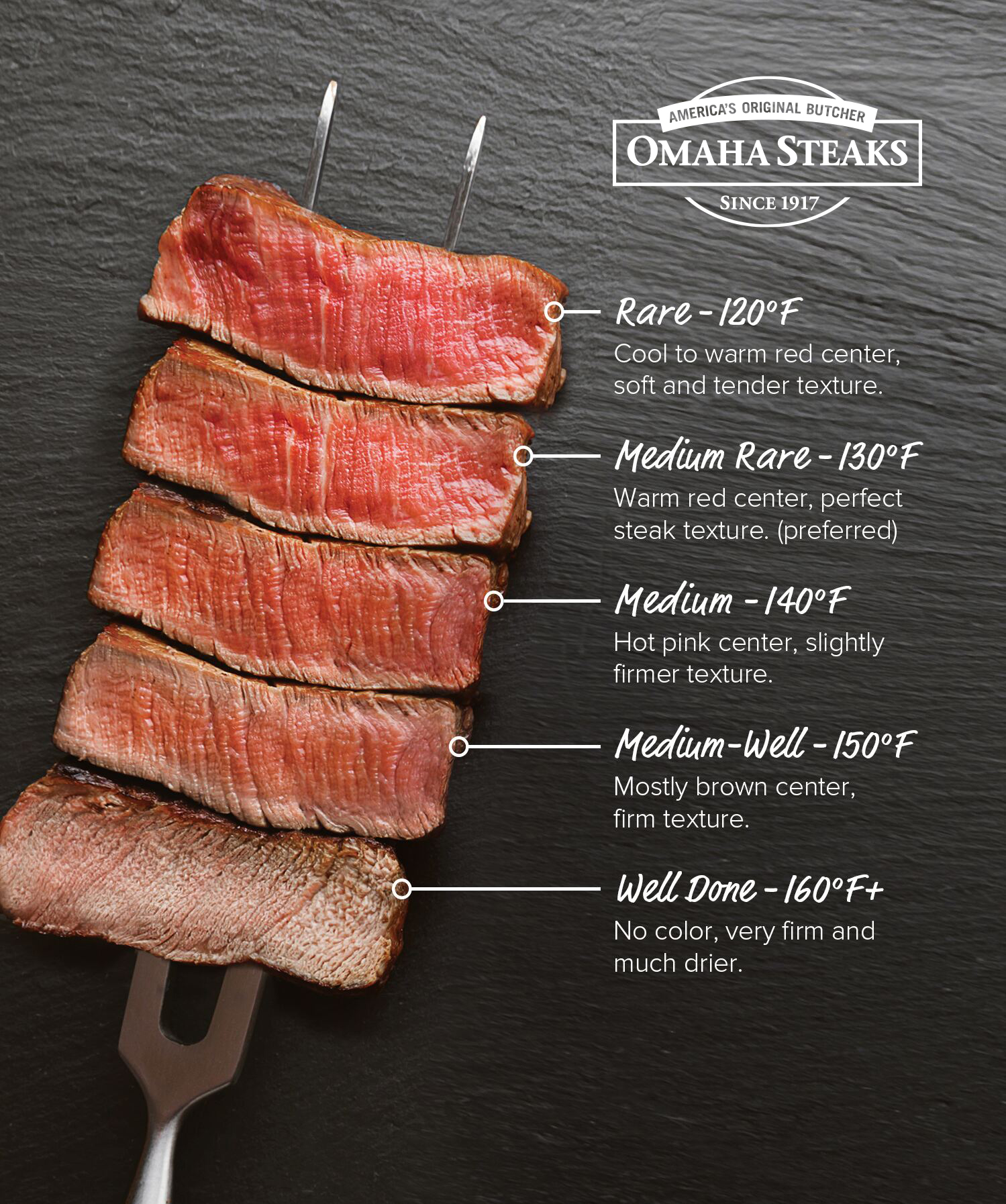
Understanding the Maillard Reaction and Protein Denaturation
When you sear a steak, the surface undergoes the Maillard reaction—a chemical interaction between amino acids and reducing sugars that creates hundreds of new flavor compounds and the desirable brown crust. This happens at temperatures typically above 300°F (150°C). While vital for flavor, the Maillard reaction primarily affects the exterior.
Simultaneously, as heat penetrates, the muscle proteins begin to denature and coagulate. Collagen, a tough connective tissue, also starts to break down into gelatin. The degree of this denaturation dictates the steak’s tenderness and juiciness.
- Rare: Proteins have just begun to coagulate; muscle fibers are still very relaxed, resulting in a soft, yielding texture and a cool, red center.
- Medium-Rare: More protein coagulation, but moisture is largely retained. The center is warm and red to pink.
- Medium: Significant protein coagulation. Muscle fibers tighten further, expelling some moisture, but enough remains for juiciness. The center is warm and pink.
- Medium-Well/Well-Done: Extensive protein coagulation, leading to a much firmer texture and a significant loss of moisture, often resulting in dryness.
For a medium steak, we’re aiming for a sweet spot where proteins have denatured enough to firm up slightly and lose their raw characteristics, but not so much that they squeeze out excessive moisture.
Why Precision Matters for Flavor and Texture
Even a few degrees can make a substantial difference in the final outcome of a steak. A steak pulled off the heat too early might be closer to medium-rare, while one left on for just a minute too long could tip into medium-well territory.
- Texture: Overcooked steak becomes tough and dry as muscle fibers contract too tightly, squeezing out precious juices.
- Flavor: Juiciness is intrinsically linked to flavor. The expelled moisture carries dissolved flavor compounds, so a dry steak is often a bland one.
- Consistency: Technology enables consistent results. A digital thermometer removes the guesswork, ensuring that every time you aim for medium, you achieve it. This consistency builds confidence and elevates your cooking.
Essential Tech Tools for Perfect Medium Steak
The modern kitchen is increasingly equipped with smart gadgets designed to take the ambiguity out of cooking. For steak, these tools are indispensable.
Digital Meat Thermometers: The Unsung Hero
The humble digital meat thermometer is the bedrock of precise steak cooking. It offers a direct, quantifiable measurement of internal temperature, making it far superior to traditional methods.
Probe Thermometers (Wired/Wireless)
These are ideal for continuous monitoring, especially for thicker cuts or when using an oven, grill, or smoker. A heat-resistant probe is inserted into the thickest part of the meat, and a wire connects it to a digital display unit that stays outside the cooking vessel.
- Wired Models: Basic, reliable, and often inexpensive. The display sits on the countertop.
- Wireless Models (Bluetooth/Wi-Fi): Offer ultimate freedom. The display unit can be carried around the house, or in more advanced models, data can be streamed to a smartphone app. Many come with multiple probes, allowing you to monitor several pieces of meat or different sections of a large roast simultaneously. Some even include predictive algorithms that estimate remaining cooking time.
Instant-Read Thermometers
These are crucial for quick checks and for verifying doneness before resting. They are designed for speed and accuracy, providing a reading within 2-5 seconds.
- Use Case: Ideal for checking steak doneness just before removing it from the pan or grill, or for spot-checking different areas of a larger steak. You insert the probe, get a reading, and remove it. The rapid response time prevents significant heat loss.
Smart Grills and Sous Vide Machines: Advanced Control
For those looking to push the boundaries of precision, more advanced cooking tech offers unparalleled control.
Smart Grills
Many modern grills (gas, pellet, electric) now integrate smart technology. They can connect to apps, allowing you to monitor and even adjust temperatures remotely. Some high-end models come with integrated probe thermometers and can follow pre-programmed cooking cycles or guide you through the process based on meat type and desired doneness.
Sous Vide Machines
This technology provides the ultimate in temperature control. Sous vide involves cooking vacuum-sealed food in a precisely temperature-controlled water bath.
- How it works for steak: You set the water bath to the exact desired final internal temperature for medium steak (e.g., 132°F / 55.5°C). The steak cooks gently and evenly to this temperature from edge to edge, without any risk of overcooking internally. Once it reaches the target, it can be held there for hours without further change in doneness. A quick sear in a hot pan or grill afterward creates the Maillard crust, resulting in a steak that is perfectly medium throughout.
Companion Apps and AI for Predictive Cooking
The ecosystem of smart cooking gadgets often includes robust companion apps. These apps do more than just display temperature readings:
- Recipe Integration: Many apps include databases of recipes with recommended temperatures and cooking times for various meats and cuts.
- Alerts and Notifications: Get notified when your steak reaches its target temperature, or if the cooking temperature deviates from the set point.
- Cooking Graphs: Visualize temperature changes over time, allowing you to learn and refine your technique.
- Predictive AI: Some advanced systems use AI and machine learning to analyze cooking data (initial temperature, cooking temperature, ambient temperature) to predict when your steak will reach its target doneness, even accounting for carryover cooking. This significantly reduces anxiety and ensures optimal timing.
Mastering the Medium Steak Temperature
With the right tech, hitting the medium steak sweet spot becomes a repeatable triumph rather than a lucky guess.
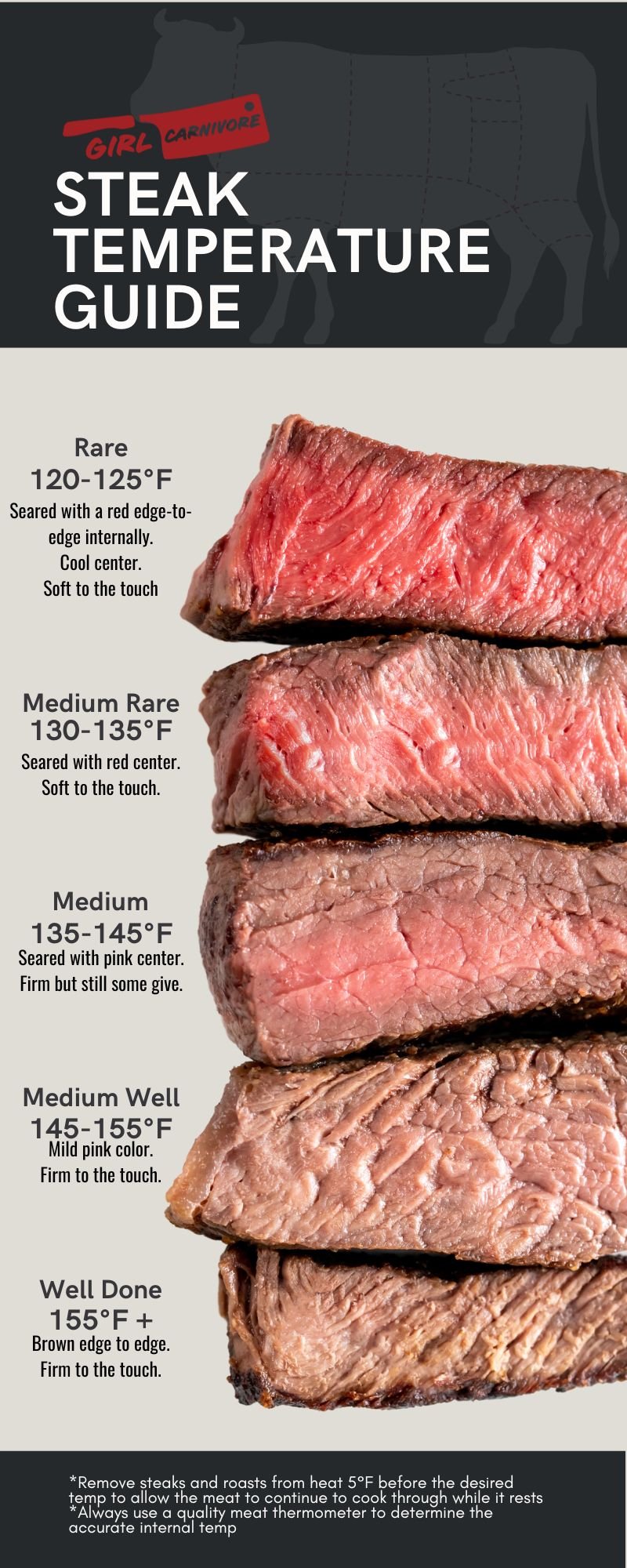
The Target: 130-135°F (54-57°C) for Medium
For a true medium steak, aim for an internal temperature range of 130°F to 135°F (54°C to 57°C).
- Visually: This translates to a warm, pink center with no visible red, and a slightly firmer texture than medium-rare.
- Temperature Variance: Some chefs might push to 135°F for a slightly firmer medium, while others prefer 130°F for a juicier, more tender result. Experiment within this range to find your personal preference.
Accounting for Carryover Cooking
This is a critical factor that digital thermometers and smart apps help manage. When you remove a steak from the heat source, its internal temperature will continue to rise for several minutes—a phenomenon known as “carryover cooking” or “residual heat cooking.” This is because the exterior of the steak is much hotter than the interior, and heat energy continues to transfer inwards.
- Rule of Thumb: For a medium steak, remove it from the heat source when it is about 5°F (2-3°C) below your target temperature. So, if you’re aiming for 130°F, pull it off at around 125°F (52°C). If aiming for 135°F, pull at 130°F.
- Tech Advantage: Advanced probe thermometers and smart apps can track this rise during the resting period, sometimes even graphing it for you. This data helps you fine-tune your pull temperature for future cooks.
Step-by-Step Tech-Assisted Cooking Process
- Pre-Cook Prep: Season your steak liberally. Allow it to come closer to room temperature for more even cooking (this is debated, but generally accepted).
- Insert Probe: For continuous monitoring, insert your wired or wireless probe into the thickest part of the steak, ensuring it doesn’t touch bone or gristle, which can give inaccurate readings. If using an instant-read, keep it handy.
- High Heat Sear: Get your pan, grill, or broiler very hot to achieve a good crust (Maillard reaction). Sear each side for 1-3 minutes.
- Lower Heat Finish: For thicker steaks, you may want to transfer to a lower heat zone, a cooler part of the grill, or a preheated oven (e.g., 375°F / 190°C) to allow the internal temperature to rise gently and evenly without burning the exterior.
- Monitor Temperature: Watch your thermometer display or app closely.
- Pull Early: When the steak reaches approximately 125-130°F (52-54°C) (5 degrees below your target), remove it from the heat. If using an instant-read, quickly check in multiple spots to ensure evenness.
- Resting Period: Transfer the steak to a cutting board, ideally with a small well or channel to catch juices. Let it rest for 5-10 minutes. During this time, the internal temperature will continue to rise to your target of 130-135°F, and the muscle fibers will relax, reabsorbing juices for a tender, moist result.
- Serve: Slice and enjoy your perfectly cooked medium steak!
Troubleshooting and Advanced Tips with Technology
Even with the best tech, a little knowledge goes a long way in ensuring flawless results every time.
Calibrating Your Thermometer for Accuracy
A thermometer is only as good as its calibration. Periodically check its accuracy.
- Ice Bath Test: Fill a glass with crushed ice and add a little water. Insert the thermometer probe. It should read 32°F (0°C).
- Boiling Water Test: Insert the thermometer probe into rapidly boiling water. It should read 212°F (100°C) at sea level (adjust for altitude).
- Digital Recalibration: Many digital thermometers have a recalibration function, allowing you to fine-tune them if they are off by a few degrees.
Monitoring Multiple Zones with Smart Probes
If you’re cooking multiple steaks of varying thickness or desire different levels of doneness (e.g., one medium, one medium-rare), multi-probe wireless thermometers are invaluable. Assign each probe to a specific steak and monitor them independently via your app, setting custom alerts for each.

Data-Driven Doneness: Learning from Every Cook
The data generated by smart thermometers and apps (temperature graphs, cooking times, pull temperatures, final temperatures) is a powerful learning tool. Review your cooking logs to:
- Identify patterns: Did a specific cut of steak always take longer? Did you consistently under- or over-estimate carryover cooking?
- Refine your technique: Use this data to adjust your pull temperatures, cooking times, or searing intensity for future cooks.
- Troubleshoot: If a steak didn’t turn out as expected, analyze the temperature graph to understand where it went wrong.
By embracing these technological tools and understanding the science behind them, the pursuit of the perfect medium steak transforms from a daunting challenge into a consistently achievable triumph, ensuring every meal is a professional-grade experience.
aViewFromTheCave is a participant in the Amazon Services LLC Associates Program, an affiliate advertising program designed to provide a means for sites to earn advertising fees by advertising and linking to Amazon.com. Amazon, the Amazon logo, AmazonSupply, and the AmazonSupply logo are trademarks of Amazon.com, Inc. or its affiliates. As an Amazon Associate we earn affiliate commissions from qualifying purchases.