
Volcanoes, those awe-inspiring geological giants, have captivated humanity for millennia. Their explosive power and the raw elemental forces they represent evoke a sense of primal fear and wonder. While we often witness their majestic peaks and destructive eruptions from a safe distance, the true nature of their interior remains a realm of intense speculation and scientific exploration. What exactly lies beneath that outwardly calm or violently churning surface? The answer, far from being a simple one, delves into a complex interplay of molten rock, immense pressure, and intricate geological processes.
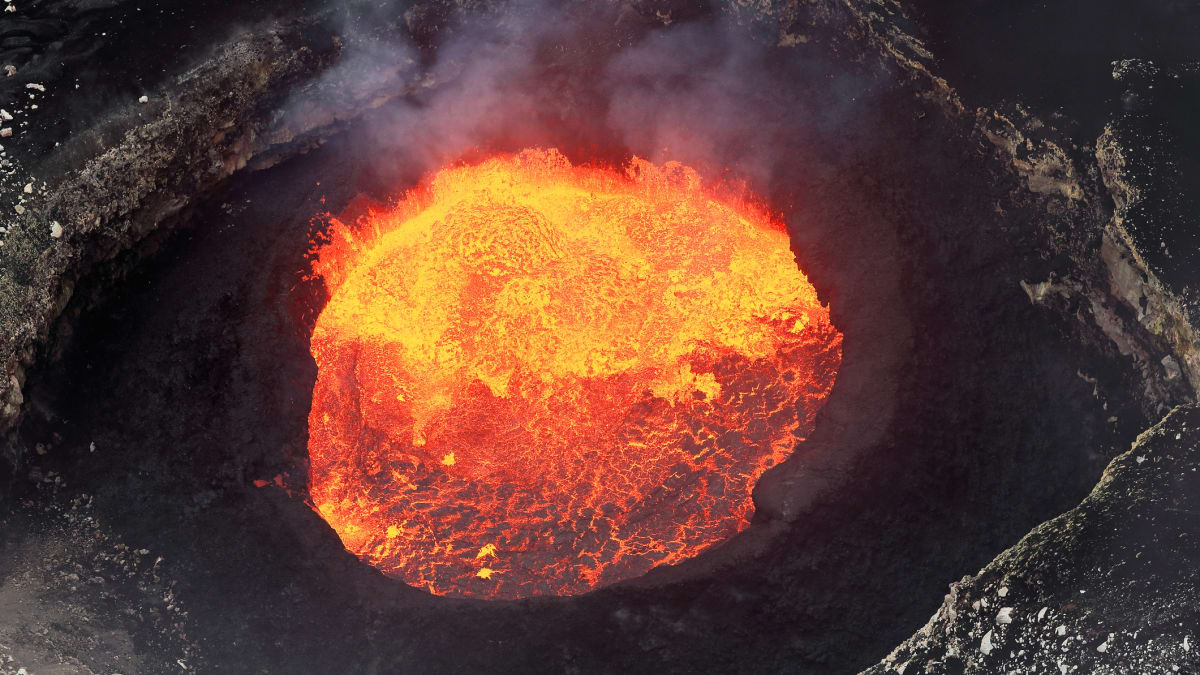
When we speak of the “inside of a volcano,” we’re not referring to a hollow cave filled with lava. Instead, we’re exploring the dynamic, often subterranean, plumbing system that fuels these geological marvels. This internal architecture is a testament to the immense heat and pressure generated deep within our planet. Understanding this internal landscape is crucial not only for scientific advancement but also for developing sophisticated monitoring and prediction technologies, safeguarding communities, and even understanding the very formation of our planet.
The Fiery Core: Understanding Magma and Its Journey
At the heart of any volcano lies magma, the superheated, molten rock that serves as its lifeblood. This isn’t simply melted rock; it’s a complex mixture of liquid rock, dissolved gases, and solid crystals, all existing under conditions of extreme temperature and pressure. The journey of magma from the Earth’s mantle to the surface is a story of geological forces at their most potent.
From Mantle Plumes to Magma Chambers: The Genesis of Molten Rock
The genesis of magma can be traced back to deep within the Earth’s mantle. Here, convection currents – massive, slow-moving currents of heat – drive the tectonic plates that form our planet’s crust. In certain regions, like divergent plate boundaries (where plates pull apart) or over mantle plumes (hotspots of rising molten rock), the pressure decreases, allowing the solid mantle rock to melt. This melting process is not uniform; it depends on factors like temperature, pressure, and the presence of water, which can significantly lower the melting point of rocks.
Once formed, this molten rock begins its ascent. It doesn’t immediately erupt. Instead, it often accumulates in vast underground reservoirs known as magma chambers. These chambers are not static pools; they are dynamic environments where magma can cool, crystallize, and differentiate. The size and depth of these chambers vary greatly, influencing the type of volcano and the nature of its eruptions. Some magma chambers are relatively shallow, just a few kilometers below the surface, while others can extend dozens of kilometers deep.
The composition of the magma within these chambers is critical. It’s not a homogenous soup. Different minerals crystallize at different temperatures, leading to a separation of components. Lighter, more silica-rich magmas tend to be more viscous and gas-rich, often leading to explosive eruptions. Denser, basaltic magmas, with lower silica content, are more fluid and typically produce effusive, lava-flow dominated eruptions.
The Ascent and Accumulation: Pressure Cooker Beneath the Surface
The pressure within a magma chamber is immense, constantly building as new magma enters and dissolved gases begin to exsolve (come out of solution). Think of it like opening a shaken soda bottle – the dissolved carbon dioxide wants to escape. In magma, the dissolved gases, primarily water vapor, carbon dioxide, and sulfur dioxide, behave similarly. As magma rises and the surrounding pressure decreases, these gases start to form bubbles.
The accumulation of these gas bubbles significantly increases the pressure within the magma chamber and the conduits leading to the surface. When this internal pressure overcomes the strength of the overlying rock, an eruption can occur. The shape and characteristics of the volcano itself are a direct result of the type of magma it hosts and the way this magma interacts with the Earth’s crust during its ascent.
The Volcanic Plumbing System: Conduits, Dikes, and Sills
The “inside of a volcano” is essentially a complex network of interconnected pathways through which magma travels. This intricate geological plumbing system is far from a single, straight pipe. It’s a labyrinth of fissures, conduits, and channels that evolve over time.
Volcanic Conduits: The Main Arteries of Eruption

The most direct pathway from the magma chamber to the surface is the volcanic conduit, often referred to as the “throat” of the volcano. This is the primary channel through which magma erupts. It can be a relatively simple, straight passage, or it can be a more complex network of interconnected fissures. The size and shape of the conduit significantly influence the explosivity of an eruption. A narrow, constricted conduit can lead to a buildup of pressure and a more violent explosion, while a wider conduit may allow for a steadier, less explosive outflow of magma.
Over time, volcanic conduits can become choked with solidified magma, rock fragments, and ash. This solidified material forms what is known as a volcanic plug, which can temporarily seal the vent and increase the pressure below, potentially leading to a subsequent, more powerful eruption. Geologists use various techniques, including seismic monitoring and gas analysis, to infer the state of these conduits and predict potential eruptions.
Dikes and Sills: Injecting Magma into the Crust
Beyond the main conduit, magma can also exploit pre-existing fractures in the Earth’s crust, forcing its way into these openings. When magma is injected horizontally between layers of existing rock, it forms a sill. If the magma is injected vertically or at an angle through existing rock layers, it forms a dike. These intrusions are essentially pathways for magma to spread out within the crust, sometimes forming smaller magma chambers or contributing to the overall stress and fracturing of the surrounding rock.
These dikes and sills can be a crucial part of the volcanic system, acting as secondary pathways for magma to reach the surface or to feed into the main conduit. They also play a significant role in shaping the landscape around a volcano, creating distinctive geological features that can be observed long after the volcanic activity has ceased. In essence, the “inside” of a volcano is not just the immediate pathway to the vent, but an extensive network of molten rock pathways within the surrounding crust.
The Eruption Process: From Molten Rock to Explosive Fury
The dramatic visual spectacle of a volcanic eruption is the culmination of intense geological processes occurring beneath the surface. The transformation of quiescent magma into a forceful expulsion of ash, gas, and molten rock is a complex interplay of thermodynamics and fluid dynamics.
The Role of Gas: The Driving Force Behind Explosions
As previously mentioned, dissolved gases are the primary drivers of explosive volcanic eruptions. As magma rises towards the surface, the confining pressure decreases, allowing these dissolved gases to expand and form bubbles. This process, known as exsolution, is analogous to the fizzing of a carbonated beverage. The rapid expansion of these gas bubbles creates tremendous pressure, which can shatter the surrounding rock and propel molten material upwards.
The more gas a magma contains, and the more easily it can escape, the more explosive the eruption is likely to be. Magmas with high silica content, like rhyolite, tend to be more viscous and trap gases more effectively, leading to violent, ash-laden eruptions. Basaltic magmas, which are more fluid and less viscous, allow gases to escape more readily, resulting in less explosive, effusive eruptions characterized by lava flows. The rate at which magma rises and the nature of the conduit system also play a crucial role in determining the explosivity.

Ash, Lava, and Pyroclastic Flows: The Manifestations of Internal Energy
When an eruption occurs, the internal energy of the volcano is released in various forms. Ash is finely pulverized rock, volcanic glass, and mineral fragments that are ejected into the atmosphere. This ash can travel hundreds or even thousands of kilometers, posing significant hazards to air travel, infrastructure, and human health.
Lava refers to molten rock that has erupted onto the Earth’s surface. Its behavior depends on its composition and temperature. Fluid, basaltic lavas can flow for kilometers, creating vast lava fields. More viscous, silica-rich lavas tend to form thick, slow-moving flows that can build up steep-sided cones.
Perhaps the most dangerous manifestation of a volcanic eruption is a pyroclastic flow. These are fast-moving, superheated currents of gas, ash, and rock fragments that surge down the flanks of a volcano at speeds of hundreds of kilometers per hour. They are incredibly destructive and often unsurvivable due to their extreme temperatures and high velocities. Understanding the internal conditions that lead to the formation and movement of these flows is a critical area of volcanological research, often aided by advanced modeling and simulation technologies.
In conclusion, the inside of a volcano is a dynamic, fiery realm far removed from any static, hollow cavern. It’s a complex system of molten rock, dissolved gases, and intricate geological pathways, all governed by the immense forces at play deep within our planet. The study of these internal processes not only satisfies our innate curiosity about the Earth’s powerful phenomena but also underpins our ability to predict and mitigate the hazards posed by these awe-inspiring geological giants.
aViewFromTheCave is a participant in the Amazon Services LLC Associates Program, an affiliate advertising program designed to provide a means for sites to earn advertising fees by advertising and linking to Amazon.com. Amazon, the Amazon logo, AmazonSupply, and the AmazonSupply logo are trademarks of Amazon.com, Inc. or its affiliates. As an Amazon Associate we earn affiliate commissions from qualifying purchases.