
The United States, a global economic powerhouse, plays a pivotal role in international trade, with its exports forming a significant component of its economic activity. Understanding what goods the U.S. exports is crucial for grasping its economic strengths, trade relationships, and the financial health of numerous domestic industries. These exports not only generate substantial revenue for American businesses but also influence global supply chains, employment figures, and investment opportunities. From advanced machinery to agricultural staples and energy resources, the diverse portfolio of U.S. goods reflects its innovative capacity, industrial prowess, and abundant natural resources.

The Economic Engine of U.S. Exports
Exports are more than just goods leaving a country; they are a vital economic engine that drives growth, creates jobs, and generates foreign exchange. For the United States, a robust export sector is fundamental to its overall economic stability and prosperity. The sheer volume and value of U.S. exports underscore its position as a dominant force in global commerce, impacting everything from corporate balance sheets to individual investment portfolios.
Understanding the Trade Balance and GDP Contribution
Exports contribute directly to a nation’s Gross Domestic Product (GDP). When U.S. companies sell goods abroad, they bring revenue back into the country, stimulating economic activity. While the U.S. often runs a trade deficit in goods (importing more goods than it exports), the export component is still substantial and essential for specific sectors. A healthy export sector helps to mitigate the impact of trade imbalances and provides a buffer against domestic economic downturns by diversifying revenue streams for businesses. For investors, monitoring export performance offers insights into the potential profitability of various industries and the overall strength of the U.S. economy, influencing decisions on equity markets, bond yields, and currency valuations.
Key Drivers of Export Growth
Several factors underpin the continued strength and growth of U.S. exports. Technological innovation is a primary driver, particularly in high-value sectors like aerospace, semiconductors, and medical equipment, where American companies often hold a competitive edge. The sheer scale and efficiency of U.S. agricultural production ensure its position as a leading global supplier of foodstuffs. Furthermore, the U.S.’s abundant natural resources, particularly in energy, have transformed it into a significant exporter of crude oil, petroleum products, and natural gas. Robust infrastructure for logistics and transportation, coupled with a highly skilled workforce, also facilitates the efficient movement of goods to international markets. Fluctuations in global demand, trade policies, and currency exchange rates also play critical roles, making the export landscape a dynamic area for financial analysis and strategic planning.
Dominant Categories of U.S. Goods Exports
The breadth of U.S. exports is remarkable, spanning highly sophisticated manufactured products, essential raw materials, and agricultural commodities. This diversity is a testament to the multifaceted nature of the American economy, offering a wide array of opportunities and risks for businesses and investors alike. Analyzing these categories provides a clearer picture of where the U.S. excels and where its economic interests lie on the global stage.
Advanced Machinery and Transport Equipment
This category consistently ranks among the top U.S. exports, showcasing American leadership in engineering and manufacturing. It represents significant investment and high-skilled labor, generating substantial revenue for major corporations.
Aerospace and Aircraft
The United States is a global leader in aerospace manufacturing, with companies like Boeing dominating the commercial aircraft market and numerous others contributing to defense and space technologies. Exports of civilian aircraft, engines, and parts are major revenue generators, reflecting extensive research and development and complex manufacturing processes. These exports support a vast supply chain, offering investment opportunities in aerospace component manufacturers and related services.
Automotive Components
While the U.S. imports a significant number of finished vehicles, it also exports a substantial volume of automotive parts and accessories. These range from high-tech engine components and electronic systems to specialized vehicle parts for assembly in foreign factories. The complexity and precision required for these components underline the advanced manufacturing capabilities within the U.S. automotive sector, making it an attractive area for industrial investors.
Industrial Machinery
From construction and mining equipment to specialized manufacturing machinery, U.S.-made industrial equipment is sought after globally for its durability, performance, and technological sophistication. Exports in this sector support infrastructure development and industrial expansion worldwide, directly impacting the profitability of companies like Caterpillar and their investors.
Chemicals and Pharmaceuticals
The U.S. chemical industry is vast and diverse, producing a wide range of products that are critical inputs for numerous other industries globally. This sector is characterized by heavy capital investment, intense research, and development.
Organic Chemicals
The U.S. is a major exporter of various organic chemicals, which are foundational components for plastics, pharmaceuticals, textiles, and many other manufactured goods. The scale of production benefits from advanced chemical engineering and access to raw materials, offering stable revenue streams for large chemical conglomerates and specialized manufacturers.
Medicinal and Pharmaceutical Products
With a strong emphasis on research and innovation, the U.S. pharmaceutical industry is a global leader in developing and manufacturing groundbreaking drugs and medical treatments. Exports of patented medicines, vaccines, and diagnostic agents represent a significant portion of high-value U.S. trade, driving profits for pharmaceutical giants and creating opportunities for biotech investors.
Agricultural Products
Despite its industrial strength, the U.S. remains an agricultural superpower, consistently ranking among the world’s largest exporters of food and fiber. This sector is vital for global food security and significantly contributes to rural economies.
Soybeans, Corn, Wheat
These staple crops represent a massive volume of U.S. agricultural exports, feeding livestock and people across the globe. The efficiency and scale of American farming, combined with robust transportation networks, ensure competitive pricing and reliable supply, making these commodities crucial for global food markets and investment in agricultural futures.
Meat and Dairy
The U.S. also exports substantial quantities of beef, pork, poultry, and dairy products. Advanced farming techniques, stringent quality controls, and efficient processing facilities enable American producers to meet international demand for high-quality animal proteins and dairy, impacting the financial performance of major food processors and distributors.
Mineral Fuels and Related Products
A significant shift in the global energy landscape has positioned the U.S. as a major exporter of energy products, fundamentally altering international trade dynamics and providing new revenue streams.
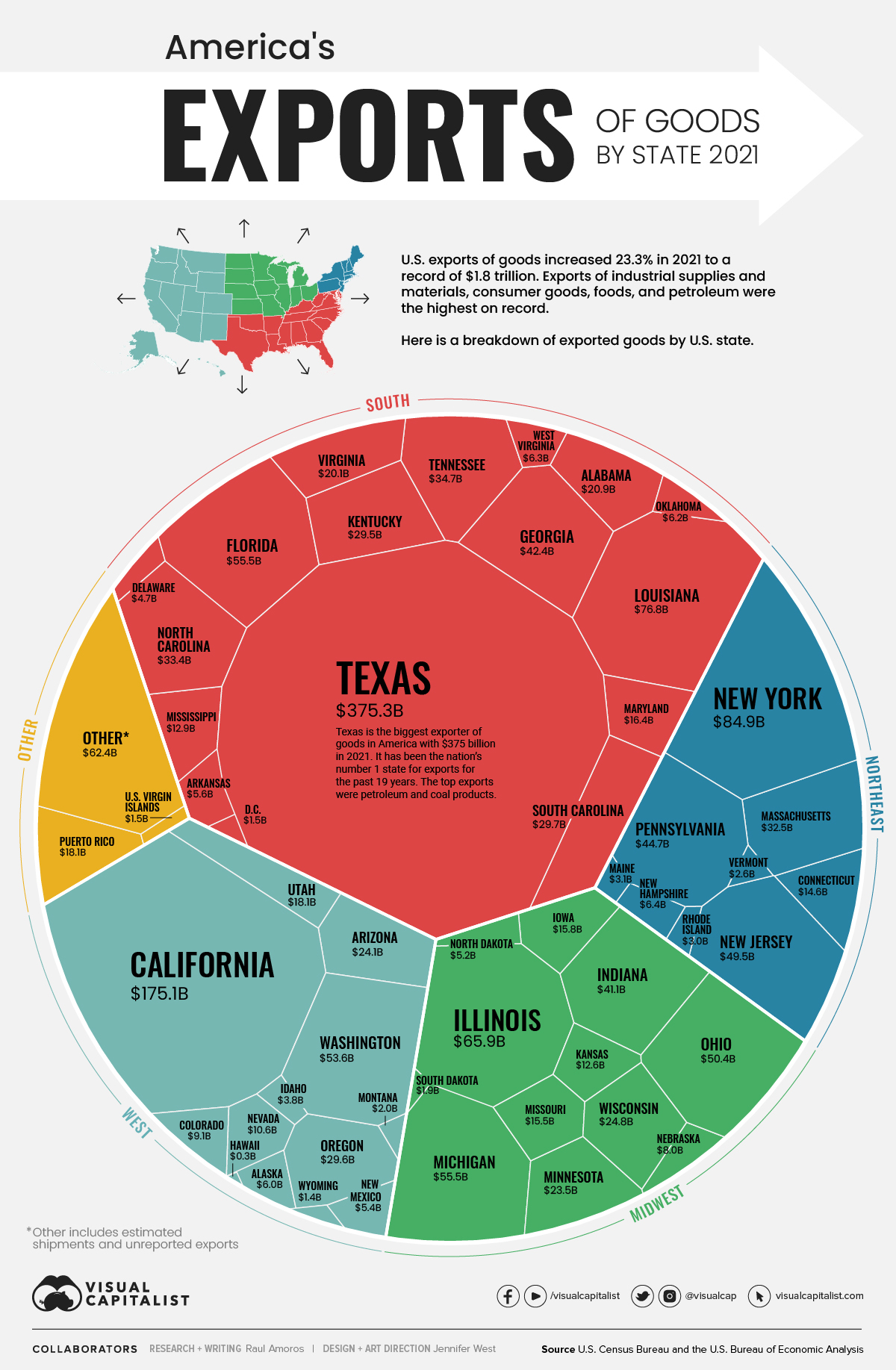
Crude Oil and Petroleum Products
The shale revolution dramatically increased U.S. domestic oil production, transforming the country from a major importer to a significant exporter of crude oil. Additionally, U.S. refineries process crude into various petroleum products (gasoline, diesel, jet fuel) which are then exported worldwide, bolstering the balance sheets of energy companies and influencing global energy prices.
Natural Gas
Similarly, increased natural gas production, particularly liquefied natural gas (LNG), has allowed the U.S. to become a key supplier to energy-hungry markets in Europe and Asia. The development of LNG export terminals represents massive capital investment and provides long-term revenue for energy infrastructure firms.
High-Tech Goods and Electronics
The U.S. continues to lead in innovation, making high-tech goods and advanced electronics a critical component of its export portfolio.
Semiconductors
American companies are at the forefront of semiconductor design and manufacturing, exporting these essential components that power everything from smartphones to supercomputers. This sector is characterized by intense R&D and high-value intellectual property, making it a cornerstone of the digital economy and a vital area for tech-focused investors.
Medical Instruments
Innovations in medical technology lead to significant exports of sophisticated medical devices, diagnostic equipment, and surgical instruments. U.S. companies are known for precision engineering and cutting-edge solutions in healthcare, creating a high-demand market for their products globally.
Impact on U.S. Businesses and Investors
The robust U.S. export market has profound implications for businesses, affecting their growth strategies, profitability, and overall market valuation. For investors, understanding these dynamics is key to identifying lucrative opportunities and managing portfolio risks. The interplay between domestic economic health and global demand for U.S. goods shapes the landscape for financial decisions.
Revenue Generation for Multinational Corporations
For many U.S. multinational corporations, international sales constitute a significant portion of their total revenue. Companies in sectors like aerospace, chemicals, pharmaceuticals, and technology depend heavily on export markets to achieve economies of scale and maximize profitability. A strong global demand for American goods directly translates to higher sales, increased earnings per share, and often, higher stock valuations for these corporations. Investors tracking these companies must consider their global market penetration, competitive advantages in various regions, and exposure to international economic cycles and currency fluctuations. Export revenue diversifies a company’s income streams, making it less dependent on a single domestic market and potentially more resilient during regional economic downturns.
Job Creation and Economic Stability
The production and export of goods support millions of American jobs across various sectors, from manufacturing and agriculture to logistics and sales. Each dollar of exports can indirectly support multiple jobs throughout the supply chain. These jobs range from highly skilled engineers and researchers to factory workers and truck drivers. A healthy export sector contributes to overall economic stability by fostering employment, increasing consumer spending, and generating tax revenues. For policymakers and economists, export performance is a key indicator of economic health and competitiveness, influencing decisions on trade policies, infrastructure investment, and workforce development programs, all of which ultimately impact the broader investment climate.
Investment Opportunities in Export-Oriented Industries
The consistent demand for U.S. goods globally creates compelling investment opportunities. Sectors that are heavy exporters often exhibit strong growth potential and offer attractive returns. For example, the increasing global demand for energy has driven investment into U.S. oil and gas companies and LNG infrastructure. Similarly, the continuous innovation in biotech and pharmaceuticals ensures a steady stream of demand for U.S.-developed drugs. Investors can gain exposure to these trends through direct stock ownership in export-heavy companies, exchange-traded funds (ETFs) focused on specific sectors (e.g., industrials, materials, energy), or even through commodity-linked investments. Due diligence is crucial to identify companies with strong competitive advantages, diversified export markets, and resilient supply chains.
Navigating Global Supply Chains and Market Risks
While exports offer significant rewards, they also come with inherent risks. Businesses engaging in international trade must navigate complex global supply chains, geopolitical tensions, trade tariffs, and currency volatility. Fluctuations in exchange rates can impact the profitability of exports, making U.S. goods more or less expensive for foreign buyers. Trade disputes and protectionist policies can erect barriers to market access, affecting sales volumes and profit margins. Investors in export-oriented companies must therefore consider these external factors. Understanding a company’s diversification across different export markets and its ability to adapt to changing trade environments is critical for assessing risk. Moreover, the efficiency and resilience of global logistics and transportation networks, which have recently faced unprecedented challenges, directly influence a company’s ability to reliably deliver goods to international customers.
Emerging Trends and Future Outlook for U.S. Exports
The landscape of global trade is in constant evolution, shaped by technological advancements, geopolitical shifts, and changing consumer priorities. For the U.S. export sector, adapting to these emerging trends is crucial for maintaining its competitive edge and discovering new avenues for growth and profitability. Investors and businesses must keep a keen eye on these developments to position themselves advantageously in the coming years.
Shifting Geopolitical Dynamics and Trade Agreements
The global political environment significantly influences trade flows. Geopolitical tensions, shifts in alliances, and the renegotiation or formation of new trade agreements can open or close markets for U.S. goods. For example, efforts to strengthen trade ties with allies through mechanisms like the Indo-Pacific Economic Framework (IPEF) or the potential for new bilateral agreements could create preferential access for American products in key growth regions. Conversely, trade disputes or tariffs can disrupt established supply chains and increase costs, impacting the competitiveness of U.S. exports. Businesses must be agile in adapting their market strategies, and investors should consider the geopolitical exposure of companies in their portfolios, recognizing that policy changes can rapidly alter the profitability of international ventures.
The Role of Digitalization and E-commerce in Exports
The digital revolution is transforming how goods are bought and sold internationally. E-commerce platforms are increasingly enabling small and medium-sized enterprises (SMEs) to access global markets directly, bypassing traditional distribution channels. This trend is democratizing exports, allowing a wider range of U.S. businesses to participate in international trade. Digitalization also enhances supply chain efficiency through improved tracking, inventory management, and communication, reducing costs and lead times. Furthermore, the rise of digital services exports, while not “goods” in the traditional sense, often complements physical goods exports by providing necessary support like software, cloud services, and technical support, underpinning the value proposition of American products abroad. Investors should look for companies leveraging these digital capabilities to expand their global reach and optimize their export operations.
Sustainability and Green Exports
With growing global awareness of climate change and environmental responsibility, demand for sustainable and “green” products is on the rise. This presents a significant opportunity for U.S. manufacturers and innovators. Exports of renewable energy technologies (e.g., solar panels, wind turbine components), energy-efficient machinery, sustainable agricultural products, and eco-friendly consumer goods are expected to grow. The U.S. is increasingly investing in green technologies, which positions its businesses to meet this emerging global demand. Companies focused on sustainable manufacturing processes, circular economy principles, and environmentally friendly product development stand to gain a competitive advantage in international markets. This shift also creates new investment opportunities in companies developing these innovative green solutions and those committed to sustainable export practices.

Opportunities in Developing Markets
While traditional markets in Europe, Canada, and Mexico remain crucial, developing economies in Asia, Africa, and Latin America represent vast, untapped potential for U.S. exports. As these economies grow, their burgeoning middle classes demand a wider array of goods, from consumer electronics and processed foods to industrial equipment and healthcare products. U.S. businesses that can effectively penetrate these markets, understanding local consumer preferences and regulatory environments, can unlock significant new revenue streams. However, these markets also come with unique challenges, including infrastructure limitations, political instability, and currency risks. Strategic investment in market research, local partnerships, and flexible business models will be key to capitalizing on these evolving global opportunities, offering diversified growth avenues for financially astute entities.
aViewFromTheCave is a participant in the Amazon Services LLC Associates Program, an affiliate advertising program designed to provide a means for sites to earn advertising fees by advertising and linking to Amazon.com. Amazon, the Amazon logo, AmazonSupply, and the AmazonSupply logo are trademarks of Amazon.com, Inc. or its affiliates. As an Amazon Associate we earn affiliate commissions from qualifying purchases.