
In the competitive landscape of ancient belief systems, establishing a powerful and enduring identity was paramount. Much like a modern corporation launching a new product or service, deities and their cults needed a clear value proposition, a compelling narrative, distinctive visual elements, and a strategy for market penetration and longevity. Few figures exemplify this ancient brand mastery as profoundly as Osiris, whose identity as a god of kingship, agriculture, and the afterlife became one of ancient Egypt’s most successful and enduring “brands.” To understand “what god Osiris was” is to deconstruct a millennia-spanning brand strategy.

The Core Offering: Osiris’s Enduring Value Proposition
Every successful brand begins with a clear understanding of what it offers its audience. For Osiris, his initial “product line” was multifaceted, designed to address fundamental needs and desires of early Egyptian society.
Kingship and Benevolence: Establishing Early Brand Trust
Osiris’s origin story positioned him not merely as a deity, but as a civilizing monarch who brought order, agriculture, and law to humanity. This narrative served as his foundational value proposition: a benevolent leader who transformed a chaotic world into a fertile, organized society. He was credited with teaching humans how to cultivate grain, bake bread, brew beer, and establish just governance. This positioning immediately garnered trust and established a reputation for positive societal impact, akin to a modern brand emphasizing its corporate social responsibility and tangible benefits to its consumers. He wasn’t just a god; he was a beneficent leader whose “product” was civilization itself. This initial brand messaging was crucial for widespread adoption and loyalty.
The Narrative of Sacrifice and Resurrection: A Powerful Brand Story
The defining element of Osiris’s brand, however, lay in his intensely dramatic and emotionally resonant brand story: his murder by his envious brother Set, his dismemberment, and his miraculous resurrection thanks to the efforts of his devoted wife Isis. This narrative is the ultimate “brand narrative” – a tale of betrayal, suffering, love, and ultimate triumph over death. It offered an unparalleled promise: hope for an afterlife, an assurance that death was not an end but a transformation.
This story provided a powerful emotional anchor for his followers, creating a deep connection that transcended mere transactional worship. It spoke to universal human anxieties about mortality and offered a unique solution, making Osiris the ultimate “solution provider” for the most existential of human problems. The narrative wasn’t just mythology; it was a carefully crafted brand story that resonated deeply, driving engagement and building a loyal following that would endure for thousands of years. It communicated vulnerability, resilience, and ultimate victory, making the brand relatable and aspirational.
Crafting the Visual and Experiential Brand: Iconography and Ritual
A brand is more than its story; it’s how it looks, feels, and is experienced. Osiris’s brand identity was meticulously developed through distinctive iconography and deeply immersive rituals, akin to modern visual identity guides and experiential marketing campaigns.
Symbols of Power and Eternity: Visual Brand Elements
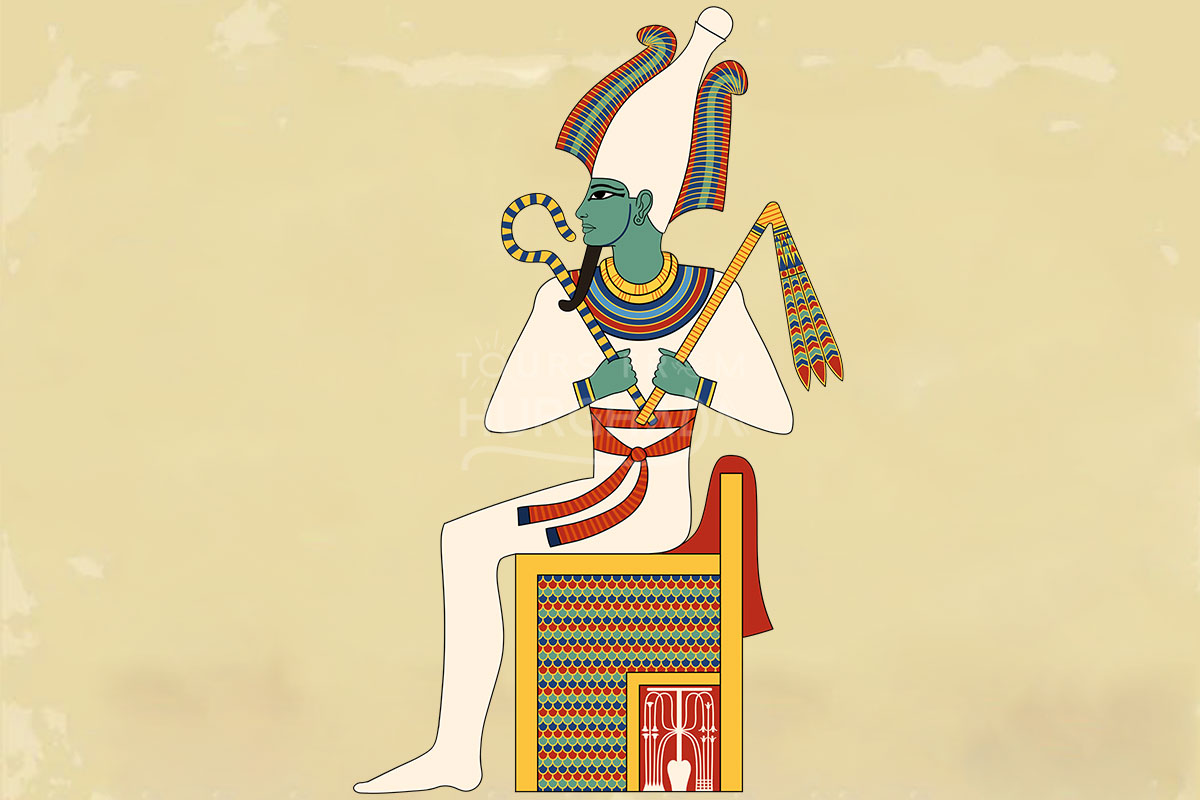
Osiris’s visual identity was instantly recognizable and rich with symbolism, functioning as his “logo” and brand toolkit. He was almost always depicted with green or black skin, symbolizing fertility, regeneration, and the rich black soil of the Nile Delta – powerful visual metaphors for his core brand promise of life and rebirth. He wore the Atef crown, a tall white headdress adorned with ostrich feathers and sometimes ram’s horns, signifying his divine authority and connection to the sun. In his hands, he clutched the crook and flail, traditional symbols of pharaonic power, representing kingship and the shepherd’s care for his flock.
These visual elements were consistently applied across temples, tombs, papyri, and statuary, creating an unmistakable and coherent brand image. This consistency reinforced his identity, ensuring that his message was clear and his presence impactful, much like a modern corporation ensures its logo and color palette are uniformly applied across all touchpoints.
The Rites of Passage: Experiential Marketing for the Afterlife
Beyond static imagery, Osiris’s brand was experienced through elaborate rituals and festivals, offering a profound “customer journey.” The annual mysteries of Osiris, celebrated in cities like Abydos, were highly dramatic and participatory events, reenacting his death and resurrection. These weren’t mere observances; they were immersive experiences designed to reinforce the brand narrative and solidify belief.
Funerary practices, including mummification and the elaborate burial rites, were directly linked to Osiris. Egyptians believed that by mirroring Osiris’s journey, they too could achieve rebirth in the afterlife. The “Book of the Dead” served as a “user manual” or “guidebook” for navigating the journey to the Duat (underworld) and achieving resurrection, with Osiris as the ultimate arbiter and destination. These rituals transformed abstract belief into tangible, personal experiences, creating a powerful emotional investment in the brand. This experiential marketing fostered a sense of belonging and direct connection to the deity’s promises.

Market Segmentation and Influence: Targeting and Reach
A successful brand evolves its strategy to reach diverse audiences and maintain relevance across changing demographics and historical periods. Osiris’s brand successfully transitioned from a niche offering to a mass-market phenomenon.
From Royal Deity to Everyman’s Hope: Broadening the Audience
Initially, Osiris’s cult was primarily associated with the pharaohs and the elite, serving as a guarantor of their divine right and eternal rule. However, over time, his brand expanded its target audience. The promise of an afterlife, once exclusive to royalty, gradually democratized, becoming accessible to all Egyptians regardless of social status. This expansion was a critical strategic move, broadening the brand’s reach and ensuring its longevity. His appeal shifted from merely endorsing kingship to offering universal hope, effectively tapping into a much larger market segment. This adaptability made the Osiris brand resilient through societal changes.
Legacy and Endorsement: Enduring Cultural Impact
Osiris’s influence extended beyond Egypt’s borders, demonstrating remarkable brand scalability and cross-cultural appeal. His cult spread to Greece and Rome, where he was syncretized with local deities like Serapis, a testament to the universality of his brand message. This brand extension strategy allowed Osiris’s core tenets to permeate new cultures, demonstrating the strength of his foundational identity. The longevity of his brand, enduring for thousands of years and influencing subsequent religions, speaks volumes about its robust design and the timeless relevance of its core promises. His brand legacy became embedded in the cultural fabric, serving as a benchmark for subsequent religious and philosophical developments.
Crisis Management and Brand Resilience: Overcoming Adversity
Even the most powerful brands face challenges. Osiris’s brand narrative inherently contained a crisis, which ultimately reinforced its strength and resilience.
The Sethean Challenge: A Brand Under Attack
The myth of Set’s fratricide and usurpation represents a direct attack on the Osiris brand – an attempt to discredit, dismantle, and replace its authority. Set’s destructive actions posed an existential threat to the established order and Osiris’s legacy. However, this crisis was not a weakness but a crucible that forged stronger brand loyalty. The adversity amplified the drama and heroism, making Osiris’s eventual triumph all the more impactful.
Reaffirmation and Renewal: The Brand’s Triumphant Return
Isis and Horus’s efforts to restore Osiris and avenge his death served as the ultimate brand reaffirmation. Their dedication to his legacy demonstrated unwavering commitment to the brand’s core values, reinforcing its message of justice, order, and eternal life. This narrative arc provided a powerful lesson in brand resilience: even when facing existential threats, a strong core identity, supported by loyal advocates (Isis and Horus), can emerge stronger, reaffirming its relevance and deepening consumer trust. It proved that the brand’s promise could withstand and overcome any challenge.
The Modern Echo: Lessons from an Ancient Brand
The case of Osiris offers profound insights into brand building that transcend millennia and commercial intent.
Timeless Principles of Brand Building
Osiris’s enduring success highlights several timeless principles: the power of a compelling, emotionally resonant narrative; the importance of a consistent and recognizable visual identity; the effectiveness of immersive experiential engagement; and the strategic value of adapting to new audiences while maintaining core values. These are the same tenets that underpin successful branding efforts today.
A Legacy of Meaning: Beyond Commercialism
Ultimately, Osiris’s identity teaches us that “branding” in its purest form is about crafting meaning, fostering connection, and inspiring belief. It’s about establishing an identity so potent and a promise so compelling that it shapes cultures, comforts generations, and endures for an eternity. The story of what god Osiris was is, in essence, the story of how an ancient brand achieved unparalleled mastery in establishing an identity that truly defined existence for an entire civilization.
aViewFromTheCave is a participant in the Amazon Services LLC Associates Program, an affiliate advertising program designed to provide a means for sites to earn advertising fees by advertising and linking to Amazon.com. Amazon, the Amazon logo, AmazonSupply, and the AmazonSupply logo are trademarks of Amazon.com, Inc. or its affiliates. As an Amazon Associate we earn affiliate commissions from qualifying purchases.