
The Bill of Rights, the first ten amendments to the United States Constitution, is frequently lauded for safeguarding fundamental liberties such as freedom of speech, religion, and the press. While these protections are undoubtedly crucial for a free society, their profound impact on the economic landscape, personal finance, and the overall stability of financial markets is often overlooked. Far from being solely a document of civic freedoms, the Bill of Rights lays essential groundwork for a thriving economy, securing property, encouraging commerce, and providing a framework for financial due process. Understanding these financial dimensions reveals how deeply intertwined our economic lives are with our constitutional guarantees.
The Foundations of Financial Security and Property Rights
At the heart of any stable financial system is the assurance that individuals can acquire, own, and transfer property without arbitrary seizure or infringement. The Bill of Rights provides robust protections that directly impact an individual’s and a business’s financial security, fostering an environment where investment and wealth accumulation can occur with confidence.
The Fourth Amendment: Protecting Financial Privacy and Assets
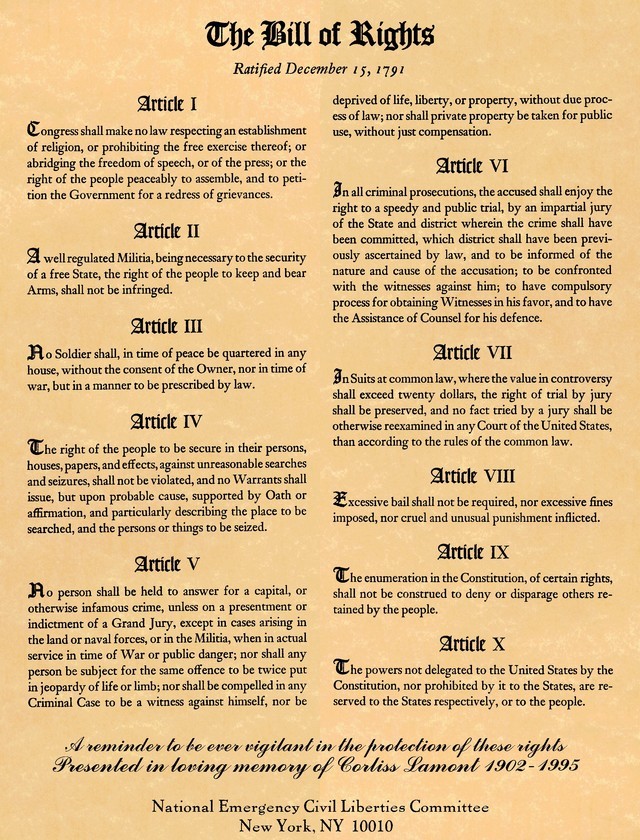
The Fourth Amendment famously protects individuals from “unreasonable searches and seizures.” While often discussed in the context of criminal investigations, its implications for financial privacy and asset protection are significant. In an age where digital financial records, online transactions, and intricate business dealings are commonplace, the principle that the government cannot arbitrarily access or confiscate one’s financial data or physical assets without due cause is paramount.
- Financial Records and Data Security: This amendment provides a legal bulwark against unwarranted government intrusion into bank accounts, investment portfolios, business ledgers, and digital financial communications. For a business, this means protection against exploratory audits or data collection without a legitimate legal basis. For individuals, it guards against the arbitrary scrutiny of personal spending habits or savings. This security encourages participation in the formal financial system, knowing that one’s economic activities are generally private unless specific legal standards are met.
- Protection of Physical Assets: Beyond data, the Fourth Amendment protects physical property that holds significant financial value, such as real estate, vehicles, and business inventory. Unlawful seizure of these assets could cripple a business or devastate personal wealth. The requirement for a warrant based on probable cause ensures that such actions are not taken lightly, providing a degree of predictability and stability necessary for long-term financial planning and investment.
The Fifth Amendment: Due Process, Takings, and Self-Incrimination
The Fifth Amendment is arguably the most financially impactful of the Bill of Rights, containing several clauses critical to economic stability and individual financial protection.
- Due Process Clause: This guarantees that no person shall “be deprived of life, liberty, or property, without due process of law.” In a financial context, this means that before the government can take away someone’s money, property, or economic opportunity (e.g., a business license), it must follow fair legal procedures. This includes notice, an opportunity to be heard, and a fair hearing or trial. This guarantee is vital for businesses facing regulatory fines, individuals contesting tax assessments, or anyone involved in disputes that could lead to the loss of financial assets. It prevents arbitrary governmental action from destroying wealth or livelihood.
- The Takings Clause (Eminent Domain): Perhaps the most direct financial guarantee, this clause states that “private property shall not be taken for public use, without just compensation.” This is the constitutional basis for eminent domain, allowing the government to acquire private land for public projects (like roads or schools). Critically, it mandates “just compensation,” meaning property owners must be paid a fair market value for their assets. This prevents the government from enriching itself at the expense of private citizens and provides financial security, ensuring that individuals and businesses are not financially ruined when their property is needed for public good. It also provides a clear framework for valuing and exchanging assets, an essential function in any market economy.
- Protection Against Self-Incrimination: While primarily known for protecting individuals from testifying against themselves in criminal cases, this right also has financial implications. It can prevent individuals or business owners from being compelled to provide testimony or financial documents that could incriminate them in cases involving financial fraud, tax evasion, or other economic crimes, without proper legal safeguards. This indirectly protects financial assets by ensuring fair legal proceedings.
Fostering a Stable Market Economy Through Rights
Beyond direct property and financial security, the broader guarantees of the Bill of Rights create an environment conducive to a dynamic and trustworthy market economy. Economic growth and stability rely heavily on transparency, free exchange of ideas, and the ability to engage in commerce without undue governmental interference.
The First Amendment: Fueling Economic Discourse and Innovation
The First Amendment guarantees freedom of speech, press, assembly, and the right to petition the government. While seemingly distant from finance, these rights are cornerstones of a transparent and competitive market.
- Freedom of Commercial Speech: While subject to more regulation than political speech, commercial speech (e.g., advertising, marketing) is protected. This allows businesses to promote their products and services, fostering competition and informing consumers, which are vital for a healthy market.
- Financial Journalism and Market Transparency: A free press is critical for scrutinizing corporate practices, reporting on market trends, and holding financial institutions accountable. This transparency helps investors make informed decisions, deters fraud, and builds trust in the financial system. Without a free press, financial information could be manipulated, leading to unstable markets and widespread distrust.
- Advocacy for Economic Interests: The rights to assemble and petition allow individuals and groups to advocate for economic policies, business regulations, and financial reforms. This democratic participation helps shape a regulatory environment that ideally balances various economic interests, preventing entrenched monopolies and promoting fair practices.
- Innovation and Idea Exchange: Freedom of speech and the open exchange of ideas are critical for innovation. New business models, financial technologies, and economic theories flourish when ideas can be freely discussed, debated, and challenged without fear of reprisal. This intellectual freedom is a catalyst for economic progress.
The Eighth Amendment: Preventing Excessive Financial Penalties
The Eighth Amendment prohibits “excessive bail, nor excessive fines, nor cruel and unusual punishments.” While often associated with criminal justice, the prohibition against excessive fines has direct financial implications.
- Protection from Disproportionate Fines: This clause prevents the government from levying fines so exorbitant that they amount to a forfeiture of property or an undue financial burden, effectively bankrupting individuals or businesses for minor infractions. It ensures that penalties, even for financial misconduct, are proportional and do not serve as a tool for arbitrary wealth confiscation. This provides a measure of financial predictability, allowing businesses to assess risks without fear of ruinous, unpredictable fines.

The Long-Term Impact on Wealth Creation and Investment
The cumulative effect of these Bill of Rights guarantees is a stable legal and political environment that is essential for long-term wealth creation, investment, and economic growth. Investors, both domestic and foreign, are more likely to commit capital when they are confident that their property rights are secure, that they will receive due process, and that they can operate within a framework of law rather than arbitrary power.
A robust Bill of Rights reduces sovereign risk, which is the risk that a government will default on its financial obligations or arbitrarily seize assets. By establishing clear rules and limits on governmental power, it fosters trust in the legal system and predictability in economic outcomes. This trust encourages entrepreneurship, facilitates contracts, and supports the capital markets necessary for large-scale projects and innovation. Without these fundamental guarantees, the economic landscape would be chaotic, deterring investment and making personal financial planning virtually impossible.
In essence, the Bill of Rights is not just a shield for individual liberties; it is a foundational pillar supporting the entire financial and economic infrastructure of the nation. Its guarantees enable the pursuit of financial prosperity, the security of earned wealth, and the stability essential for a complex, modern economy.
aViewFromTheCave is a participant in the Amazon Services LLC Associates Program, an affiliate advertising program designed to provide a means for sites to earn advertising fees by advertising and linking to Amazon.com. Amazon, the Amazon logo, AmazonSupply, and the AmazonSupply logo are trademarks of Amazon.com, Inc. or its affiliates. As an Amazon Associate we earn affiliate commissions from qualifying purchases.