
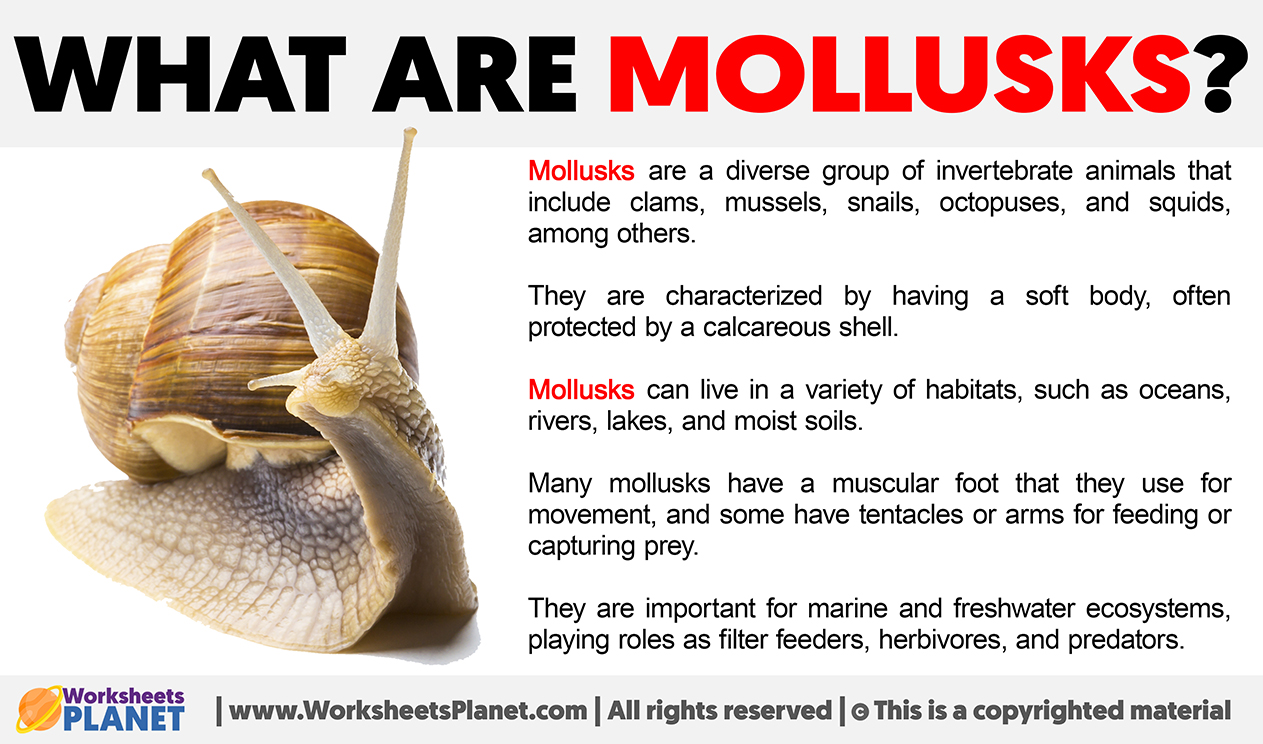
The term “Mollusca” immediately conjures images of diverse marine and terrestrial invertebrates, from snails and slugs to oysters and octopuses. Biologically, it represents one of the largest phyla of invertebrate animals. Yet, to delve deeper into its historical and economic significance is to uncover a fascinating thread that connects these seemingly simple organisms to the very foundations of human finance. While molluscs themselves are a vast and ancient group, certain specific elements derived from them – primarily their durable and often beautiful shells – played an indispensable role in the development of early economic systems, shaping our understanding of value, exchange, and the nature of money itself. Understanding this ancient link provides profound insights into the underlying principles that continue to govern global financial markets today.

From Natural Forms to Financial Foundations: The Molluscan Link
Before the advent of coined metals or paper currency, societies relied on various forms of commodity money. These were items valued for their intrinsic utility or aesthetic appeal, which gradually became standardized mediums of exchange. Among the most widespread and enduring of these commodities were the shells of certain molluscs, particularly cowrie shells (from the Cypraea moneta and Cypraea annulus species), which circulated as currency across vast geographical areas for millennia. Their natural attributes made them uniquely suited for this pivotal role, laying a rudimentary groundwork for complex financial systems.
Early Economic Systems and Commodity Money
The transition from a pure barter system to one involving commodity money marked a critical evolutionary step in human economic development. Barter, while direct, is inherently inefficient due requiring a “double coincidence of wants”—both parties must have something the other desires. Commodity money, like cowrie shells, provided a universal equivalent, simplifying transactions immensely. Cowrie shells, originating primarily from the warm waters of the Indian and Pacific Oceans, journeyed through extensive trade networks, serving as legal tender in regions as diverse as Africa, Asia, and parts of Europe. Their prevalence stemmed from a unique combination of features: they were small, lightweight, easily transportable, and relatively durable. They resisted decay, could be counted and stored, and their natural beauty gave them a universally recognized aesthetic value. This widespread acceptance, born from both practical utility and perceived worth, established them as a reliable store of value and a unit of account across diverse cultures. The very act of collecting, storing, and exchanging shells fostered an understanding of wealth accumulation and economic planning, pushing nascent societies towards more sophisticated financial thought.
The Enduring Appeal of Tangible Value
The historical reliance on mollusc shells as currency also underscores a fundamental human inclination towards tangible assets. In an era devoid of central banks or digital ledgers, the physical presence and intrinsic qualities of a medium of exchange were paramount. A shell’s beauty, its specific size, and its natural resilience offered a direct, observable measure of value, requiring no abstract leap of faith. This preference for tangible assets, which can be seen, touched, and held, has persisted throughout history. From the ancient embrace of gold and silver to modern-day investments in real estate, precious metals, or even rare art, the psychological comfort derived from owning physical assets with perceived intrinsic value remains a powerful driver in financial decision-making. The stability and predictability offered by such tangible wealth served as an economic anchor, particularly in times of uncertainty, a principle that continues to inform investment strategies focused on hedging against market volatility or inflation through hard assets.
Shells as Precursors: Lessons for Modern Currencies
The practical characteristics that elevated mollusc shells to the status of currency in ancient times provide a powerful framework for understanding the essential qualities of any successful monetary system, whether it be a metallic coin, a banknote, or a digital token. The lessons derived from these natural forms resonate deeply with the requirements for effective money in today’s complex global economy.
Durability and Divisibility: Qualities of Effective Money
For a medium of exchange to function reliably, it must possess durability. Mollusc shells, particularly those used as currency, were naturally robust; they did not easily corrode, decompose, or break down, ensuring that their value persisted over time and through countless transactions. This characteristic is paramount for any form of money, as a currency that degrades quickly loses its utility as a store of value. Modern currencies, whether physical or digital, must equally demonstrate resilience. Physical banknotes are designed for wear and tear, while the security and immutability of digital currencies are rigorously protected through encryption and distributed ledger technologies.
Equally important is divisibility. To facilitate a wide range of transactions, from minor purchases to significant investments, money must be capable of being broken down into smaller, standardized units without losing proportional value. While cowrie shells were naturally uniform to an extent, more sophisticated shell currencies sometimes involved specific sizes or even fragments to denote smaller denominations. This concept is fundamental to modern currency systems, which feature various denominations of coins and notes, or precise digital units, allowing for granular transactions. The lack of easy divisibility or durability would severely hamper a currency’s ability to serve an economy, making shells an early, tangible lesson in these core monetary principles.
Scarcity and Perceived Value in Economic Systems
The value of mollusc shells as currency was not solely based on their physical attributes; it was significantly influenced by their scarcity and the collective cultural perception of their worth. Cowrie shells, while abundant in their native habitats, were relatively rare and difficult to obtain in the inland regions where they circulated as money. This controlled supply, combined with the labor involved in their acquisition and transport, naturally conferred value. Furthermore, in many cultures, shells held symbolic or spiritual significance, enhancing their perceived value beyond mere utility.

This interplay between scarcity and perceived value is a cornerstone of all economic systems. From the gold standard, where a currency’s value was tied to a finite commodity, to modern fiat currencies, whose value is maintained by central bank policies and collective trust in governmental stability, the principle remains constant. An overabundance of any currency, without a corresponding increase in goods and services, leads to inflation and a devaluation of purchasing power – a lesson that would have been learned if too many shells were suddenly introduced into a local economy. Conversely, artificial scarcity or high demand can drive up value. The market for cryptocurrencies, for instance, often demonstrates extreme sensitivity to supply limitations and shifts in investor sentiment, echoing the ancient dynamics of shell valuation. Understanding how scarcity, demand, and collective belief underpin value is crucial for navigating any financial landscape.
Beyond the Shell: Understanding Intrinsic vs. Fiat Currency
The journey from mollusc shells as commodity money to the complex global financial instruments of today represents a profound evolution in how humanity defines and manages value. This trajectory involves a shift from money with intrinsic worth to systems based on collective trust and governmental decree.
The Transition from Commodity to Representative Money
As societies grew more complex and trade expanded, relying solely on physical commodities like shells or even precious metals became cumbersome. Transporting large quantities of gold or silver was risky and inefficient. This led to the innovation of representative money: paper notes or certificates that represented a claim to a specific amount of a commodity held in reserve, typically gold or silver. The value of the currency was still intrinsically linked to a tangible asset, providing a sense of security and trust. Much like a receipt for shells stored in a communal treasury, these early forms of paper money streamlined transactions while maintaining a connection to a physical store of value. This system flourished for centuries, offering the convenience of paper while retaining the perceived stability of a commodity-backed system. It was a crucial stepping stone, allowing for the scaling of financial operations without the physical burden of moving vast amounts of valuable materials.
Fiat Money and the Role of Trust in Modern Finance
The ultimate evolution in the nature of money is fiat currency, which dominates the global economy today. Fiat money, such as the US dollar, Euro, or Yen, is not backed by a physical commodity like gold or shells. Its value is derived solely from government decree (“fiat”), public trust in the issuing authority, and the collective agreement that it holds value. It is accepted because governments declare it legal tender for all debts, and people have confidence in its stability and purchasing power.
This transition away from intrinsic value requires a profound leap of faith and robust institutional frameworks. Central banks play a critical role in managing the supply of fiat currency, aiming to maintain stability, control inflation, and foster economic growth. The value of fiat money is, therefore, a dynamic construct, influenced by economic performance, political stability, and monetary policy decisions. The ancient acceptance of a cowrie shell, driven by its beauty and scarcity, was a form of collective trust. Modern fiat money simply elevates this principle of collective agreement to an institutional level. Without this bedrock of trust, the entire edifice of modern finance would crumble, demonstrating that while the form of money has changed drastically, the underlying social and psychological components of its acceptance remain remarkably consistent.
Investment Lessons from Ancient Exchanges
The rudimentary financial systems that once relied on mollusc shells offer surprisingly relevant, albeit foundational, lessons for contemporary investment strategies. While the tools and scales have changed dramatically, the core principles of value, risk, and market dynamics have enduring resonance.
Diversification: Not Putting All Your ‘Shells’ in One Basket
Even in early economies, savvy individuals likely understood the wisdom of not relying solely on a single type of shell or commodity. If one type of shell suddenly became more abundant or less desired due to a shift in cultural tastes or new trade routes, its value would diminish. This ancient wisdom is the very essence of modern investment diversification. Investors are consistently advised to spread their capital across various asset classes—stocks, bonds, real estate, commodities, and alternative investments. This strategy aims to mitigate risk, as a downturn in one sector might be offset by gains in another. Just as ancient traders might have held a mix of cowrie shells, obsidian, and furs, modern portfolios are structured to withstand specific market shocks, protecting overall wealth by not having all “shells” in a single, vulnerable basket.
Understanding Market Dynamics Through Historical Lenses
The supply and demand dynamics that influenced the value of mollusc shells were remarkably similar to those affecting modern financial markets. The discovery of a new, easily accessible source of cowries could lead to a decline in their value (inflationary pressure), while disruptions in trade routes or an increase in demand from a burgeoning population could drive values up. These historical observations directly parallel today’s market mechanisms. Technological advancements, geopolitical events, changes in consumer preferences, or shifts in global production can dramatically impact the prices of stocks, commodities, or even national currencies. By studying how simple supply and demand played out with ancient forms of money, investors can gain a clearer perspective on the fundamental forces driving price movements in today’s complex, interconnected markets. The basic economic laws are timeless, merely manifested through different instruments.
The Psychological Factor in Valuation
Finally, the value ascribed to mollusc shells was often deeply intertwined with cultural beliefs, social status, and collective psychology. Certain shells might have been prized for their rarity, or for symbolic meanings, rather than purely practical utility. This powerful psychological dimension of value is a perennial feature of financial markets. Investor sentiment, often driven by fear, greed, or speculation, can create bubbles and busts, irrespective of underlying fundamentals. The “herd mentality,” where investors follow the actions of others, can lead to irrational exuberance or panic selling. Understanding that the perceived value of an asset—whether it’s an ancient shell, a dot-com stock, or a cryptocurrency—is often influenced by collective human psychology is critical. Astute investors recognize these behavioral biases and seek to make decisions based on sound analysis rather than succumbing to emotional market swings, reflecting an ancient understanding that value is not purely objective but also a construct of shared belief.
aViewFromTheCave is a participant in the Amazon Services LLC Associates Program, an affiliate advertising program designed to provide a means for sites to earn advertising fees by advertising and linking to Amazon.com. Amazon, the Amazon logo, AmazonSupply, and the AmazonSupply logo are trademarks of Amazon.com, Inc. or its affiliates. As an Amazon Associate we earn affiliate commissions from qualifying purchases.