
Inflation, at its core, represents a pervasive increase in the general price level of goods and services in an economy over a period. When this occurs, each unit of currency buys fewer goods and services than it could before. Its effects are far-reaching, subtly and overtly reshaping the financial landscape for individuals, businesses, and investors alike. Understanding its broad impact is crucial for navigating economic cycles and making informed financial decisions.
The Erosion of Purchasing Power: Inflation’s Fundamental Impact
The most immediate and discernible effect of inflation is the depreciation of money’s purchasing power. What $100 could buy yesterday, it can no longer buy today, and certainly not tomorrow, if inflation persists. This reduction in the real value of money is not merely an abstract economic concept; it directly translates into tangible shifts in living standards, financial planning, and economic stability. For consumers, it means everyday necessities like food, housing, and transportation become more expensive, demanding a larger portion of their income to maintain the same quality of life. For businesses, it translates into higher operational costs, forcing them to make difficult decisions regarding pricing, wages, and investment. Ultimately, unchecked inflation can lead to economic instability, uncertainty, and a loss of confidence in a nation’s currency.

Inflation’s Grip on Household Budgets and Personal Wealth
The impact of inflation on personal finance is profound, touching almost every aspect of a household’s economic life, from daily expenditures to long-term financial goals.
Rising Everyday Expenses
The most visible sign of inflation for most people is the escalating cost of living. Groceries, fuel, utilities, rent, and healthcare services all tend to climb in price during inflationary periods. This forces households to adjust their budgets, often cutting back on discretionary spending or seeking ways to increase income. For those on fixed incomes, such as retirees or individuals relying on social security benefits, this rise in costs can be particularly devastating, as their income does not keep pace with the increasing prices of goods and services, effectively diminishing their quality of life.
The Devaluation of Savings and Fixed Income
Inflation acts as a silent tax on savings. Money held in traditional savings accounts, which typically offer low-interest rates, loses its real value over time when inflation outpaces the interest earned. This erosion of purchasing power extends to fixed-income investments like bonds, especially those with long maturities and fixed interest rates. The real return on these investments diminishes, as the future value of the fixed payments is worth less in terms of purchasing power. Consequently, individuals and retirees who depend on such investments for income or capital preservation find their financial security threatened. To mitigate this, investors often seek out inflation-indexed bonds or other assets that historically perform better during inflationary periods.
Navigating Debt and Lending in an Inflated Economy
Inflation has a dual effect on debt. For borrowers with fixed-rate loans, such as a traditional mortgage, inflation can be beneficial. As the value of money decreases, the real value of their outstanding debt also diminishes. Their fixed monthly payments become a smaller portion of their increasingly larger nominal income. However, this is detrimental to lenders, who receive repayments in currency that has less purchasing power than when the loan was issued. Conversely, for new borrowers, central banks often raise interest rates to combat inflation, making new loans more expensive. Adjustable-rate mortgages or lines of credit also become more costly as interest rates climb, placing a greater burden on borrowers whose payments are not fixed.
Retirement Planning Adjustments
Inflation presents a significant challenge for retirement planning. Future retirees need to accumulate a much larger nest egg to maintain their desired lifestyle, as the cost of living will likely be substantially higher by the time they retire. This necessitates higher savings rates, more aggressive investment strategies, or a re-evaluation of retirement spending projections. For those already in retirement, managing withdrawals becomes critical. Drawing too much too soon, without accounting for inflation, can prematurely deplete savings. Financial planners often advise incorporating inflation-adjusted growth rates into retirement models and considering investments that offer some hedge against rising prices.
Business Operations and Profitability Under Pressure
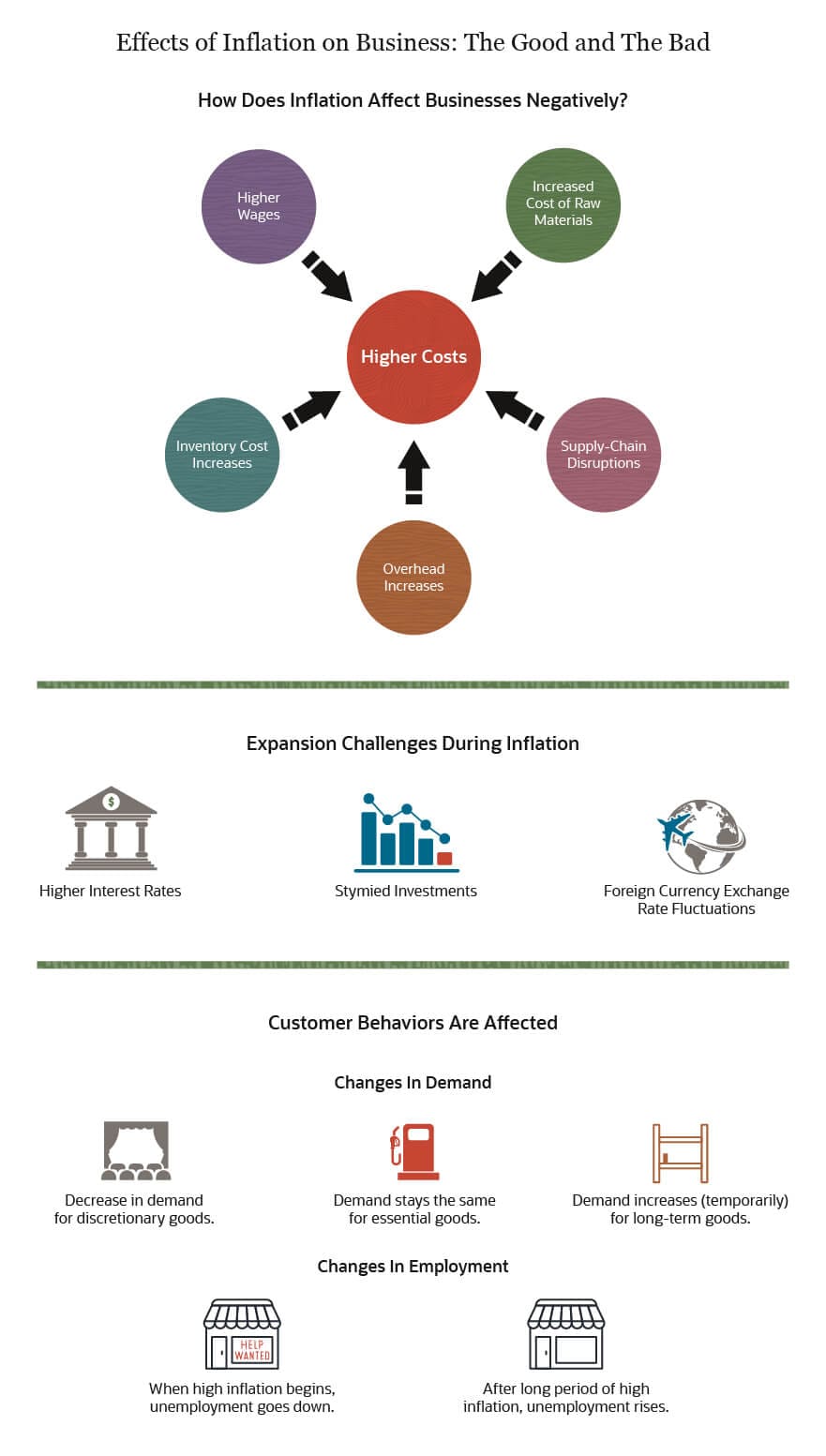
For businesses, inflation introduces a complex set of challenges that impact everything from supply chains to pricing strategies and overall profitability.
Escalating Production Costs
One of the most immediate effects of inflation on businesses is the rise in production costs. Raw material prices typically increase, energy costs soar, and labor wages often demand upward adjustments as employees seek to maintain their real income. These escalating input costs directly squeeze profit margins unless businesses can effectively pass these costs on to consumers. Small businesses, in particular, may find it harder to absorb these increases due to less purchasing power with suppliers and tighter margins. Managing inventory also becomes more complicated, as the cost of holding goods may increase, but delaying purchases could mean paying even higher prices later.
Strategic Pricing and Margin Management
To offset rising costs, businesses are often compelled to raise their own prices. This process, however, is delicate. Price increases must be carefully managed to avoid alienating customers or losing market share to competitors who may be slower to adjust prices or have more efficient cost structures. Businesses must analyze price elasticity of demand for their products and services. In highly competitive sectors, raising prices might be difficult, leading to squeezed profit margins. This can force companies to look for efficiency gains, cost-cutting measures, or innovate to deliver value more efficiently. Maintaining healthy profit margins during inflationary periods often requires a sophisticated understanding of market dynamics and a proactive approach to cost control.
Impact on Business Investment and Expansion
Inflation introduces uncertainty into future revenue streams and costs, which can dampen business investment. Companies may become more cautious about undertaking long-term projects or making capital expenditures if they are unsure about future costs of materials, labor, and financing, or the real return on their investment. Moreover, as central banks typically raise interest rates to combat inflation, the cost of borrowing for businesses increases, making it more expensive to finance new ventures or expand existing operations. This can lead to a slowdown in economic growth, reduced job creation, and less innovation as businesses adopt a more conservative stance. Conversely, some businesses might accelerate investment if they anticipate even higher costs in the future, attempting to lock in current prices.
Navigating the Investment Landscape During Inflationary Periods
Inflation significantly alters the dynamics of financial markets, requiring investors to re-evaluate their portfolios and adopt strategies that protect against the erosion of capital.
Equities: Sector Performance and Earnings Pressure
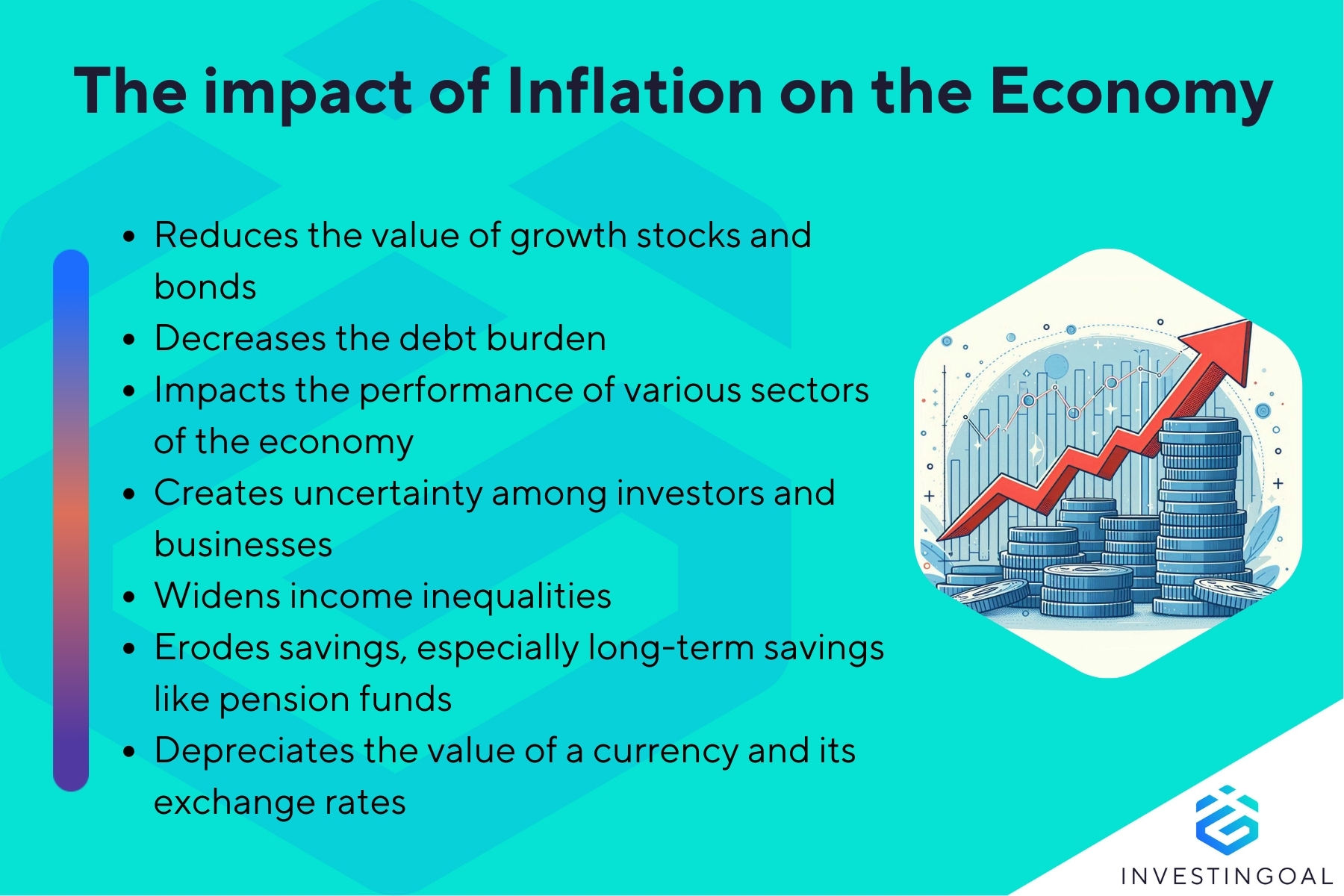
The stock market’s reaction to inflation is nuanced. While some companies can successfully pass on increased costs to consumers and even see their nominal revenues grow, others may struggle with squeezed profit margins, leading to lower earnings and, consequently, lower stock valuations. Growth stocks, which derive a significant portion of their value from future earnings potential, can be particularly vulnerable as higher inflation typically leads to higher interest rates, discounting future earnings at a higher rate. Conversely, value stocks, companies with strong current cash flows, and those in defensive sectors (like utilities or consumer staples, though even these face pressures) or commodity-related industries often perform relatively better. Energy companies and basic material producers, for instance, can benefit from rising commodity prices.
Bonds: The Challenge of Real Returns
Fixed-income investments, such as bonds, are generally hit hard by inflation. As inflation rises, the purchasing power of the fixed interest payments and the principal repayment at maturity diminishes. Furthermore, central banks typically respond to inflation by raising interest rates, which negatively impacts the market value of existing bonds (as newly issued bonds offer higher yields). Investors in bonds, therefore, face a double whammy: a decline in the real value of their returns and a potential fall in the market price of their bond holdings. To mitigate this, investors might consider short-duration bonds, floating-rate notes, or Treasury Inflation-Protected Securities (TIPS), which are designed to protect against inflation by adjusting their principal value with changes in the Consumer Price Index (CPI).
Real Assets and Alternative Investments
During periods of high inflation, many investors turn to real assets, which are physical assets that tend to retain or increase their value as the cost of living rises. Real estate, for instance, is often considered an inflation hedge, as property values and rental income tend to increase with inflation, though rising interest rates can also cool housing markets. Commodities like gold, silver, oil, and agricultural products are also traditional inflation hedges, as their prices often rise in inflationary environments. Gold, in particular, is often seen as a safe haven asset during times of economic uncertainty and currency devaluation. Alternative investments such as private equity or certain types of hedge funds may also offer diversification benefits and inflation protection, depending on their underlying strategies and assets.
In conclusion, inflation is a powerful economic force that impacts every facet of the financial world. From the daily budgeting decisions of households to the strategic investments of corporations and the portfolio adjustments of sophisticated investors, its effects are undeniable. Understanding these multifaceted impacts is essential for effective financial planning, risk management, and wealth preservation in an ever-changing economic climate.
aViewFromTheCave is a participant in the Amazon Services LLC Associates Program, an affiliate advertising program designed to provide a means for sites to earn advertising fees by advertising and linking to Amazon.com. Amazon, the Amazon logo, AmazonSupply, and the AmazonSupply logo are trademarks of Amazon.com, Inc. or its affiliates. As an Amazon Associate we earn affiliate commissions from qualifying purchases.