
The concept of “3-dimensional” or “3D” is fundamental to understanding a vast array of modern technologies, from the immersive worlds of virtual reality to the tangible creations of 3D printing. At its core, dimensionality describes the number of coordinates required to specify a point in space. While humans perceive and interact with a three-dimensional world naturally, representing and manipulating this reality digitally requires a sophisticated understanding of how these dimensions translate into data and algorithms.
Understanding the Dimensions: From 2D to 3D
To fully grasp what 3-dimensional means, it’s helpful to start with simpler dimensions and build up. Our everyday experience gives us intuitive access to these concepts, but their digital representation requires a more rigorous definition.
The Foundation of 2D: X and Y Axes
Before delving into the complexities of three dimensions, consider two-dimensional (2D) space. This is the flat world of a piece of paper, a computer screen, or a photograph. In 2D, any point can be precisely located using just two pieces of information: its position along a horizontal axis (commonly called the X-axis) and its position along a vertical axis (the Y-axis). Imagine a grid: moving right or left changes the X-coordinate, while moving up or down changes the Y-coordinate. All points exist on a single plane, possessing length and width, but no depth. Graphics software, image editors, and traditional animation primarily operate within this 2D framework, manipulating pixels or vector shapes on a flat canvas.
Introducing the Z-Axis: Depth and Volume
The transformative leap from 2D to 3D occurs with the introduction of a third axis: the Z-axis. This axis represents depth, extending perpendicularly to both the X and Y axes. If X is left-right and Y is up-down, then Z can be thought of as forward-backward. With the Z-axis, an object no longer just has length and width; it gains depth, allowing it to occupy space in a more complete way, possessing volume.
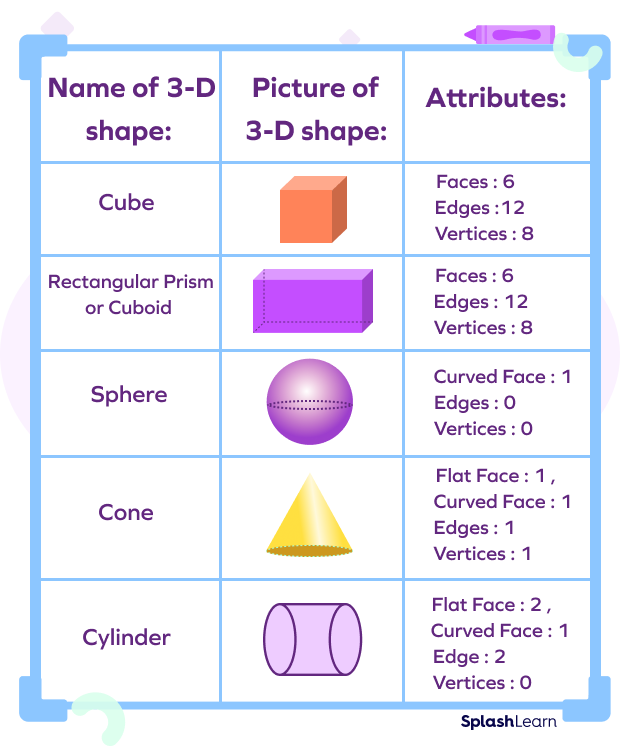
Consider a simple cube. In a 2D representation, you might draw a square. But a square lacks depth. In 3D, a cube is defined not just by its height and width, but by how far it extends into space along the Z-axis. Each corner of the cube would have unique (X, Y, Z) coordinates, defining its position in a volumetric space. This addition of depth is what allows for the perception of objects having real form, shadows, and the ability to obscure other objects behind them.
The Leap to Three Dimensions
The transition to three dimensions fundamentally changes how we represent and interact with digital content. Instead of flat images or simple vector shapes, we deal with “models” that have geometric properties in all three axes. These models can be rotated, viewed from any angle, and even manipulated to change their shape, size, and position within a virtual environment. This leap is not merely adding another number; it’s about enabling a whole new class of interactions and representations that mimic the physical world.
The Digital World in Three Dimensions
In the realm of technology, “3-dimensional” doesn’t just refer to a concept; it dictates how data is structured, processed, and rendered to create realistic or stylized virtual environments and objects.
3D Modeling: Building Digital Objects
At the heart of any 3D digital content is the process of 3D modeling. This involves creating a mathematical representation of any three-dimensional surface of an object using specialized software. Unlike drawing, which primarily deals with outlines and surfaces, 3D modeling constructs an object’s complete geometric data.
The most common method for 3D modeling is using polygonal modeling, where objects are built from a collection of interconnected points (vertices), lines (edges), and flat surfaces (faces, usually triangles or quadrilaterals). These polygons form the “skin” of the 3D object. More complex objects require a greater number of smaller polygons to achieve smooth curves and intricate details. Other modeling techniques include NURBS (Non-Uniform Rational B-Splines) for smooth, mathematically defined surfaces, and digital sculpting, which mimics traditional clay sculpting.
Once a basic geometric model is created, it’s often enhanced with materials and textures. Materials define properties like color, shininess, transparency, and reflectivity, making the surface look like plastic, metal, glass, or skin. Textures are 2D images applied to the surface of the 3D model, providing fine detail and patterns without adding excessive geometric complexity. This combination of geometry, materials, and textures is what gives digital 3D objects their visual richness and realism.
Rendering and Visualization: Bringing 3D to Life
A 3D model, by itself, is just data—a collection of coordinates, polygons, and material definitions. To see it as an image or an interactive scene, it must be “rendered.” Rendering is the process of converting a 3D model into a 2D image or animation, taking into account lighting, camera position, textures, and other visual effects.
Real-time rendering is crucial for interactive applications like video games, virtual reality (VR), and augmented reality (AR). Here, images must be generated so quickly (typically 30 to 120 frames per second) that the user perceives continuous motion. This demands highly optimized algorithms and powerful graphics hardware, often making compromises on visual fidelity to maintain performance.

Offline rendering, used for films, architectural visualizations, and high-fidelity product designs, prioritizes image quality over speed. These renders can take minutes, hours, or even days per frame, employing advanced techniques like ray tracing and global illumination to simulate light bouncing around a scene with extreme accuracy, resulting in incredibly realistic images.
Visualization refers to the broader process of converting data or concepts into a visual format, often leveraging 3D techniques to represent complex information in an intuitive, engaging way.
The Role of Graphics Processors (GPUs)
The demanding computational nature of 3D rendering, especially real-time rendering, led to the development of specialized hardware: the Graphics Processing Unit (GPU). Unlike a Central Processing Unit (CPU), which is optimized for sequential processing of general tasks, a GPU is designed for parallel processing of many simple tasks simultaneously. This architecture is perfect for the repetitive calculations required in 3D graphics, such as transforming vertices, applying textures, and calculating lighting for millions of pixels across a screen.
Modern GPUs are immensely powerful, featuring thousands of processing cores that can handle the massive datasets and complex mathematical operations needed to render intricate 3D scenes in real-time, driving the advancements we see in gaming, VR, AI, and scientific computing.
Applications of 3D Technology
The ability to create, manipulate, and render three-dimensional digital content has revolutionized countless industries and opened doors to entirely new forms of interaction and creation.
Immersive Experiences: VR, AR, and Gaming
Perhaps the most public-facing application of 3D technology is in immersive experiences.
Video games have been at the forefront, evolving from simple 2D sprites to breathtakingly realistic 3D worlds that players can explore and interact with.
Virtual Reality (VR) completely immerses users in a simulated 3D environment, allowing them to feel truly present in digital spaces. This is achieved by displaying stereoscopic 3D images (one for each eye) and tracking head movements to update the view in real-time.
Augmented Reality (AR) overlays 3D digital content onto the real world, enhancing our perception with interactive information or virtual objects that appear to exist in our physical space. Both VR and AR rely heavily on precise 3D tracking, rendering, and interaction techniques to blend digital and physical realities seamlessly.
Engineering, Design, and Simulation
In engineering and design, 3D technology is indispensable.
Computer-Aided Design (CAD) software allows engineers, architects, and product designers to create precise 3D models of components, buildings, and products. This enables detailed visualization, analysis, and modification before physical prototypes are ever built, saving time and resources.
Finite Element Analysis (FEA) and other simulation tools use 3D models to predict how designs will perform under various conditions—stress, heat, fluid dynamics—without destructive physical testing.
From designing jet engines to planning entire cities, 3D empowers innovation by providing a virtual sandbox for creation and testing.
3D Printing and Additive Manufacturing
While the previous applications focus on digital representations, 3D printing bridges the gap between the virtual and the physical. Using a 3D model (typically in an STL file format), a 3D printer builds a physical object layer by layer, essentially converting a digital 3D design into a tangible, three-dimensional product. This process, known as additive manufacturing, has transformed prototyping, low-volume production, medical device creation, and even construction, offering unprecedented design freedom and customization.
Medical Imaging and Scientific Visualization
The medical field heavily leverages 3D technology for diagnostics, surgical planning, and education. Techniques like CT scans and MRI generate stacks of 2D images that can be reconstructed into detailed 3D models of organs, bones, and tissues. Surgeons can then use these 3D models to visualize pathologies, plan complex operations with greater precision, and even practice procedures virtually. In scientific research, 3D visualization helps researchers understand complex datasets, from molecular structures to astronomical phenomena, making abstract concepts more accessible and intuitive.
The Future of 3D Interaction
As technology continues to advance, our interaction with 3D digital content is becoming increasingly sophisticated, intuitive, and integrated into our daily lives.
Advancements in Real-time 3D and AI
The convergence of real-time 3D graphics with artificial intelligence is paving the way for more dynamic and intelligent virtual environments. AI can be used to generate 3D content procedurally, populate virtual worlds with realistic behaviors, and enhance the realism of simulations through advanced physics and character animation. Machine learning algorithms are also being applied to optimize rendering processes, improve 3D reconstruction from 2D images, and even enable real-time tracking of complex objects and environments for AR applications. These developments promise more responsive, personalized, and believable 3D experiences.
Democratizing 3D Creation Tools
Historically, 3D modeling and animation required specialized skills and expensive software. However, there’s a growing trend towards democratizing 3D creation. User-friendly software interfaces, online tutorials, and open-source tools are making 3D design accessible to a broader audience, from hobbyists to small businesses. Additionally, technologies like photogrammetry (creating 3D models from photos) and 3D scanning are simplifying the process of bringing real-world objects into the digital 3D realm. This accessibility is fueling innovation, enabling more people to conceptualize, design, and create in three dimensions, further blurring the lines between the physical and digital worlds.
aViewFromTheCave is a participant in the Amazon Services LLC Associates Program, an affiliate advertising program designed to provide a means for sites to earn advertising fees by advertising and linking to Amazon.com. Amazon, the Amazon logo, AmazonSupply, and the AmazonSupply logo are trademarks of Amazon.com, Inc. or its affiliates. As an Amazon Associate we earn affiliate commissions from qualifying purchases.