
The humble postcard, often overlooked in the digital age, remains a potent tool in a brand’s marketing arsenal. Its physical presence, tactile nature, and direct mail capabilities offer a unique avenue for communication that digital channels cannot fully replicate. However, understanding “what size is a postcard” goes beyond a simple measurement; it’s a strategic consideration that impacts design, messaging, budget, and ultimately, a brand’s ability to connect with its audience. For brand strategists, marketing professionals, and designers, mastering postcard dimensions is crucial for optimizing impact and ensuring successful campaign execution.
The Strategic Importance of Postcard Dimensions in Branding
In the realm of branding and marketing, every detail contributes to the overall perception of a company or individual. Postcard size is not an arbitrary choice; it’s a deliberate decision that profoundly influences how a brand is perceived and how effectively its message is delivered.
First Impressions and Tangible Touchpoints
A postcard is a tangible touchpoint, a physical manifestation of your brand that lands directly in the hands of your target audience. Its size dictates the immediate impression it makes. A larger postcard might convey importance and premium quality, demanding more attention in a stack of mail. A smaller, well-designed postcard could evoke a sense of intimacy or exclusivity. The physical dimensions contribute to the overall tactile experience, which is a critical element in creating memorable brand interactions. In an increasingly digital world, a physical item can stand out, creating a lasting impression that reinforces brand identity and message recall.
Designing for Impact and Deliverability
The size of a postcard directly dictates the canvas available for your creative message. Too small, and your carefully crafted headline or striking imagery might be lost. Too large, and it might seem unwieldy or incur prohibitive mailing costs. Designers must work within these constraints, balancing visual appeal with practicality. Moreover, postcard dimensions are intrinsically linked to mailing regulations, particularly those set by postal services like the USPS. Non-compliance can lead to increased postage costs, delays, or even non-delivery, undermining the entire marketing effort and reflecting poorly on the brand’s professionalism. Strategic sizing ensures not only design impact but also efficient and cost-effective delivery, vital components of any successful marketing campaign.
Standard Postcard Sizes: Meeting USPS Requirements and Marketing Goals
The most common postcard sizes are often dictated by postal service regulations, which aim for efficient processing and cost-effective mailing. Adhering to these standards is typically the most economical and reliable approach for direct mail campaigns.
The Basics: Minimum and Maximum Dimensions
For a piece of mail to qualify as a postcard in the U.S. and receive standard postcard postage rates, it must fall within specific dimensions:
- Minimum Size: 3.5 inches high x 5 inches long x 0.007 inches thick
- Maximum Size: 4.25 inches high x 6 inches long x 0.016 inches thick
Any mailpiece exceeding these maximums typically falls into the letter category and incurs higher postage rates. This crucial distinction highlights why precise sizing is paramount for budget-conscious marketing campaigns.
Common Standard Sizes and Their Applications
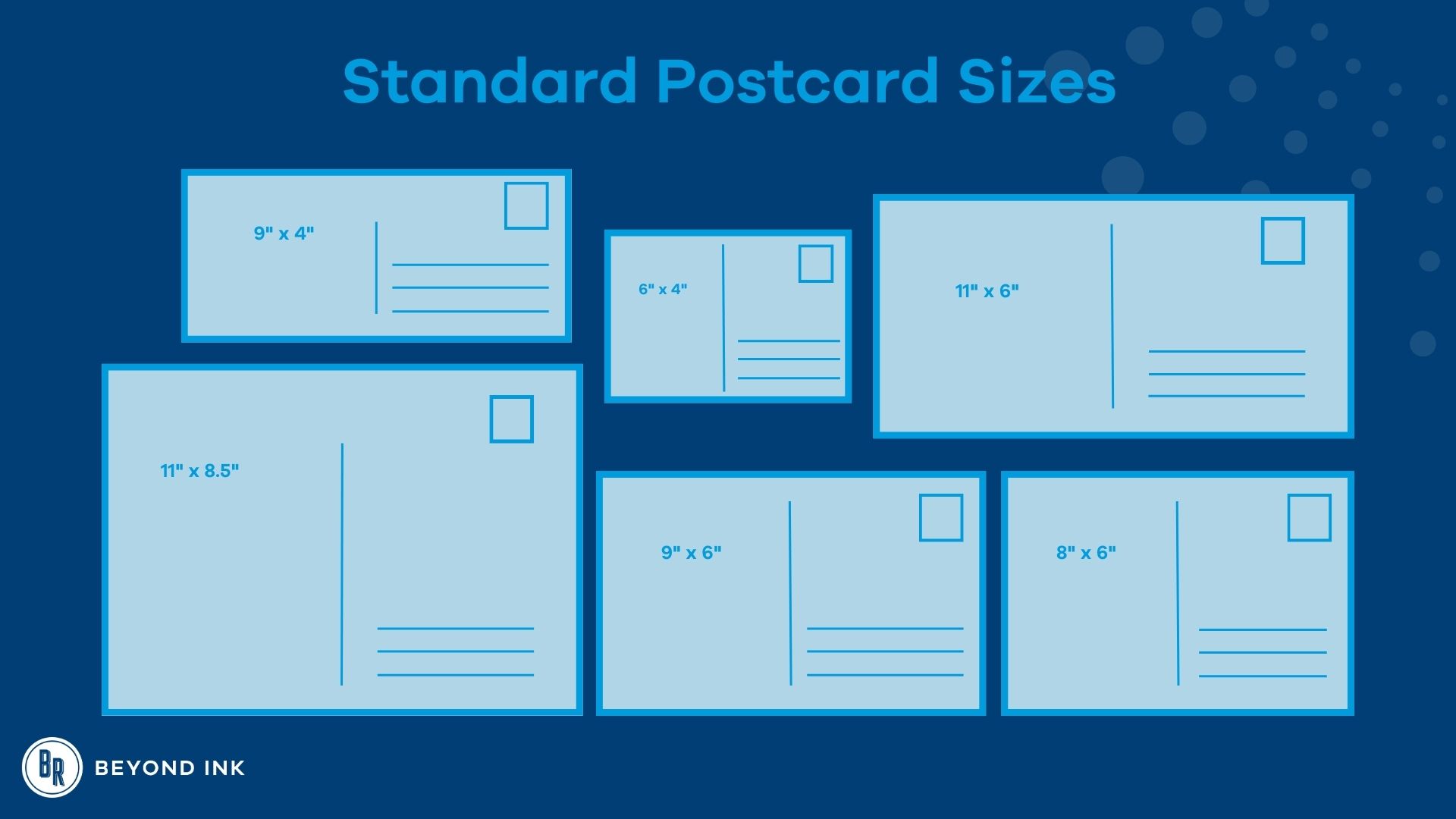
While the 4.25″ x 6″ dimension is the maximum for the lowest postcard rate, several other common sizes are frequently used in marketing, often categorized as “first-class letters” by the postal service due to their dimensions, but still referred to as postcards in design and marketing contexts.
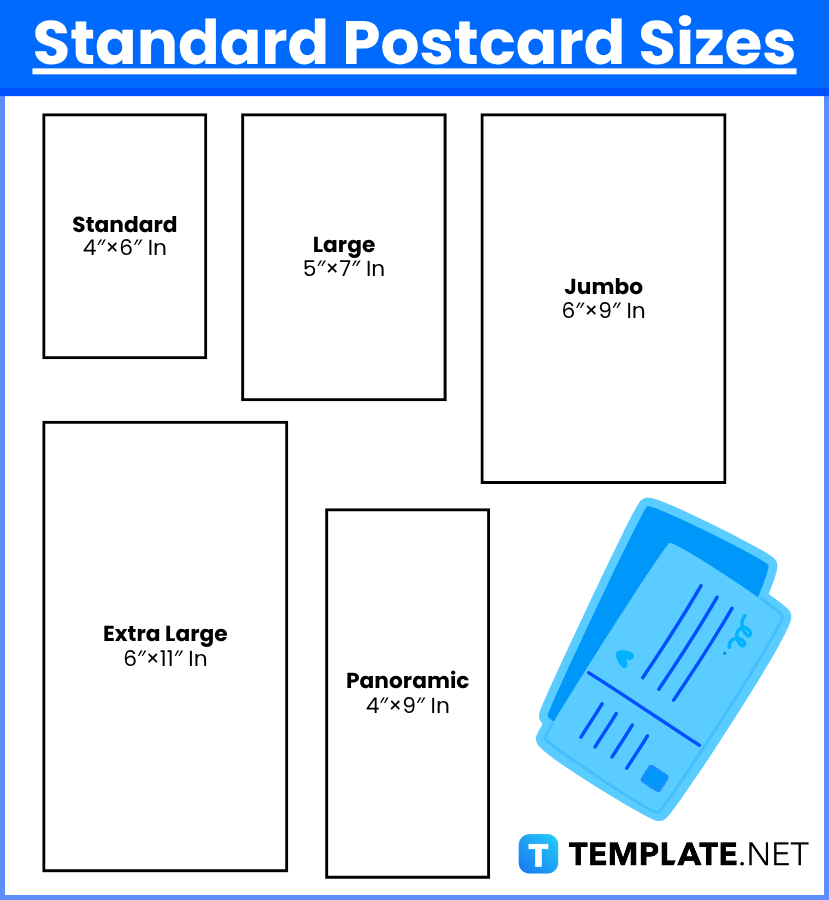
4″ x 6″ (Standard/First-Class)
This is the quintessential postcard size, maximizing the physical dimensions for the lowest possible postage rate. It’s cost-effective for large-volume direct mail campaigns, making it ideal for:
- Promotional announcements: New product launches, sales, event invitations.
- Appointment reminders: For service-based businesses.
- Follow-up communications: Thank-you notes, feedback requests.
- Customer loyalty programs: Small offers or loyalty card mailings.
Its compact nature makes it easy to handle and store, increasing the likelihood it will be kept or acted upon.
5″ x 7″ (Medium/Versatile)
Slightly larger, this size offers more real estate for visuals and text, without being overly cumbersome. It often ships at the standard letter rate, but the additional space can justify the increased cost for certain campaigns:
- Detailed offers: When more information or a larger visual is needed to explain a complex product or service.
- Event invitations: Providing more space for venue details, RSVP information, and imagery.
- Brand storytelling: Incorporating richer graphics and a more extensive narrative.
- Artistic promotions: Showcasing high-quality photography or illustrations.
6″ x 9″ (Jumbo/Direct Mail)
This size commands attention. Its larger surface area makes it stand out in a mailbox, making it a popular choice for more impactful direct marketing initiatives:
- High-value promotions: For premium products, services, or events where a stronger visual presence is desired.
- Lead generation campaigns: With clear calls-to-action and space for compelling testimonials or benefit statements.
- Real estate marketing: Showcasing properties with large, appealing images.
- Retail promotions: Announcing grand openings, major sales, or new collections with significant visual impact.
6″ x 11″ (Maxi/Statement Stuffer)
Among the largest standard “postcard-style” mailers, the 6″ x 11″ offers maximum visual impact and ample space for complex messages. It’s often used when a brand wants to ensure its message cannot be ignored:
- Comprehensive informational pieces: Ideal for providing detailed product specifications, service breakdowns, or educational content.
- Campaigns requiring multiple offers: Allowing for different calls-to-action or product features to be highlighted.
- Financial services: For statements, policy updates, or special offers requiring significant explanatory text.
- Automotive industry: Promoting new models, service specials, or financing options with large vehicle imagery.
Understanding Aspect Ratios and Visual Balance
Beyond the absolute dimensions, the aspect ratio (the proportional relationship between width and height) of a postcard is a key design consideration. A square aspect ratio might convey modernity or uniqueness, while a wider format is excellent for panoramic imagery. Understanding how different aspect ratios affect visual balance and hierarchy is crucial for designers to create compelling layouts that align with brand aesthetics and marketing objectives. A well-chosen aspect ratio can enhance readability, direct the viewer’s eye, and reinforce brand messaging.
Beyond Standard: Custom Sizes for Unique Brand Expression
While standard sizes offer cost-effectiveness and ease of mailing, there are instances where a brand might opt for custom postcard dimensions to achieve a truly unique impact.
When to Break the Mold
Custom sizes are typically chosen when a brand aims for a highly distinctive impression that standard formats cannot achieve. This might include:
- Luxury brands: To convey exclusivity and bespoke quality.
- Art galleries or designers: To showcase their creative work in a unique format.
- Experiential marketing: Where the postcard itself becomes part of a larger interactive experience.
- Guerrilla marketing campaigns: To create an element of surprise and memorability.
The decision to go custom should be weighed against the increased production and mailing costs.
Practical Considerations for Non-Standard Postcards
Choosing a custom size requires careful planning and collaboration with printers and mailing houses.
- Cost: Custom die-cutting and non-standard mailing requirements significantly increase per-piece cost.
- Design Complexity: Designers must ensure the unique dimensions enhance, rather than hinder, the message. Unusual shapes might make layouts challenging.
- Mailing Restrictions: Custom shapes or sizes often fall outside automated processing capabilities, resulting in higher manual processing fees. Brands must consult with their postal service provider early in the design process to understand potential surcharges and ensure mailability.
- Durability: Unusual shapes might be more prone to damage during transit.
Design Principles Influenced by Postcard Size
The physical dimensions of a postcard are not just logistical constraints; they are fundamental design parameters that dictate how content is arranged and perceived.
Layout and Information Hierarchy
A smaller postcard demands extreme conciseness and a rigid information hierarchy. Key elements (logo, headline, CTA) must be immediately visible and impactful. Larger postcards allow for more breathing room, multiple content blocks, and richer storytelling, enabling a more complex information flow. The size dictates whether a design should be minimalist and direct or more expansive and informative. For example, a 4″x6″ might feature a striking image and a single compelling call to action, while a 6″x11″ could integrate multiple images, a paragraph of text, and several service offerings.
Imagery, Typography, and White Space
The amount of space directly influences choices in imagery and typography. On a small postcard, a single, powerful image often works best, complemented by concise, readable typography. Intricate details or excessive text can appear cluttered. Larger postcards can accommodate more detailed graphics, photographic collages, and a broader range of font sizes and styles. White space, the often-underestimated element, is crucial regardless of size. On small postcards, strategic white space prevents overwhelming the viewer, while on larger formats, it guides the eye and provides a sense of sophistication and order.
Call to Action (CTA) Placement
The postcard’s size critically affects where and how the Call to Action (CTA) is presented. On smaller formats, the CTA must be prominent, clear, and unmissable, often centered or placed in a high-visibility corner. Larger postcards offer flexibility for integrating CTAs more subtly within the design or including multiple CTAs for different conversion paths (e.g., “Visit Website” and “Call Now”). Regardless of size, the CTA’s position, size, and visual prominence must be carefully designed to prompt the desired audience response, directly impacting the campaign’s success metrics.
Leveraging Postcard Size for Effective Marketing Campaigns
The strategic selection of postcard size is a cornerstone of effective marketing, influencing everything from budget allocation to brand recall.
Direct Mail Marketing and ROI
For direct mail, postcard size is inextricably linked to postage costs, which significantly impact campaign ROI. Smaller, standard-rate postcards are excellent for broad reach and high-volume campaigns where cost-efficiency is paramount. Larger postcards, while more expensive per piece, can generate higher response rates due to their increased visibility and space for persuasive content, potentially leading to a higher return on investment for targeted, high-value campaigns. Measuring the response rates for different postcard sizes and campaign objectives allows brands to fine-tune their direct mail strategy for optimal financial performance.
Event Promotion and Handouts
Postcards are invaluable for promoting events. A smaller, convenient size (like 4″x6″) is ideal for handing out at trade shows, conferences, or local businesses, acting as a quick reminder or mini-invitation. Larger sizes (like 5″x7″ or 6″x9″) can be mailed to a targeted list, providing more visual appeal and space for event details, schedules, and sponsorship information. The choice of size should align with how the postcard is intended to be distributed and the level of detail required to entice attendees.
Personal Branding and Networking
For individuals looking to build their personal brand, custom postcards can serve as sophisticated networking tools. A unique size or shape might be used as a business card alternative, a portfolio piece, or a leave-behind after a meeting. The physicality of a well-designed postcard can leave a memorable impression, differentiating the individual in a competitive professional landscape. This personal touch reinforces brand identity and fosters stronger connections.

Integrating Physical and Digital Strategies
Postcards, regardless of size, are powerful bridges between physical and digital marketing. A well-designed postcard can include QR codes, unique URLs, or social media handles, driving recipients from an offline touchpoint to online engagement. A larger postcard might have more space for a compelling offer that encourages an online visit, while a smaller one might simply serve as a brand reminder with a direct link to a landing page. The strategic use of postcard size ensures that the physical piece effectively funnels interest into measurable digital actions, creating a cohesive and multi-channel brand experience.
aViewFromTheCave is a participant in the Amazon Services LLC Associates Program, an affiliate advertising program designed to provide a means for sites to earn advertising fees by advertising and linking to Amazon.com. Amazon, the Amazon logo, AmazonSupply, and the AmazonSupply logo are trademarks of Amazon.com, Inc. or its affiliates. As an Amazon Associate we earn affiliate commissions from qualifying purchases.