
Understanding “Big” in the Context of Travel Costs and Personal Finance
The perception of a “big suitcase” extends far beyond its physical dimensions; it carries significant financial implications for travelers. In an era of unbundled airfares and stringent baggage policies, understanding what constitutes a large piece of luggage, and its associated costs, is crucial for savvy personal finance management. Misjudging suitcase size can lead to unexpected expenses, from overweight baggage fees to the need for additional luggage purchases, directly impacting a travel budget. Therefore, defining “big” is less about a universal measurement and more about its alignment with airline regulations and personal financial strategy.

Airline Regulations and Overweight Fees: A Significant Financial Burden
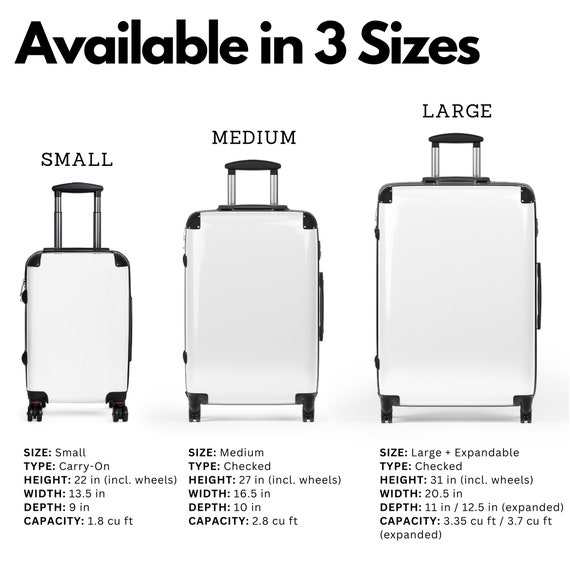
Airlines are the primary arbiters of what qualifies as a “big suitcase,” particularly concerning checked baggage. While carry-on luggage dimensions are generally standardized (often around 22 x 14 x 9 inches, including wheels and handles), checked bag allowances vary considerably by airline, fare class, and route. Typically, a standard checked bag allowance for economy class might be up to 62 linear inches (length + width + height) and a weight limit of 50 pounds (23 kg). Any luggage exceeding these limits, either in dimensions or weight, immediately incurs substantial financial penalties.
These overweight and oversized baggage fees can range from $75 to $200 per bag, per flight segment, for exceeding weight limits by even a few pounds or inches. For a round-trip journey with connecting flights, these fees can quickly accumulate, easily surpassing the initial cost of the airline ticket itself. From a personal finance perspective, this represents an unbudgeted expense that erodes the value of a trip and can lead to financial stress. It emphasizes the importance of meticulously checking an airline’s specific baggage policy before packing and certainly before heading to the airport. Investing in a lightweight, high-quality suitcase that adheres to common airline standards can be a preventative measure against these financial pitfalls.
Checked vs. Carry-On: The Economic Divide
The decision between checking a bag and traveling solely with a carry-on is often an economic one, deeply intertwined with the concept of “big.” For many budget-conscious travelers, minimizing checked luggage is a cornerstone of their financial strategy. Many airlines now charge for even the first checked bag on domestic flights, with international flights sometimes including one free checked bag, but rarely two. The cost of checking a single bag can be $30-$60 each way, which again, adds up.
A “big suitcase” in this context is one that must be checked. If a traveler can consolidate their belongings into a maximum-sized carry-on (fitting in the overhead bin) and a personal item (fitting under the seat), they can often avoid all checked baggage fees. This strategy not only saves money but also time (no waiting at baggage claim) and reduces the risk of lost luggage. For personal finance, the goal is often to make a “big suitcase” unnecessary unless the duration or nature of the trip absolutely demands it, thus maximizing savings on travel expenses.
Investing in the Right Luggage: A Long-Term Financial Decision
The purchase of a suitcase itself is an upfront financial investment. The size of this investment, and its long-term return, is directly related to the suitcase’s dimensions, durability, and features. A “big suitcase” can represent a significant purchase, and its selection should be approached with the same financial diligence as any other major expenditure, considering both its initial cost and its potential to save or cost money over time.
Durability vs. Cost: Finding the Sweet Spot
When considering a “big suitcase,” travelers often face a trade-off between price and quality. Cheaper, less durable luggage might seem appealing initially, but it can quickly become a false economy. A suitcase that rips, has broken zippers, or a collapsed handle after a few trips will necessitate replacement, leading to repeated expenses. Furthermore, poorly constructed luggage might exceed weight limits even when empty, further contributing to potential fees.
Investing in a durable, high-quality “big suitcase” from a reputable brand, while a larger initial outlay (perhaps $150-$500+), can be a wise long-term financial decision. Such luggage is often lighter, more resilient to the rigors of travel, and designed to maximize internal packing space while adhering to external dimensional limits. This reduces the frequency of replacement purchases and helps avoid additional costs associated with damaged bags (e.g., contents spilling out, requiring emergency purchases). Think of it as an asset with a depreciating but valuable service life.
The Hidden Costs of Poorly Sized Luggage
Beyond the obvious fees, poorly sized luggage can create several hidden financial drains:
- Excessive Taxi/Ride-Share Fares: An oversized, unwieldy suitcase might not fit in standard car trunks, forcing travelers to opt for larger, more expensive vehicles or even multiple vehicles.
- Storage Fees: Some hotels or tour operators might charge for storing excessively large items.
- Increased Travel Stress & Lost Productivity: While not a direct monetary cost, the stress and time wasted dealing with oversized baggage can impact a business traveler’s productivity or a leisure traveler’s enjoyment, which can have an indirect financial cost (e.g., needing to spend more to unwind after a stressful trip, or missing work time).
- Impulse Purchases: If a suitcase is too small or poorly organized, travelers might be forced to buy items they already own or unnecessary items at inflated airport prices, simply because they couldn’t fit them or find them.
Maximizing Space and Minimizing Spend: Smart Packing Strategies
The financial implications of a “big suitcase” extend to how efficiently one packs. A large capacity isn’t inherently cost-saving if the space isn’t utilized strategically. Smart packing is a personal finance skill that transforms a large container into an economic advantage rather than a liability.
Packing Efficiency for Business Travel Budgets
For business travelers, every cubic inch of a “big suitcase” has a financial value related to productivity and corporate expenditure. Efficient packing minimizes the need for multiple bags, reducing checked baggage fees on company expenses. Furthermore, having necessary items readily accessible and well-organized can save time during a business trip, allowing for greater focus on work rather than logistics. The cost of a well-packed, appropriately sized suitcase can be offset by avoiding the need to dry-clean wrinkled suits or purchase forgotten essentials during a critical meeting.
Using packing cubes, rolling clothes, and strategically choosing multi-purpose items can allow a business traveler to fit more into a smaller, often carry-on sized bag, or to fully optimize a checked bag without exceeding weight limits. This directly contributes to managing the company’s travel budget effectively.
Avoiding Unnecessary Purchases Abroad
A “big suitcase” used wisely can prevent unexpected financial outlays during a trip. If a traveler can pack all necessary clothing, toiletries, and specific items (e.g., medication, adapters) for the entire duration, they avoid the often inflated costs of buying these items at their destination. This is particularly true for personal items like sunscreen, over-the-counter medications, or specific brand toiletries, which can be significantly more expensive or harder to find internationally.
Conversely, an oversized suitcase that tempts overpacking can lead to items being forgotten, requiring purchases at the destination. The key is balance: enough space to bring what’s truly needed to avoid additional spending, but not so much that it encourages bringing superfluous items that contribute to overweight fees.
When is a “Big Suitcase” Worth the Financial Outlay?
While the trend is often towards minimalist packing and carry-on travel to save money, there are specific scenarios where a “big suitcase” represents a necessary and financially sound investment.
Extended Trips and Family Travel Budgets
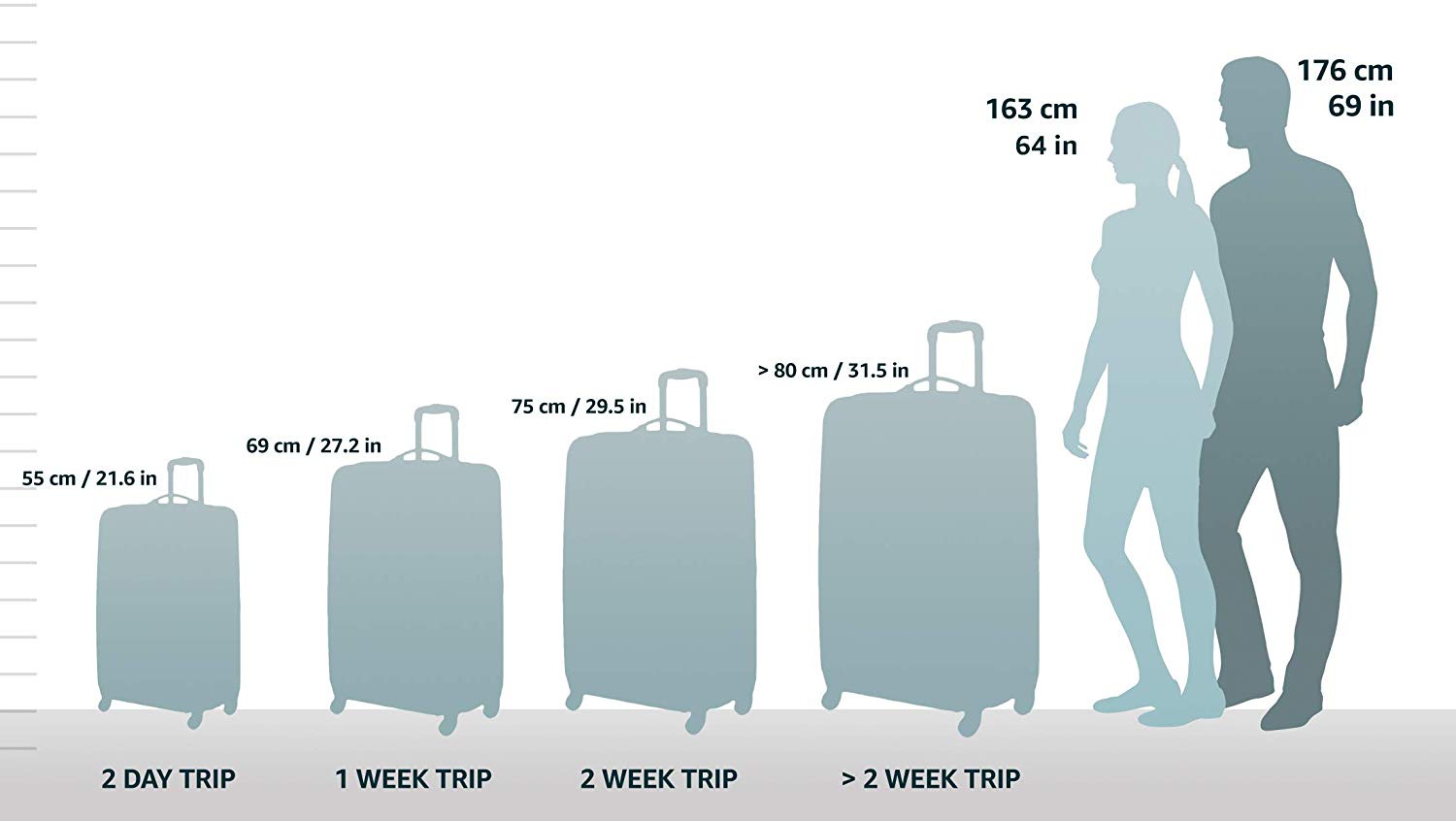
For extended vacations (e.g., two weeks or more) or family travel, a large checked suitcase often becomes unavoidable. The sheer volume of clothing, shoes, and toiletries required for multiple people or for a longer duration necessitates greater capacity. In these situations, the financial cost of one or two “big suitcases” is often less than the cumulative cost of checking multiple smaller bags, or the expense of buying essentials repeatedly. From a family budget perspective, consolidating belongings into fewer, larger bags can be a smart way to manage travel expenses. The key is to optimize the packing within these larger bags to stay within airline weight limits, as oversized fees for family travel can quickly escalate.
Relocation and International Moves: A Different Scale of Investment
When considering relocation or a significant international move, the term “big suitcase” takes on a new financial dimension. Here, it refers to large, often extra-large, checked luggage used to transport essential personal belongings that are too important or costly to replace. While shipping companies handle bulk items, often there are specific personal effects that one wants to keep close. In this context, a “big suitcase” becomes part of a broader logistical and financial strategy to manage the costs of establishing a new home. The upfront investment in several durable, maximum-capacity suitcases for such a move is justified by the savings on replacement costs for cherished items or critical documents, and the convenience of having immediate access to essentials upon arrival.
The Resale Value and Lifecycle Cost of Quality Luggage
Finally, consider the full lifecycle cost of a “big suitcase.” A high-quality, well-maintained piece of luggage can have a decent lifespan, often coming with warranties that cover repairs, further extending its utility and avoiding premature replacement costs. Furthermore, certain premium luggage brands hold their value reasonably well. Should your travel needs change, a durable, well-regarded “big suitcase” might have a respectable resale value on secondary markets, recouping a portion of your initial investment. This perspective shifts the suitcase from a disposable travel accessory to a depreciating asset that, when chosen wisely, contributes positively to long-term personal finance management.
aViewFromTheCave is a participant in the Amazon Services LLC Associates Program, an affiliate advertising program designed to provide a means for sites to earn advertising fees by advertising and linking to Amazon.com. Amazon, the Amazon logo, AmazonSupply, and the AmazonSupply logo are trademarks of Amazon.com, Inc. or its affiliates. As an Amazon Associate we earn affiliate commissions from qualifying purchases.