
Understanding the structural composition of decimals is a foundational skill that serves as the bedrock for financial literacy. Whether you are calculating compound interest on a savings account, auditing a corporate budget, or analyzing the return on investment for a stock portfolio, precision is non-negotiable. In the realm of finance, money is almost exclusively denominated in base-ten increments, making the “hundredths place” the most critical digit in your professional and personal accounting.
The Anatomy of a Decimal in Financial Contexts
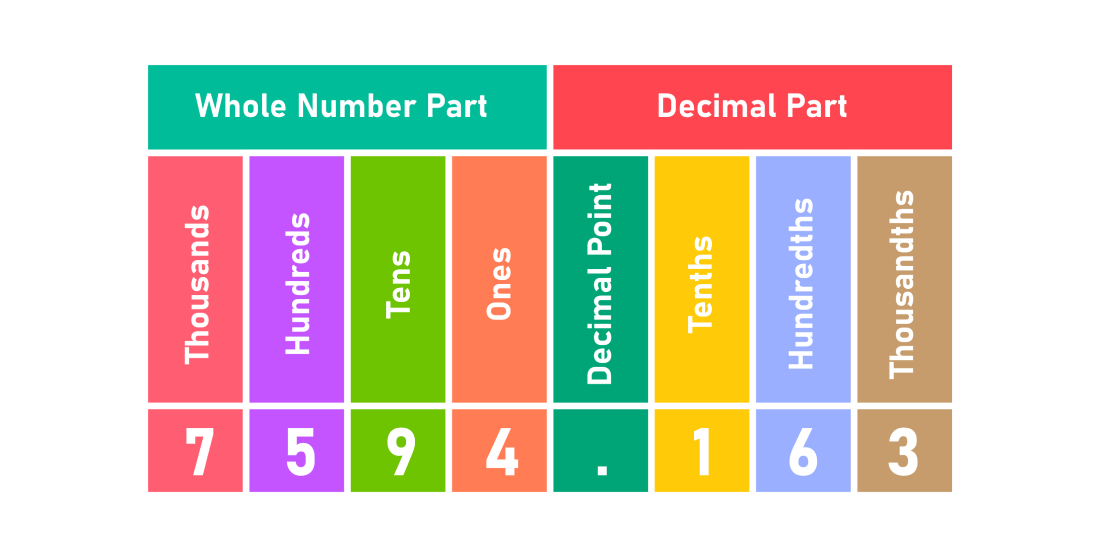
To master your personal or business finances, you must first perceive a number not just as a value, but as a map of potential growth or loss. When we look at a decimal number, the decimal point acts as the anchor. Every digit to the left represents whole units, while every digit to the right represents fractions of a whole.

Defining the Decimal Hierarchy
The hierarchy of decimal places proceeds in powers of ten. When you move to the right of the decimal point, the value of the digits diminishes significantly. The first position to the immediate right is the tenths place (1/10). The second position to the right is the hundredths place (1/100).
In currency—specifically the U.S. Dollar, Euro, and many other global fiat systems—the hundredths place represents the smallest standard unit of exchange: the cent. Therefore, understanding the hundredths place is synonymous with understanding the “penny” component of your wealth.
Why Precision to the Hundredths Place Matters
In high-level financial modeling, rounding errors are the silent killers of profitability. If you are calculating the interest on a large-scale loan or the tax liabilities for a corporation, omitting or incorrectly rounding the hundredths place can lead to significant discrepancies over time. For the average investor, this might seem negligible, but when applied to automated algorithmic trading, tax filings, or long-term amortization schedules, the hundredths place determines the accuracy of your financial narrative.
The Role of the Hundredths Place in Personal Finance
Personal finance is the art of managing the micro to secure the macro. We often focus on big-picture figures like annual salary or total debt, but true wealth management lives in the decimals.
Budgeting and the Micro-Economy
When you track your daily expenditures, every transaction is recorded to the hundredths place. If you purchase a coffee for $4.50, the “5” is in the tenths place, and the “0” is in the hundredths place. If you are aggressive about optimizing your savings, you are likely looking at the hundredths place in your bank statement to see if you can squeeze out extra efficiency.
Budgeting apps and financial software are designed to track these tiny increments because, cumulatively, they dictate your net savings rate. A difference of even three cents per transaction, when multiplied by thousands of transactions across an entire fiscal year, results in hundreds of dollars in variance. Understanding exactly where the hundredths place sits allows you to categorize your spending with surgical precision.
Interest Rates and Compounding
Compound interest is the “eighth wonder of the world,” according to Einstein, and it is entirely dependent on the precision of decimal placement. When a bank quotes you an Annual Percentage Yield (APY), they are calculating the interest based on the hundredths place of your account balance.
If you have $10,000.00 in a high-yield savings account earning 4.50%, the bank calculates your interest down to the hundredths place of a cent. Over a decade, that precision ensures that your compounding is accurate. If a system were to round off at the tenths place, you would lose significant capital. Recognizing the importance of this specific decimal position helps you evaluate financial products more effectively, ensuring that your choice of institution isn’t costing you money due to poor calculation methodologies.

Professional Accounting and Business Finance
In the corporate world, the hundredths place is where regulatory compliance meets operational efficiency. Whether you are dealing with tax reporting or auditing, the decimal point is the line between a clean audit and a compliance failure.
Tax Reporting and Regulatory Standards
Government agencies like the IRS require specific rounding protocols. Generally, taxpayers are required to round their reported figures to the nearest whole dollar, but the raw data used to generate those figures—ledgers, payroll, and receipt tracking—must be maintained to the hundredths place.
If you are a business owner, your bookkeeping software automatically handles these calculations. However, knowing that the second digit to the right of the decimal point represents your tax-deductible cents is vital for verifying that your inputs are correct. A decimal error—such as misplacing the point or rounding to the tenths place instead of the hundredths—can result in an incorrect tax filing, leading to audits or penalties.
Pricing Strategies and Revenue Management
For those in retail or digital sales, pricing is a psychological and mathematical game. The “charm pricing” strategy, where items are priced at $19.99 instead of $20.00, leverages the hundredths place to influence consumer perception.
From an accounting standpoint, your revenue reports must track these hundredths to ensure that your margins are healthy. If your cost of goods sold (COGS) is tracked to the hundredths, but your sales revenue is inconsistently recorded, your profit margins will appear distorted. By mastering the distinction of the hundredths place, business owners can better analyze their break-even points, contribution margins, and overall net income.
Advanced Financial Tools and Decimal Accuracy
Modern financial technology (FinTech) has removed much of the manual labor from accounting, but it hasn’t removed the need for the user to understand the underlying logic of these systems.
Algorithmic Precision in Investing
If you engage in stock trading, you will notice that prices are often quoted out to the hundredths place (and sometimes further, to the thousandths or ten-thousandths). Understanding that the hundredths place remains the primary indicator of your cent-value is essential for setting limit orders. When you place a trade, you are telling the market exactly what price you are willing to pay or accept. A misunderstanding of decimal placement could lead to a catastrophic limit order error, where you accidentally buy or sell an asset at an unintended price point.
Leveraging Software for Accuracy
Accounting software like QuickBooks or Xero operates on a strict decimal-based infrastructure. These tools are programmed to treat the hundredths place as the primary unit for currency. When you interface with these platforms, you are effectively participating in a system that relies on the accuracy of this decimal position to generate your Profit & Loss statements and Balance Sheets.
By familiarizing yourself with how these tools handle the hundredths place, you become a more discerning user of your own financial data. You can spot anomalies in reports—such as a trailing decimal that doesn’t belong—and rectify it before it affects your bottom line.
Conclusion: The Financial Impact of Small Digits
The hundredths place is more than just a location in a mathematical string; it is a fundamental component of economic control. By recognizing that it represents the “cent” in your dollar, you gain a clearer picture of how money flows, how interest compounds, and how taxes are calculated.
In personal finance, it is the difference between a loose budget and a disciplined one. In business, it is the difference between an accurate ledger and a potential compliance nightmare. Regardless of whether you are managing a household checkbook or overseeing a corporate treasury, the mastery of the hundredths place is a quiet, yet powerful, tool in your financial arsenal. Precision in the small things leads to stability in the large things, ensuring that your financial journey is built on a solid foundation of mathematical truth.
aViewFromTheCave is a participant in the Amazon Services LLC Associates Program, an affiliate advertising program designed to provide a means for sites to earn advertising fees by advertising and linking to Amazon.com. Amazon, the Amazon logo, AmazonSupply, and the AmazonSupply logo are trademarks of Amazon.com, Inc. or its affiliates. As an Amazon Associate we earn affiliate commissions from qualifying purchases.