
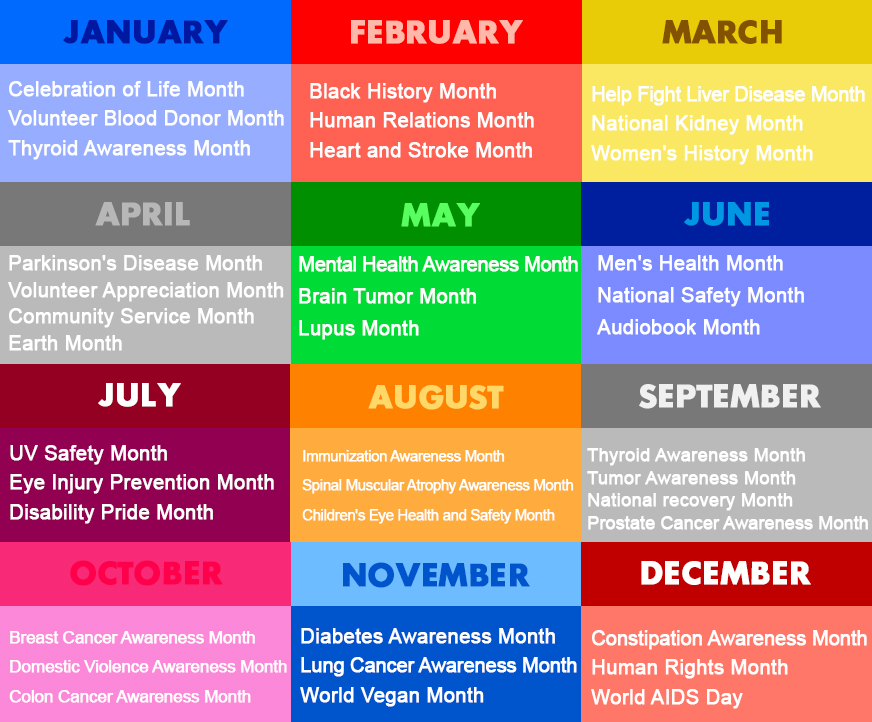
In the modern marketing landscape, the calendar has become one of the most powerful tools in a brand manager’s arsenal. Awareness months—designated periods dedicated to raising visibility for specific causes, social movements, or community health issues—offer businesses a unique opportunity to align their brand identity with values that resonate with their target audience. When executed with authenticity, these initiatives can transcend traditional advertising, fostering deep, meaningful connections between a company and its customer base.
However, the proliferation of awareness months—ranging from Black History Month in February to Movember in November—presents a strategic challenge. Brands must navigate a crowded field where “cause-washing” is easily detected and dismissed. This guide explores the strategic role of awareness months in brand building, how to select the right causes, and how to execute campaigns that provide genuine value rather than mere performative participation.
The Strategic Importance of Purpose-Driven Marketing
At its core, brand strategy is about establishing a recognizable identity that stands for something beyond the product or service itself. Today’s consumers, particularly Gen Z and Millennials, prioritize corporate social responsibility (CSR) when making purchasing decisions. They look for brands that occupy a space in the cultural conversation, and awareness months provide the ideal gateway for this engagement.
Building Emotional Equity
When a brand commits to an awareness month, it isn’t just donating money; it is investing in emotional equity. If a technology firm supports Cybersecurity Awareness Month in October, they are signaling that their brand values digital safety and user protection. This alignment builds trust. Trust is the currency of the modern economy, and consistency in supporting relevant causes acts as a deposit in that bank.
Differentiating in a Competitive Market
In saturated markets, product features often converge. If every competitor offers similar functionality, the tie-breaker is often the brand’s “Why.” Awareness months allow companies to humanize their operations. By taking a public stance on issues related to their industry—such as mental health awareness for a meditation app or environmental sustainability for an apparel brand—companies differentiate themselves by reflecting the values their customers hold dear.
Selecting the Right Awareness Months for Your Brand
Not every awareness month is a fit for every brand. A common mistake is attempting to participate in every cultural moment, leading to a diluted brand message. The key to effective strategy is relevance. A brand must evaluate potential awareness months through three strategic filters: Alignment, Authenticity, and Actionability.
The Alignment Filter
Is the cause relevant to your core business model? If you are a fintech company, Financial Literacy Month (April) is a natural fit. It provides an opportunity to educate your audience, provide value through tools or content, and position your brand as an industry authority. Attempting to force your brand into an unrelated awareness month—such as a construction firm trying to lead a campaign on pet adoption—can lead to confusion among your audience and a breakdown of brand consistency.
The Authenticity Audit
Before committing to a campaign, ask: “What is our track record on this issue?” Authenticity is non-negotiable. If a brand champions Diversity, Equity, and Inclusion (DEI) during awareness months but fails to maintain those standards in its internal hiring practices, the backlash will be immediate and severe. Consumers are adept at cross-referencing public marketing campaigns with internal corporate realities. Only participate in awareness months where your brand can prove its commitment through ongoing initiatives, not just marketing slogans.
Defining Your Scope of Actionability
What will you actually do? Participation in an awareness month requires a roadmap. Will you be raising funds for a non-profit partner? Will you be creating educational content to bridge a knowledge gap? Will you be modifying your service offerings to better support the community in question? If the answer is “we will post a logo with a hashtag,” the campaign is likely to be viewed as performative. Authentic action involves tangible contributions.

Planning a Multi-Month Awareness Calendar
Rather than scrambling to respond to awareness months as they arrive, successful brands plan their annual cycle in advance. A structured approach ensures that campaigns are well-resourced, creative, and consistent with the overall brand narrative.
Q1 and Q2: Establishing Foundations
The beginning of the year is ideal for launching long-term partnerships. For instance, Black History Month in February or International Women’s Day in March are globally recognized moments. For brands that prioritize social justice or internal equity, these months provide the space to showcase stories of leadership and internal progress. Use these months to launch long-term scholarship programs or internal workshops, which can be showcased as the start of a year-long initiative rather than a one-time event.
Q3 and Q4: Driving Impact and Action
The second half of the year often hosts awareness months that focus on community action, such as Pride Month (June) or various environmental and mental health awareness periods. These months often require high-engagement campaigns. This is the time to leverage your community of customers. User-generated content campaigns—such as “share your story” initiatives or challenges that encourage community participation—are highly effective during these periods. By Q4, the focus should shift toward “giving back,” often aligning with holiday-season philanthropy.
Measuring Success Beyond ROI
One of the most persistent questions in brand strategy is how to measure the “success” of participating in an awareness month. While ROI is important, awareness campaigns should be measured by Impact, Sentiment, and Connection.
Measuring Sentiment Shifts
Use social listening tools to monitor how your audience perceives your involvement. Are they using the hashtag in the spirit you intended? Are they expressing gratitude for the resources you provided? A shift in sentiment toward your brand—viewing you as a helper rather than just a vendor—is a significant success metric.
Analyzing Engagement Quality
Avoid vanity metrics like total impressions. Instead, look at the depth of engagement. Are users clicking through to your educational resources? Are they engaging in meaningful dialogue in your comment sections? High-quality interaction indicates that your brand has successfully tapped into a topic that matters to your audience, turning a “like” into a conversation.
The Long-Term Connection
The ultimate goal of aligning with awareness months is to increase customer lifetime value. Customers who feel aligned with your brand’s values are less likely to leave for a competitor who is merely cheaper. By consistently showing up for the causes that matter, you build a brand that is resilient, respected, and deeply ingrained in the lives of your customers.

The Future of Awareness Marketing
As we look toward the future, the trend toward purpose-driven marketing will only accelerate. The brands that win will be those that view awareness months not as calendar dates to be ticked off, but as opportunities for year-round advocacy.
The strategy of the future involves “thematic consistency.” Instead of jumping from one awareness month to the next with disjointed messaging, successful brands will weave these months into a cohesive narrative. If your brand is committed to sustainability, every awareness month—from Earth Day to World Water Day—should be treated as a chapter in the same ongoing book about your environmental impact.
By grounding your participation in deep research, internal commitment, and a genuine desire to add value to your community, awareness months become more than just marketing tactics. They become the heartbeat of your brand identity, proving that your business is not just a participant in the market, but an active, positive force in the broader world. Remember that the calendar is your tool, but the value you provide is your legacy. Choose your months wisely, invest deeply, and ensure that your brand’s voice is one that fosters connection, education, and genuine progress.
aViewFromTheCave is a participant in the Amazon Services LLC Associates Program, an affiliate advertising program designed to provide a means for sites to earn advertising fees by advertising and linking to Amazon.com. Amazon, the Amazon logo, AmazonSupply, and the AmazonSupply logo are trademarks of Amazon.com, Inc. or its affiliates. As an Amazon Associate we earn affiliate commissions from qualifying purchases.