
The “What makes you unique?” interview question is frequently misunderstood as an invitation to list eccentric hobbies or superlative adjectives. In the context of personal branding, however, this question is a strategic audit of your professional equity. It is the moment when you move beyond the static facts of your resume and transition into the narrative of your brand. When a hiring manager asks this, they are not looking for a personality profile; they are looking for your unique value proposition (UVP).
To answer this effectively, you must approach your career history as a product manager approaches a brand. You are the product, your skills are the features, and your track record is the case study. Identifying what makes you unique requires synthesizing your hard skills, your soft skills, and your professional philosophy into a cohesive, marketable identity.
Defining Your Professional Value Proposition
Your uniqueness does not exist in a vacuum. It is found at the intersection of your specific expertise and the unmet needs of the organizations you seek to join. Many candidates make the mistake of focusing on their “uniqueness” in terms of personality—being “hard-working” or “a people person”—but these are commodities. To build a robust personal brand, you must move toward differentiation.
The Intersection of Competence and Character
True professional differentiation stems from a specific “skill stack.” Most professionals are proficient in one area. The ones who stand out are those who sit at the nexus of two or three disparate skill sets. For example, a project manager who understands coding, financial modeling, and crisis communication is infinitely more “unique” than a project manager who simply understands project management.
When preparing for your interview, map your skills on a Venn diagram. Where does your technical proficiency overlap with your leadership style? Where does your industry-specific knowledge overlap with your creative problem-solving ability? Your uniqueness is the combination of these traits that, when deployed together, create a result that your competitors cannot easily replicate.
Crafting Your Personal Brand Narrative
Your brand narrative is the story you tell about your career trajectory. It is the thread that connects your past roles to your future aspirations. When you answer the question about uniqueness, you should frame it through a “problem-solution” lens.
Think of a time when your unique combination of skills allowed you to solve a problem that others struggled with. By framing your uniqueness as a tool for ROI (Return on Investment), you shift the conversation from “why I am special” to “how I will be profitable for your company.” Your narrative should emphasize your brand’s mission statement: a succinct summary of the value you bring to the table and the consistent quality you deliver.
The Strategy of Strategic Differentiation
To truly stand out, you must treat your professional identity as a strategic asset. Differentiation is not about being different for the sake of it; it is about being different in a way that provides superior value.
Identifying Your “Only” Factor
In marketing, the “Only” factor is the one thing that your brand does that no one else can claim. In your interview, this should be a specific outcome you have generated in past roles. Do you have a track record of turning around failing departments? Have you built a specific methodology that increased efficiency by a measurable margin?
If you cannot point to a quantifiable “Only” factor, look toward your unique perspective. Perhaps you are a developer who approaches UI design with the psychology of a marketer. Maybe you are a salesperson who approaches client acquisition with the analytical rigor of a data scientist. Your “Only” factor is the unique vantage point from which you view common industry challenges.
Aligning Personal Brand with Corporate Identity
A strong personal brand is useless if it does not align with the corporate identity of your potential employer. When you answer “What makes me unique?”, you must also subtly communicate that your uniqueness is a perfect fit for their brand architecture.
Research the company’s recent successes and their stated mission. If they pride themselves on being disruptors, your “uniqueness” should be framed around your ability to innovate and challenge the status quo. If they are a legacy organization focused on stability, your “uniqueness” should be framed around your ability to optimize systems and manage risk. This alignment demonstrates that you are not just a talented individual, but a strategic partner who understands the business’s broader objectives.
Communicating Your Uniqueness During the Interview
Once you have identified what makes you unique, you must articulate it with the confidence of a brand strategist. The delivery is just as important as the content.
The Art of the Case Study
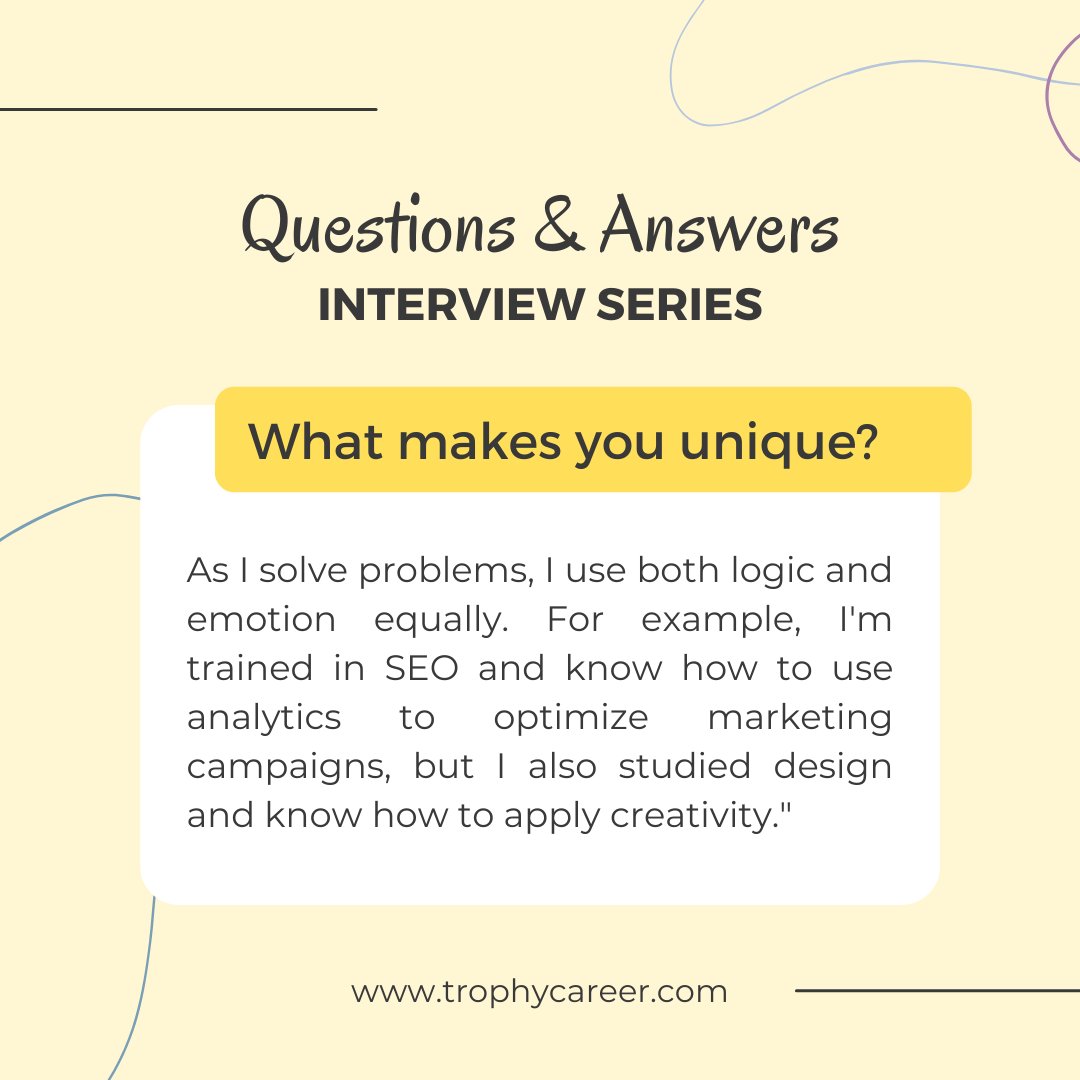
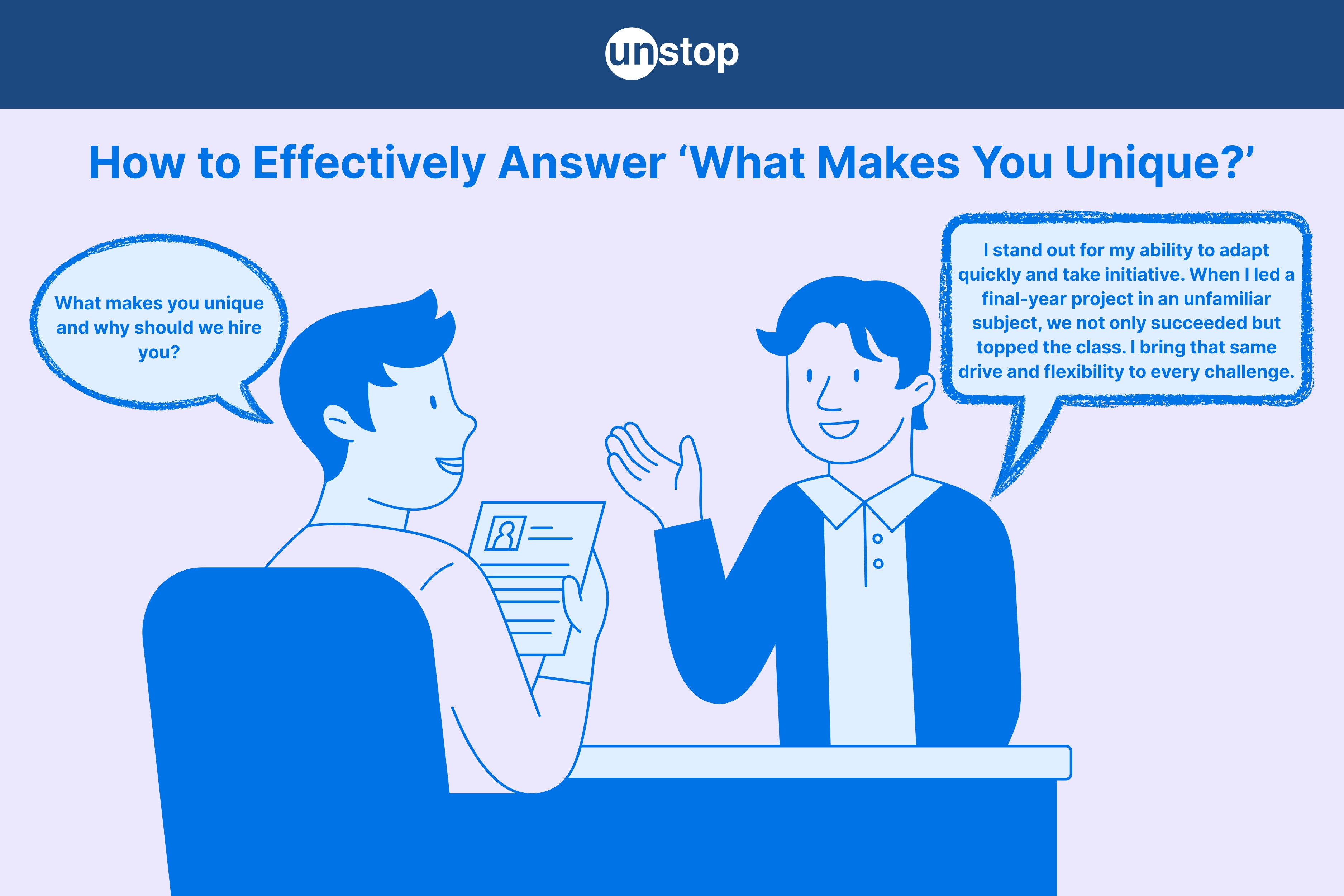
The most compelling way to present your uniqueness is through a concise case study. Instead of saying “I am detail-oriented,” say, “What makes me unique is my ability to identify systemic inefficiencies in operational workflows. For example, at my previous firm, I noticed a bottleneck in the reporting process, and by applying a custom automation script I designed, I reduced processing time by 40%. This ability to blend technical automation with process analysis is how I consistently add value.”
This approach anchors your uniqueness in reality. It transforms a vague adjective into a verifiable fact. When you speak in terms of outcomes rather than traits, you make it easy for the interviewer to visualize the impact of hiring you.
Maintaining Brand Consistency
Consistency is the cornerstone of any strong brand. Your answer to “What makes you unique?” should not contradict the rest of your interview performance. If you claim that your unique strength is “creative problem-solving,” your answers throughout the interview must demonstrate that. If you claim your strength is “analytical precision,” your answers should be backed by data and structured, logical reasoning.
The interviewer is looking for congruence. They want to see that the person they are interviewing is the same person they see on the resume and the same person they would encounter in a high-pressure office environment. Any disconnect between your stated uniqueness and your demonstrated behavior will be perceived as a lack of professional integrity or poor self-awareness.
The Evolution of Your Professional Brand
Your uniqueness is not a fixed asset; it is an evolving brand. As industries change and technology advances, your skill stack must adapt. The “unique” professional is one who is constantly auditing their market value and adding layers of expertise.
Auditing Your Competitive Landscape
To remain unique, you must understand the competitive landscape of your industry. What are the baseline skills expected of a professional in your role? Once you identify these baseline expectations, your goal is to differentiate yourself by exceeding them in a specific direction. If everyone in your field is learning Project Management Professional (PMP) certification, perhaps your unique path is to pair that with a certification in data analytics or design thinking.

Investing in Intellectual Capital
A brand is only as strong as its output. To keep your uniqueness relevant, you must invest in your intellectual capital. Whether through continuous learning, networking with industry thought leaders, or experimenting with new technologies, you must constantly refresh your unique value proposition.
When you sit in that chair and the interviewer asks, “What makes you unique?”, your answer should be the culmination of your career strategy. It should be a reflection of the deliberate choices you have made to cultivate a set of skills and experiences that, when combined, make you an indispensable asset. You are not just filling a role; you are providing a specific, high-value solution to a business problem. By viewing the interview through the lens of personal branding, you move from being a candidate to being a professional who is clearly, and uniquely, worth hiring.
aViewFromTheCave is a participant in the Amazon Services LLC Associates Program, an affiliate advertising program designed to provide a means for sites to earn advertising fees by advertising and linking to Amazon.com. Amazon, the Amazon logo, AmazonSupply, and the AmazonSupply logo are trademarks of Amazon.com, Inc. or its affiliates. As an Amazon Associate we earn affiliate commissions from qualifying purchases.