
The Misery Index is one of the most enduring, albeit debated, barometers used by economists and policymakers to gauge the economic health of a nation and, more pointedly, the relative “misery” felt by its citizens. Developed in the 1970s by economist Arthur Okun, the index serves as a simple yet powerful quantitative tool designed to reflect the social and financial distress caused by the combination of rising prices and a lack of employment opportunities.
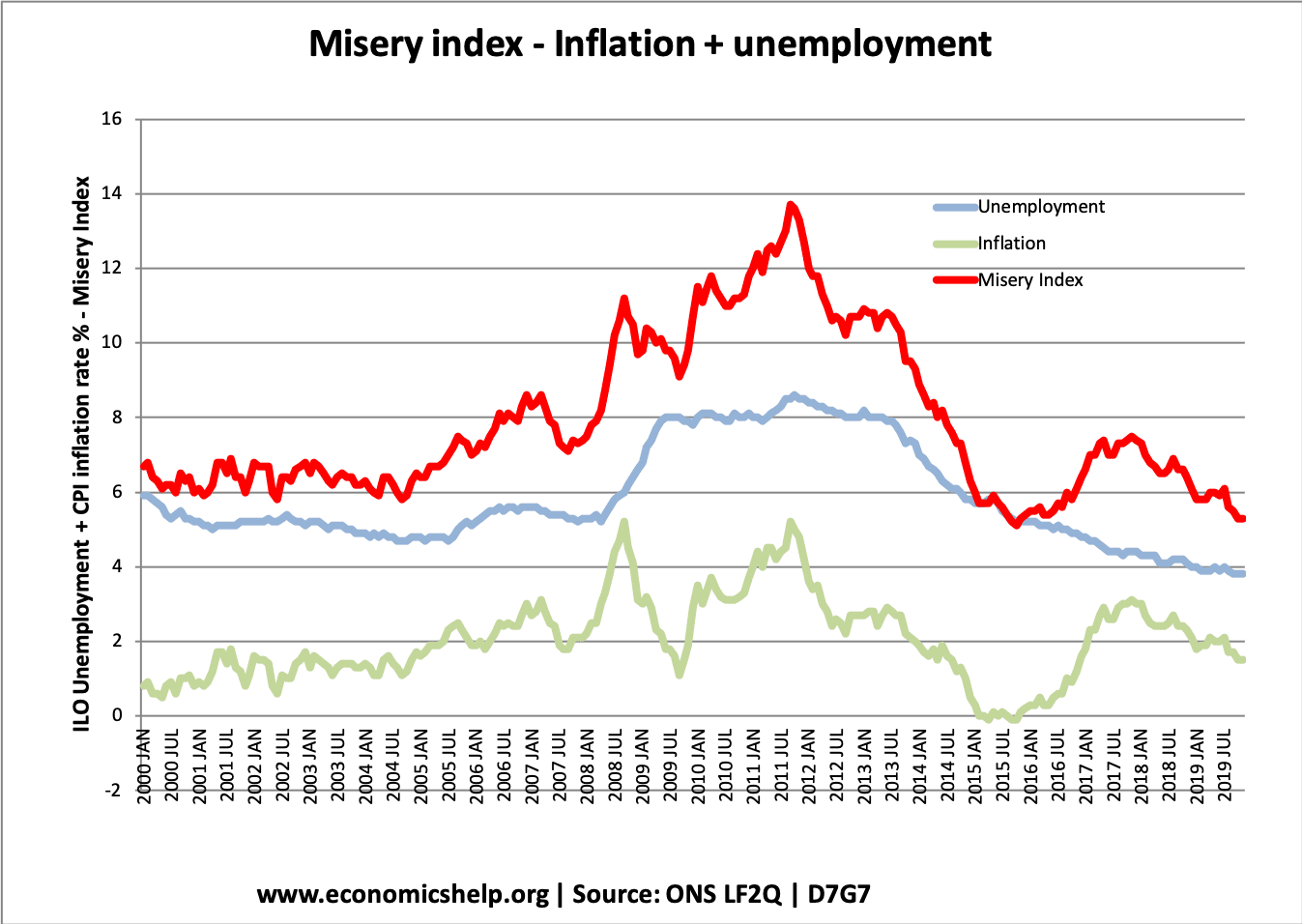
At its core, the Misery Index is the sum of a country’s annual inflation rate and its unemployment rate. It operates on a straightforward premise: when both prices for essential goods increase and the number of people without jobs rises, the general population experiences a significant decline in quality of life. While modern economics has become increasingly complex, involving sophisticated predictive modeling and high-frequency data analysis, the Misery Index remains a staple in public discourse because it translates abstract macroeconomic statistics into a concept that is immediately relatable to the average household.

The Mechanics and Origin of the Misery Index
The Misery Index was born out of the stagflation era of the 1970s, a period that challenged the traditional economic consensus. Before this, the prevailing Phillips Curve theory suggested an inverse relationship between inflation and unemployment; the idea was that as unemployment fell, inflation would naturally rise as the economy heated up. However, the 1970s saw the U.S. economy struggle with both high unemployment and high inflation simultaneously, creating a unique climate of stagnation that traditional models failed to predict or explain effectively.
Calculating the Index
The calculation is deceptively simple:
Misery Index = Inflation Rate + Unemployment Rate
By adding these two percentages, economists arrive at a single number. For instance, if a country has an annual inflation rate of 5% and an unemployment rate of 6%, the Misery Index score is 11. The simplicity of this formula is its greatest strength and its primary criticism. By boiling down complex national output, trade balances, and fiscal policy into a single additive score, it provides a “temperature check” that is easy to communicate to the public, even if it ignores nuance.
Historical Context and Political Utility
Arthur Okun, who served as the chairman of the Council of Economic Advisers under President Lyndon B. Johnson, initially conceived the index as a way to quantify the social cost of economic mismanagement. It gained massive popularity during the 1976 and 1980 presidential elections. Ronald Reagan famously utilized the Misery Index to challenge Jimmy Carter’s administration, arguing that a rising index was a definitive indictment of incumbent economic policy. Since then, the index has been frequently cited during election cycles as a rhetorical weapon to highlight the disconnect between government claims of economic growth and the lived reality of consumers.
The Economic Impact of High Misery Index Scores
A high Misery Index score is not merely a data point; it is a signal of structural instability within an economy. When both inflation and unemployment are elevated, the foundation of consumer confidence begins to erode. Understanding the specific mechanics of how these two factors interact helps explain why a high index score often correlates with social unrest and decreased private investment.
The Erosion of Purchasing Power
Inflation is often referred to as a “hidden tax.” When inflation is high, the purchasing power of the average wage earner declines. If wages do not grow at the same rate as the Consumer Price Index (CPI), families must make increasingly difficult choices about how to allocate their limited resources. They may forgo savings, rack up credit card debt, or cut back on essential services like healthcare and education. This loss of purchasing power reduces the “velocity of money”—the speed at which money changes hands—which slows down economic growth even further.
The Psychological and Social Toll
Unemployment carries a weight beyond the simple loss of income. It is linked to increased rates of mental health struggles, community instability, and a decline in future-earning potential due to skill atrophy. When a significant portion of the workforce is sidelined, the tax base shrinks, placing additional pressure on government social safety nets. When combined with the high cost of goods, these factors create a “misery trap” where citizens feel that their effort to work and contribute to the economy is being devalued by forces beyond their control. This sentiment can lead to political polarization, as citizens look toward populism or radical policy shifts as a solution to their financial distress.
Critiques and Limitations of the Index
Despite its popularity, the Misery Index is frequently criticized by professional economists for its lack of sophistication. It is often described as a “blunt instrument” that ignores the underlying drivers of economic change. Critics argue that relying on the index can lead to a fundamental misunderstanding of what is actually happening within a national economy.
Lack of Nuance in Variable Weighting
One of the primary critiques is that the index treats inflation and unemployment as having an equal impact on human well-being. However, research suggests that the pain felt from unemployment is often more acute and immediate than the pain felt from a gradual rise in the cost of goods. Furthermore, the index does not distinguish between different types of inflation—such as “demand-pull” inflation, which can be a sign of a robust economy, and “cost-push” inflation, which is driven by supply chain shocks. By weighting them at a 1:1 ratio, the index fails to tell us whether an economy is in a period of necessary adjustment or a period of genuine systemic collapse.
Omitting Key Economic Indicators
The index is also criticized for what it leaves out. Modern personal finance and macroeconomics rely on a wide array of indicators, including:
- GDP Growth: The index ignores productivity levels.
- Income Inequality: A low index score can exist even if the majority of the wealth gains are concentrated at the top.
- Debt-to-Income Ratios: The index does not measure the individual debt burden of the population.
- Interest Rates: High interest rates are often used to fight inflation, which can cause economic pain that the standard Misery Index doesn’t capture until it manifests as unemployment.
The Evolution of the Index: The “Hanke” Variation
In response to these limitations, some economists, such as Steve Hanke of Johns Hopkins University, have proposed modified versions of the index. The “Hanke Misery Index” is more comprehensive, adding lending interest rates to the sum of inflation and unemployment, and then subtracting the annual percentage change in real GDP per capita.
By including interest rates, this version captures the cost of borrowing, which is a major factor in the lives of small business owners and homeowners. By subtracting GDP growth, it accounts for the fact that a growing economy can “outrun” some of the pain caused by inflation or unemployment. This evolution acknowledges that while the original index was a brilliant pedagogical tool, the modern global economy requires a multi-dimensional approach to track the financial well-being of a nation.

Conclusion: Why the Misery Index Still Matters
Even with its limitations, the Misery Index persists as a vital entry point for understanding the health of the average individual’s wallet. Its power lies in its accessibility. It forces politicians and central bankers to answer a simple question: “Are people better off than they were before?”
For the average person, personal finance is not managed through complex derivatives or international trade agreements, but through the price of gasoline, the cost of groceries, and the security of their job. The Misery Index captures the intersection of these daily pressures, making it a permanent feature of economic discourse. While it should never be the sole metric used to determine monetary policy, it remains the most effective summary of the human experience within the cold, hard data of economics. As we navigate an era of unprecedented global supply chain shifts and shifting labor markets, the Misery Index serves as a constant reminder that the ultimate goal of any economic system should be to reduce the stress and financial burden placed on its citizenry.
aViewFromTheCave is a participant in the Amazon Services LLC Associates Program, an affiliate advertising program designed to provide a means for sites to earn advertising fees by advertising and linking to Amazon.com. Amazon, the Amazon logo, AmazonSupply, and the AmazonSupply logo are trademarks of Amazon.com, Inc. or its affiliates. As an Amazon Associate we earn affiliate commissions from qualifying purchases.