
The bass clef. For many, it’s an enigmatic symbol adorning musical scores, a curious squiggle that hints at deeper, resonant tones. But what exactly does it look like, and why is this specific visual representation so crucial to understanding the world of music? While our website primarily delves into the realms of technology, branding, and finance, the fundamental principles of understanding complex systems and visual communication resonate across all disciplines. Just as a well-designed app interface or a compelling brand logo communicates vital information, the bass clef acts as a visual key, unlocking a specific sonic landscape.

This article will explore the visual characteristics of the bass clef, its historical evolution, and its fundamental role in musical notation. We’ll also draw parallels to how clear visual communication is essential in the tech, brand, and money sectors we frequently discuss, demonstrating that understanding symbols, whether musical or digital, is a cornerstone of comprehension and effective engagement.
The Anatomy of the Bass Clef: A Visual Deconstruction
At its core, the bass clef is an instantly recognizable symbol. It’s often described as resembling a stylized letter “F” or a reversed “C” with two dots. Let’s break down its constituent parts:
The Dominant Curve: The Heart of the Clef
The most prominent feature of the bass clef is its large, sweeping curve that begins on the left, moves upwards and then loops back downwards, ending with a distinct flourish. This curve is the foundational element, and its precise placement on the musical staff is what gives the clef its identity.
The Two Defining Dots: Anchoring the Pitch
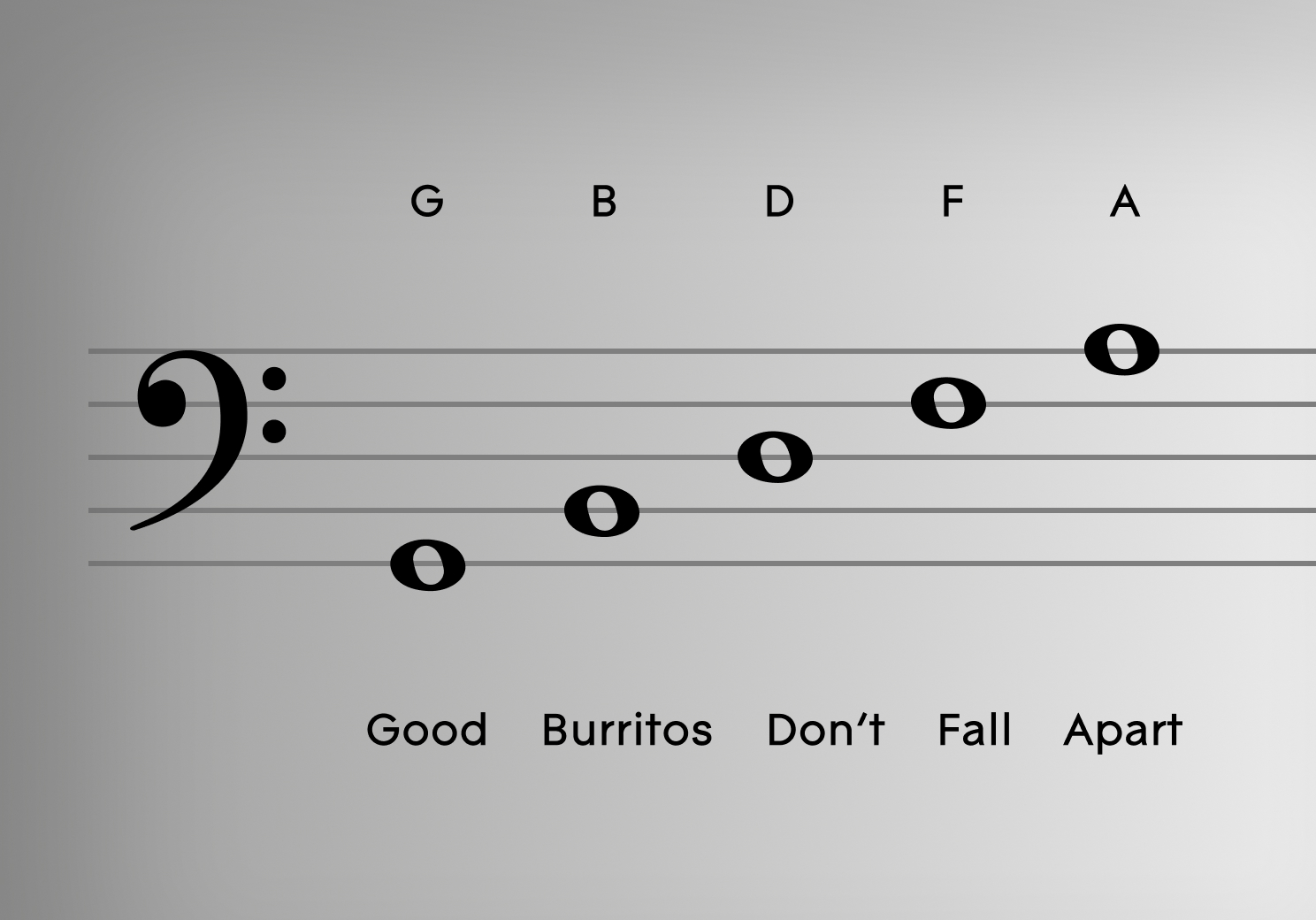
Following the prominent curve, the most critical visual elements are the two dots. These are not mere decorative additions; they are anchors that precisely define a specific note. In the bass clef, these two dots are positioned on either side of the fourth line from the bottom of the musical staff. This placement is paramount.
The Line Itself: The Foundation of the Staff
The musical staff, upon which the clef sits, consists of five horizontal lines and the four spaces between them. The bass clef’s design intrinsically relates to these lines. The dominant curve of the clef actually crosses the fourth line from the bottom. It is this crossing point, and the subsequent placement of the two dots on either side of this line, that unequivocally identifies this as the bass clef.
What the Dots Tell Us: The F Note
The two dots of the bass clef are not arbitrary. They serve to highlight and emphasize the F note. Specifically, they surround the fourth line of the staff. This line, therefore, is designated as the F below middle C. This is the defining characteristic of the bass clef: it dictates that the fourth line from the bottom of the staff represents the note F.
The Significance of the Symbol’s Origin
The modern bass clef symbol is a descendant of a much older, more ornate script that evolved over centuries. While the exact origins are debated, it is widely believed to have evolved from a stylized Latin letter “F” used in medieval musical notation. This evolution from a recognizable letter to a more abstract symbol mirrors trends seen in branding and graphic design, where clarity and impact are often achieved through simplification and stylization. The goal remains the same: to convey meaning efficiently and unambiguously.
Beyond the Shape: The Functional Purpose of the Bass Clef
The bass clef isn’t just a pretty picture; it’s a functional tool that dictates the entire pitch interpretation of the music written on the staff.
Setting the Foundation: The Key to the Lower Register

The primary function of the bass clef is to indicate that the music written on the staff is to be played in the lower register. This means it’s primarily used for instruments and vocal ranges that produce deeper, more resonant sounds. Think of the cello, the double bass, the bassoon, the trombone, the tuba, and the lower ranges of the piano and organ. It also applies to the left-hand part of piano music and the lower vocal parts like bass and baritone.
Establishing the Reference Point: The F Line
As we’ve established, the bass clef’s most crucial role is to assign the note F to the fourth line from the bottom of the staff. This creates a fixed reference point, a constant in the otherwise fluid arrangement of lines and spaces. Once this reference point is understood, all other notes on the staff can be determined relative to it.
The Hierarchy of Notes: Reading the Staff
With the F note firmly established on the fourth line, the remaining notes on the staff can be easily deciphered. The lines and spaces ascend in pitch. For instance, the space immediately above the F line will be G, the next line will be A, and so on. Conversely, moving downwards from the F line, the space below will be E, the next line down will be D, and so forth. This systematic arrangement makes musical notation a powerful and efficient language.
The Treble Clef Counterpart: A Visual Contrast
To fully appreciate the bass clef, it’s helpful to consider its counterpart: the treble clef. The treble clef, often depicted as a stylized letter “G,” is used for higher-pitched music. Its curl wraps around the second line from the bottom of the staff, designating that line as the G note above middle C. The distinct visual difference between the bass and treble clefs is not accidental; it serves to immediately differentiate the intended pitch range of the music, preventing confusion and ensuring accurate interpretation. This dual-clef system is a testament to the power of visual cues in conveying complex information.
Parallels to Tech, Brand, and Money: The Universal Language of Clarity
The principles behind the bass clef – clear visual representation, establishing reference points, and efficient communication of complex information – are deeply ingrained in the disciplines we explore on this website.
Tech: The Intuitive Interface
In the realm of technology, visual cues are paramount to user experience. An app icon, a button design, or an error message are all forms of visual language. Just as the bass clef guides a musician to the correct pitches, an intuitive user interface guides a user through a digital product. The clarity of a software’s design, the ease with which one can understand a dashboard, or the immediate recognition of a security icon all depend on effective visual communication. A poorly designed interface, like misinterpreting a clef, can lead to frustration and errors. AI tools, in particular, are constantly striving to understand and generate visual information, from recognizing objects in images to creating user-friendly interfaces.
Brand: The Visual Identity
Brand strategy, corporate identity, and design all rely heavily on visual language. A logo is a simplified, iconic representation of a company’s essence. Color palettes, typography, and imagery are carefully chosen to evoke specific emotions and convey particular messages. The bass clef, in its own way, is a highly effective piece of visual branding for a specific musical context. A strong brand, like a well-understood clef, creates immediate recognition and communicates intent without the need for lengthy explanations. Case studies in marketing often highlight how a powerful visual identity can cut through the noise and connect with an audience on a fundamental level.
Money: The Language of Financial Literacy
Personal finance, investing, and business finance all involve understanding complex numerical and symbolic information. Charts, graphs, and financial statements are visual tools designed to communicate financial health and potential. Just as a musician learns to read notes on a staff using clefs as guides, individuals learning about personal finance need clear visual aids to understand budgets, investment performance, and market trends. A well-designed financial app, for instance, uses clear visualizations to make complex data accessible. The ability to interpret these visual representations is a critical component of financial literacy. Online income streams and side hustles often require understanding visual representations of performance metrics and sales funnels.
Conclusion: More Than Just a Symbol
So, what does a bass clef look like? It’s a distinctive symbol, a stylized “F” with two dots, fundamentally defining the lower pitches on a musical staff. But its significance extends far beyond its visual form. It’s a gateway to a rich world of sound, a critical tool for musical comprehension, and a prime example of how effective visual language can simplify complexity.
In the same way that a well-designed app makes technology accessible, a compelling brand resonates with its audience, and clear financial tools empower individuals, the bass clef empowers musicians. By understanding its shape and function, we unlock a deeper appreciation for the intricate systems that govern our world, whether those systems are built on lines and notes, code and pixels, or market fluctuations and investment strategies. The universal quest for clarity and effective communication, whether in the concert hall or the digital marketplace, continues to be driven by the power of well-understood symbols.
aViewFromTheCave is a participant in the Amazon Services LLC Associates Program, an affiliate advertising program designed to provide a means for sites to earn advertising fees by advertising and linking to Amazon.com. Amazon, the Amazon logo, AmazonSupply, and the AmazonSupply logo are trademarks of Amazon.com, Inc. or its affiliates. As an Amazon Associate we earn affiliate commissions from qualifying purchases.