At the fundamental level of electrical engineering, a capacitor is more than just a passive component; it is an essential reservoir for electrical energy. Often described as a tiny, two-terminal rechargeable battery, its ability to store and release energy with extreme speed makes it the backbone of modern electronics. From the delicate timing circuits inside a smartphone to the high-power smoothing systems in industrial machinery, the capacitor plays a role that is both diverse and indispensable.
The Physical Mechanics of Capacitance
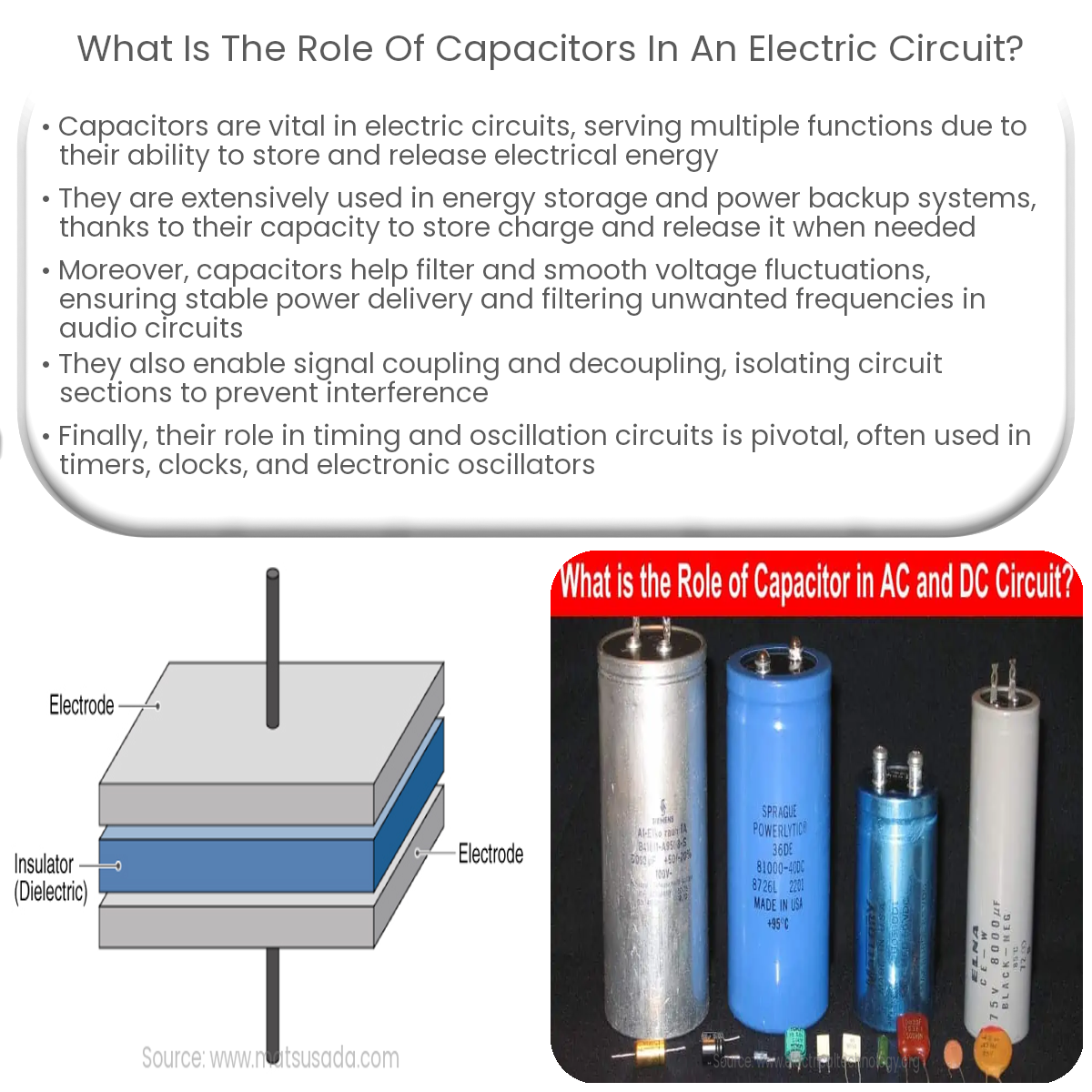
To understand the function of a capacitor, one must first look at its physical construction. In its simplest form, a capacitor consists of two conductive plates separated by an insulating material known as a dielectric. When a voltage is applied across these plates, an electric field forms within the dielectric, forcing positive charges to accumulate on one plate and negative charges on the other.
The Role of the Dielectric
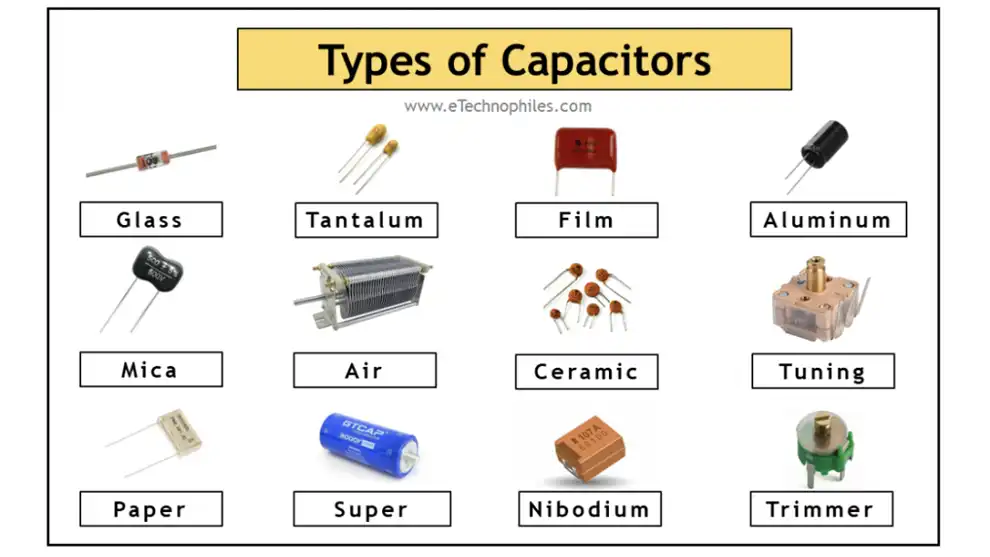
The dielectric is the secret sauce of the capacitor. It prevents the charges from jumping across the gap, thereby allowing them to be held in static equilibrium. The material used—be it ceramic, plastic film, glass, or electrolytic paste—determines the capacitor’s efficiency, voltage rating, and thermal stability. By choosing the right dielectric, engineers can tailor a capacitor to perform in high-frequency environments, extreme heat, or high-voltage power lines.
Charge Storage and Field Dynamics
The fundamental function is the storage of electrostatic potential energy. Unlike a battery, which relies on slow, chemical reactions to release energy, a capacitor stores energy as an electric field. This allows it to discharge its entire contents in a fraction of a second. This “instantaneous” capability is the core reason why capacitors are used in everything from camera flashes to defibrillators, where a sudden burst of power is required.
Essential Functions in Electronic Circuits
Because capacitors react to changing voltages in predictable ways, they are utilized for a variety of critical tasks within a circuit. Their primary function often shifts depending on whether they are placed in series or parallel within a system.
Filtering and Smoothing Power Supplies
One of the most common applications of a capacitor is in power supply circuits. When alternating current (AC) is converted to direct current (DC), the resulting voltage is often “rippled” or wavy. A capacitor placed across the output acts as a reservoir. It charges during the peaks of the voltage wave and discharges during the troughs, effectively “ironing out” the ripple. This process provides a smooth, stable DC voltage that sensitive electronic components—such as microprocessors—require to function without errors.
Decoupling and Bypass Capabilities
In complex digital circuits, high-speed switching of transistors can create “noise” or fluctuations in the local power rail. If left unchecked, this noise can cause logic errors or system crashes. Capacitors are placed near the power pins of integrated circuits to act as local energy buffers. They provide the instantaneous current required by the chip during switching, while simultaneously shunting high-frequency noise to the ground, thereby “cleaning” the power supply for the chip.
Signal Coupling and DC Blocking
In audio and radio frequency (RF) circuits, signals are often composed of a varying AC signal riding on top of a constant DC offset. In many cases, the DC component is undesirable for the next stage of the circuit. A capacitor placed in series acts as a “blocker” for DC—since steady current cannot flow through the dielectric—while allowing the AC signal to pass through via electromagnetic induction. This is a critical function in multi-stage amplifiers where one stage must communicate its signal to the next without the DC bias interfering.
Advanced Roles in Timing and Tuning
Beyond simple energy storage and filtering, capacitors are vital for controlling the temporal and frequency-based characteristics of electrical systems.
Timing Circuits and RC Constants
By pairing a capacitor with a resistor, engineers create an “RC circuit.” Because it takes a finite amount of time for a capacitor to charge through a resistor, this combination acts as a precise clock. By varying the resistance or the capacitance, the duration of a pulse can be controlled. This is how blinking LED indicators, pulse-width modulation (PWM) controllers, and even the “debounce” circuitry in a keyboard switch operate.
Frequency Selection and Resonant Circuits
In radio technology, capacitors are the primary component in tuning circuits. When paired with an inductor, a capacitor forms an “LC tank circuit.” This circuit has a natural resonant frequency—the frequency at which it prefers to oscillate. By using a variable capacitor to change the capacitance, a radio receiver can tune in to specific frequencies, effectively “filtering out” every other station except the one desired. This principle is the foundation of all wireless communication, from Bluetooth and Wi-Fi to satellite transmissions.
Safety, Reliability, and Longevity
While capacitors are remarkably robust, their function is dictated by their limits. Understanding the lifecycle of a capacitor is a key aspect of hardware maintenance and design.
Voltage Ratings and Dielectric Breakdown
Every capacitor is designed to hold a maximum voltage. If this threshold is exceeded, the dielectric can suffer a breakdown, resulting in a short circuit and potential component failure. This is why capacitors are often oversized in power-heavy applications—providing a safety margin that ensures the device remains operational even during voltage spikes.
The Phenomenon of Aging
Electrolytic capacitors, which use a liquid electrolyte, are particularly prone to aging. Over time, the electrolyte can evaporate, changing the capacitor’s value or causing it to fail completely. In the world of consumer electronics, this is the most common reason for device failure. When a monitor starts flickering or a stereo stops producing sound, it is almost always due to a dried-out capacitor failing to perform its smoothing or coupling function. Recognizing these signs is essential for anyone involved in hardware repair or long-term system design.
Conclusion: The Silent Workhorse
The function of a capacitor is defined by its reaction to time and change. It is a component that resists change in voltage, stores energy in an electric field, and acts as a selective filter for signals. Whether it is ensuring that a CPU receives clean, stable power or allowing a radio to find a specific frequency, the capacitor is an unsung hero of modern technology.
Without these components, our digital landscape would be unable to function. We would have no stable power for our computers, no way to filter out the noise in our audio systems, and no way to tune into the wireless signals that connect the modern world. By mastering the fundamental behavior of the capacitor, one gains a deeper understanding of the physics that power our digital age, transforming how we perceive the silent, hidden actions of the circuit boards inside our everyday devices. From the tiny ceramic components on a smartphone motherboard to the massive electrolytic cans in a power substation, the capacitor remains a cornerstone of electrical engineering, silently managing energy and signals to keep our world running smoothly.