
In the modern landscape of digital finance, the terms “ACH” and “EFT” are frequently used interchangeably. While they are inextricably linked, they represent different concepts within the architecture of global payments. Understanding the nuances between these two acronyms is essential for business owners, finance managers, and individuals aiming to optimize their payment workflows. At its core, the distinction lies in the relationship between a broad category of movement and a specific method of execution.
Defining the Scope: EFT vs. ACH
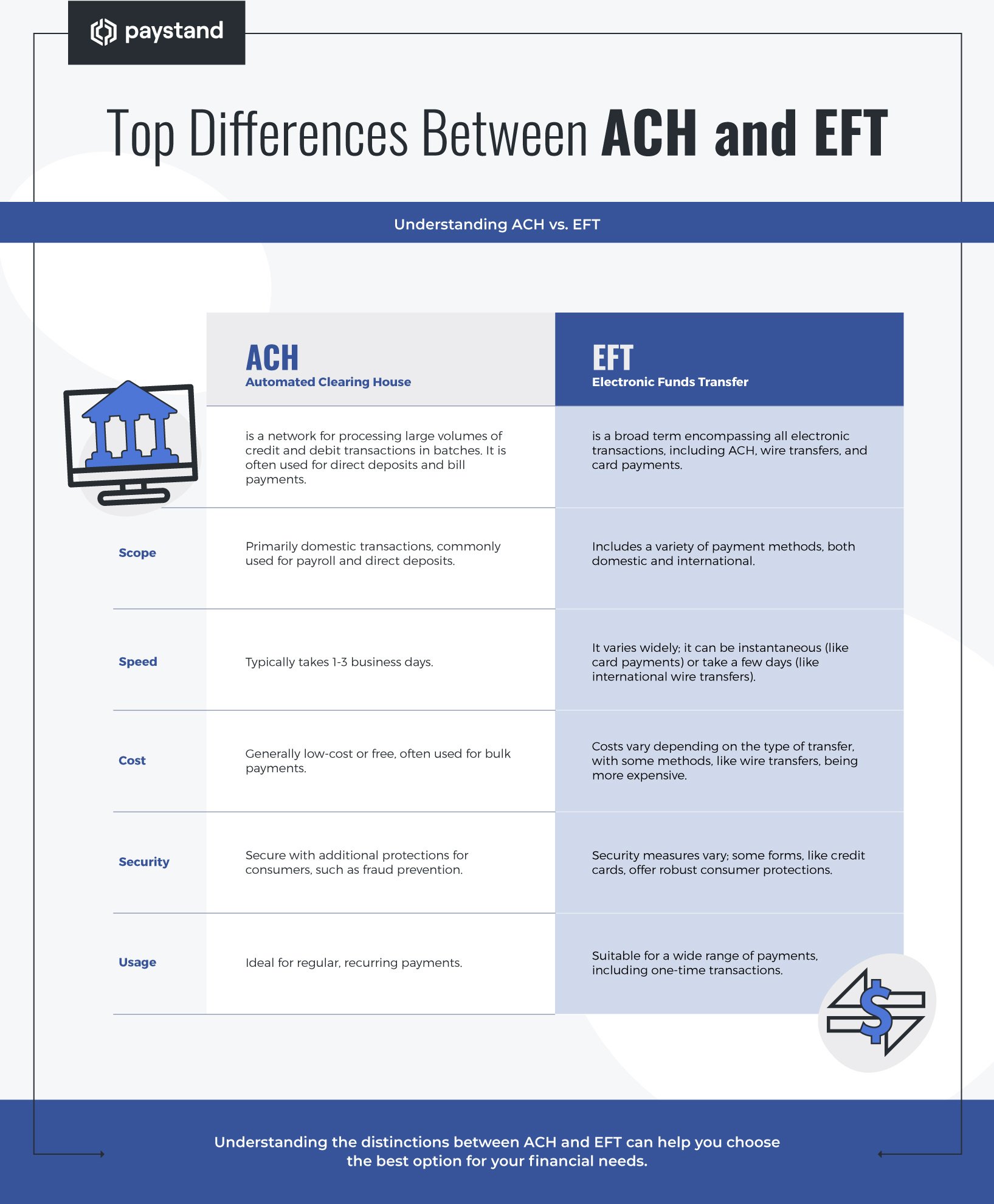
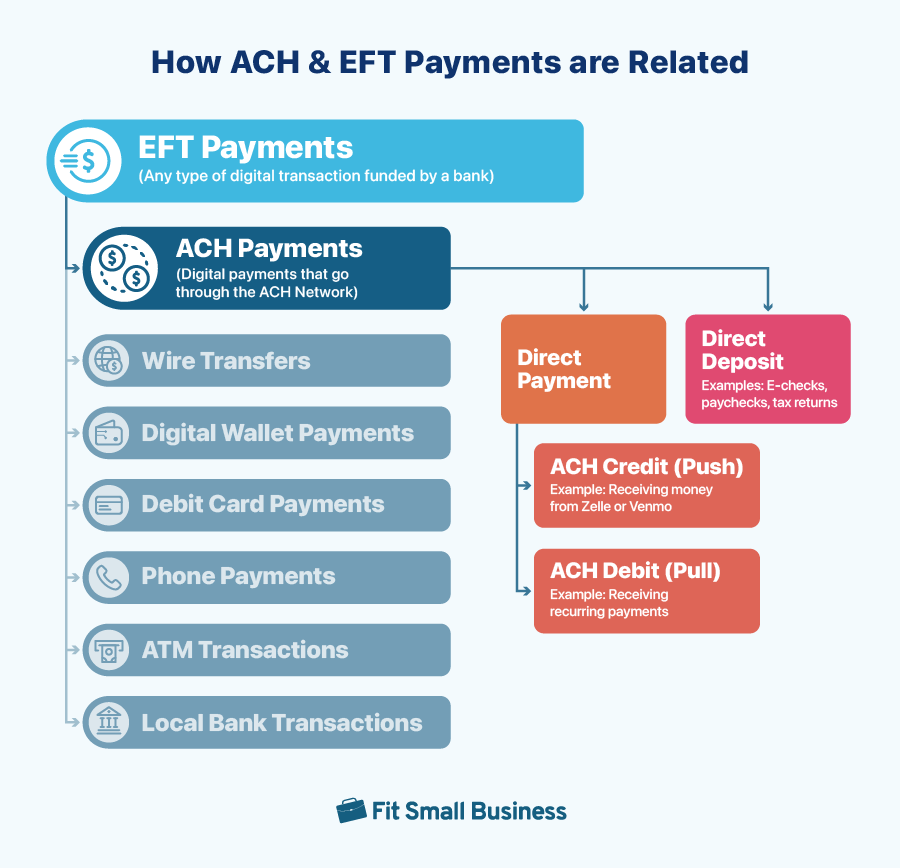
To understand the difference, one must first look at the hierarchy of digital payments. Electronic Funds Transfer (EFT) is the umbrella term, while Automated Clearing House (ACH) is a specific, highly regulated network utilized within the United States.
Understanding EFT (Electronic Funds Transfer)
Electronic Funds Transfer refers to any transfer of money initiated through an electronic terminal, telephone, computer, or magnetic tape for the purpose of ordering, instructing, or authorizing a financial institution to debit or credit an account. It is a broad, catch-all category. If you move money digitally, you are engaging in an EFT.
Common examples of EFTs include:
- ATM withdrawals.
- Direct deposits of payroll.
- Point-of-sale (POS) transactions using a debit card.
- Wire transfers.
- Online bill payments.
- ACH transfers.
Because EFT is a functional description rather than a specific network, it encompasses everything from instantaneous credit card swipes at a grocery store to complex international wire transfers.
Understanding ACH (Automated Clearing House)
The ACH network is a specific processing system governed by the National Automated Clearing House Association (Nacha). Unlike the broad definition of EFT, ACH is a batch-processing system. It is designed to move large volumes of payments in groups rather than individually.
When you set up an automatic utility payment or receive your paycheck via direct deposit, your bank is interacting with the ACH network. It acts as a digital clearinghouse that connects banks and credit unions across the United States. It is not designed for speed—transactions are typically processed in batches throughout the day—but it is highly efficient and cost-effective, making it the backbone of recurring financial transactions in the U.S. economy.
Key Operational Differences: Speed, Cost, and Reliability
The functional gap between ACH and the broader category of EFT becomes apparent when analyzing the mechanics of how money is moved and the constraints placed upon those movements.
Transaction Processing and Batching
The most significant technical difference is the “batch” nature of the ACH network. Because ACH payments are grouped together and sent to the clearinghouse in specific intervals, they are not typically real-time. A standard ACH credit transaction usually takes one to three business days to settle.
Conversely, other forms of EFTs—such as wire transfers or card-based transactions—often operate on real-time gross settlement systems. When you send a wire, the funds are cleared almost immediately because the banks have a direct, non-batched agreement. When you use your debit card, the EFT signal is sent to your bank to verify funds instantly at the point of sale.
Cost Structures
For businesses, the distinction is vital for cash flow management. ACH transactions are significantly cheaper than most other forms of EFT. Because ACH payments are batched and automated, they require less manual oversight and lower network fees per transaction. Wire transfers, which fall under the EFT umbrella but outside the ACH network, usually incur higher fees because they require individual, high-priority processing.
For companies managing thousands of payroll entries or subscription billing cycles, the cost-savings of using the ACH network over other electronic transfer methods can reach tens of thousands of dollars annually.
Geographical and Network Constraints
The ACH network is distinctly American. It functions within the U.S. banking system and cannot be used for international transfers. Other forms of EFT, such as the SWIFT system for wire transfers, are designed specifically to bridge the gap between different national banking infrastructures. If you are attempting to pay a vendor in Europe, you are engaging in an EFT, but you are specifically using an international wire system, not an ACH transfer.
Why the Distinction Matters for Business Finance
Distinguishing between ACH and other EFT methods is not merely an academic exercise; it is a fundamental requirement for operational efficiency and risk management in business finance.
Managing Cash Flow Cycles
Businesses that rely heavily on ACH are effectively trading speed for cost. Because ACH payments take a few days to clear, businesses must account for this “float” time in their accounting software. If a business needs to ensure that funds are available immediately for a critical vendor payment, they might choose an alternative EFT method, like a wire transfer or an instant digital payment rail, even though the cost is higher. Understanding that ACH is a slower, batch-processed EFT allows financial managers to time their outgoing payments to maximize working capital.
Security and Dispute Resolution
Both ACH and other EFTs are governed by the Electronic Fund Transfer Act (EFTA), which provides a framework for consumer protection. However, the dispute resolution process differs based on the mechanism used.
ACH transactions have specific “return codes” that allow for reversal under strict conditions, such as unauthorized debits. Because ACH involves a standardized clearing process, there is a clear audit trail for every batch. Other forms of EFT, such as credit-backed transactions, have their own distinct dispute protocols, often managed through card network rules rather than Nacha guidelines. Business owners must understand these protocols to effectively handle chargebacks and unauthorized activity.
Integration with Financial Tools
Most modern accounting software and financial management platforms (like QuickBooks, Xero, or ERP systems) automate the distinction between ACH and other EFTs. When a user selects a payment method, the software determines the underlying rail. However, the manual entry of bank routing and account numbers is standard for ACH, while other EFTs might require additional verification layers or intermediary bank identifiers (like SWIFT/BIC codes for international wires). Recognizing which information is required—and why—prevents payment failures and delays.
Future Trends: The Convergence of Real-Time EFTs
While the historical difference between ACH and other EFTs is rooted in speed and batching, the financial industry is currently undergoing a shift toward “Real-Time Payments” (RTP).
The Rise of Faster ACH
The ACH network has introduced Same-Day ACH to bridge the gap between traditional batch processing and modern expectations for speed. This evolution moves the ACH closer to the instant gratification of other EFT methods without abandoning the cost-efficiency of the clearinghouse model.
Emerging EFT Rails
Newer technologies and digital wallets represent the next generation of EFTs. These systems are technically EFTs but operate on proprietary rails that exist outside the traditional banking batch-clearing systems. By leveraging API connectivity, these platforms offer the speed of a wire transfer at a fraction of the cost of traditional banking services.

Conclusion: Making Informed Decisions
The confusion between ACH and EFT is understandable, given their overlapping functions. However, for anyone managing personal or corporate finances, the distinction is clear: EFT is the broad definition of digital money movement, while ACH is a specific, reliable, and cost-effective tool within that category.
By viewing ACH as the “slow and steady” workhorse of domestic recurring payments and viewing other EFT methods as specialized tools for speed, international reach, or instant point-of-sale verification, finance professionals can build a more resilient and cost-effective payment architecture. Whether you are optimizing payroll, managing vendor relationships, or overseeing daily operational expenses, selecting the right payment rail requires a deep understanding of how these mechanisms move money across the digital divide.
aViewFromTheCave is a participant in the Amazon Services LLC Associates Program, an affiliate advertising program designed to provide a means for sites to earn advertising fees by advertising and linking to Amazon.com. Amazon, the Amazon logo, AmazonSupply, and the AmazonSupply logo are trademarks of Amazon.com, Inc. or its affiliates. As an Amazon Associate we earn affiliate commissions from qualifying purchases.