
In the realm of physical sciences, the distinction between a mixture and a compound serves as the bedrock for understanding how matter is organized, manipulated, and utilized. While these terms are frequently used interchangeably in casual conversation, they represent fundamentally different structural realities. For the analytical mind, understanding these differences is not merely an academic exercise; it is the prerequisite for chemistry, material science, and industrial engineering. Whether you are analyzing the synthesis of new polymers or simply looking to understand the fundamental laws of nature, the divergence between a mixture and a compound is absolute.
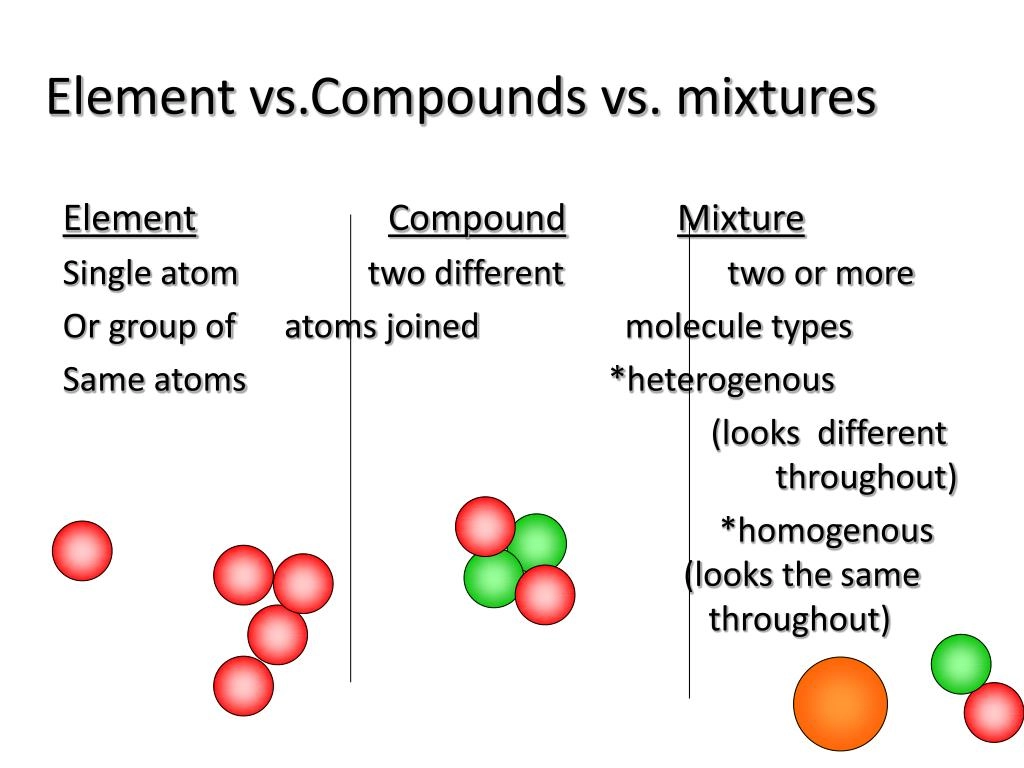
The Fundamental Definitions: Physical Aggregation vs. Chemical Bonding
At the heart of the matter lies the distinction between physical mixing and chemical reaction. This is the primary fault line upon which all other differences are built.
The Nature of Mixtures
A mixture is defined as a material system made up of two or more different substances that are mixed together but remain physically distinct. In a mixture, the components do not react with each other; they retain their individual chemical properties. If you take iron filings and mix them with powdered sulfur, you have a mixture. You can see the iron, and you can see the sulfur. If you were to bring a magnet near this mixture, the iron would be drawn away, leaving the sulfur behind. The substances have not lost their identities; they have simply been brought into proximity.
The Nature of Compounds
A compound, by contrast, is a substance formed when two or more chemical elements are chemically bonded together. This bonding is not a simple proximity arrangement; it is a fundamental transformation. When atoms bond to form a compound, they share or transfer electrons, creating a new substance with properties entirely distinct from those of the original elements. Using our previous example, if you heat that mixture of iron and sulfur to a specific temperature, they react to form iron sulfide. Iron sulfide is a compound. It is no longer attracted to a magnet, nor does it behave like raw sulfur. The elements have sacrificed their individual identities to create an entirely new entity.
Structural Differences: Defining the Composition
The way atoms and molecules are organized in a mixture versus a compound dictates how these materials behave under stress, heat, and chemical interaction.
Variable Proportions in Mixtures
Mixtures possess a fluid architecture. Because the components are not chemically bound, they can be present in any ratio. You can have a mixture of salt and water that is extremely salty, or one that is barely salty. The concentration depends entirely on the proportion of the ingredients you choose to add. There is no “formula” for a mixture because there is no required stoichiometric ratio. This flexibility is what makes mixtures so useful in industrial applications—you can tailor the composition to achieve specific physical characteristics, such as the ductility of an alloy or the viscosity of a lubricant.
Fixed Proportions in Compounds
Compounds are governed by the law of definite proportions. Every compound has a unique chemical formula that dictates the exact ratio of elements required to form it. Water, a quintessential compound, is always H2O. It is two hydrogen atoms covalently bonded to one oxygen atom. If you were to alter that ratio, you would no longer have water; you might have hydrogen peroxide (H2O2) instead. This fixed ratio is the result of valence shell requirements and the necessity of achieving chemical stability. You cannot “adjust” the ratio of a compound without destroying the compound itself.

Separation and Synthesis: The Energy of Change
How we separate materials back into their base components provides the ultimate proof of their structural classification.
Separation of Mixtures
Because a mixture is a physical aggregation, it can be separated using physical methods. These processes do not require the breaking of chemical bonds, as none were formed. Common separation techniques include:
- Filtration: Using a porous barrier to separate solids from liquids.
- Distillation: Leveraging differences in boiling points to separate liquids.
- Chromatography: Utilizing the different affinities of substances for a stationary or mobile phase to separate components based on molecular size or solubility.
- Magnetism: Using magnetic fields to extract ferromagnetic materials from non-magnetic substrates.
These processes are generally energy-efficient and rely on the physical properties—density, boiling point, or solubility—that the substances retained while in the mixture.
Separation of Compounds
Compounds are significantly more stubborn. Because the constituent elements are held together by powerful electrostatic forces (chemical bonds), they cannot be separated by simple physical means. You cannot filter water to remove the hydrogen, nor can you use a magnet to pull the iron out of iron sulfide. To decompose a compound, you must supply enough energy—typically in the form of electricity (electrolysis), intense heat (thermal decomposition), or chemical reagents—to break the bonds that hold the molecule together. This requires a fundamental shift in energy states, making the process of separating a compound far more complex and resource-intensive than separating a mixture.
Industrial and Scientific Implications: Why the Distinction Matters
The categorization of matter into mixtures and compounds is not a theoretical quirk; it is the engine of modern industry and technology.
Alloys and Materials Science
In metallurgy, the distinction between a mixture and a compound is critical. Most industrial “metals” are actually mixtures known as alloys. Steel, for instance, is a mixture of iron and carbon. By adjusting the percentage of carbon, engineers can manipulate the hardness, corrosion resistance, and tensile strength of the resulting material. If steel were a compound with a fixed ratio, we would be limited to only one type of steel. By treating it as a mixture, we can engineer specific grades for bridges, medical instruments, or aerospace components.
Chemical Synthesis and Pharmacology
In the pharmaceutical industry, the focus shifts to compounds. When synthesizing a drug, the goal is to create a specific molecular structure—a compound—that will interact with biological receptors in a predictable way. A mixture of the raw ingredients used to create a drug would be therapeutically useless or potentially toxic. The drug must be a purified compound, with every molecule identical to the next. The rigorous process of chemical synthesis is designed to ensure that the compound is formed correctly, with precise stoichiometry, and that all remaining impurities (mixtures) are removed.

Environmental Engineering
Understanding mixtures is essential for water purification and waste management. Polluted water is essentially a complex mixture of water, minerals, organic matter, and synthetic contaminants. Environmental engineers use our understanding of physical separation—filtration, distillation, and ion exchange—to remove these contaminants. By understanding that these pollutants are present as a mixture rather than a chemically bonded component of the water, engineers can design systems that strip away the waste while leaving the H2O molecules intact.
Ultimately, the distinction between a mixture and a compound is the distinction between a pile of parts and a designed machine. A mixture is a snapshot of existence where elements happen to occupy the same space; a compound is a deliberate, energy-stable construction of matter. By mastering these definitions, one gains the ability to deconstruct the physical world into its core components and reconstruct it into the advanced materials that define modern civilization. Whether you are refining petroleum, crafting an alloy, or simply brewing a cup of coffee, you are operating within the framework of these two fundamental realities.
aViewFromTheCave is a participant in the Amazon Services LLC Associates Program, an affiliate advertising program designed to provide a means for sites to earn advertising fees by advertising and linking to Amazon.com. Amazon, the Amazon logo, AmazonSupply, and the AmazonSupply logo are trademarks of Amazon.com, Inc. or its affiliates. As an Amazon Associate we earn affiliate commissions from qualifying purchases.