
In the intricate landscape of global finance, the movement of goods and capital across borders is rarely frictionless. While the ideal of free trade advocates for an open, borderless marketplace, many nations turn toward a policy known as trade protectionism. Understanding this concept is essential for investors, business owners, and those managing corporate finances, as it directly impacts market volatility, supply chain costs, and the profitability of international ventures.
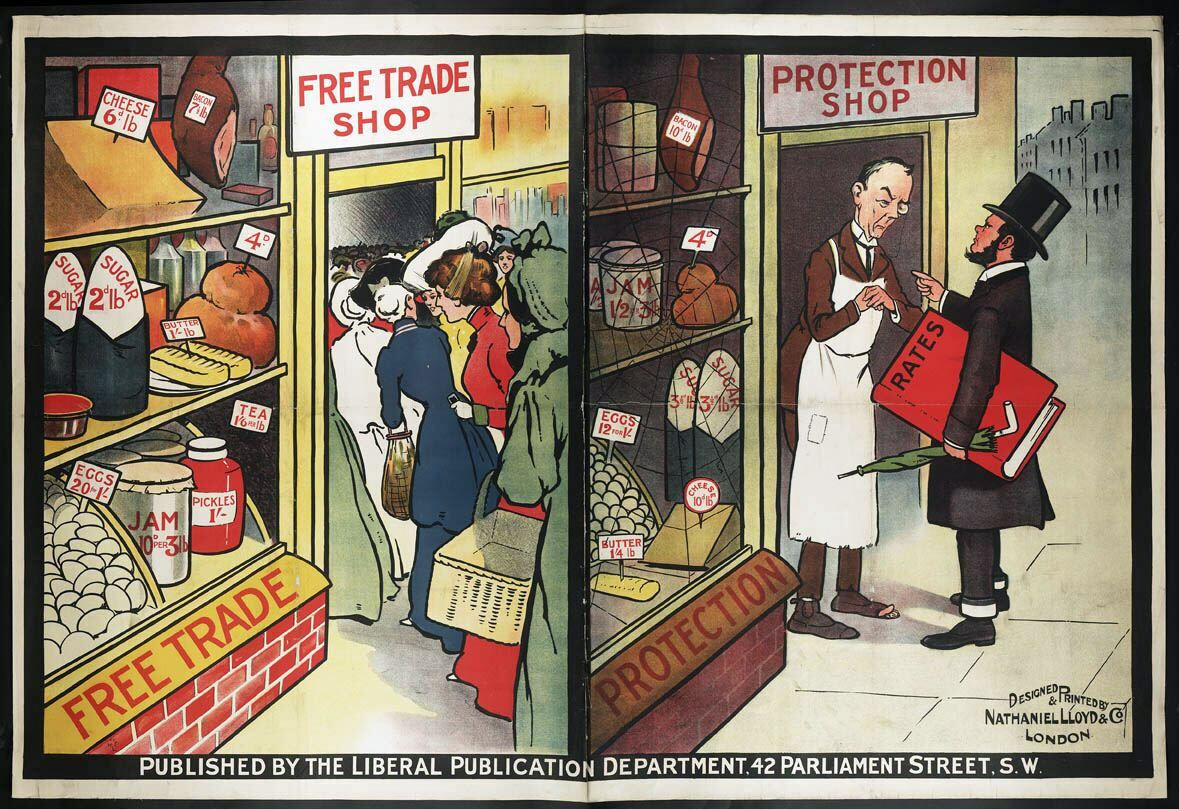
Trade protectionism is an economic policy wherein a government takes deliberate measures to restrict international trade with the goal of shielding domestic industries from foreign competition. By artificially inflating the cost of imported goods or limiting the quantity of imports allowed into the country, a government attempts to nurture local businesses, preserve domestic jobs, and insulate the national economy from the fluctuations of the global market.

The Mechanisms of Protectionist Policy
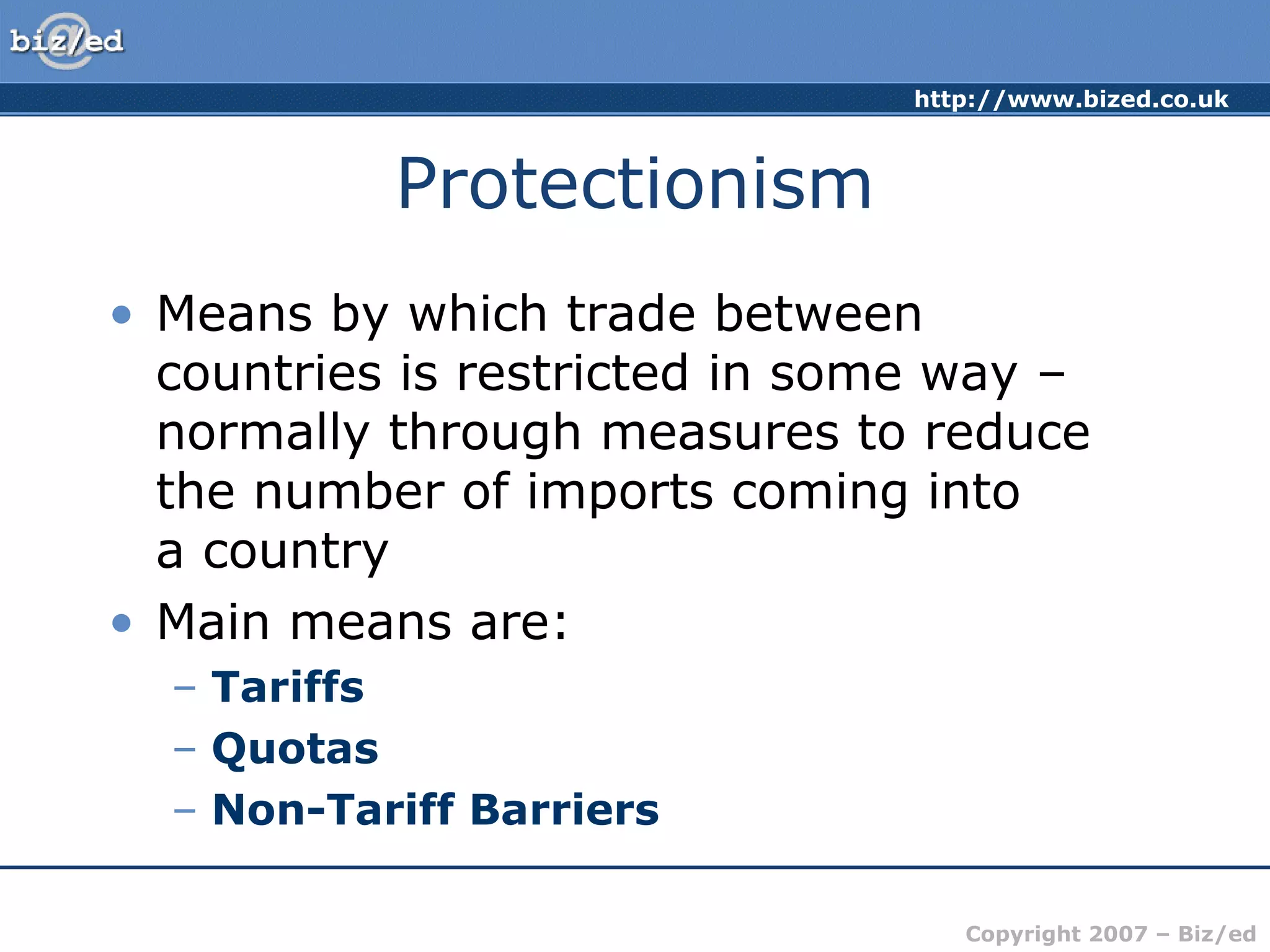
Governments employ a variety of fiscal and regulatory tools to implement protectionist strategies. Each of these mechanisms acts as a barrier, altering the financial landscape for both multinational corporations and smaller enterprises that rely on global supply chains.
Tariffs: The Financial Barrier
Tariffs are the most recognizable tool of protectionism. These are taxes levied on imported goods. By imposing a tariff, a government increases the end-user price of the foreign product, making domestic alternatives appear more attractive by comparison. For a business, this is a direct tax on the cost of goods sold. When tariffs are introduced, firms must decide whether to absorb the cost—thereby shrinking their profit margins—or pass the expense on to the consumer, which may dampen demand.
Quotas and Import Licenses
Unlike tariffs, which manipulate price, import quotas manipulate supply. A quota sets a hard limit on the quantity of a specific good that can be imported during a given period. Once that limit is reached, no further imports are permitted. This scarcity often drives up the price of the remaining available goods, allowing domestic producers to capture a larger market share at higher price points. Import licenses serve as a bureaucratic gatekeeping method, where only authorized entities are permitted to bring foreign goods into the country, giving the state significant control over domestic market composition.
Subsidies and Domestic Support
Protectionism is not always about penalizing imports; it is also about strengthening domestic players. Governments may provide subsidies, tax breaks, or low-interest loans to industries deemed “strategic.” By subsidizing local production, the government lowers the overhead costs for domestic companies, allowing them to compete more effectively against foreign rivals who might have an inherent cost advantage due to lower labor costs or economies of scale.
The Economic Rationale and Strategic Intent
Why would a nation willingly choose to restrict trade, potentially inviting retaliatory measures from its partners? The rationale behind protectionism is rooted in the pursuit of national economic stability and long-term industrial independence.
The Infant Industry Argument
One of the most persistent defenses of protectionism is the “infant industry” argument. Emerging domestic industries, particularly in developing nations, often lack the infrastructure and scale to compete with established global titans. Protectionist policies act as a “training wheels” mechanism, shielding these new industries from intense foreign pressure until they reach a level of operational maturity where they can compete on a level playing field.
National Security and Strategic Autonomy
In an era of global supply chain fragility, many nations view total dependence on foreign imports as a strategic liability. This is particularly prevalent in sectors such as agriculture, energy, pharmaceuticals, and defense technology. If a country relies entirely on external sources for its food supply or high-tech components, a geopolitical rift could result in a catastrophic supply shock. Protectionist measures are used to ensure that a country maintains a sufficient domestic production capacity to meet its own essential needs regardless of international tensions.
Addressing Trade Imbalances
When a country consistently imports far more than it exports, it runs a persistent trade deficit. Economists argue over whether these deficits are inherently harmful, but governments often see them as a sign of wealth leakage and job erosion. By curbing imports through protectionist measures, a nation aims to balance the scales, theoretically encouraging consumption of domestic goods and keeping capital within the national borders.
The Financial Risks for Businesses and Investors
For the investor or business leader, protectionism introduces a layer of systemic risk that can disrupt portfolios and business models overnight. The shift toward protectionist policies is rarely a smooth transition; it is often volatile and reactive.
Margin Compression and Inflation
When tariffs are placed on raw materials—such as steel, aluminum, or microchips—the businesses that rely on these inputs face immediate margin compression. If the business is unable to renegotiate supplier contracts or pass the costs to the customer, its bottom line suffers, which can lead to depressed stock valuations. Furthermore, if these costs are passed down the supply chain, the result is “cost-push” inflation, where the consumer eventually pays more for finished goods, potentially slowing down economic growth.
Retaliation and Trade Wars
The greatest danger of protectionism is the risk of a “trade war.” When one nation imposes a tariff, the affected trading partners rarely sit idle. They often respond with retaliatory tariffs on the first country’s key exports. This tit-for-tat cycle creates a high-stakes game of chicken that can lead to a significant decline in global trade volume. Investors must remain wary of industries heavily reliant on international trade, as these are the first to experience volatility when protectionist policies are signaled by government leaders.
Shifting Supply Chain Strategies
Protectionism necessitates a shift in corporate finance and operational strategy. To mitigate the risks of tariffs and quotas, firms often undergo “nearshoring” or “friend-shoring,” which involves moving production facilities to countries with more favorable trade agreements. While this can provide long-term stability, the capital expenditure required to shift manufacturing bases is immense. Businesses that fail to adapt their supply chains to the reality of a protectionist world may find themselves locked out of vital markets or saddled with unsustainable costs.
Evaluating the Future of Trade Policy
The global economy is currently navigating a pivot away from the hyper-globalization of the late 20th century toward a more segmented, protection-focused environment. This shift is driven by a desire for domestic stability, political populism, and the need for supply chain resilience in a post-pandemic world.
For stakeholders in the financial sector, the definition of trade protectionism has evolved from a theoretical textbook concept to a practical, everyday hurdle. It is a tool of government policy that attempts to trade the efficiency of global markets for the perceived safety of domestic control. While protectionism can help nurture nascent industries and secure critical supply lines, it comes at the cost of higher consumer prices, potential trade retaliation, and increased operational complexity for businesses.
As an investor or business owner, monitoring government rhetoric regarding trade policy is as important as tracking interest rates or quarterly earnings. A protectionist turn in a country’s policy can alter the trajectory of an entire industry. Success in this environment requires not only an understanding of market fundamentals but also a keen awareness of the political climate that defines the borders within which capital flows. The balance between open markets and protective barriers remains the central tension of modern economic policy, and those who can navigate this divide are best positioned to protect and grow their assets in the long term.
aViewFromTheCave is a participant in the Amazon Services LLC Associates Program, an affiliate advertising program designed to provide a means for sites to earn advertising fees by advertising and linking to Amazon.com. Amazon, the Amazon logo, AmazonSupply, and the AmazonSupply logo are trademarks of Amazon.com, Inc. or its affiliates. As an Amazon Associate we earn affiliate commissions from qualifying purchases.