
In the world of personal finance, precision is the difference between a sound investment strategy and a mathematical oversight. While most people navigate their daily financial lives using dollars and cents—the standard decimal format—fractions remain a persistent remnant of historical accounting and specific industry standards. Understanding how to convert simple fractions like 1/8 into their decimal counterparts is not merely an exercise in elementary arithmetic; it is a fundamental tool for evaluating yields, parsing interest rates, and understanding fractional share ownership in the modern digital investment landscape.
The Mathematical Foundation of Decimal Conversion
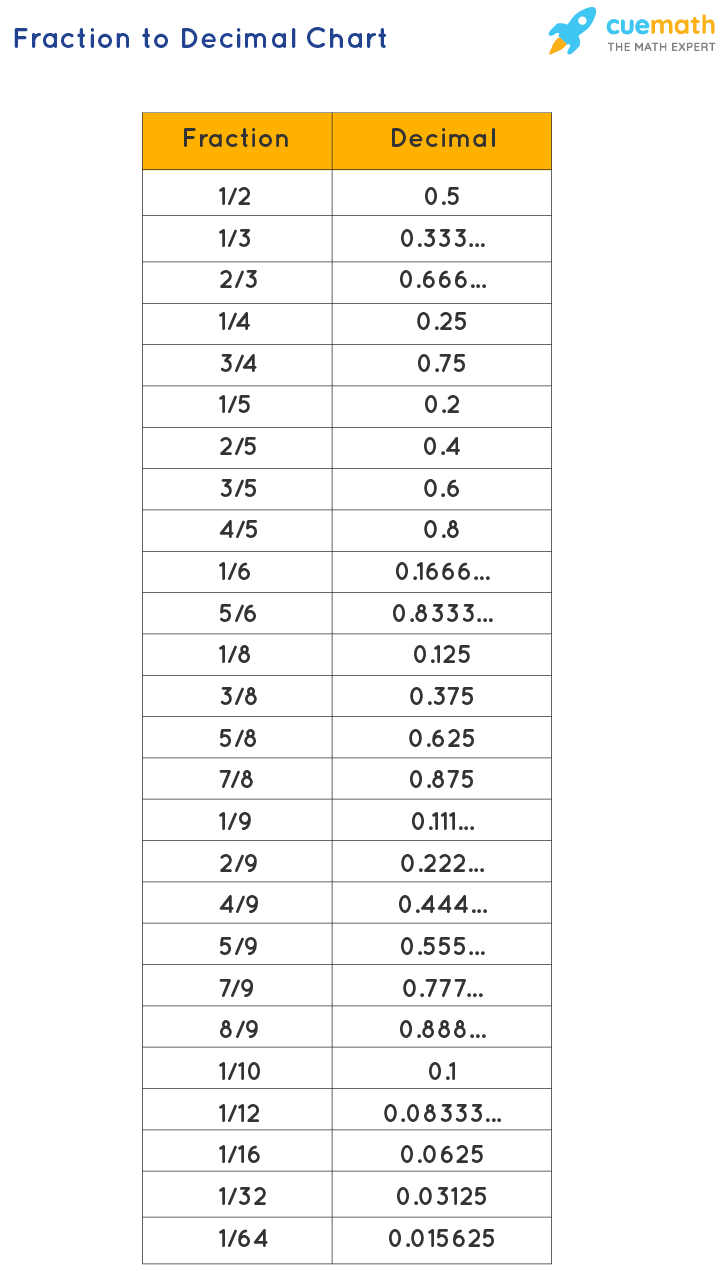
At its core, a fraction represents a division problem. When we look at the fraction 1/8, we are observing a ratio of one part to eight total parts. To convert this into a decimal, we simply perform the division: 1 divided by 8.
The Mechanics of the Calculation
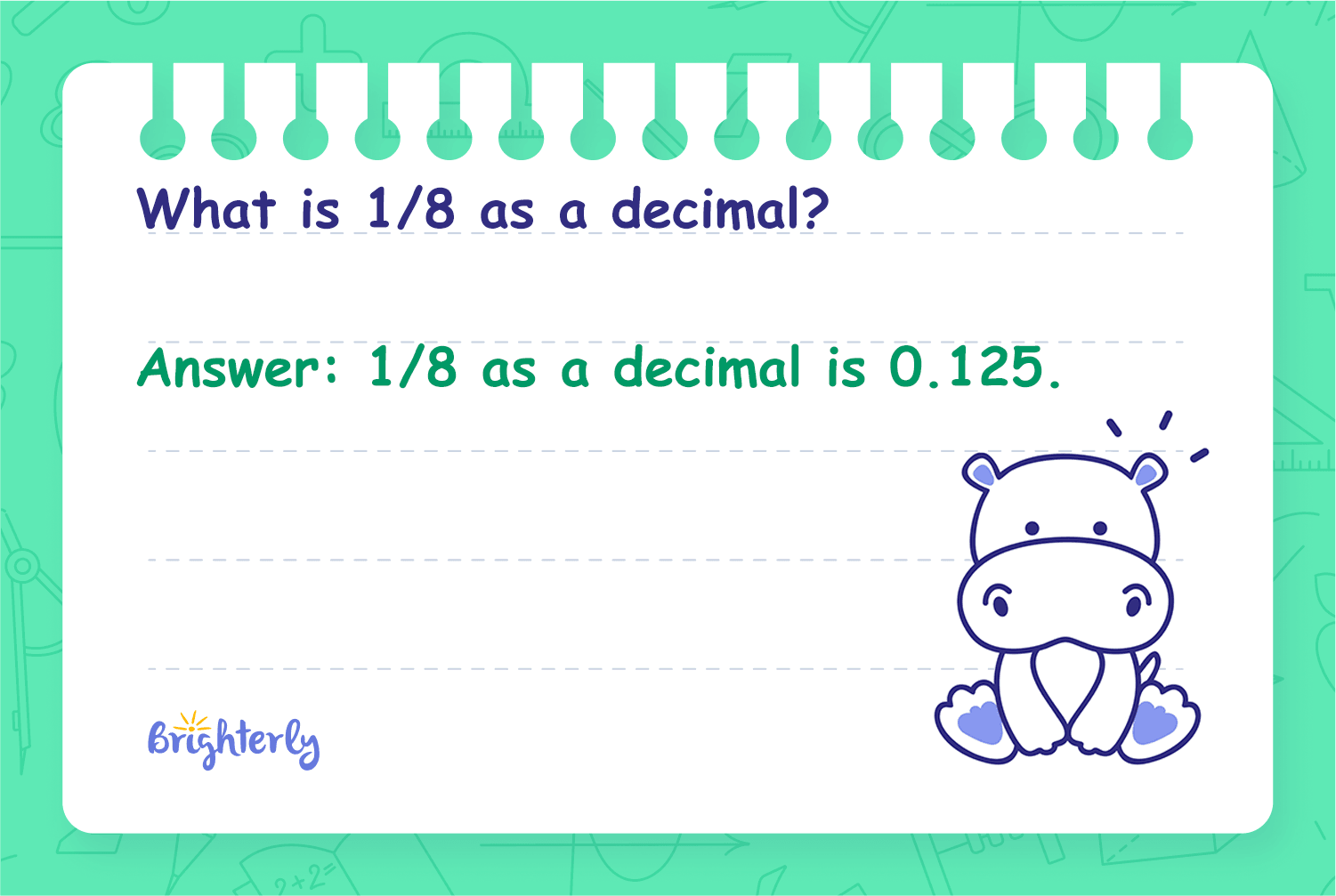
If you were to input this into a calculator or perform long division, the process reveals a clean, terminating decimal.
- 1.000 ÷ 8 = 0.125
Unlike repeating decimals—such as 1/3, which results in 0.333—the value 1/8 terminates precisely at the thousandths place. This specific value, 0.125, is a cornerstone in various financial contexts, particularly where increments of interest or asset pricing are involved. Recognizing this value instantly allows an investor or budgeter to bypass manual calculation and maintain momentum when analyzing complex data sets.
Precision and Rounding in Financial Reporting
In personal finance, the degree of precision you choose to maintain can significantly impact your bottom line. If an investment yield is calculated to several decimal places, rounding too early—for instance, rounding 0.125 up to 0.13—can lead to errors when compounding interest or projecting long-term growth. Because 1/8 is exactly 0.125, it is a “safe” fraction that does not require rounding, allowing for perfect accuracy in spreadsheet modeling and portfolio tracking.
1/8 in the Context of Investment and Banking
The fraction 1/8 is not merely a theoretical number; it appears with surprising frequency in traditional and modern financial instruments. Understanding its decimal equivalent allows investors to decode complex statements and market movements with greater clarity.
Interest Rates and Basis Points
The banking industry frequently speaks in terms of “basis points.” One basis point is equal to 0.01% (or 0.0001 in decimal form). When a central bank adjusts interest rates, they often do so in increments of 1/8 of a percentage point.
- 1/8 of a percent = 0.125%
- 0.125% = 12.5 basis points
This relationship is crucial for homeowners evaluating mortgage rate changes or investors monitoring bond yields. When a financial news outlet reports that a rate has been adjusted by “an eighth,” they are signaling a specific, calculated shift in the cost of borrowing or the yield on a security. Being able to instantly translate “an eighth” into “0.125%” provides the investor with the mental agility needed to assess the impact on their debt service or investment income immediately.
Fractional Share Investing
The emergence of retail investment platforms has popularized the concept of fractional share ownership. Investors no longer need to purchase a full share of a high-priced stock; they can buy a fraction. If you decide to invest a specific dollar amount that happens to align with 1/8 of a share, your platform will display this as 0.125 shares.
Understanding this conversion is essential for tracking your asset allocation. If your target portfolio requires that you hold 0.125 shares of a particular asset to maintain a specific risk profile, knowing the decimal equivalent ensures you are hitting your targets accurately. It removes the ambiguity of “buying a slice” and replaces it with the concrete reality of quantitative asset management.
Practical Applications for Personal Budgeting
While large-scale investments utilize decimals for yield analysis, individual budgeting requires a different kind of fluency. Small, fractional expenses often aggregate into significant annual figures.
Understanding Unit Pricing
When shopping for bulk goods or managing food costs, unit pricing is often presented in fractions or combined formats. If a store lists a product by volume or weight in fractional increments, converting these to decimals is the only way to effectively compare the “best buy.”
If Product A is sold in a 1/8 gallon increment and Product B is sold in a 0.15 gallon increment, a quick mental conversion of 1/8 to 0.125 reveals immediately that Product B is the larger volume. While this seems trivial on a single item, applying this level of scrutiny to weekly grocery expenditures—which often contain hundreds of fractional units—is the foundation of a disciplined, cost-conscious lifestyle.
Tax and Fee Projections
Tax brackets, fee structures, and commission rates on various trading platforms are often expressed as percentages. Occasionally, these percentages are presented as fractions to simplify complex tiered systems. If a service provider charges a fee of 1/8 of 1% (0.125%) on your account balance, being able to calculate that against your total assets is vital for understanding your net return.
Imagine an account with $10,000. A fee of 1/8 of 1% is calculated as:
$10,000 * 0.00125 = $12.50.
By understanding that 1/8 is 0.125, you quickly identify the decimal multiplier (0.00125) and can project your costs with ease. This transparency is key to avoiding “fee creep,” where small, misunderstood percentage charges silently erode your wealth over time.
Leveraging Technology for Precision
In the digital age, we have moved past the need for pencil-and-paper conversion. However, the application of these numbers remains a human responsibility.
Utilizing Spreadsheet Software Effectively
Excel, Google Sheets, and other financial modeling tools rely exclusively on decimals for their underlying logic. If you are building a budget tracker or an investment spreadsheet, inputting fractions as decimals ensures that your formulas remain clean.
- Instead of
=(A1/8)*B1, advanced users often prefer=(A1*0.125)*B1to maintain consistency across a dataset.
This habit creates a “clean code” environment for your personal finance documents. When your formulas are consistent, you are less likely to encounter “hidden” errors that occur when mixing fractional input types with decimal-based calculations.

Developing Financial Intuition
The ultimate goal of learning that 1/8 equals 0.125 is the development of financial intuition. When you no longer need to reach for a calculator to determine the value of an eighth, your brain is freed to perform higher-level analysis. You stop focusing on the mechanics of the math and start focusing on the strategy behind the numbers.
Does this 0.125% fee justify the service? Is this 0.125 share purchase moving me closer to my diversification goals? By mastering the decimal equivalent of simple fractions, you remove the barriers between you and your financial data. You transform from a passive observer of your bank account into an active manager of your economic future. Precision is not just about getting the right answer; it is about having the confidence to make informed decisions in a fast-paced, numerical world. Whether it is interest rates, stock ownership, or unit pricing, the conversion of 1/8 to 0.125 is a small but powerful step toward achieving true financial literacy.
aViewFromTheCave is a participant in the Amazon Services LLC Associates Program, an affiliate advertising program designed to provide a means for sites to earn advertising fees by advertising and linking to Amazon.com. Amazon, the Amazon logo, AmazonSupply, and the AmazonSupply logo are trademarks of Amazon.com, Inc. or its affiliates. As an Amazon Associate we earn affiliate commissions from qualifying purchases.