
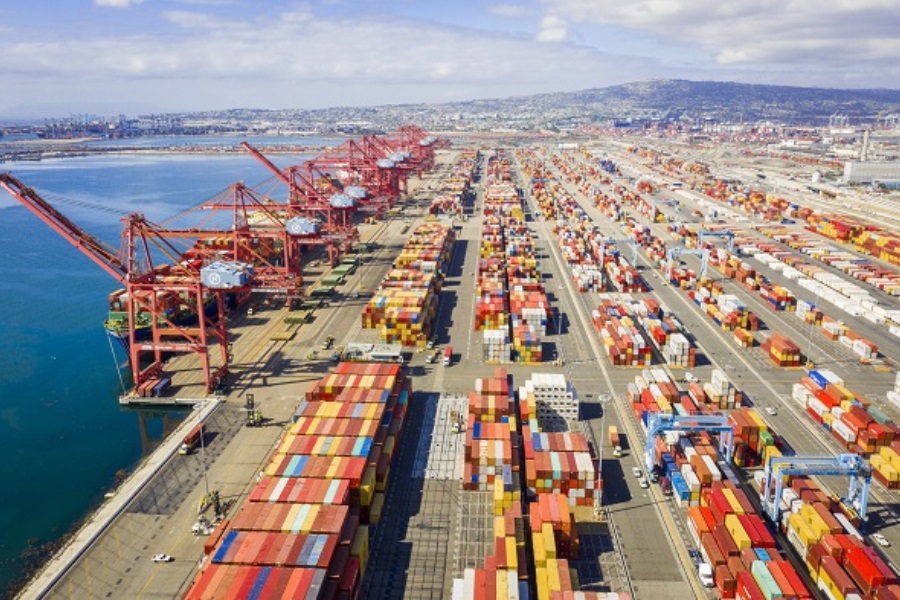
The Port of Los Angeles stands as the undisputed titan of American maritime commerce. Located in San Pedro Bay, just south of downtown Los Angeles, it consistently ranks as the busiest container port in the United States, a title it has held for over two decades. Understanding the financial implications of this logistical powerhouse is essential for anyone interested in the macro-economic forces that drive national prosperity, trade deficits, and global supply chain investments.
The Economic Engine of the Pacific Rim
The Port of Los Angeles is not merely a collection of docks and cranes; it is a fundamental asset in the global financial ecosystem. As the primary gateway for trade between the United States and Asia—specifically China, Japan, South Korea, and Taiwan—the volume of cargo passing through its terminals serves as a barometer for the American consumer economy.

Capitalizing on Import Volume
When we talk about the “busiest” port, we are referring to Twenty-foot Equivalent Units (TEUs), the standardized measure for shipping containers. The Port of Los Angeles processes millions of these units annually. For investors and business analysts, these figures are predictive of retail success. A surge in imports often signals inventory buildup ahead of peak retail seasons, reflecting corporate confidence in consumer spending. Conversely, a sustained dip in TEU volume can serve as a leading indicator of a cooling economy or a contraction in manufacturing output.
The Multiplier Effect on Local and National Wealth
The financial impact of the port extends far beyond the physical movement of goods. The infrastructure required to support such high-volume activity creates a massive multiplier effect. From drayage trucking firms and freight forwarders to customs brokerage houses and warehouse real estate developers, the port sustains a vast network of service-based businesses. For those interested in business finance, the port represents an ecosystem where capital allocation toward logistics and infrastructure yields significant dividends for the Southern California regional economy and, by extension, the national GDP.
Strategic Infrastructure and Commercial Logistics
The dominance of the Port of Los Angeles is secured by massive capital investment. Staying competitive in international trade requires constant upgrades in automation, dredging depth, and intermodal connectivity. This creates specific opportunities and risks for stakeholders in the industrial and logistics sectors.
The Capital Intensity of Modern Shipping
Operating a world-class port is a capital-intensive venture. The transition toward electric cargo-handling equipment, shore-power connections for vessels, and sophisticated digital terminal operating systems (TOS) requires billions in public and private funding. These investments are designed to increase the velocity of capital—moving goods faster reduces carrying costs for retailers and improves the liquidity of the supply chain. Businesses that can navigate the regulatory and financial landscape of these upgrades often find themselves at the center of a high-growth sector in industrial finance.

The Role of Intermodal Connectivity
A port is only as efficient as its connection to the rest of the country. The Port of Los Angeles excels because of its seamless integration with the BNSF and Union Pacific railroads. This intermodal capability allows goods arriving from Asia to be transferred directly from ships to rail cars, destined for massive distribution hubs in the Inland Empire, Chicago, or even the East Coast. For logistics companies, this efficiency is a major competitive advantage. Understanding how this rail-to-port integration functions is critical for investors looking at transportation stocks and freight-forwarding corporations.
Navigating Trade Volatility and Financial Risks
The business of global logistics is inherently susceptible to geopolitical shifts and economic volatility. Because the Port of Los Angeles is the busiest in the country, it is also the most exposed to disruptions, making it a focal point for risk management professionals and savvy investors.
Mitigating Exposure to Geopolitical Trade Policy
Trade wars, tariffs, and international sanctions directly impact the bottom line of the port. When policy shifts occur, the immediate financial fallout is felt at the terminals. For an individual or a firm managing business assets, the port’s activity levels provide a blueprint for how to hedge against trade-related shocks. If your business relies on components arriving from overseas, the operational status of the Port of Los Angeles is perhaps the most vital metric in your quarterly risk assessment.
Inventory Management as a Financial Tool
High volume at the port directly affects inventory management strategies. When the port is congested—as seen during the post-pandemic supply chain crisis—businesses are forced to tie up more working capital in “safety stock” to protect against delivery delays. This inflationary pressure on inventories changes the financial profile of retail and manufacturing companies. By monitoring the Port of Los Angeles’ performance reports, CFOs and supply chain managers can make better-informed decisions regarding their cash-to-cash cycle, helping them preserve liquidity in an uncertain global market.
Future Outlook: Trends in Maritime Investment
As global trade continues to evolve, the Port of Los Angeles is shifting its financial strategy toward sustainability and digital integration. For those looking at long-term investments, these trends offer a glimpse into the future of maritime finance.
Investing in the Green Supply Chain
Sustainability is no longer a corporate social responsibility talking point; it is a financial imperative. Ports are facing increasing pressure to reduce emissions, leading to massive investments in hydrogen fuel cells, electric vehicle charging infrastructure for trucks, and low-emission cargo handling. Companies that provide the technological backbone for these green transitions are positioned to capture significant market share. Investors focusing on ESG (Environmental, Social, and Governance) criteria are finding that the Port of Los Angeles is a primary testing ground for next-generation clean-energy logistics technology.
Digital Transformation and Big Data
The integration of blockchain and AI-driven data analytics into port operations is revolutionizing terminal efficiency. By digitizing the tracking of containers, the port is reducing the administrative overhead associated with international shipping. This transition represents a shift toward more transparent and efficient business operations. For investors in the “LogTech” (Logistics Technology) space, the Port of Los Angeles acts as the ultimate case study. The ability to process real-time data to optimize ship berthing times or gate processing speeds is transforming how profit margins are protected in the shipping industry.
The Bottom Line for Port Stakeholders
For the average investor or business professional, the Port of Los Angeles is a masterclass in the scale and complexity of the American economy. It remains the busiest port in the US not by accident, but through consistent investment in capacity, technology, and strategic connectivity. While it faces ongoing challenges—ranging from labor relations to infrastructure modernization—its role as the primary artery for Pacific trade ensures that it will remain a central pillar of financial and commercial activity for years to come. Recognizing its influence on inflation, supply chain stability, and corporate liquidity is essential for anyone serious about understanding the interconnected nature of our global economy. Whether you are managing personal investments in transportation or analyzing the health of retail sectors, keeping an eye on the Port of Los Angeles is, quite simply, good business.
aViewFromTheCave is a participant in the Amazon Services LLC Associates Program, an affiliate advertising program designed to provide a means for sites to earn advertising fees by advertising and linking to Amazon.com. Amazon, the Amazon logo, AmazonSupply, and the AmazonSupply logo are trademarks of Amazon.com, Inc. or its affiliates. As an Amazon Associate we earn affiliate commissions from qualifying purchases.