
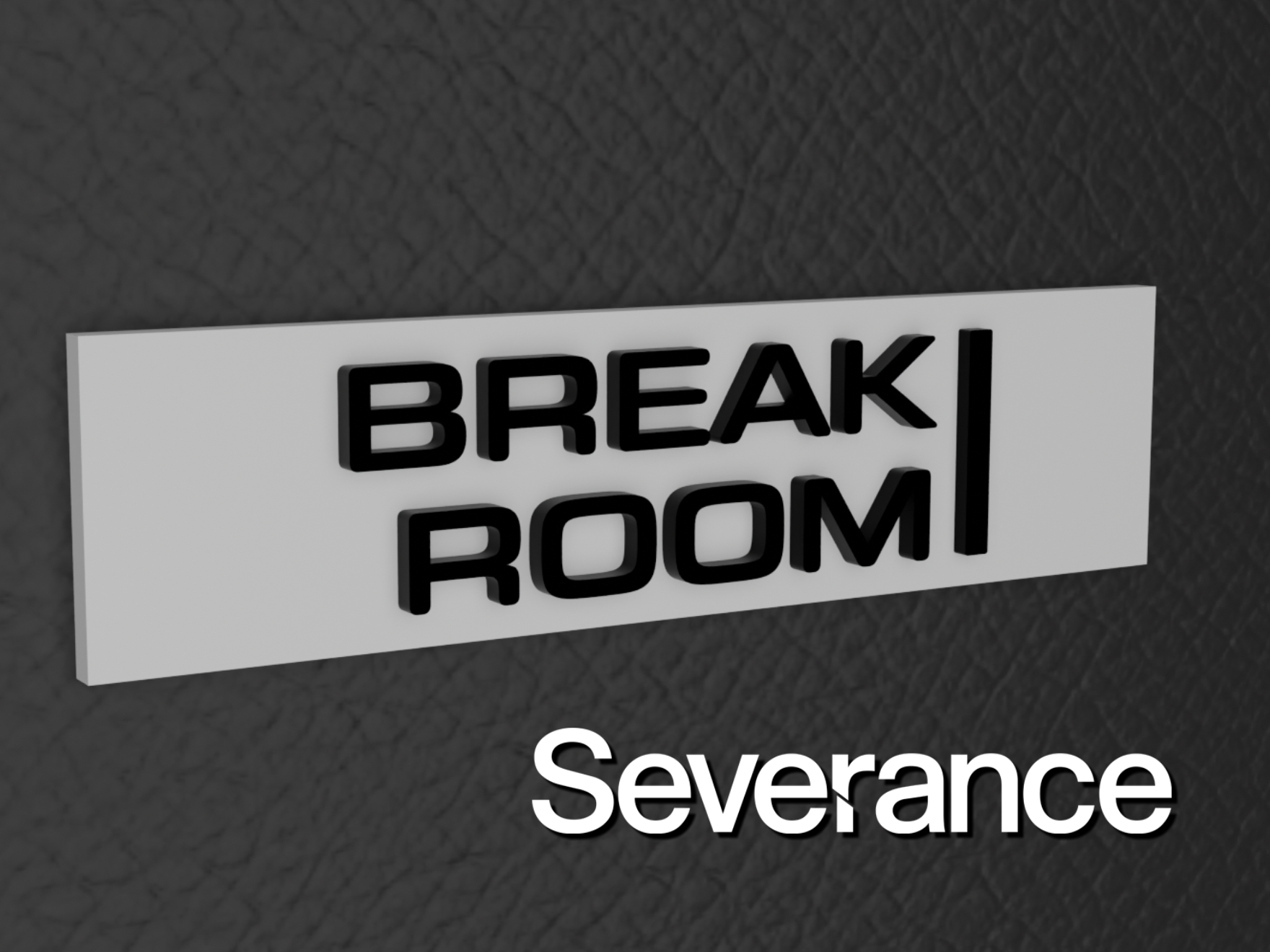
The “Break Room” depicted in the corporate thriller Severance serves as a chilling case study in the dark arts of corporate identity and behavior modification. While the series is a work of fiction, the psychological mechanisms at play reflect an extreme evolution of organizational psychology and coercive corporate culture. To understand the Break Room, one must look at it through the lens of brand strategy and corporate identity, where the employee’s sense of self is not merely managed, but engineered to align with a monolithic corporate mission.
The Architecture of Corporate Identity
In the world of Lumon Industries, the Break Room is not a space for rest; it is a space for the absolute erasure of the individual. In branding terms, the corporation functions as a cult of personality—not of an individual, but of the brand itself. The Break Room is the “policing” mechanism of the brand’s identity.

The Institutionalization of Compliance
When a corporation seeks to build a powerful brand, it requires employees to act as brand ambassadors. In the context of Severance, this goes beyond typical marketing strategy and enters the realm of psychological subjugation. The Break Room utilizes a specific, repetitive script—an apology that must be recited until the “sincerity” of the speaker satisfies the listener.
This process is a perversion of performance management. In standard corporate practice, performance reviews are designed to align individual KPIs with company goals. In the Break Room, the goal is total assimilation. The employee is forced to disassociate from their personal feelings to perform the emotional labor required by the corporate brand. By forcing the worker to repeat phrases they do not believe, the corporation systematically dismantles the subject’s ability to dissent.
The Space as a Branding Tool
The physical environment of the Break Room—minimalist, stark, and devoid of the comforts typical of a corporate lounge—reinforces the brand’s power. A brand’s physical footprint, from the office layout to the break room, informs the employee’s perception of the hierarchy. By stripping away all individuality, the brand signals that the worker is a component of the machine, not a stakeholder in the company’s success.
Psychological Conditioning and Brand Loyalty
At its most toxic, corporate culture attempts to manufacture loyalty. While healthy companies achieve this through shared values and fair compensation, the “severed” model takes this to an artificial extreme. The Break Room is essentially a mechanism for enforced loyalty.
Behavioral Modification through Repetition
Marketing experts often speak of “message repetition” to build brand recall. The Break Room applies this principle to human behavior. By forcing an employee to repeat an apology until it is deemed “genuine” by an external monitor, the company is attempting to hard-wire the worker’s responses.
The psychological toll is immense. In traditional branding, we aim to have the customer feel that a product is an extension of their identity. In this fictional office, the company attempts to replace the employee’s identity with the corporate agenda. The “severance” procedure creates a blank slate, and the Break Room acts as the software installer, ensuring that the “inner” employee remains perfectly aligned with the brand’s requirements, regardless of their private moral objections.
The Illusion of Choice and the “Genuine” Persona
Central to the efficacy of the Break Room is the concept of the “genuine” apology. The monitor, Ms. Casey, does not look for an apology; she looks for a performative indicator of compliance. This is a dark mirror of customer service training, where employees are taught to “smile through the phone” until the attitude becomes reflexive. The difference is that in Severance, the stake is the employee’s very sense of self. When the brand demands that the employee “believes” in the apology, it is essentially demanding a form of gaslighting. The brand requires the employee to doubt their own autonomy to maintain the status quo.
The Brand as a Closed Ecosystem
The Break Room represents the terminal stage of a closed-loop corporate identity. In a healthy organization, there is a porous membrane between the company and the outside world, allowing for checks, balances, and individual agency. Lumon Industries eliminates this membrane, turning the brand into a totalizing, all-consuming force.
The Cost of Total Brand Alignment
Why would a company invest such energy into psychological control? The answer lies in the pursuit of absolute consistency. In global branding, consistency is the holy grail. Whether you buy a coffee in London or Tokyo, the experience should be identical. When applied to human labor, this desire for consistency becomes tyrannical.
The Break Room is where the “deviant” variable—human emotion, curiosity, or disagreement—is crushed. From a brand management perspective, the Break Room is the ultimate, if horrific, tool for ensuring that every “asset” (the employee) behaves exactly according to the brand manual. It is the elimination of “on-brand” deviation.
The Erosion of Professional Autonomy
The series forces us to ask: at what point does professional dedication become corporate exploitation? We see employees who have no memory of the world outside, making their entire existence contingent on the brand. When an employee is punished in the Break Room, they are being punished for failing to uphold the “brand values.”
In real-world terms, companies often struggle with employees who do not “fit” the culture. Most successful businesses focus on hiring the right talent to match the brand. Severance presents a hypothetical future where the company is so desperate to maintain its brand integrity that it will force the employee to adapt through sheer psychological pressure. It is a cautionary tale about the dangers of prioritizing corporate identity over human dignity.
Beyond the Screen: Lessons in Corporate Culture
While the Break Room is a science-fiction construct, it highlights the importance of psychological safety in the workplace. When a brand becomes a closed system that refuses to listen to its employees, it risks creating a culture of resentment and performative compliance.
The Value of Dissent
Great brands thrive on feedback, iteration, and, occasionally, friction. When a company creates a culture where dissent is treated as a “breach of contract,” it stagnates. The Break Room, by design, destroys the ability for an employee to provide honest, constructive feedback. It is the antithesis of a progressive organizational culture.
Maintaining Authenticity in Branding
For modern organizations, the lesson is clear: brand identity must be built on the collective values of its people, not the forced suppression of them. A company that relies on “Break Room” tactics—coercion, isolation, and the policing of thought—is a company that has fundamentally failed its mission. True brand strength comes from alignment, not control.
When we observe the terror of the Break Room, we are really observing the terror of a brand that has lost its humanity. As professionals, we must ensure that our corporate identities and brand strategies empower the individual, rather than seeking to dismantle them. The goal of a brand should be to attract people who resonate with its mission, not to force compliance through the erasure of the personhood that makes those employees valuable in the first place. The Break Room is a stark reminder that when corporate identity is elevated above all else, the humanity of the workforce is always the first thing to be discarded.
aViewFromTheCave is a participant in the Amazon Services LLC Associates Program, an affiliate advertising program designed to provide a means for sites to earn advertising fees by advertising and linking to Amazon.com. Amazon, the Amazon logo, AmazonSupply, and the AmazonSupply logo are trademarks of Amazon.com, Inc. or its affiliates. As an Amazon Associate we earn affiliate commissions from qualifying purchases.