
In the relentless pursuit of aerospace innovation, the definition of the “biggest” aircraft shifts frequently. When we discuss the pinnacle of aeronautical engineering, we aren’t just looking at size for the sake of scale; we are evaluating how advanced materials science, propulsion technology, and aerodynamic design converge to push the boundaries of what is physically possible to lift into the sky. Today, the title of the biggest aircraft in the world is held by the Stratolaunch Roc, a marvel of modern tech engineering that redefines the relationship between heavy-lift capability and orbital access.
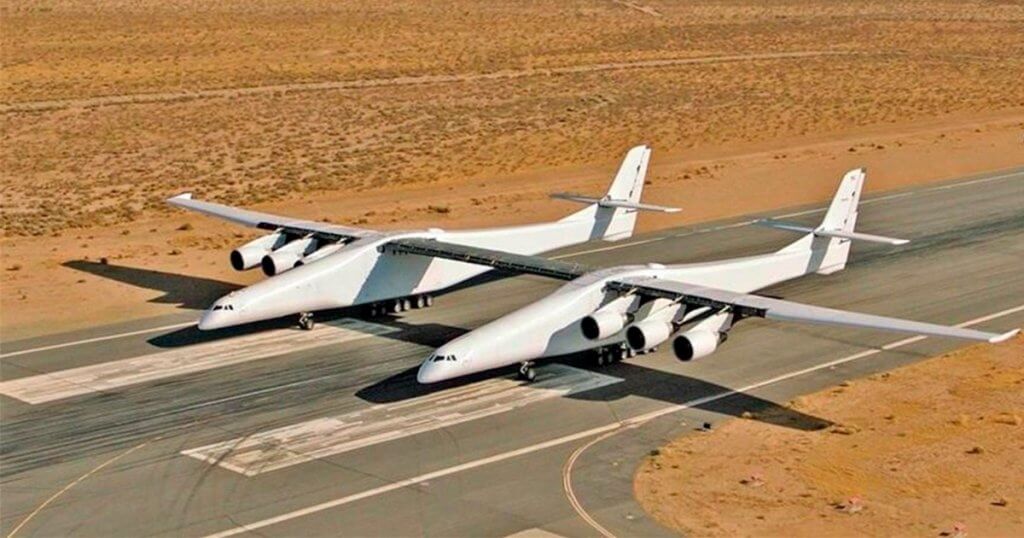
The Stratolaunch Roc: A Triumph of Aerospace Engineering
The Stratolaunch Roc is not a traditional passenger jet, nor is it a conventional cargo plane. It is a dual-fuselage launch platform designed to carry rockets to high altitudes before releasing them into space. From a technology perspective, the Roc represents a paradigm shift in how we approach satellite deployment and space exploration.
Dual-Fuselage Architecture and Wingspan
The most striking feature of the Roc is its massive wingspan, which stretches an impressive 385 feet—longer than an American football field. This design choice is rooted in structural necessity; by utilizing a twin-fuselage configuration, engineers were able to distribute the massive weight of a payload carrier across a balanced, aerodynamic platform. This configuration allows the aircraft to carry heavy, complex orbital launch vehicles that would be structurally compromised if mounted under the belly of a single-body aircraft.
Advanced Composite Materials and Weight Management
Building an aircraft of this magnitude required a revolutionary approach to weight. Using traditional aluminum alloys would have resulted in a craft too heavy to achieve the necessary flight ceiling. Instead, the developers leveraged advanced carbon-composite materials. By utilizing these high-strength, low-weight polymers, the engineering team could maintain the necessary rigidity for the 385-foot wingspan while keeping the craft within the parameters required for efficient take-off and high-altitude cruise speeds.
The Technological Underpinnings of Heavy-Lift Flight
Moving beyond the physical dimensions of the Roc, one must consider the propulsion and avionics systems that make such a machine functional. The aircraft is powered by six Pratt & Whitney PW4056 engines, the same engines used on the Boeing 747-400. This choice was strategic; by utilizing flight-proven engine technology, the developers reduced the R&D risks associated with experimental propulsion, allowing them to focus resources on the integration of the airframe’s unique flight control systems.
Avionics and Flight Control Integration
Operating a craft with a dual-fuselage design requires sophisticated avionics. The flight control software must manage the distribution of power and atmospheric forces across the entire wingspan to prevent asymmetric loading. The fly-by-wire system is highly automated, utilizing real-time sensor data to adjust control surfaces instantaneously. This level of digital integration is a testament to how software-defined aerospace tools have transformed the way we handle unstable or non-traditional aerodynamic bodies.
The Role of Air-Launch Technology
The “tech” behind the Roc is fundamentally about democratization of access to Low Earth Orbit (LEO). By launching from an altitude of 35,000 feet, the launch vehicle—the rocket—can bypass the densest parts of the atmosphere. This significantly reduces the fuel requirements for the rocket, effectively increasing the payload capacity for satellites. This tech-driven “mid-air launch” approach is increasingly viewed as the future of the satellite industry, as it provides greater flexibility for launch windows compared to ground-based vertical launch pads.
Comparing Giants: How the Roc Overtook the Antonov An-225
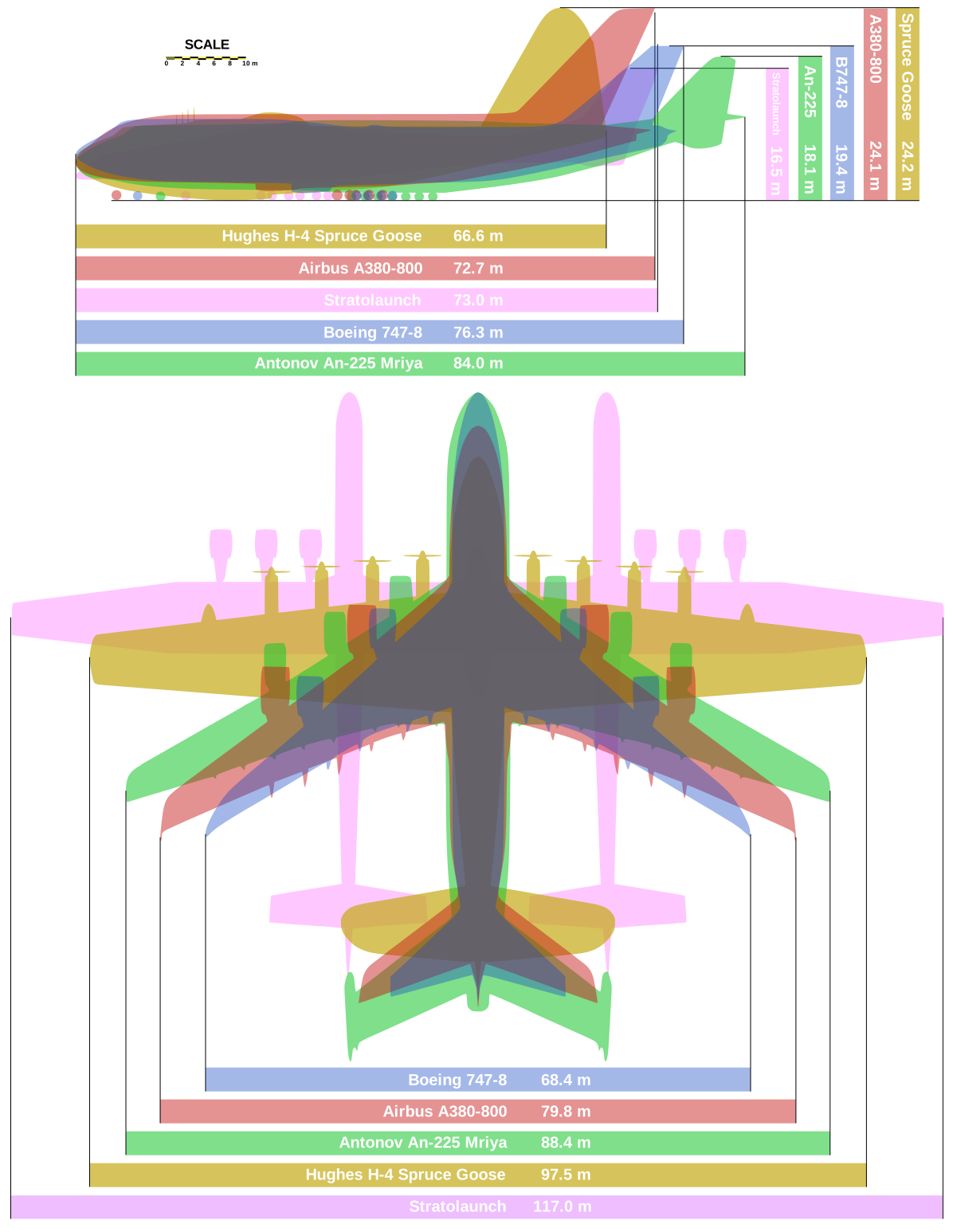
For decades, the title of the world’s largest aircraft by weight and cargo capacity belonged to the Antonov An-225 Mriya. A Soviet-era behemoth, the Mriya was a masterpiece of 1980s mechanical engineering. To understand the evolution of this technology, it is essential to compare the design philosophies of the two giants.
Mechanical Power vs. Digital Precision
The Antonov An-225 was designed as a cargo hauler, built to transport the Buran space shuttle. Its design relied on raw, mechanical force—six massive ZMKB Progress Lotarev D-18T turbofan engines capable of producing a combined thrust that set numerous world records. Its success was measured by its maximum takeoff weight (MTOW), which exceeded 640 tonnes.
The Stratolaunch Roc, while not intended to match the An-225 in raw cargo-in-the-hold weight, exceeds it in wingspan and structural complexity. Where the An-225 was built for brute-force logistics, the Roc is built for technological precision. It uses modern computing power to manage the deployment of sensitive, high-value payloads, representing a shift from “heavy logistics” to “high-tech deployment.”
The Legacy of the Mriya and the Future of Heavy Lift
The loss of the An-225 during the conflict in Ukraine marked the end of an era for heavy-lift transport. However, it also accelerated the industry’s focus on the next generation of aircraft. The Roc serves as the bridge between the old guard of massive industrial carriers and the new, agile era of private aerospace. It proves that the “biggest” aircraft of the future will not necessarily be the ones that carry the most concrete or heavy machinery, but the ones that act as sophisticated digital platforms for the next stage of human orbital expansion.
Future Trends in Large-Scale Aerospace Development
The technological advancements pioneered by the Stratolaunch project are already influencing the broader aerospace landscape. As we look forward, the trend in aircraft design is moving toward modularity, autonomy, and increased efficiency through better software modeling.
AI-Driven Structural Analysis
The design and ongoing refinement of the Roc relied heavily on computational fluid dynamics (CFD) and AI-assisted stress testing. By using machine learning models to simulate millions of flight scenarios before the craft ever touched the runway, engineers were able to optimize the wing shape for maximum lift and minimum drag. This methodology is now standard practice in the tech industry, allowing for shorter development cycles and safer, more reliable aircraft.
Autonomous Systems in Heavy-Lift Operations
As these aircraft grow in scale, the potential for autonomous operation increases. Integrating AI into the flight deck of ultra-large aircraft allows for “optimized flight paths”—algorithms that calculate the most fuel-efficient routes by analyzing weather patterns and air traffic data in real-time. The Roc is essentially a flying laboratory for these kinds of digital integrations, paving the way for larger, potentially pilotless aircraft that could handle long-haul, heavy-lift logistics with extreme efficiency.

Conclusion: The Horizon of Aviation
The title of “biggest aircraft in the world” remains a moving target, symbolic of humanity’s drive to overcome the physical limitations of flight. The Stratolaunch Roc is the current leader, not just because of its physical stature, but because it represents the convergence of advanced materials science, complex software integration, and a forward-thinking mission.
As we look toward the future, the technology inherent in such machines will continue to trickle down into commercial and aerospace sectors. We are entering an age where the size of an aircraft matters less than its digital capacity to interface with other systems, be they satellite constellations, air traffic control networks, or autonomous cargo fleets. The Roc is the physical embodiment of this technological evolution, a giant of the skies that does more than just fly—it enables the infrastructure of the space-faring economy. As aerospace companies continue to iterate, we can expect that the “biggest” aircraft of tomorrow will be even more intelligent, more efficient, and more integral to our global technological ecosystem.
aViewFromTheCave is a participant in the Amazon Services LLC Associates Program, an affiliate advertising program designed to provide a means for sites to earn advertising fees by advertising and linking to Amazon.com. Amazon, the Amazon logo, AmazonSupply, and the AmazonSupply logo are trademarks of Amazon.com, Inc. or its affiliates. As an Amazon Associate we earn affiliate commissions from qualifying purchases.