
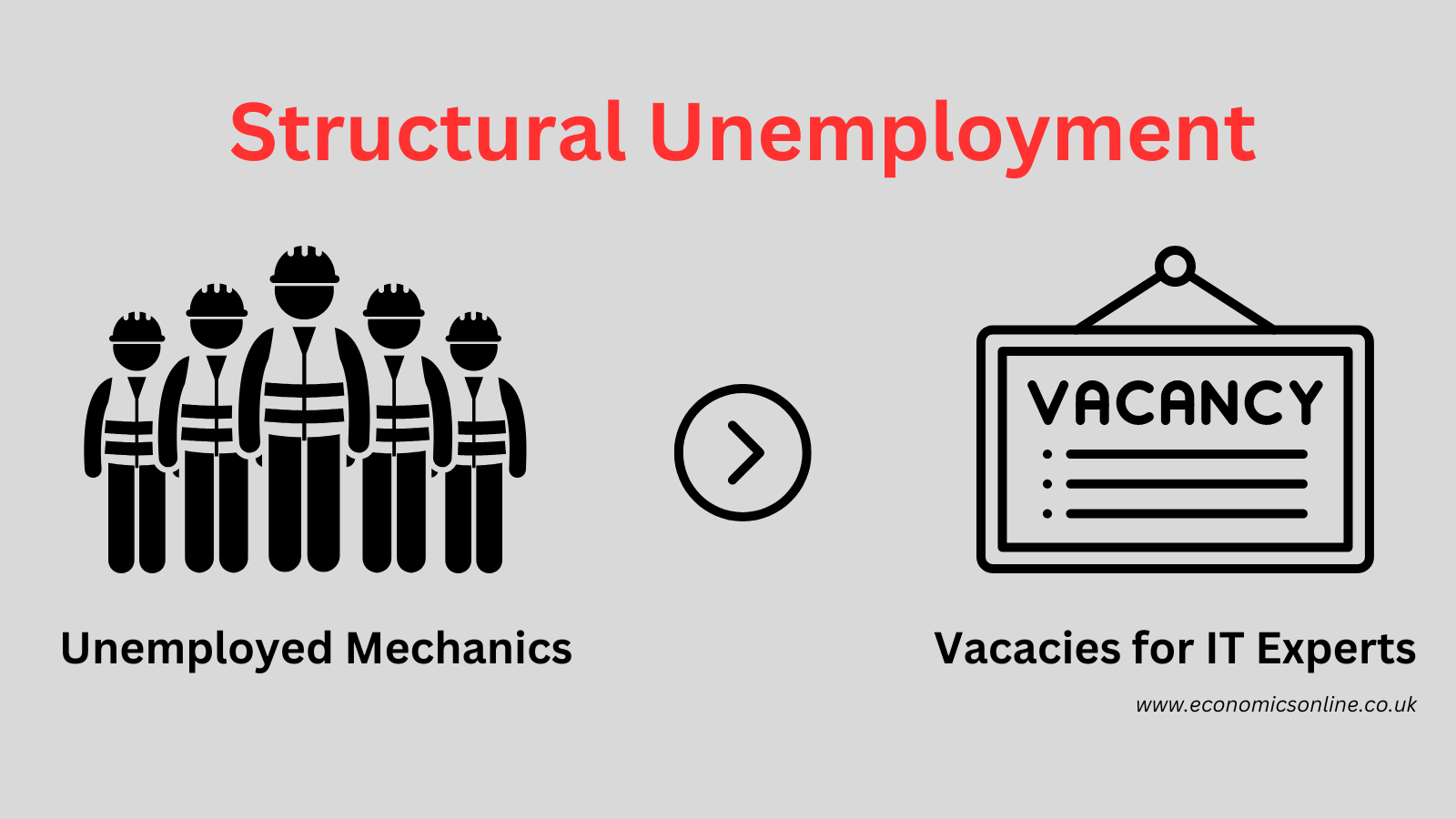
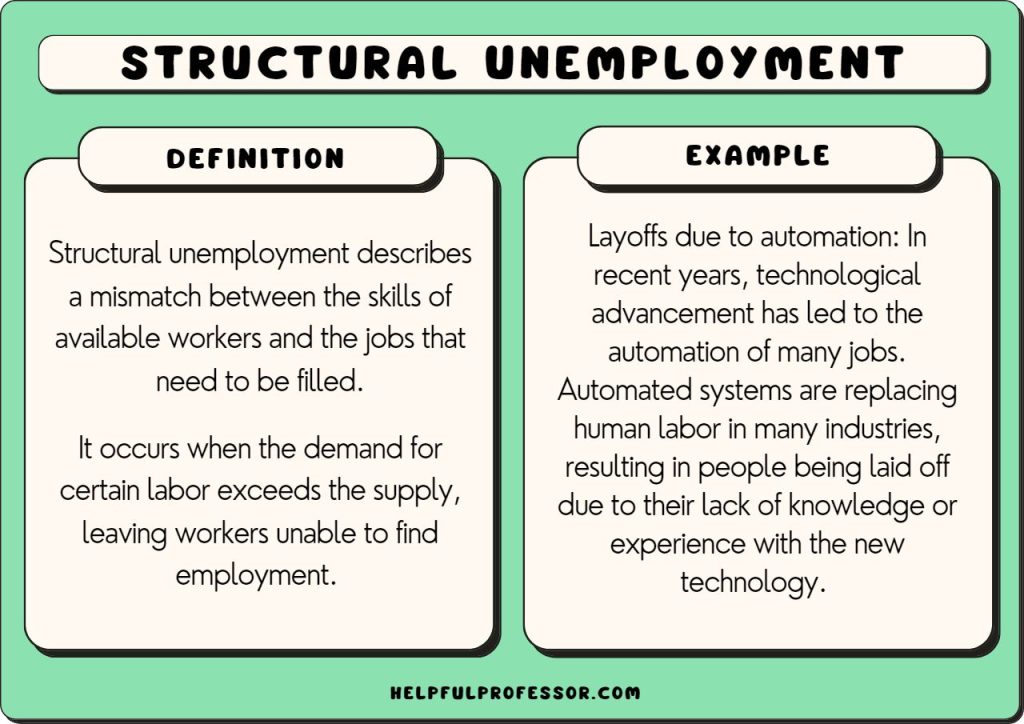
Structural unemployment is a form of involuntary unemployment caused by a mismatch between the skills that workers in the economy can offer and the skills demanded of workers by employers. Unlike cyclical unemployment, which rises and falls with the health of the broader economy, structural unemployment is persistent and long-term. It occurs when the underlying structure of the economy changes—often due to technological advancements, globalization, or shifts in consumer preference—rendering specific labor force segments obsolete.
When we talk about structural unemployment, we are discussing the friction between the supply of labor and the demand for labor in specific sectors. It is not necessarily that there are no jobs available; rather, the jobs available require a different set of competencies than those possessed by the available workforce. Understanding this phenomenon is essential for both individual career planning and national economic policy, as it highlights the necessity of lifelong learning and adaptability in an ever-evolving market.
The Drivers of Structural Unemployment
Structural unemployment is rarely the result of a single event. It is usually the cumulative effect of macro-level shifts that permanently alter how value is created. Identifying these drivers is the first step toward mitigating their impact on your personal financial security.
Technological Disruption and Automation
The most prominent driver of structural unemployment in the modern era is technological advancement. As software, artificial intelligence, and robotics become increasingly sophisticated, they replace human labor in routine or repetitive tasks. While this increases productivity and lowers costs for businesses, it leaves workers whose jobs were based on those tasks without a clear path forward. This is not a temporary dip in demand; it is a permanent replacement of the labor function. For the worker, this creates a “skill gap” that cannot be bridged without significant retraining.
Globalization and Offshoring
Global trade has allowed companies to source labor from the most cost-effective locations. While this provides consumers with cheaper goods and services, it has historically led to the decline of specific domestic industries, particularly in manufacturing. When a factory closes in a domestic market because the production was shifted to a region with lower labor costs, the displaced workers face structural unemployment. Their specific expertise—often specialized to that industry—is no longer in demand within the domestic labor market, creating a long-term economic challenge for those communities.
Shifts in Consumer Demand
Economies are dynamic, and consumer preferences change over time. As society evolves, the demand for certain products and services wanes, while others rise. For example, the decline of traditional retail in favor of e-commerce has led to a structural shift in the retail labor market. Employees trained in floor sales and traditional stock management find their skills less valuable, while the market now demands workers with expertise in supply chain logistics, data analytics, and digital fulfillment. When a workforce cannot pivot at the speed of market demand, structural unemployment emerges.
The Financial Consequences of Structural Unemployment
Structural unemployment presents a unique risk profile for the individual. Because it is not cyclical, waiting for the “economy to recover” is rarely a viable strategy. The financial implications are deep and require a proactive approach to personal wealth management and career stability.
Income Loss and the “Skill-Value” Decline
When a worker becomes structurally unemployed, their primary source of income is interrupted. More importantly, their “market value”—the wage the market is willing to pay for their specific skill set—begins to decline. If a professional spends years in an industry that is dying, their lack of exposure to modern tools and methodologies makes them less competitive even in adjacent sectors. This leads to a scenario where, upon re-employment, the worker may be forced to accept a significantly lower salary, impacting their long-term earning potential and retirement savings trajectory.
The Erosion of Retirement Savings
One of the most insidious effects of structural unemployment is the interruption of compound interest. When a worker is out of the market for an extended period, they stop contributing to retirement accounts like a 401(k) or IRA. Furthermore, they may be tempted to tap into these savings to cover immediate living expenses, triggering tax penalties and losing out on years of growth. For the structurally unemployed, the financial recovery is not just about finding a new job; it is about rebuilding the lost momentum of their investment portfolio.
The Cost of Retraining and Education
To exit structural unemployment, workers must often undergo a period of “human capital investment.” This involves the cost of new certifications, degrees, or specialized training programs. This is a capital-intensive process that occurs at a time when the individual’s cash flow is at its lowest. Managing the cost-benefit analysis of such training is a critical financial decision. Choosing the wrong path—investing in a skill set that is already nearing its peak of maturity—can lead to further financial hardship.
Building Individual Resilience Against Structural Unemployment
Given that structural unemployment is an inevitable byproduct of a progressing economy, resilience is built through proactive adaptation. You must view your career not as a static destination, but as a portfolio of assets that must be managed, upgraded, and diversified.
Developing “Future-Proof” Skills
To protect yourself, you must identify skills that are complements to technology rather than substitutes for it. While technical skills like coding or data analysis are high-demand, “human-centric” skills—such as critical thinking, complex problem-solving, strategic negotiation, and creative strategy—are significantly harder to automate. By cultivating a hybrid skill set that combines technical literacy with deep human soft skills, you create a buffer against the automation and outsourcing trends that define structural shifts.
Maintaining Financial Liquidity
Structural unemployment is a long-term problem that requires a long-term financial buffer. Standard advice often suggests a three-to-six-month emergency fund, but for those in vulnerable industries, a more robust liquidity plan is necessary. This includes maintaining a larger cash reserve and keeping debt levels low. By minimizing fixed overhead costs, you gain the “optionality” to take time off to pivot your career, acquire new certifications, or start a venture, rather than being forced to accept the first available low-paying job that keeps you stuck in a declining sector.
The Strategy of Continuous Professional Development
The era of the “career for life” is largely over. Today, the economy rewards the “lifelong learner.” You should treat your professional development as a line item in your annual budget. Whether it is through industry conferences, online certifications, or networking within emerging sectors, you must ensure that your skills remain at the “frontier” of what the market demands. If you are not actively learning, you are, by definition, falling behind the curve of structural economic change.

Diversifying Income Streams
Structural unemployment is most devastating when your total household income depends on a single employer in a single sector. Diversification is a core tenet of both investing and career management. By developing side hustles, consulting practices, or passive income streams, you reduce your reliance on a single source of income. This not only provides a financial cushion during periods of transition but also exposes you to different industries and professional networks, making it easier to pivot if your primary career sector faces a structural downturn.
Structural unemployment serves as a harsh reminder that the economy does not owe any worker a specific role. It is a shifting, ruthless, and ultimately innovative machine. While it presents significant risks to financial stability, those who understand the forces driving these shifts can position themselves to not only survive but thrive. By investing in high-value, adaptable skills and maintaining a disciplined financial life, you ensure that you remain a vital participant in the economy, regardless of how its structure may evolve.
aViewFromTheCave is a participant in the Amazon Services LLC Associates Program, an affiliate advertising program designed to provide a means for sites to earn advertising fees by advertising and linking to Amazon.com. Amazon, the Amazon logo, AmazonSupply, and the AmazonSupply logo are trademarks of Amazon.com, Inc. or its affiliates. As an Amazon Associate we earn affiliate commissions from qualifying purchases.