
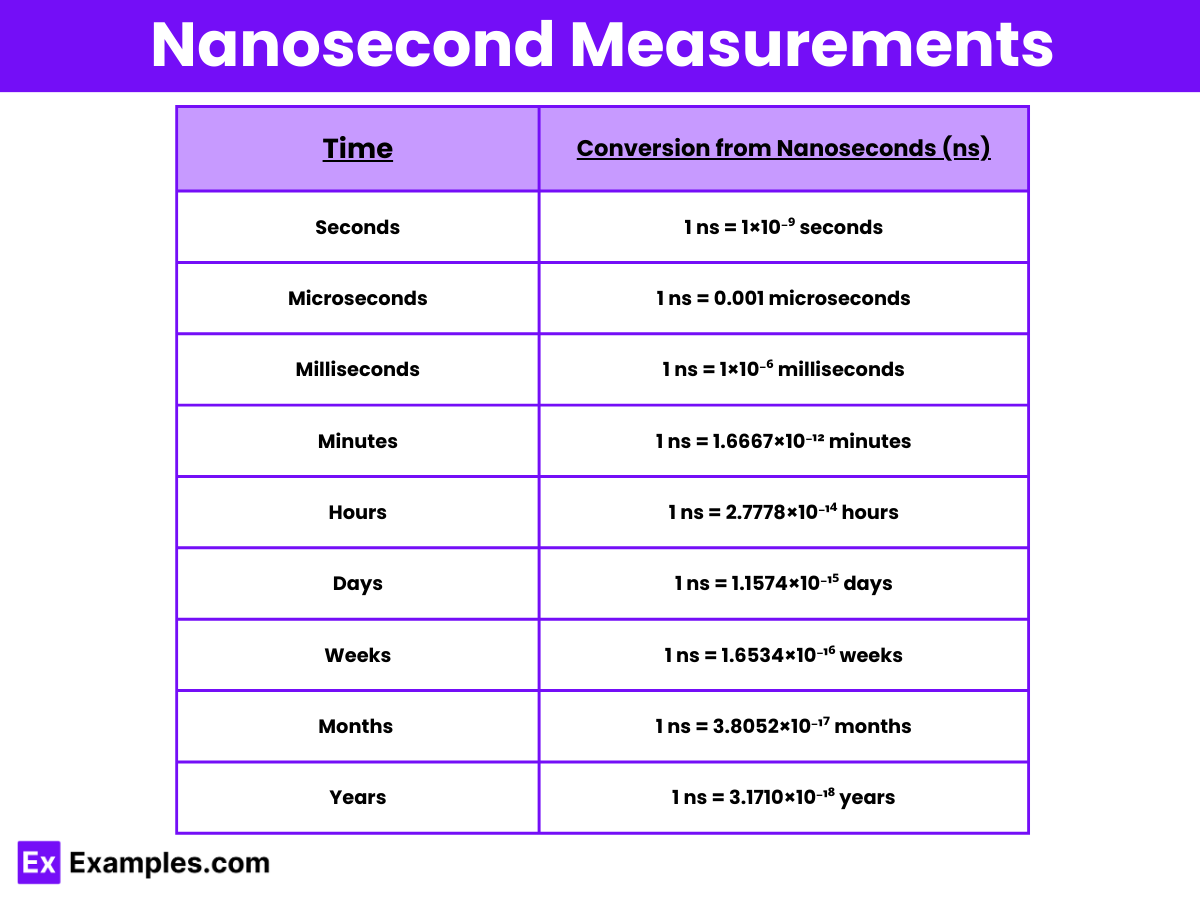
In the world of high-performance computing, fiber-optic telecommunications, and experimental physics, time is the ultimate currency. For decades, the nanosecond—one billionth of a second—was the gold standard for measuring speed. It is the interval at which modern processors execute a single clock cycle, and the time it takes for light to travel roughly 30 centimeters. However, as we push the boundaries of digital signaling, network latency, and sub-atomic event logging, the nanosecond is increasingly viewed as an eternity. To engineer the next generation of artificial intelligence and quantum infrastructure, we must descend into the realm of picoseconds, femtoseconds, and attoseconds.
The Architecture of Sub-Nanosecond Computing
Modern computing architecture is currently trapped by the “memory wall” and the physical limits of silicon switching speeds. A CPU operating at 4 gigahertz performs a clock cycle every 0.25 nanoseconds. While this feels instantaneous, it creates a bottleneck in data-intensive tasks like deep learning model training or high-frequency trading.
Transitioning to the Picosecond Era
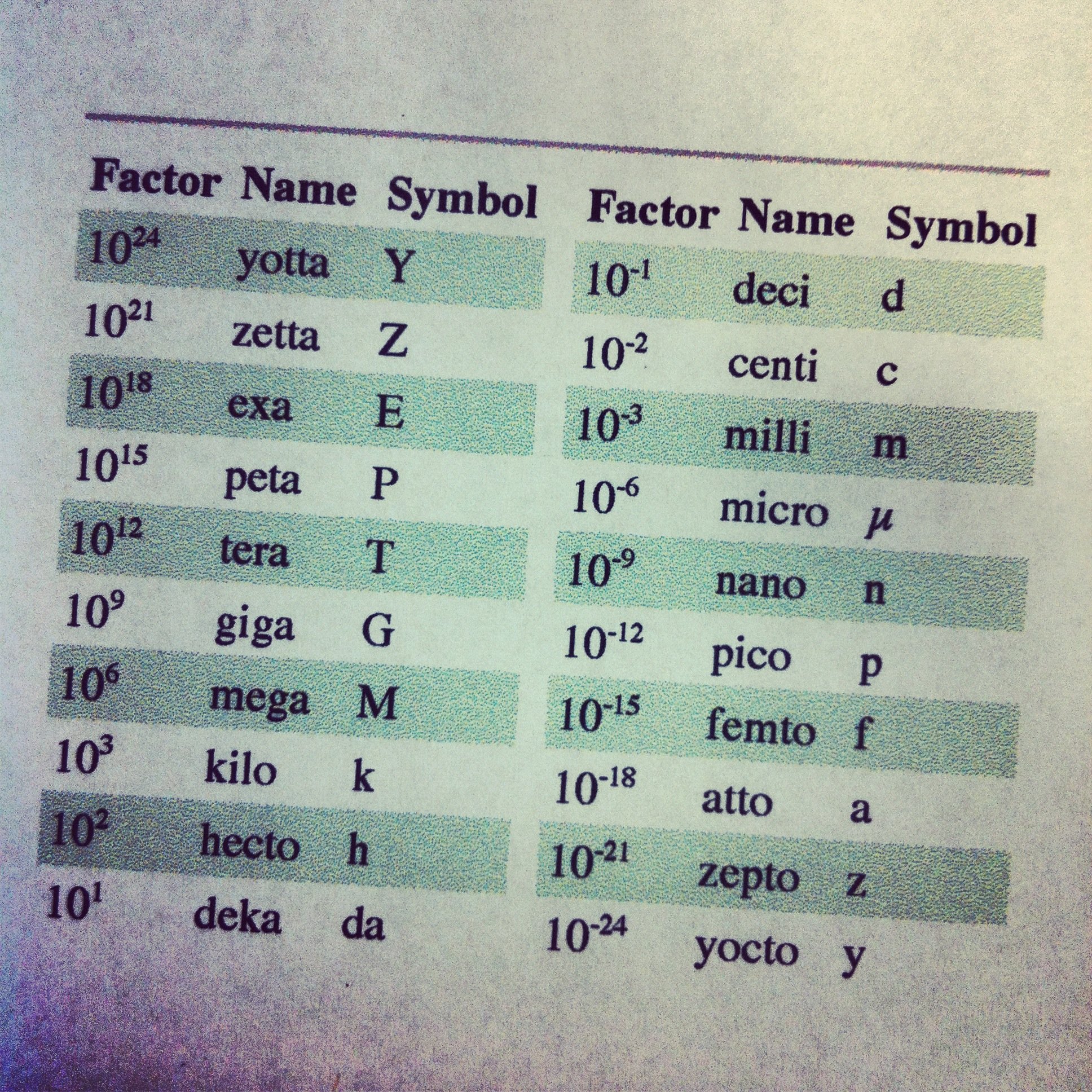
A picosecond is one trillionth of a second (10⁻¹² seconds). In the context of computer hardware, this unit is becoming the primary metric for signal integrity. As traces on motherboards and within integrated circuits (ICs) shrink, the time it takes for an electrical pulse to travel from a cache bank to a processor core has entered the picosecond regime. Engineers are now focusing on “picosecond electronics” to reduce thermal throttling. By optimizing logic gate switching times to remain within the picosecond range, manufacturers can reduce the heat generated by capacitive loading, allowing for higher density chips without a corresponding increase in power consumption.
The Role of Photonics
As we approach the physical limits of electron-based signaling, optics are beginning to take over. Photonic interconnects utilize light rather than electrons to move data across a circuit board. Because light is essentially immune to the electromagnetic interference that plagues copper wiring at high speeds, these systems can communicate in the picosecond domain with negligible latency. This transition is essential for the future of AI data centers, where massive clusters of GPUs must synchronize their states in near-perfect temporal alignment.
Femtoseconds and the Laser Frontier
If the picosecond is the domain of high-speed data transfer, the femtosecond (10⁻¹⁵ seconds) is the realm of precision physics and material science. A femtosecond is to a second what a second is to about 31.7 million years. At this scale, even light, the fastest entity in the universe, moves only 0.3 micrometers—a distance shorter than the width of a human cell.
Ultra-Fast Laser Spectroscopy
The utility of the femtosecond lies in its ability to “freeze” motion. By using femtosecond lasers, engineers can monitor the movement of electrons within a semiconductor material in real-time. This is critical for the development of next-generation AI hardware, specifically memristors and neuromorphic chips. By observing electron behavior at the femtosecond scale, researchers can better understand “charge trapping,” a phenomenon where electrons become stuck in the insulating layer of a chip, eventually causing hardware failure. Mastering this timeframe is not just about speed; it is about extending the lifespan of the hardware that powers our digital future.
Precision Timing in Global Networks
The internet relies on global synchronization protocols like PTP (Precision Time Protocol). While network switches currently operate in the microsecond range, the future of decentralized computing and distributed ledger technology will require synchronization at the femtosecond level. This is the only way to ensure that massive, geographically dispersed AI models remain coherent during synchronized weight updates.
The Attosecond: Mapping the Sub-Atomic Horizon
The attosecond (10⁻¹⁸ seconds) represents the current frontier of human measurement capability. It is the timescale on which the electrons orbiting an atom complete their motion. Measuring an attosecond is akin to capturing a photograph of a hummingbird’s wings from the perspective of an ant. While this may seem purely academic, it is the bedrock of future advancements in quantum computing.
Quantum States and Coherence
Quantum computers operate on qubits, which exist in states of superposition. A major challenge in this field is “decoherence”—the loss of quantum information due to environmental noise. This process happens in attoseconds. To maintain a stable qubit, scientists must manipulate the state of the system before decoherence takes hold. Consequently, the research into attosecond pulse control is the direct path toward stable, fault-tolerant quantum hardware.
Next-Generation Sensor Arrays
Beyond computing, the ability to manipulate and measure time at the attosecond scale allows for the creation of sensors with unprecedented sensitivity. These sensors can detect microscopic shifts in gravitational fields or electromagnetic radiation, which could revolutionize how we approach digital security, enabling the detection of hardware-level tampering or sophisticated side-channel attacks that are currently invisible to nanosecond-scale monitoring equipment.
Why We Must Go Smaller
The pursuit of smaller time intervals is not merely a vanity project for physicists; it is a necessity for the advancement of the digital economy. Every industry that relies on data is eventually throttled by latency. Whether it is a self-driving car processing sensor input or a financial algorithm balancing a global portfolio, the goal is always to reduce the time between “input” and “reaction.”
Overcoming the Silicon Plateau
Silicon-based transistors are hitting a wall. As we look toward post-silicon technologies—such as carbon nanotubes, spintronics, or biological computing—our ability to measure time will determine our ability to innovate. If we cannot measure the signal propagation in these new materials, we cannot optimize them. Moving from the nanosecond to the femtosecond and beyond is the prerequisite for designing the logic gates of the 2030s and 2040s.
The Future of Latency-Critical Infrastructure
As we move toward an era of ubiquitous AI, the network itself becomes a distributed computer. We are no longer designing systems that fit on a chip; we are designing systems that span continents. Reducing latency at the hardware level, through the use of picosecond-ready optics and femtosecond-synchronized atomic clocks, will be the differentiator between systems that are merely fast and systems that are truly intelligent.
The nanosecond served us well during the dawn of the internet age. It provided the framework for the first wave of digitization. But as we transition into an age of artificial intelligence, quantum supremacy, and pervasive machine learning, we must leave the nanosecond behind. We are entering a timeline defined by the picosecond, the femtosecond, and the attosecond—an era where time is no longer just a measurement, but a fundamental component of structural engineering. The race to master these infinitesimal slices of time will define the next generation of technological superiority. The hardware of tomorrow will not be measured by how many gigahertz it can reach, but by how precisely it can control the flow of data within the fleeting blink of an attosecond.
aViewFromTheCave is a participant in the Amazon Services LLC Associates Program, an affiliate advertising program designed to provide a means for sites to earn advertising fees by advertising and linking to Amazon.com. Amazon, the Amazon logo, AmazonSupply, and the AmazonSupply logo are trademarks of Amazon.com, Inc. or its affiliates. As an Amazon Associate we earn affiliate commissions from qualifying purchases.