
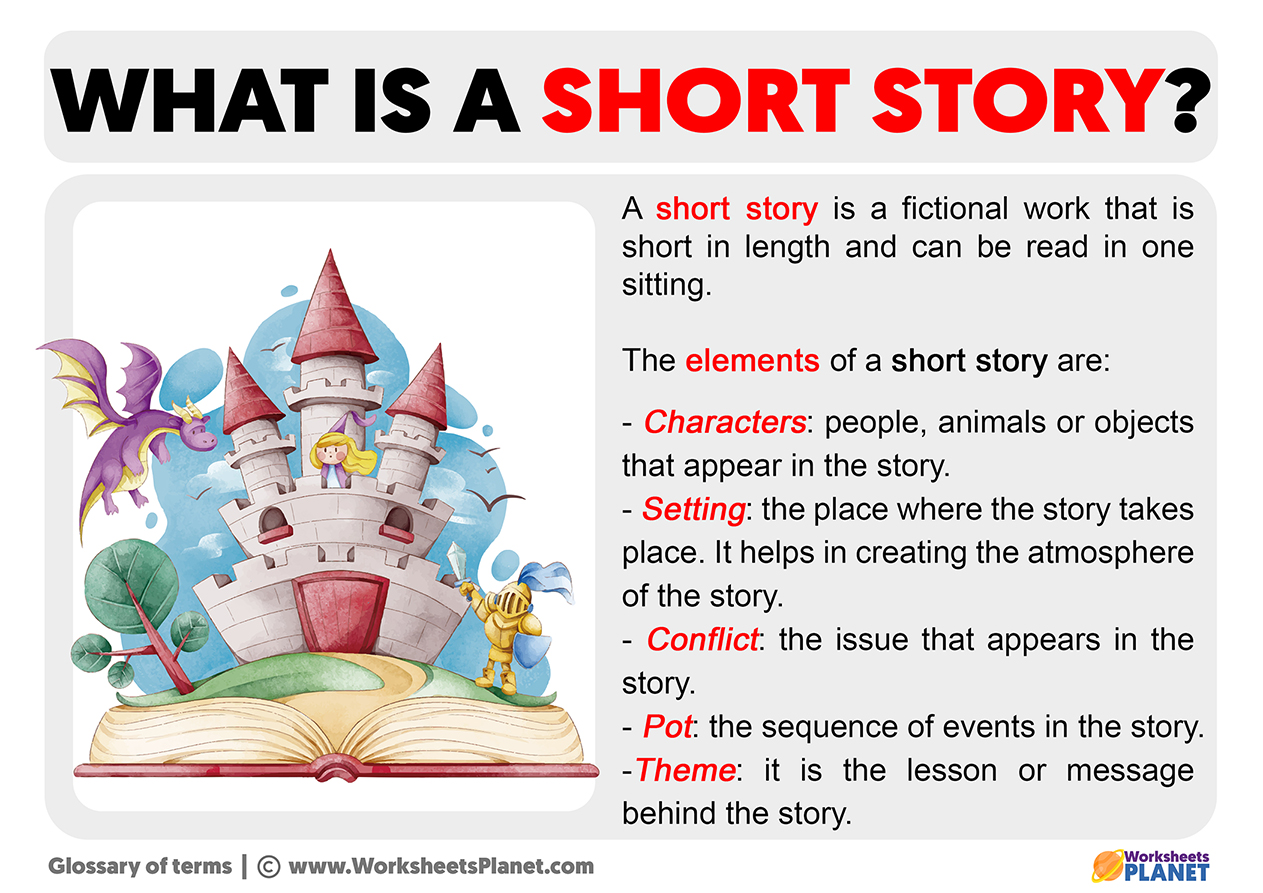
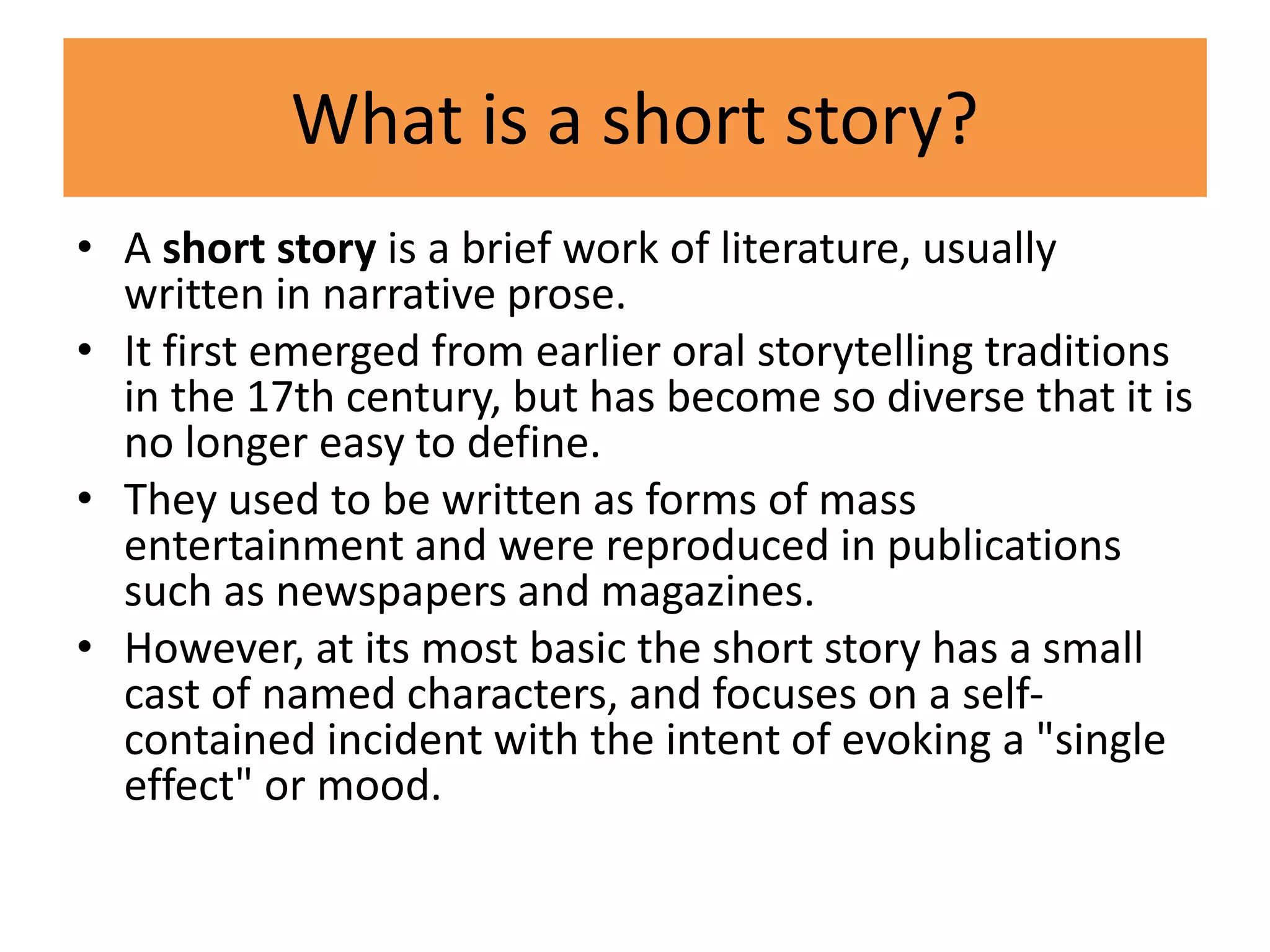
Short fiction represents one of the most demanding yet rewarding forms of literary expression. By definition, a short story is a piece of prose fiction that can typically be read in a single sitting. It focuses on a self-contained incident or series of linked incidents, with the intent of evoking a “single effect” or mood. Unlike the novel, which thrives on expansive world-building, sprawling subplots, and slow-burn character development, short fiction operates through compression. Every word, every sentence, and every narrative beat must earn its place.
In the contemporary landscape, short fiction functions as a laboratory for writers. It is where experimental techniques are tested, where themes are distilled to their absolute essence, and where the architecture of storytelling is laid bare. Whether it takes the form of flash fiction, the traditional short story, or the novella, this medium relies on the principle of economy. When space is limited, the writer must rely on implication, subtext, and the power of the unspoken to carry the weight of the narrative.
The Structural Anatomy of the Short Story
At its core, short fiction is built upon the paradox of limitation. Because the writer cannot afford the luxury of excessive exposition, they must master the art of the “in media res” opening—jumping directly into the action without tedious preamble.
Economy of Character
In a novel, a character’s evolution might span years of trial and error. In a short story, however, the character is often presented at a point of crisis—an inflection point where their internal world shifts or fractures. We do not need a comprehensive history of the protagonist’s childhood; we need only the specific traits and motivations that drive their response to the current conflict. The reader learns who a character is by observing how they navigate a singular, high-stakes moment.
The Precision of Setting
Setting in short fiction rarely serves as mere backdrop. Because there is no room for lengthy descriptive passages, every detail of the environment must serve a dual purpose: it must create atmosphere and reinforce the theme. If a character is waiting in a sterile, fluorescent-lit hospital corridor, that setting must simultaneously ground the reader in the physical space and reflect the character’s internal sense of anxiety or helplessness. In this genre, place acts as an extension of psychology.
Narrative Compression and Pacing
Pacing in a short story is governed by tension. Because the narrative arc must reach its resolution quickly, there is no time for “filler” scenes. Every interaction must advance the plot or deepen the character’s emotional complexity. Writers often use the “iceberg theory”—a concept popularized by Ernest Hemingway—wherein the surface-level dialogue and action represent only the smallest portion of the story, while the massive weight of history, emotion, and motive remains submerged, felt rather than stated.
The Evolution of the Form: From Flash to Novella
Short fiction is not a monolithic category; it encompasses a spectrum of lengths, each offering a different set of challenges and opportunities. Understanding these gradations allows writers and readers to appreciate the intent behind the structure.
Flash Fiction and the Power of the Fragment
Flash fiction, often defined as stories under 1,000 words (sometimes even under 100), represents the ultimate distillation of narrative. It functions similarly to a photograph or a sudden lightning strike. In such a compressed space, the story often relies on a “twist” or a sudden realization to provide resolution. These pieces require the reader to participate actively, filling in the gaps left by the writer’s silence. The beauty of flash fiction lies in its ability to capture a fleeting emotion or a singular truth that might otherwise be lost in a larger, more cluttered work.
The Traditional Short Story
Ranging from 2,000 to 7,500 words, the traditional short story is the “sweet spot” of the genre. It allows for enough depth to develop a multi-layered narrative arc while still maintaining the intensity of a focused experience. This length provides the necessary room to build complex internal monologues and nuanced interactions between multiple characters. It remains the most widely published and analyzed form of short fiction, serving as a staple for literary journals and anthologies.
The Novella: The Long-Form Short Story
Falling between the traditional short story and the novel (typically 17,000 to 40,000 words), the novella offers a unique middle ground. It provides the space to explore a more intricate plot or a broader scope of setting than a standard short story, yet it retains the singular, focused intensity that a full-length novel often diffuses. Novellas are particularly effective for character studies where the author wishes to track a more significant, yet still contained, transformation.
Mastering the “Single Effect”
The primary goal of short fiction, as famously articulated by Edgar Allan Poe, is the creation of a “single effect.” This means that every element of the story should be directed toward a unified purpose. If a story is intended to be unsettling, every word choice, rhythm, and structural choice should contribute to that overarching sense of unease.
The Role of Subtext
Subtext is the lifeblood of successful short fiction. In a medium where brevity is mandated, the writer cannot explain everything to the reader. Instead, they must create a system of signs—dialogue that implies hidden agendas, gestures that betray internal turmoil, and silence that speaks louder than proclamation. When the reader is forced to infer the meaning behind a character’s choice or an ambiguous ending, the emotional impact is significantly amplified. The story becomes a collaborative project between the writer and the reader.
The Art of the Ending
Endings in short fiction are notoriously difficult. Because there is little room to wrap up multiple plot threads, the conclusion often shifts from resolution to resonance. Many of the most impactful stories do not provide neat “happily ever after” endings. Instead, they offer a moment of realization—an epiphany—that lingers with the reader long after the final sentence. A successful ending in this genre doesn’t necessarily answer the questions posed; rather, it changes the way the reader views the questions entirely.

Why Short Fiction Matters Today
In an era of fractured attention spans and constant digital noise, the short story is more relevant than ever. It caters to the modern reader’s need for profound, high-impact narratives that can be consumed in a fragmented timeframe. However, its value extends beyond mere convenience. Short fiction demands an engagement that is intense and focused. It trains the brain to look for patterns, to value brevity, and to seek meaning in the margins of human experience.
Furthermore, short fiction remains the vanguard of literary innovation. Because the barrier to entry is lower than that of a novel, it is the primary arena where new voices, diverse perspectives, and experimental narrative forms find their footing. It allows for risks that a traditional publishing market might deem too dangerous for a full-length book.
As a craft, it requires an immense amount of discipline. It forces the writer to be an editor of their own thoughts, stripping away the superfluous to reveal the raw, beating heart of the story. It is a testament to the fact that greatness in literature is not measured by volume, but by the ability to hold a mirror to the human condition, however briefly, and reflect a truth that is both specific and universal. Whether through the punch of a 500-word piece or the lingering meditation of a longer story, the short form remains one of the most powerful tools in a writer’s arsenal.
aViewFromTheCave is a participant in the Amazon Services LLC Associates Program, an affiliate advertising program designed to provide a means for sites to earn advertising fees by advertising and linking to Amazon.com. Amazon, the Amazon logo, AmazonSupply, and the AmazonSupply logo are trademarks of Amazon.com, Inc. or its affiliates. As an Amazon Associate we earn affiliate commissions from qualifying purchases.