
In an era where digital archives are increasingly accessible, the term “remastering” has become a ubiquitous buzzword. From the resurgence of classic video games on modern consoles to the polished re-releases of legendary music albums, remastering is the bridge between historical content and contemporary technology. But what does the process actually entail? It is not merely a “save as” function or a simple volume boost; it is a complex, technical undertaking that balances fidelity to the original source with the performance requirements of modern hardware.
The Technical Foundations of Remastering
At its core, remastering is the process of taking a source—whether audio, visual, or software code—and creating a new master copy that improves upon the original’s limitations. Unlike a “remake,” which involves rebuilding an asset from the ground up, remastering operates within the constraints of the original material.

Audio Remastering: Balancing Dynamic Range
In audio engineering, remastering involves taking the final mix of a track and applying modern processing techniques. Engineers utilize high-resolution digital converters to capture the nuances of original analog tapes, ensuring that the signal-to-noise ratio is optimized. The primary goal is to resolve inconsistencies in frequency response. By using parametric equalizers, compressors, and de-noising software, engineers can breathe new life into recordings that were originally limited by the magnetic tape technology or vinyl pressing capabilities of their time. The challenge lies in avoiding “loudness wars,” where excessive dynamic range compression renders the music flat and fatiguing to the listener.
Visual and Video Remastering
For film and television, remastering often means scanning original film negatives at 4K or 8K resolution. This is a labor-intensive process involving frame-by-frame restoration. Specialists work to remove physical artifacts like dust, scratches, and chemical decay that occurred over decades. Once the physical flaws are addressed, color grading is applied to standardize the palette. Modern HDR (High Dynamic Range) mastering allows for deeper blacks and more vibrant highlights, ensuring that the visual experience matches the director’s original vision while meeting the requirements of modern OLED and LED displays.
Software and Game Remastering: The Code Challenge
In the realm of software and video games, the term “remaster” carries significant technical weight. Unlike physical media, software is bound by the logic and resolution of its original engine. Remastering a game is often more akin to a “port” with upgrades, where developers must navigate the complexities of legacy code.
Asset Upscaling and Texture Work
The most visible aspect of software remastering is the overhaul of graphical assets. Original textures, which were often designed to fit the low-resolution screens of the early 2000s, appear blurry or “muddy” on modern 4K displays. Developers use AI-driven upscaling tools to increase texture resolution while maintaining the original artistic intent. This process is augmented by modern lighting engines, which can introduce real-time shadows, ambient occlusion, and global illumination, fundamentally changing the atmosphere of a scene without altering the underlying geometry of the environment.
Performance Optimization and Modern Standards
Beyond aesthetics, remastering addresses the performance gaps between generations. Older software often relied on frame rates tethered to specific monitor refresh rates or internal clock speeds. Remastering requires engineers to decouple the game logic from the frame rate, allowing the software to run at 60, 120, or even unlocked frame rates on modern hardware. Furthermore, developers must integrate support for modern input APIs, widescreen aspect ratios (converting 4:3 to 16:9), and controller compatibility that didn’t exist at the time of the original release. This is a delicate balancing act, as altering the engine’s core performance can sometimes break the physics calculations or collision detection intended by the original creators.
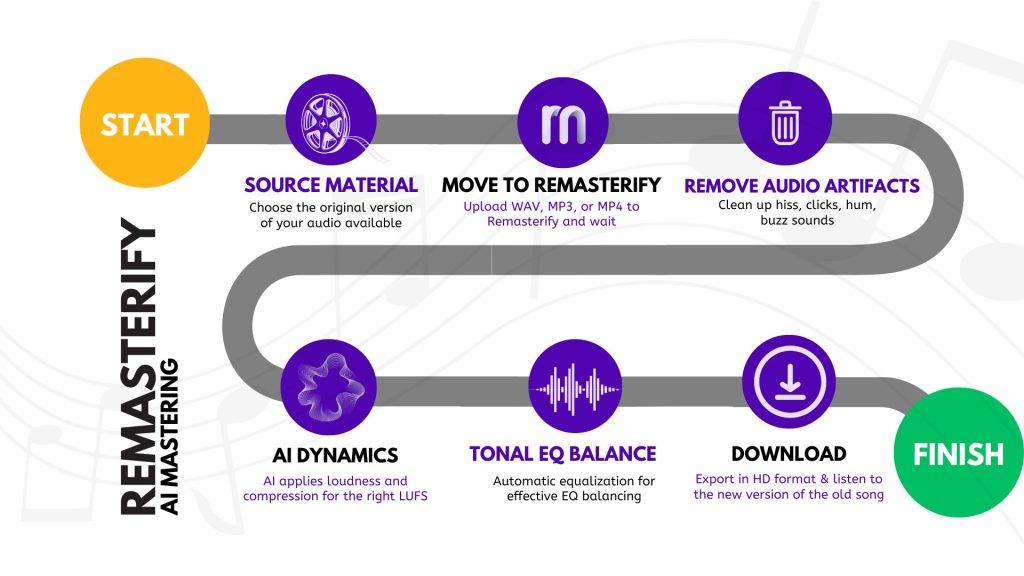
The Evolution of Remastering Tools
The efficacy of the remastering process has shifted dramatically over the last decade, primarily due to advancements in machine learning and computational power.
The Role of AI in Restoration
Artificial Intelligence has become a cornerstone of modern remastering workflows. In audio, AI-based source separation allows engineers to isolate vocals or individual instruments from a monophonic or poorly mixed stereo track, allowing for a more precise remixing process. In video and software, deep learning models are used for “super-resolution” upscaling. These models are trained on millions of images to predict and reconstruct fine details—like skin pores, fabric textures, or foliage—that were lost in lower-resolution captures. While these tools do not replace the human touch, they drastically reduce the time spent on manual restoration, allowing technicians to focus on aesthetic consistency rather than menial labor.
The Human Element: Preservation vs. Modernization
Technology serves as the mechanism for remastering, but the subjective human element remains the final arbiter. A remaster is successful only if it satisfies both the nostalgia of longtime fans and the expectations of a new, modern audience. This often leads to heated debates regarding “the look” of a remaster. For instance, some gamers prefer the original, gritty, low-resolution pixel art of a 90s classic, arguing that smoothing out textures ruins the stylistic integrity of the game. Conversely, others demand the sharpness and fluidity of modern rendering. Professionals must navigate these expectations, often providing settings that allow users to toggle between “original” and “remastered” modes.
The Economic and Cultural Significance
Remastering is not merely a technical exercise; it is a major economic driver in the tech and entertainment sectors. It allows intellectual property holders to monetize their catalogs indefinitely.
Extending the Lifecycle of Digital Assets
For tech companies and software developers, remastering is a cost-effective way to sustain revenue streams. Developing a brand-new software product involves immense risk, massive teams, and years of development time. Remastering leverages existing, proven assets, drastically reducing the research and development overhead. It allows companies to introduce their legacy hits to new platforms, such as porting PC-era software to mobile devices or consoles, effectively expanding the addressable market for a product that had previously reached its natural end-of-life cycle.
Digital Preservation and Accessibility
Beyond the profit motive, remastering plays an essential role in digital preservation. Software, in particular, suffers from “bit rot”—the phenomenon where files become unreadable as operating systems update and hardware interfaces change. Without active remastering, a vast majority of digital history would become unusable within 10 to 15 years. By updating codebases to modern standards, developers ensure that software remains compatible with contemporary operating systems like Windows 11, macOS, or modern Linux distributions. This preserves the history of human creativity, ensuring that the innovations of the past remain functional for researchers, enthusiasts, and future developers to learn from.
Conclusion
Remastering is a complex interplay between past intent and present capability. It is the technical discipline of modernization, ensuring that the stories, music, and software of previous generations do not disappear into the digital void. Whether it is through the subtle frequency balancing of an audio engineer, the frame-by-frame color grading of a film restorer, or the engine optimization of a software developer, remastering demands a deep understanding of both how things were made and how they function today. As AI tools continue to mature, the barriers to high-quality restoration will drop, making it easier than ever to bridge the gap between antiquity and the cutting edge. Ultimately, the art of remastering is about honoring the past while refusing to let it be constrained by the limitations of the time in which it was created.
aViewFromTheCave is a participant in the Amazon Services LLC Associates Program, an affiliate advertising program designed to provide a means for sites to earn advertising fees by advertising and linking to Amazon.com. Amazon, the Amazon logo, AmazonSupply, and the AmazonSupply logo are trademarks of Amazon.com, Inc. or its affiliates. As an Amazon Associate we earn affiliate commissions from qualifying purchases.