
For any investor, developer, or business owner, real estate transactions are fraught with hidden variables. While market value, location, and zoning are readily visible, the history buried beneath the soil or hidden within the walls of a property can represent a significant financial liability. A Phase I Environmental Site Assessment (ESA) serves as the primary defensive tool in a commercial real estate transaction, acting as a crucial audit that protects stakeholders from inheriting costly environmental cleanup obligations.
In the realm of business finance and commercial property investment, the Phase I ESA is not merely a box to check for a lender; it is a vital due diligence process that directly impacts the bottom line and the long-term feasibility of an asset. Understanding the intricacies of this assessment is essential for anyone looking to navigate the commercial property landscape without encountering catastrophic financial surprises.
The Financial Necessity of Environmental Due Diligence
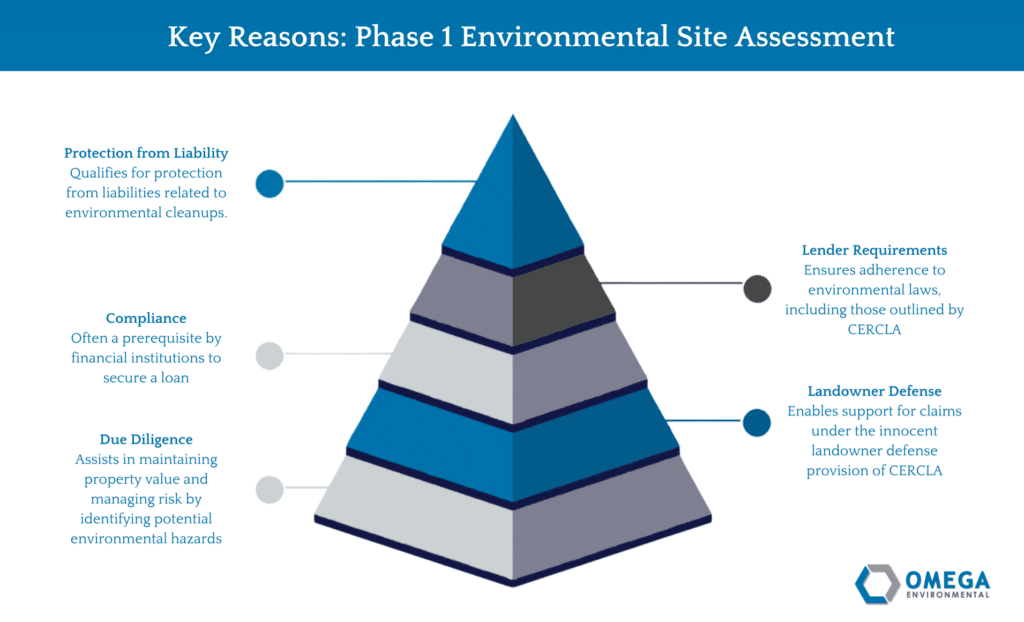
The Phase I ESA is designed to identify “Recognized Environmental Conditions” (RECs) associated with a property. An REC is the presence, or likely presence, of any hazardous substances or petroleum products in, on, or at a property. From a business finance perspective, the primary objective of this report is to satisfy the “All Appropriate Inquiries” (AAI) rule, which is a requirement for establishing the Innocent Landowner Defense under the Comprehensive Environmental Response, Compensation, and Liability Act (CERCLA).
Mitigating Liability and Protecting Equity
Without a valid Phase I ESA, an investor who purchases a contaminated property could be held strictly liable for the cleanup costs under federal law, regardless of whether they caused the contamination. These costs can easily reach into the millions, effectively wiping out the equity in a deal. By conducting a thorough assessment, an investor establishes a baseline of knowledge. If an REC is identified, the investor can pivot—either by renegotiating the purchase price, requesting the seller to remediate the issue prior to closing, or walking away from the deal entirely.
Lending Requirements and Risk Assessment
Institutional lenders almost universally require a Phase I ESA before approving commercial loans. Banks are risk-averse by nature; they view environmental contamination as a threat to their collateral. If a property is found to be a Superfund site or contains significant soil contamination, the bank’s loan security is compromised. Consequently, the Phase I report functions as a gatekeeper in the transaction process. If the report results in a “fail” status, financing will likely be pulled, effectively killing the transaction before it can close.
The Scope of the Phase I ESA Process
A Phase I ESA is a non-intrusive investigation. It does not involve physical sampling of soil, groundwater, or building materials. Instead, it is an evidence-based report that synthesizes data from historical records, interviews, and physical observations. The process is conducted in strict accordance with the American Society for Testing and Materials (ASTM) E1527-21 standard, which provides a uniform framework for conducting the assessment.
Records Review and Historical Documentation
The core of the investigation begins in the archives. Environmental professionals review decades of historical documents to build a timeline of the property’s usage. This includes historical aerial photographs, topographic maps, city directories, and fire insurance maps. For instance, if a property currently used as an office building was once a dry cleaner or a small-scale manufacturing facility in the 1970s, the potential for solvent contamination or underground storage tanks (USTs) increases exponentially.
Regulatory agency databases are also interrogated. These databases track records of leaking underground storage tanks, hazardous waste generators, and registered cleanup sites within a specific radius of the subject property. This spatial analysis ensures that contamination from neighboring properties—which could migrate via groundwater—is also accounted for.
The Site Reconnaissance
Once the digital footprint is mapped, an environmental professional performs a physical walkthrough of the site. They are looking for visual indicators of potential contamination. Common “red flags” include:
- Stained soil or distressed vegetation, which may indicate a surface spill.
- Evidence of current or former USTs, such as vent pipes, fill ports, or uneven pavement patches.
- Storage of hazardous chemicals, such as drums of oil, solvents, or industrial waste, without proper secondary containment.
- Evidence of dry cleaning equipment or industrial machinery that utilizes hazardous solvents.
This physical inspection is critical because historical records are not always exhaustive. A site reconnaissance can uncover undocumented activities that occurred recently, providing a comprehensive “eyes-on” perspective that data alone cannot provide.
Interviews with Stakeholders
The assessment concludes with interviews conducted with current and past owners, operators, and occupants of the property. Local government officials, such as fire department personnel or building inspectors, are also consulted if necessary. These interviews are intended to fill in the gaps. A long-time tenant might reveal the existence of a buried oil tank that was decommissioned poorly years ago, or an owner might confirm that a specific area of the property was historically used for trash disposal—a common source of environmental concern.
Interpreting the Findings and Future Implications
Once the investigation is complete, the final report provides a professional opinion on whether or not the property is clear of potential environmental liabilities. The findings typically fall into one of three outcomes: No RECs, Controlled RECs, or the identification of actual RECs requiring further action.
The “Phase II” Pivot
If the Phase I ESA identifies an REC, the investor is at a crossroads. An REC does not necessarily mean the deal is dead, but it does mean that the initial assessment was successful in identifying a potential risk that warrants further investigation. This leads to a Phase II Environmental Site Assessment.
A Phase II ESA is an intrusive investigation. It involves collecting actual samples of soil, groundwater, or surface water and submitting them to a laboratory for analysis. From a business finance standpoint, this phase is where the “true” cost of the property is revealed. If the Phase II tests come back clean, the investor gains peace of mind and can proceed. If they return with evidence of contamination, the investor now has the hard data needed to quantify the cleanup costs.
Negotiating Power and Financial Strategy
Armed with a professional ESA report, the buyer gains significant leverage. If a Phase I report identifies an issue, the buyer can demand an escrow holdback for potential cleanup costs, a reduction in purchase price, or an indemnity clause in the purchase and sale agreement. In many cases, the cost of the cleanup is negotiated into the final price of the property.
Ignoring the Phase I ESA or attempting to bypass this step is a high-stakes gamble that few successful commercial investors are willing to take. While the report is an out-of-pocket expense at the beginning of a transaction, it is an investment in risk management. It transforms an unknown financial liability into a quantified risk, allowing for calculated decision-making rather than speculative exposure. In the high-stakes world of commercial real estate, the Phase I ESA is the fundamental bedrock upon which sustainable, profitable investments are built.
aViewFromTheCave is a participant in the Amazon Services LLC Associates Program, an affiliate advertising program designed to provide a means for sites to earn advertising fees by advertising and linking to Amazon.com. Amazon, the Amazon logo, AmazonSupply, and the AmazonSupply logo are trademarks of Amazon.com, Inc. or its affiliates. As an Amazon Associate we earn affiliate commissions from qualifying purchases.