
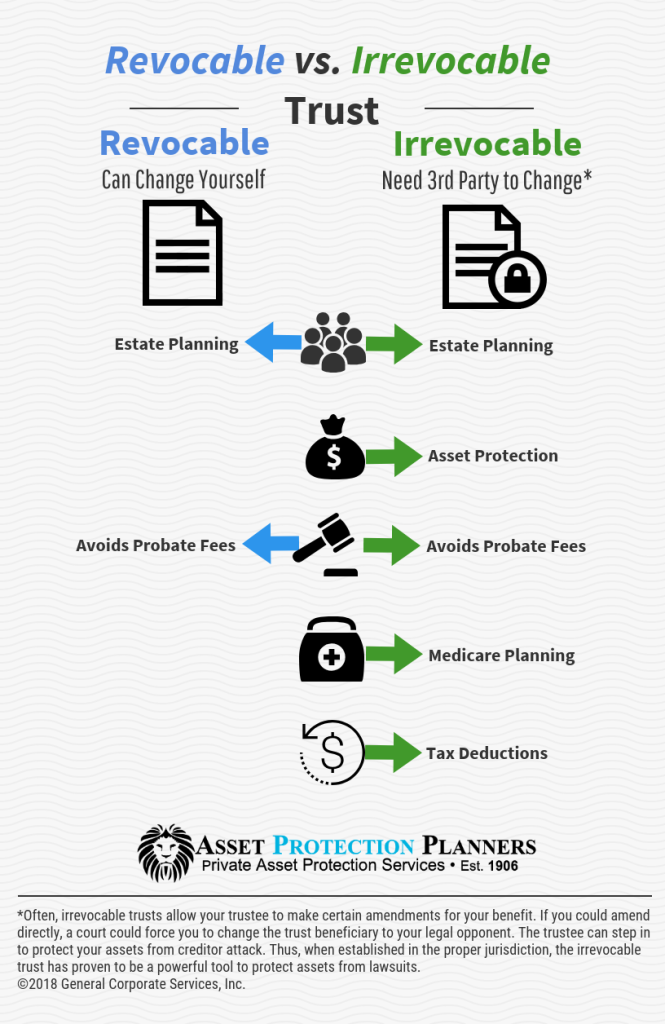
An irrevocable trust is a powerful financial tool used to transfer assets out of your taxable estate, provide long-term protection for your beneficiaries, and ensure that your wealth is managed exactly according to your wishes. Unlike a revocable (living) trust, which can be altered or canceled at any time, an irrevocable trust—once executed—is generally permanent. By relinquishing control over the assets placed within the trust, the grantor effectively removes them from their own legal ownership, creating a distinct entity that operates under the terms established in the trust document.
While the loss of control may seem daunting, the trade-off is significant. For high-net-worth individuals, those concerned about liability, or those looking to secure assets for heirs with specific conditions, the irrevocable trust is a cornerstone of advanced estate planning.

The Mechanics of an Irrevocable Trust
At its core, an irrevocable trust functions through a three-party relationship: the grantor (the person who creates the trust and provides the assets), the trustee (the party who manages the assets), and the beneficiaries (those who stand to receive the benefits or assets).
Shifting Legal Ownership
When you transfer assets into an irrevocable trust, you are legally gifting those assets to the trust entity. You are no longer the legal owner. This is the mechanism that triggers the primary tax and protection benefits. Because you no longer own the assets, they are generally not considered part of your personal estate for federal estate tax purposes. Consequently, when you pass away, those assets are not subject to the same estate tax liabilities that would apply to assets held in your individual name.
The Role of the Trustee
Because the grantor loses the ability to manage the assets directly, the selection of a trustee is perhaps the most critical decision in the process. The trustee is a fiduciary, meaning they are legally obligated to act in the best interest of the beneficiaries. This individual or institution must adhere strictly to the “trust instrument”—the written document outlining how and when assets are distributed.
Strategic Financial Benefits
The primary appeal of an irrevocable trust lies in its ability to shield wealth from various financial risks. By creating a firewall between the grantor and the assets, these trusts provide protections that standard wills or revocable trusts cannot offer.
Estate Tax Mitigation
For individuals whose total assets exceed federal estate tax exemptions, irrevocable trusts are essential. By transferring assets into the trust, the grantor reduces the total value of their taxable estate. Additionally, any future appreciation of the assets held within the trust occurs outside of the grantor’s estate, shielding that growth from potential estate taxes down the line.
Asset Protection from Creditors
Because the grantor no longer technically owns the assets within an irrevocable trust, those assets are generally shielded from the grantor’s personal creditors. If the grantor were to face a lawsuit, business failure, or bankruptcy, the assets inside the trust remain secure for the beneficiaries. This makes irrevocable trusts a common tool for professionals in high-liability fields, such as medicine or private practice, who wish to insulate their family’s wealth from professional malpractice claims.
Protecting Beneficiaries
Irrevocable trusts allow grantors to maintain a measure of control over how their legacy is spent, even after they are gone. Through “spendthrift” provisions and distribution schedules, you can ensure that heirs do not deplete their inheritance prematurely. Whether you want to provide for a child’s education, incentivize specific life achievements, or support a beneficiary with special needs, the trust document dictates the rules. This provides peace of mind that your wealth will support your family in the manner you intended, rather than being squandered or exposed to the beneficiaries’ own potential financial missteps or creditor issues.
Types of Irrevocable Trusts and Specialized Applications
Not all irrevocable trusts are created equal. Depending on your financial goals, different structures can be deployed to meet specific needs, ranging from charitable giving to life insurance management.
The Irrevocable Life Insurance Trust (ILIT)
An ILIT is specifically designed to own life insurance policies. When an individual owns a life insurance policy, the death benefit is typically included in their taxable estate. By placing the policy inside an ILIT, the death benefit can be excluded from the grantor’s estate, potentially saving the beneficiaries a substantial amount in taxes. The trust receives the life insurance proceeds upon the grantor’s death, which can then be used to provide liquidity to pay off estate taxes or support beneficiaries without adding to the estate’s tax burden.
Charitable Trusts
Charitable Remainder Trusts (CRT) and Charitable Lead Trusts (CLT) allow grantors to support philanthropic causes while achieving personal financial goals. A CRT, for instance, allows you to donate assets to the trust, receive an income stream for a set period, and eventually pass the remainder to a charity. This provides immediate tax deductions and avoids capital gains tax on the sale of appreciated assets held within the trust.
Special Needs Trusts
If you have a loved one with a disability, a standard inheritance might disqualify them from receiving essential government benefits. A special needs trust (often irrevocable) allows you to set aside funds for the individual’s supplemental care without impacting their eligibility for programs like Medicaid or Supplemental Security Income (SSI). The funds are used for things the government programs do not cover, such as therapy, travel, or specialized equipment.
Considerations Before Committing
While the benefits are clear, the irrevocable nature of these trusts demands careful deliberation. Once the trust is signed and funded, you generally cannot change your mind, retrieve the assets, or alter the beneficiaries.
The Loss of Flexibility
The most significant disadvantage is the lack of flexibility. If your financial situation changes—for instance, if you experience a severe liquidity crisis and need the assets you previously moved into the trust—you are typically locked out. While some states have introduced laws allowing for “decanting” (moving assets from one trust to another with different terms), it is a complex and expensive legal maneuver. You must be certain that the assets placed in the trust are assets you can realistically afford to part with permanently.
Administrative Complexity and Costs
Irrevocable trusts are separate tax entities. This means they require their own Taxpayer Identification Number (TIN) and must file their own annual income tax returns (Form 1041). The cost of legal fees for drafting the document, along with ongoing accounting and management fees, should be weighed against the tax and protection benefits. For smaller estates, the administrative overhead may outweigh the potential tax savings.
Regulatory and Tax Compliance
Tax laws regarding trusts are notoriously complex. The interplay between gift taxes, income taxes, and estate taxes requires the guidance of a qualified estate planning attorney and a tax professional. Ensuring the trust is drafted correctly—specifically to avoid being classified as a “grantor trust” for income tax purposes or ensuring it qualifies for gift tax exclusions (such as Crummey powers)—is vital. Failure to adhere to these technical requirements can render the trust ineffective, defeating the very purpose for which it was created.

Conclusion
An irrevocable trust is a sophisticated financial instrument that requires careful planning and long-term vision. It is not a tool for every investor, but for those with significant assets, specific family concerns, or complex estate tax liabilities, it offers a level of security and precision that few other vehicles can provide. By sacrificing short-term control, you gain long-term protection, ensuring that your wealth serves its intended purpose for generations to come. Before proceeding, consult with a professional who specializes in estate law to ensure that the structure aligns with your broader financial roadmap.
aViewFromTheCave is a participant in the Amazon Services LLC Associates Program, an affiliate advertising program designed to provide a means for sites to earn advertising fees by advertising and linking to Amazon.com. Amazon, the Amazon logo, AmazonSupply, and the AmazonSupply logo are trademarks of Amazon.com, Inc. or its affiliates. As an Amazon Associate we earn affiliate commissions from qualifying purchases.