
In the complex landscape of modern governance, the legislative and judicial branches often lack the specialized expertise or the time required to manage the granular details of highly technical industries. This gap is bridged by administrative agencies—the “fourth branch” of government. These entities are the engines of regulatory oversight, responsible for creating the rules that govern everything from the safety of the medicine you take to the stability of the financial markets in which you invest. Understanding how these agencies function is not merely a civics exercise; it is a fundamental necessity for anyone navigating the professional, corporate, or financial world.
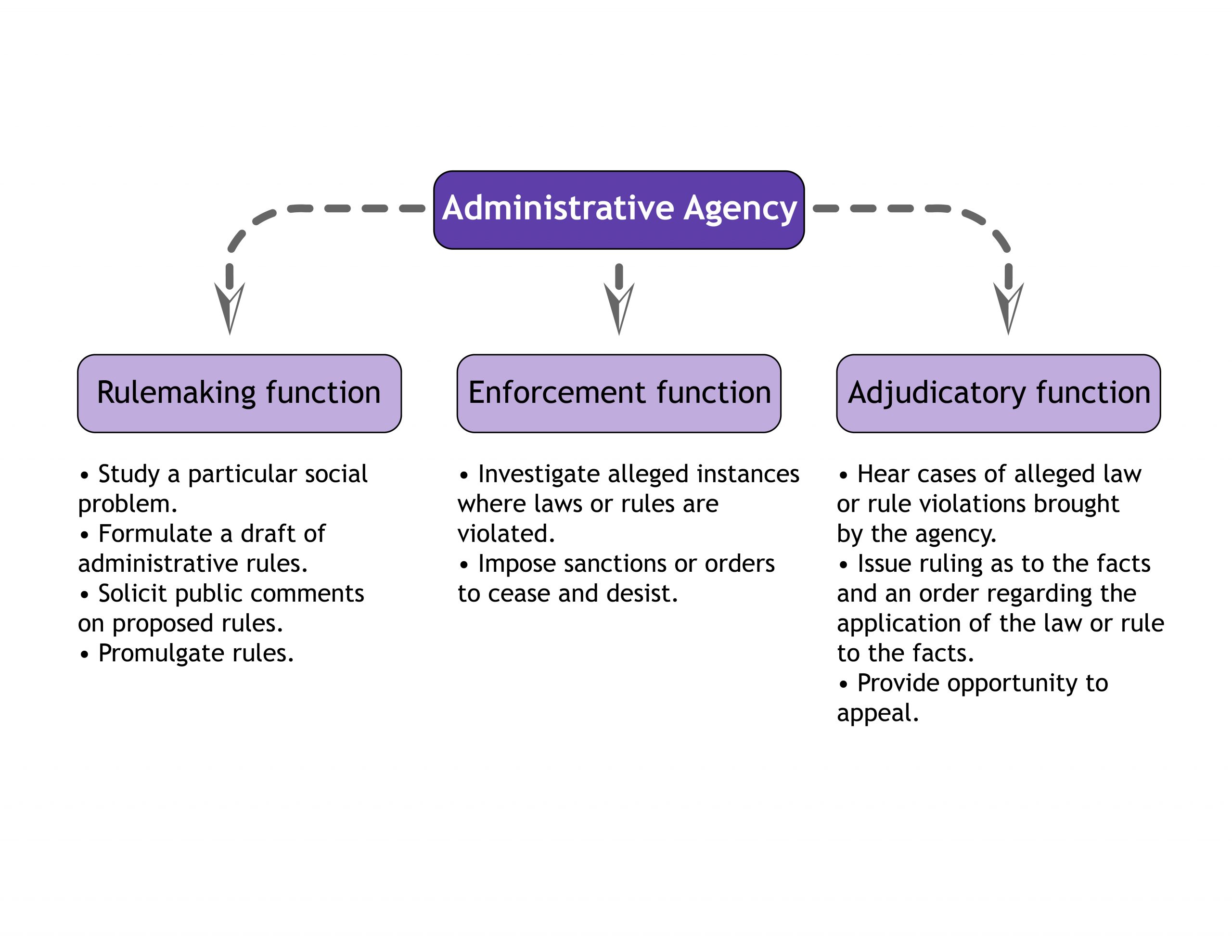
The Role of Administrative Agencies in Business and Finance
Administrative agencies are government bodies created by legislative acts (statutes) to implement and enforce specific laws. While Congress creates the law in broad strokes, it is the administrative agency that colors in the details. In the context of business and finance, these agencies act as the primary regulators, ensuring market integrity, consumer protection, and systemic stability.
Delegated Authority and Rulemaking
When a legislature passes a law, such as a financial reform bill, it often delegates authority to an agency to develop “rules” or “regulations.” These rules have the force of law. For a business owner or an investor, these regulations are often more impactful than the underlying statute itself. Agencies use a formal process—typically involving public comment periods and evidence-based analysis—to draft these regulations. This power allows agencies to adapt quickly to new technologies, such as the emergence of cryptocurrencies or rapid advancements in algorithmic trading, without needing to wait for a sluggish legislative process.
Adjudication and Enforcement
Beyond writing rules, administrative agencies also act as quasi-judicial bodies. They investigate potential violations, conduct hearings, and impose penalties. In the financial sector, this might involve the Securities and Exchange Commission (SEC) investigating a company for misleading shareholders, or the Federal Reserve ensuring a bank maintains adequate capital reserves. These enforcement actions are critical because they define the “red lines” for corporate conduct. Understanding the enforcement priorities of an agency can help a business mitigate legal risk and maintain compliance.
Key Agencies Shaping the Financial Landscape
The architecture of the financial world is supported by a network of federal and state administrative agencies. Each possesses a distinct mandate, and their combined oversight defines the environment in which capital moves.
The Securities and Exchange Commission (SEC)
The SEC is perhaps the most prominent agency for those involved in corporate finance and public markets. Its mission is to protect investors, maintain fair, orderly, and efficient markets, and facilitate capital formation. For a business, the SEC governs the lifecycle of investment: from the initial public offering (IPO) to quarterly financial reporting and shareholder voting. The agency’s focus on transparency ensures that participants in the capital markets have access to the data necessary to make informed decisions.
The Federal Reserve System
Often referred to as the “Fed,” this agency acts as the central bank of the United States. Its administrative functions are vast, ranging from conducting monetary policy to supervising and regulating financial institutions to ensure the safety and soundness of the nation’s banking system. For investors and businesses alike, the Fed’s signals regarding interest rates and liquidity are the single most important administrative indicator of future economic conditions.

The Consumer Financial Protection Bureau (CFPB)
The CFPB focuses on the intersection of individual finance and institutional conduct. It regulates the provision of financial products and services to consumers, including mortgages, credit cards, and student loans. By preventing deceptive financial practices, the CFPB influences how financial institutions design their products and interact with the public. For startups in the “fintech” space, the CFPB is a primary stakeholder in the product development lifecycle, requiring a focus on compliance by design.
Compliance and Strategy: Navigating the Regulatory Environment
For a business, viewing administrative agencies merely as obstacles is a strategic error. Instead, the most successful enterprises view regulatory compliance as a core component of their business strategy. Proactive management of the relationship between corporate operations and agency oversight can provide a competitive advantage.
The Cost of Non-Compliance
The financial and reputational costs of running afoul of an administrative agency are staggering. Fines, cease-and-desist orders, and the forced restructuring of business practices can wipe out years of growth. More importantly, administrative agencies often share information; a violation identified by one agency can trigger a “cascade” of audits by others. Maintaining a robust compliance program is, at its core, a form of risk insurance. It involves mapping corporate activities to the specific regulations issued by relevant agencies and ensuring that documentation is always “audit-ready.”
Influencing Policy through Public Comment
One of the most underutilized strategies in corporate governance is active participation in the administrative process. Agencies are required by law to provide notice and allow for public comment when creating new rules. Corporations, industry associations, and even individual investors have the right to submit feedback during these periods. By contributing high-quality, data-driven analysis during the rulemaking process, businesses can help shape regulations that are practical, effective, and conducive to a healthy market environment. Engaging at this level is not just about lobbying; it is about providing the technical expertise that agencies need to make informed decisions.
The Future of Regulatory Oversight
As the economy becomes increasingly digital, the nature of administrative agencies is evolving. We are seeing a move toward “RegTech”—the integration of technology to streamline regulatory processes. Agencies are beginning to use AI and big data to monitor market activity in real-time, moving away from reactive investigations toward proactive surveillance. For businesses, this means that the speed and accuracy of compliance reporting are becoming more critical than ever. The ability to automate compliance workflows will distinguish firms that thrive in a high-regulation environment from those that struggle.
The Intersection of Agency Policy and Investment Strategy
For the individual investor, administrative agencies provide the “rules of the road” that minimize the risk of fraud and systemic collapse. Understanding how these agencies impact the market is essential for building a resilient portfolio.
Analyzing Agency Signals
Market participants often hang on every word spoken by agency heads. Whether it is a speech by the Chair of the Federal Reserve or a press release from the Federal Trade Commission regarding a pending merger, administrative actions signal the health and direction of specific sectors. Investors who track these administrative trends are better positioned to anticipate policy shifts—such as a tightening of credit standards or a crackdown on specific investment vehicles—that could impact their returns.

The Importance of Jurisdictional Clarity
Not all regulatory oversight is federal. Depending on the industry, a business may be subject to a complex web of state-level administrative agencies, such as state insurance commissions or banking departments. For an investor, understanding the jurisdictional authority of an agency is key to evaluating the stability of a company. A company that operates across multiple states must manage the diverse, and sometimes conflicting, demands of multiple administrative bodies. This “regulatory friction” can impact profit margins, dividend sustainability, and the company’s long-term growth trajectory.
In conclusion, administrative agencies are the invisible hands that guide the economy, balancing the need for corporate innovation with the necessity of protecting the public interest. By recognizing the role of these agencies as rule-makers, enforcement agents, and market supervisors, businesses and investors can move from a state of passive reaction to one of informed, strategic participation. Whether you are leading a corporation through a merger, launching a fintech startup, or managing a personal investment portfolio, the administrative landscape is the environment in which your success is built. Respecting, understanding, and engaging with these agencies is not a bureaucratic burden—it is the prerequisite for sustainable prosperity in a regulated economy.
aViewFromTheCave is a participant in the Amazon Services LLC Associates Program, an affiliate advertising program designed to provide a means for sites to earn advertising fees by advertising and linking to Amazon.com. Amazon, the Amazon logo, AmazonSupply, and the AmazonSupply logo are trademarks of Amazon.com, Inc. or its affiliates. As an Amazon Associate we earn affiliate commissions from qualifying purchases.