
Precision in the kitchen is often the difference between a culinary triumph and a frustrating waste of ingredients. For many home cooks, the measurement “1/8 of a cup” represents a minor mathematical hurdle that frequently leads to second-guessing. Whether you are scaling down a recipe for a solo meal or precisely measuring leavening agents for a delicate pastry, understanding this fractional unit is a foundational skill in culinary science. While it may seem like a trivial measurement, mastering the conversion of 1/8 of a cup is essential for consistent results in baking and sauce reduction.
The Mathematical Breakdown of 1/8 Cup
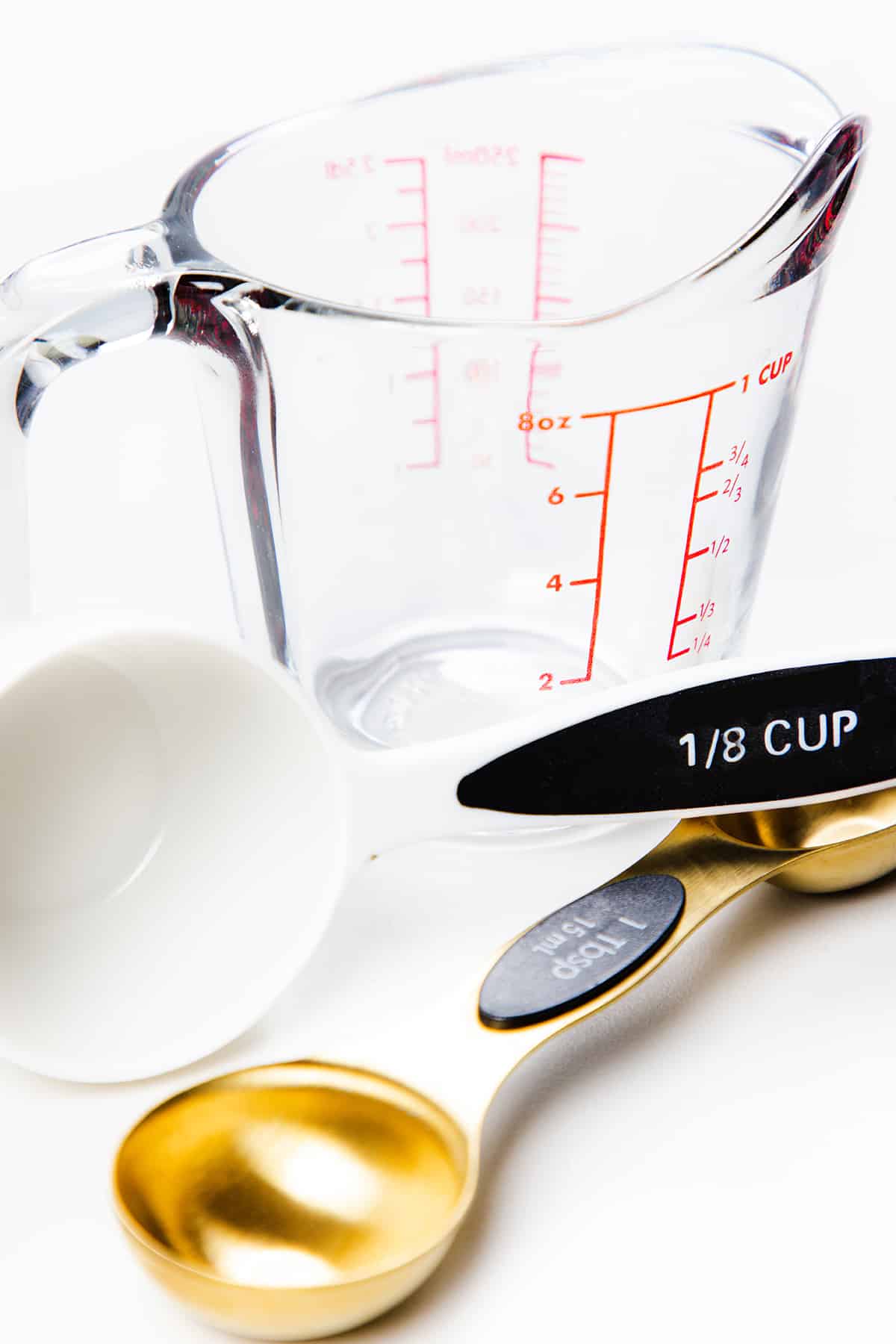
To effectively navigate your kitchen measurements, it helps to visualize the 1/8 cup in terms of more common, everyday units. Because standard measuring cups usually increment by 1/4, 1/3, and 1/2 cups, the 1/8 increment is rarely found in a standard dry measuring set, requiring you to rely on smaller tools like tablespoons.
Converting to Tablespoons
The most reliable way to measure 1/8 of a cup is to convert it into tablespoons. Since there are 16 tablespoons in a single cup, a simple division shows that 1/8 of a cup is exactly 2 tablespoons.
This conversion is highly practical because most bakers and chefs already have a set of measuring spoons readily available. By utilizing the 1-tablespoon measure twice, you achieve the exact volume required for 1/8 of a cup without the risk of over-packing a larger vessel.
The Role of Fluid Ounces
In professional settings and for liquid ingredients, culinary professionals often measure by volume in fluid ounces. Since one standard cup is equivalent to 8 fluid ounces, 1/8 of a cup is exactly 1 fluid ounce.
Understanding this relationship is particularly useful when working with liquid extracts, oils, or alcohols. If a recipe calls for 1 fluid ounce of an ingredient, you can immediately identify that as 1/8 of a cup, allowing you to use a small liquid measuring glass or a standard 1-ounce shot glass if necessary.
Practical Applications in Baking and Cooking
The necessity for such a small measurement usually arises in the context of high-stakes culinary tasks, such as baking, where the chemistry of the ingredients is rigid. A slight deviation in the amount of baking powder, salt, or concentrated flavoring can fundamentally alter the texture and flavor profile of the final product.
The Sensitivity of Leavening Agents
When you are dealing with baking powder or baking soda, the chemistry is delicate. If a recipe asks for 1/8 of a cup of a specific ingredient—though rare for leavening agents, it is common for dry flavorings like cocoa powder or spices—it implies a specific density requirement.
Measuring 2 tablespoons rather than “eyeballing” 1/8 of a cup ensures that your crumb structure remains light and airy. In recipes that utilize leavening, using a fraction too much or too little can result in a collapse or a metallic, bitter aftertaste, rendering the dish inedible.
Measuring Fats and Thickening Agents
If a recipe calls for 1/8 of a cup of melted butter or oil, precision is required to ensure that the fats correctly emulsify with the other ingredients. Using 2 tablespoons ensures that your sauce thickens correctly or that your cookie dough maintains the intended ratio of fat to flour. Without this precision, fats may separate during the cooking process, leading to a greasy exterior or an uneven distribution of flavor.
Tools of the Trade: Beyond the Measuring Cup

While standard measuring cups are the backbone of a kitchen, they are notoriously inaccurate for small fractions. The design of many measuring cups—often wide and shallow—makes it difficult to fill them to exactly 1/8 of a cup without spillover or uneven leveling.
Why Measuring Spoons Are Superior
Measuring spoons offer a narrower diameter, which allows for a more precise “leveling” of ingredients. When you fill a tablespoon, you can use the flat edge of a knife to scrape across the top, ensuring that the volume is perfectly consistent.
If you attempt to measure 2 tablespoons of an ingredient into a 1/2-cup container, you will likely find that the ingredient spreads across the wide base, making it impossible to judge whether the amount is truly 1/8 of a cup. By using the smaller spoon as your primary tool, you eliminate the margin of error introduced by the geometry of larger vessels.
Digital Scales: The Gold Standard
In modern culinary practice, professional chefs are moving away from volumetric measurements entirely. The most accurate way to measure 1/8 of a cup is not by sight, but by weight.
If you own a digital kitchen scale, you can bypass the “tablespoon conversion” headache entirely. By placing your bowl on the scale and taring it to zero, you can add ingredients until you hit the weight equivalent of 1/8 of a cup. For dry ingredients like flour, 1/8 of a cup weighs approximately 15 to 16 grams. For liquids, it is approximately 24 grams. Using weight allows for absolute repeatability, which is the cornerstone of professional-grade culinary success.
Troubleshooting Common Measurement Errors
Even with the correct tools, errors occur. Understanding the anatomy of your measurement can help you troubleshoot why a recipe might have failed in the past.
The “Packed vs. Level” Dilemma
When measuring 1/8 of a cup (or 2 tablespoons) of ingredients like brown sugar or finely grated cheese, the packing method matters. If a recipe calls for 1/8 of a cup, it usually assumes a “loosely leveled” measurement unless otherwise specified.
If you find yourself struggling with consistency, always use the “dip and sweep” method. Dip the tablespoon into the ingredient, lift it, and sweep the excess off the top with a flat-edged spatula. Never pack the ingredient into the spoon unless the recipe explicitly states to do so, as this can increase the actual volume of the ingredient by up to 20 percent, throwing off your flavor profile.
Dealing with Sticky Ingredients
Measuring sticky substances—such as honey, molasses, or peanut butter—presents a unique challenge for the 1/8 cup measurement. These ingredients tend to cling to the sides of measuring spoons, meaning that even if you fill the spoon, you are not actually depositing the full amount into your bowl.
To ensure you get the full 1/8 cup (2 tablespoons) into your recipe, lightly coat the measuring spoon with a neutral-flavored cooking spray or a drop of vegetable oil before measuring. The ingredient will slide out of the spoon effortlessly, ensuring that your measurements remain accurate down to the last drop.

Mastering Culinary Fractions for Better Results
Understanding that 1/8 of a cup is equivalent to 2 tablespoons, or 1 fluid ounce, is more than just a math lesson. It is a refinement of your craft. When you move away from estimating and toward precise measurement, you gain control over the variables in your cooking.
Whether you are scaling up a family recipe for a dinner party or perfecting a delicate dessert, having the confidence to identify and measure 1/8 of a cup accurately ensures that your culinary efforts are consistently rewarded. As you gain familiarity with these small-scale conversions, you will find that your recipes become more predictable, your baking more reliable, and your time in the kitchen more efficient. Precision, after all, is the secret ingredient that turns a home cook into a master of their craft.
aViewFromTheCave is a participant in the Amazon Services LLC Associates Program, an affiliate advertising program designed to provide a means for sites to earn advertising fees by advertising and linking to Amazon.com. Amazon, the Amazon logo, AmazonSupply, and the AmazonSupply logo are trademarks of Amazon.com, Inc. or its affiliates. As an Amazon Associate we earn affiliate commissions from qualifying purchases.