
In the landscape of historical craftsmanship, few professions carry as much structural significance as that of the wheelwright. While modern society often treats the wheel as a commodity—a mass-produced component of automotive engineering—the wheelwright represents a master of early mechanical design. As a specialized trade falling under the umbrella of traditional business and manufacturing history, understanding the wheelwright provides profound insights into supply chain logistics, product durability, and the foundational principles of engineering.
The Evolution and Definition of the Craft
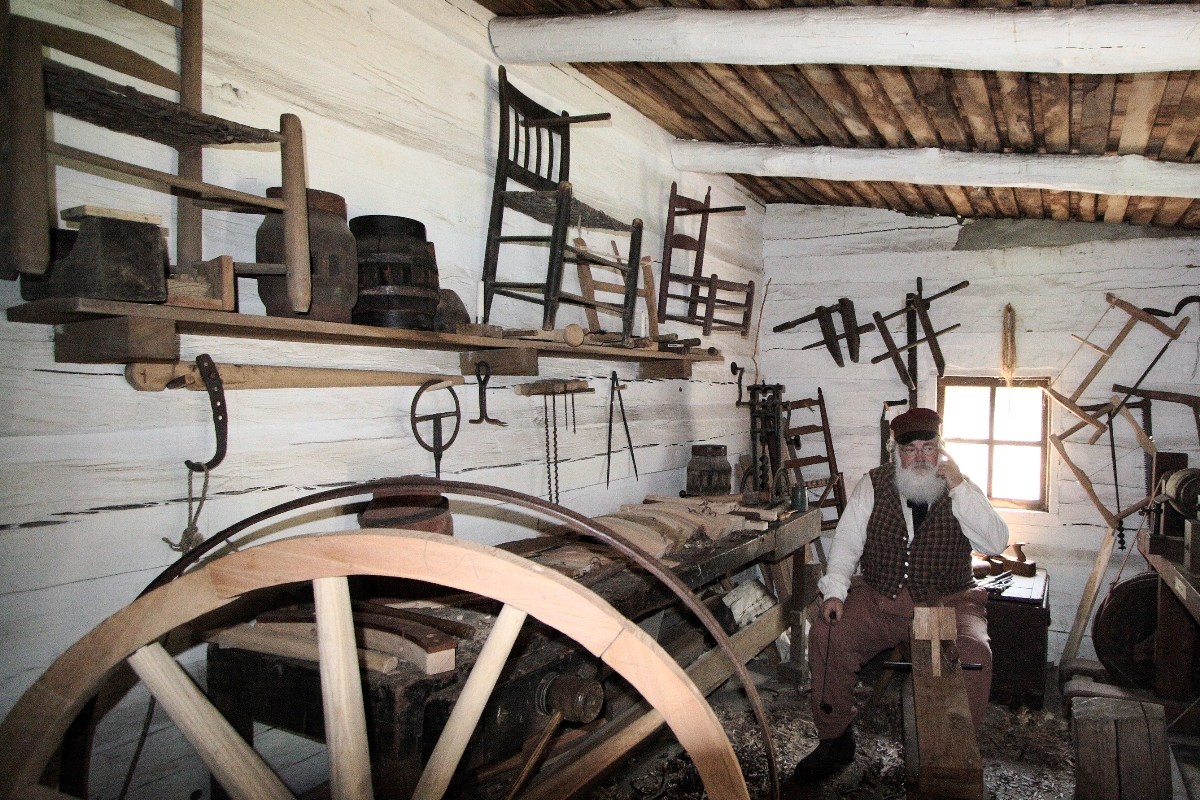
The wheelwright is a skilled craftsman whose primary trade is the design, manufacture, and repair of wooden wheels. Historically, this profession was distinct from that of a blacksmith or a carpenter. While a carpenter worked with flat planes and static structures, the wheelwright had to master the physics of rotational force, weight distribution, and torque.

The Geometry of Motion
The fundamental challenge of a wheelwright is the creation of a circular object capable of bearing heavy, uneven loads over rough terrain while maintaining structural integrity. Unlike a simple circle, a carriage or wagon wheel requires a sophisticated assembly of parts: the nave (hub), the spokes, and the felloes (the curved segments forming the rim). Each component must be engineered to withstand the natural expansion and contraction of wood under varying environmental conditions.
Bridging Material Science and Practical Utility
Before the age of industrial metallurgy, the wheelwright was the primary technologist of transportation. Their ability to select the appropriate timber—typically seasoned oak for the hubs due to its resistance to splitting, and ash or hickory for the spokes for their flexibility and tensile strength—demonstrated a high level of material science expertise. This deep knowledge of raw materials serves as a precursor to modern manufacturing standards, where the selection of composites dictates the longevity and safety of the final product.
The Business of Craft: Production and Maintenance
Operating as a wheelwright was more than a labor of art; it was a cornerstone of commercial infrastructure. In agrarian and early industrial economies, the wheelwright was the equivalent of a modern automotive mechanic or fleet maintenance manager. Without the wheelwright’s services, the movement of goods, agricultural harvests, and passengers would grind to a halt.
Customization and Bespoke Engineering
Every wheelwright operated within a model of high-end bespoke production. Unlike modern assembly lines that prioritize uniformity, the historical wheelwright tailored each wheel to the specific requirements of the vehicle and the terrain it was meant to traverse. A heavy freight wagon required a different spoke angle (known as “dish”) and a broader rim than a lightweight courier carriage. This customization ensured that the client received a product optimized for their specific business needs, effectively maximizing the return on investment for the vehicle owner.

The Economics of Durability
The hallmark of a skilled wheelwright was the longevity of their product. In a world where replacement parts could not be ordered overnight, the durability of the wheel was a critical financial factor. By utilizing techniques such as “tyre shrinking”—where a hot iron rim is fitted around the wood to contract upon cooling, effectively pulling the entire structure into a rigid, pressurized state—the wheelwright ensured that the wheel could survive years of heavy use. This focus on long-term value over short-term replacement cost remains a vital lesson in modern business strategy: superior craftsmanship reduces the total cost of ownership over the lifecycle of the asset.
Principles of Engineering and Structural Integrity
The success of a wheelwright relies on an intuitive understanding of physics that predates modern computer-aided design (CAD). The concepts of tension, compression, and load-bearing dynamics were codified through generations of trial and error, resulting in a system that is as elegant as it is robust.
The Role of ‘Dish’
One of the most complex aspects of wheelwrighting is the dish. This is the conical shape of the wheel, where the spokes are set at an angle rather than radiating in a flat plane. The dish serves a critical mechanical purpose: it allows the wheel to absorb lateral shocks from rough roads and prevents the hub from sliding off the axle. Understanding the dish is effectively an exercise in structural engineering. It dictates how the wheel responds to side-loading—a force that would instantly buckle a flat, non-dished wheel.
Maintenance Cycles and Lifecycle Management
A wheelwright’s work did not end at the point of sale. Maintenance was a core service of the trade. Exposure to heat could shrink the wood, leading to loose spokes, while moisture could cause rot. The wheelwright acted as a consultant, diagnosing these issues and performing repairs that extended the lifespan of the vehicle. In the modern business context, this is a perfect analogy for “product as a service.” By maintaining the integrity of the wheels, the wheelwright ensured the continuous uptime of the client’s logistical operations, proving that the value of the trade was measured in the reliability of the transport system as a whole.
The Legacy of the Wheelwright in Modern Industry
Though the advent of rubber tires and steel wheels largely eclipsed the traditional wheelwright by the early 20th century, the principles of the trade have been fully absorbed into modern industrial design. The transition from wood to steel and later to carbon fiber composites followed the same path of optimizing for weight-to-strength ratios that the original wheelwrights established.
Standardization and Interoperability
As the craft matured, wheelwrights began to adopt standardized sizes for axles and hub bores. This was a critical step in the development of logistical efficiency. When parts became interchangeable, it was no longer necessary to consult the original maker for every minor repair. This push toward standardization is the direct ancestor of the modern supply chain management and manufacturing standards that define global commerce today.
The Artisan in a High-Tech World
Today, the profession of the wheelwright has shifted from a primary logistical necessity to a niche craft focused on historical restoration, museum exhibition, and the production of wheels for traditional carriages and horse-drawn vehicles. However, the intellectual property of the wheelwright—the understanding of structural wood, the physics of rotational force, and the importance of precision engineering—remains a respected discipline.
The wheelwright is a testament to the idea that commerce has always relied on the marriage of technical skill and market utility. Whether it is an oak hub in the 18th century or a carbon fiber wheel in the 21st, the goal remains the same: to create a component that facilitates motion safely, efficiently, and durably. By studying the work of the wheelwright, professionals in any industry can better appreciate the value of craftsmanship, the importance of robust product design, and the necessity of building long-term value into the core of their business model. The wheelwright’s legacy is not just in the wooden structures they left behind, but in the enduring engineering principles that continue to drive the world forward.
aViewFromTheCave is a participant in the Amazon Services LLC Associates Program, an affiliate advertising program designed to provide a means for sites to earn advertising fees by advertising and linking to Amazon.com. Amazon, the Amazon logo, AmazonSupply, and the AmazonSupply logo are trademarks of Amazon.com, Inc. or its affiliates. As an Amazon Associate we earn affiliate commissions from qualifying purchases.