
The meteoric rise of Tesla as a global automotive powerhouse is inextricably linked to its battery technology. While the sleek design and autonomous software often capture the headlines, the true engine of the EV revolution lies in the chemical composition of the battery cells housed within the vehicle’s chassis. To understand the future of transportation, one must first deconstruct the periodic table of elements that powers it. Tesla’s battery technology is not a static monolith; it is a continuously evolving engineering feat that balances energy density, longevity, cost, and raw material supply chain stability.

The Chemistry of High-Performance Cells: NCA and NCM
At the core of most Tesla vehicles, particularly the Model S and Model X, are Lithium-ion cells categorized by their specific cathode chemistries. Historically, Tesla has utilized Nickel-Cobalt-Aluminum (NCA) and Nickel-Cobalt-Manganese (NCM) chemistries.
The Role of Nickel, Cobalt, and Aluminum
The cathode is the most critical component in defining a battery’s energy density. Nickel is the primary workhorse; it is responsible for providing the high energy density that allows Tesla vehicles to achieve their industry-leading range. By increasing the percentage of nickel in the cathode, engineers can pack more energy into the same physical space.
Cobalt, while controversial due to its high cost and ethical supply chain challenges, plays a vital role in thermal stability and structural integrity. It prevents the battery from overheating and degrading under the intense pressure of high-speed charging and discharging. Aluminum is used to further stabilize the structure, ensuring that the battery cells remain robust over thousands of charge cycles.
Transitioning Toward Lower Cobalt Usage
In recent years, the industry—and Tesla specifically—has moved aggressively to reduce the cobalt content in these cells. Cobalt is not only expensive but is largely mined in regions with complex geopolitical and labor concerns. By refining the crystalline structure of the cathode, Tesla has successfully pushed toward “high-nickel” chemistries that maintain performance while drastically reducing reliance on cobalt.
The Shift to Lithium Iron Phosphate (LFP)
Perhaps the most significant pivot in Tesla’s material strategy has been the adoption of Lithium Iron Phosphate (LFP) batteries for its standard-range vehicles, such as the entry-level Model 3 and Model Y. This shift represents a fundamental change in how the company views the trade-off between energy density and total cost of ownership.
Why LFP Matters
LFP batteries replace the expensive nickel and cobalt found in high-performance packs with iron and phosphate. These materials are significantly cheaper, more abundant, and environmentally easier to source. From a technical standpoint, LFP batteries offer two massive advantages: exceptional longevity and enhanced safety.
LFP cells are physically more robust and less prone to the “thermal runaway” events that sometimes plague high-nickel cells. Furthermore, they are designed to be charged to 100% capacity on a daily basis without the degradation that traditional NCA batteries might experience. For the average consumer who does not require the absolute peak performance of a high-nickel pack, LFP represents the democratization of electric vehicle technology.
Manufacturing and Economic Efficiency
By diversifying into LFP, Tesla has insulated its supply chain from the volatile price fluctuations of nickel and cobalt. This strategy has been a cornerstone of their ability to maintain vehicle margins while scaling production to millions of units annually. The LFP chemistry allows for a more localized supply chain, reducing the carbon footprint associated with transporting raw materials across continents.
The Evolution of the 4680 Structural Battery Cell
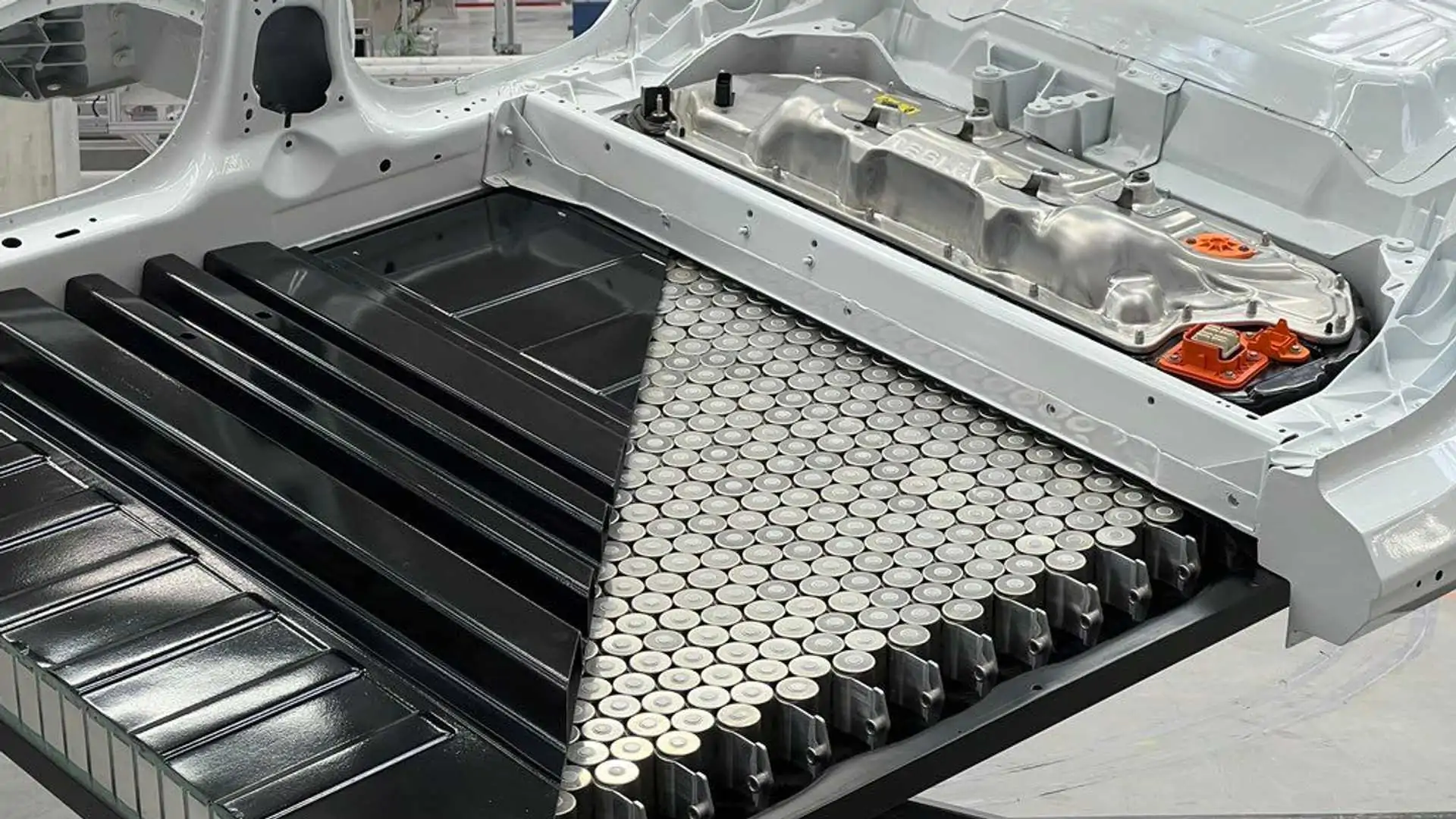
The “4680” refers to the physical dimensions of the cell (46mm in diameter and 80mm in height). While the external dimensions are revolutionary, the internal material science of these cells is where Tesla is truly pushing the boundaries of the tech sector.
The Dry Electrode Manufacturing Process
Traditional battery manufacturing involves a “wet” process where chemicals are mixed with solvents to create a slurry, which is then coated onto metal foils and dried in massive, energy-intensive ovens. This process is slow and expensive.
Tesla’s proprietary dry electrode manufacturing process eliminates the solvent phase entirely. By using a dry binder, they can create the electrode film directly. This is not only a material efficiency breakthrough but a manufacturing one; it drastically reduces the physical footprint of the factory, lowers energy consumption, and improves the overall sustainability of the production line.
Silicon Anodes and Energy Density
Historically, anodes—the negative electrode of the battery—have been made of graphite. However, silicon has a much higher capacity to store lithium ions than graphite. The challenge with silicon is that it expands significantly when charged, which can lead to the battery cracking and failing.
Tesla is solving this through advanced material engineering, incorporating silicon-carbon composites into the anodes of their 4680 cells. By “doping” the graphite with silicon, Tesla is achieving higher energy densities, meaning the cars can go further on a single charge while using smaller, lighter battery packs.
Electrolytes, Separators, and Ancillary Components
While cathodes and anodes get the most attention, the “juice” that allows ions to flow—the electrolyte—and the physical barrier that prevents short circuits—the separator—are equally critical components.
The Electrolyte Solution
The electrolyte is typically a lithium salt dissolved in an organic solvent. It serves as the medium through which lithium ions travel between the cathode and anode. Tesla is constantly iterating on the chemical additives in this solution to ensure the battery can handle higher voltages and faster charging speeds without decomposing. These additives act as a protective barrier on the surface of the electrodes, extending the life of the cell by preventing the growth of “dendrites,” which are microscopic, needle-like formations that can eventually cause an internal short circuit.
The Separator Membrane
The separator is a thin, porous polymer film. It must be thin enough to allow ions to pass through easily but strong enough to withstand high temperatures and prevent the electrodes from touching. Tesla’s focus here is on advanced ceramic coatings for these separators, which provide an extra layer of fire protection, further enhancing the safety profile of the vehicle’s energy storage system.
The Future of Battery Materials
Looking ahead, the next chapter in Tesla’s battery narrative involves the transition toward solid-state electrolytes and potentially lithium-metal anodes. As the tech industry moves deeper into sustainable energy, the refinement of these materials will determine the pace of mass adoption.
Sustainability and Circularity
The material composition of a Tesla battery is also shifting toward the end of its life. Tesla is developing internal recycling capabilities that allow them to recover nearly 90% of the nickel, cobalt, and lithium from old battery packs. This turns the battery from a “consumable” into a “circular asset.” By reclaiming these high-value metals from decommissioned vehicles, Tesla is effectively building a “mine” above ground, reducing the need for virgin mining and ensuring a stable supply of materials for the next generation of cells.

Integration with Software
Finally, the “material” of a Tesla battery is increasingly becoming code. Through sophisticated Battery Management Systems (BMS), Tesla monitors the health and chemical state of the battery in real-time. This software-defined control allows the battery to operate at the edge of its physical capabilities without crossing the threshold into damage, effectively squeezing every possible mile out of the raw chemistry contained within.
In summary, a Tesla battery is a high-tech cocktail of nickel, cobalt, aluminum, iron, phosphate, silicon, and lithium, housed in a precision-engineered structural shell. It is the result of relentless optimization—balancing the cold, hard reality of materials science with the software-driven demands of modern electric mobility. As these materials continue to evolve, the distinction between the car and the battery will continue to blur, until the battery itself is the car.
aViewFromTheCave is a participant in the Amazon Services LLC Associates Program, an affiliate advertising program designed to provide a means for sites to earn advertising fees by advertising and linking to Amazon.com. Amazon, the Amazon logo, AmazonSupply, and the AmazonSupply logo are trademarks of Amazon.com, Inc. or its affiliates. As an Amazon Associate we earn affiliate commissions from qualifying purchases.