
In the modern digital landscape, information is the most valuable currency. However, the sheer volume of data produced daily means that raw information is often overwhelming, cryptic, or entirely inaccessible to the people who need it most. This is where technical communication serves as the critical bridge. It is not merely the act of writing instructions; it is a specialized discipline dedicated to translating complex, highly technical information into clear, actionable, and user-centered content. Whether it is an API documentation page, a medical device manual, or a complex white paper on cloud architecture, technical communication ensures that the right information reaches the right audience in a way that minimizes cognitive load and maximizes utility.

Defining the Scope of Technical Communication
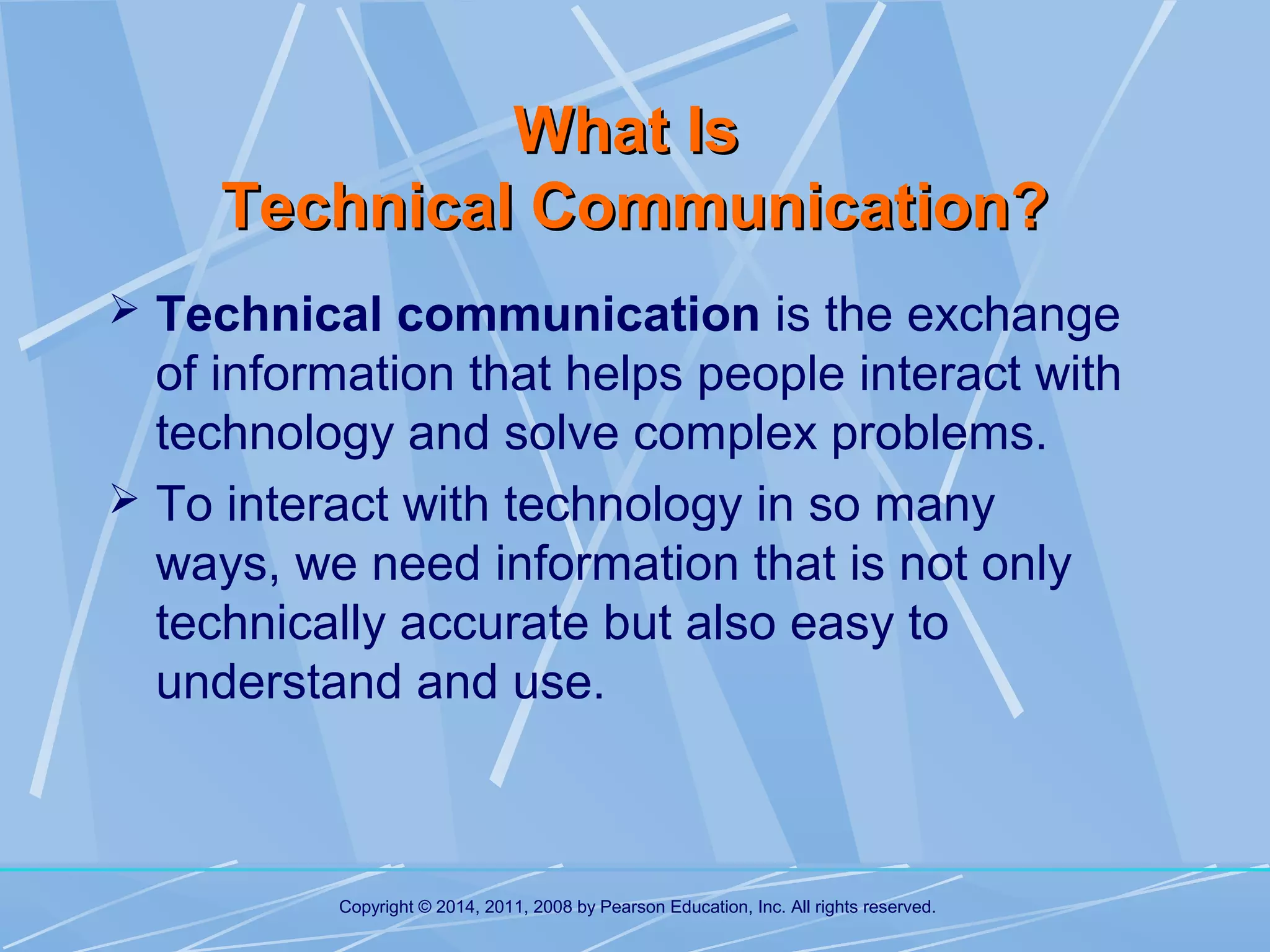
At its core, technical communication is the process of conveying information about specialized topics—such as computer software, engineering, manufacturing, or financial systems—to a targeted audience. Unlike creative writing, which often seeks to evoke emotion, technical communication is utilitarian. Its success is measured by the clarity, accuracy, and accessibility of the information provided.
The Audience-First Methodology
The defining characteristic of technical communication is its rigorous adherence to audience analysis. A technical writer does not write for themselves; they write for a specific persona. For instance, a developer looking at documentation needs snippets of code, clear endpoint definitions, and error handling protocols. Conversely, an end-user of a consumer mobile app requires intuitive, step-by-step guidance that avoids jargon. Understanding the user’s technical proficiency, goals, and pain points is the prerequisite for any successful technical document.
The Goal of Usability and Utility
Technical communication is fundamentally about solving problems. When a user consults a manual or a help article, they are usually in a state of frustration or confusion. The content must act as a roadmap to restore the user’s productivity. This requires high levels of precision. Ambiguity in technical communication can lead to significant real-world consequences, such as data loss, safety hazards, or system downtime. Therefore, the discipline prioritizes brevity and clarity, stripping away extraneous detail to focus on the exact steps required to achieve a specific outcome.
The Diverse Formats of Technical Documentation
The field of technical communication has evolved significantly alongside the growth of the software and technology sectors. What was once confined to printed user manuals has expanded into a vast ecosystem of digital assets.
Documentation for Software and APIs
In the tech industry, documentation is often a product in its own right. API documentation, for example, must be highly structured and standardized. It relies on automation tools like Swagger or Redoc to ensure that endpoints, request bodies, and response structures are presented consistently. Beyond the technical specs, developers require tutorials, “getting started” guides, and architecture overviews. These materials reduce the friction of integration, effectively lowering the barrier to entry for developers and increasing the adoption rate of a technology platform.
User Guides and Instructional Media
For consumer-facing products, technical communication often takes the form of help centers, knowledge bases, and embedded “tooltips” within an application. These assets are increasingly multimodal. While text remains the foundation, modern technical communication integrates screenshots, annotated diagrams, screen-recorded video walkthroughs, and even interactive simulations. By leveraging various media, technical communicators can accommodate different learning styles, ensuring that the information is digestible regardless of whether the user prefers reading, watching, or interacting.
Technical Reports and White Papers
In the B2B tech space, technical communication serves a strategic function. White papers are documents designed to explain a complex solution or a new technology to a business audience—typically decision-makers or stakeholders. These documents require a unique blend of technical accuracy and persuasive narrative. They must explain how a technology works while simultaneously articulating why it is a sound investment. This requires the technical communicator to possess a deep understanding of business impact, translating technical benefits into strategic advantages.
The Role of the Technical Communicator in the Tech Ecosystem
The role of a technical communicator is often misunderstood. It is frequently categorized as simply “writing,” but in the modern tech environment, it is a hybrid role that combines editorial skill with project management, user experience design, and technical engineering.
Collaborating with Engineering Teams
A technical communicator acts as a translator between two distinct groups: the engineering team that builds the product and the stakeholders who need to use it. This often involves interviewing developers to extract critical technical details, testing the product under real-world conditions, and identifying gaps in the engineering team’s assumptions. By participating in the development lifecycle, technical communicators often discover flaws in the product design, effectively serving as an early-stage QA (Quality Assurance) layer.
Information Architecture and Single-Sourcing
Modern technical communication relies heavily on information architecture. Because products evolve quickly, documentation must be agile. This has led to the adoption of “single-sourcing” and “content reuse.” Instead of rewriting instructions every time an update is released, technical writers create modular content that can be updated in one location and automatically pushed to multiple formats—such as PDF manuals, web-based help centers, and mobile app tutorials. This necessitates a mastery of tools like DITA (Darwin Information Typing Architecture), Markdown, and static site generators.
Ethical Considerations and Precision
Finally, the ethics of technical communication cannot be overlooked. In industries such as healthcare technology or digital security, the documentation is part of the product’s safety profile. Failing to mention a specific security configuration, or omitting a critical warning in a software installation guide, can have legal and ethical ramifications. Technical communicators are the stewards of this information, tasked with ensuring that all warnings, cautions, and requirements are communicated with high visibility and unmistakable clarity.
The Future of Technical Communication in an AI-Driven World
As we move deeper into the era of artificial intelligence and machine learning, the landscape of technical communication is changing once again. We are entering the age of “Content as a Service,” where users may not even browse a documentation site; instead, they might ask a chatbot or a Large Language Model (LLM) for help.
Generative AI and Automated Documentation
AI tools are increasingly capable of drafting initial documentation based on codebases or system logs. However, the human element in technical communication remains essential. AI often hallucinates or provides generic answers that lack context. The technical communicator of the future will evolve into an “editor-in-chief” of AI-generated content, tasked with verifying accuracy, ensuring brand voice consistency, and fine-tuning the information to suit the specific needs of the human user.
Designing for Conversational Interfaces
As users shift toward conversational interfaces—such as voice assistants or LLM-driven query boxes—technical communicators must learn to structure information for these new channels. This involves focusing on “micro-content” that can be quickly summarized or read aloud, while still maintaining the depth required for complex troubleshooting. The focus remains the same—helping the user—but the delivery mechanism is shifting from static pages to dynamic, context-aware responses.

A Discipline of Value
Ultimately, technical communication is the discipline of creating clarity in a world that is becoming exponentially more complex. As technology continues to integrate into every facet of our lives, the ability to communicate how these systems function, why they matter, and how to utilize them safely and effectively will only grow in importance. It is the invisible backbone of the tech industry, ensuring that innovation does not outpace the human ability to understand and utilize it. By merging technical proficiency with human-centered empathy, the field continues to bridge the gap between machine logic and human intelligence.
aViewFromTheCave is a participant in the Amazon Services LLC Associates Program, an affiliate advertising program designed to provide a means for sites to earn advertising fees by advertising and linking to Amazon.com. Amazon, the Amazon logo, AmazonSupply, and the AmazonSupply logo are trademarks of Amazon.com, Inc. or its affiliates. As an Amazon Associate we earn affiliate commissions from qualifying purchases.