
The Taft-Hartley Act, formally known as the Labor-Management Relations Act of 1947, remains one of the most consequential pieces of federal legislation in American labor history. While the term is frequently tossed around in business boardrooms and union halls alike, its actual impact on the financial landscape of modern enterprise is often misunderstood. To understand the Taft-Hartley Act from a business finance perspective, one must view it not merely as a regulatory framework for labor, but as a mechanism that dictates the flow of capital, the structure of pension obligations, and the long-term financial liabilities of multi-employer organizations.
The Financial Genesis of Taft-Hartley
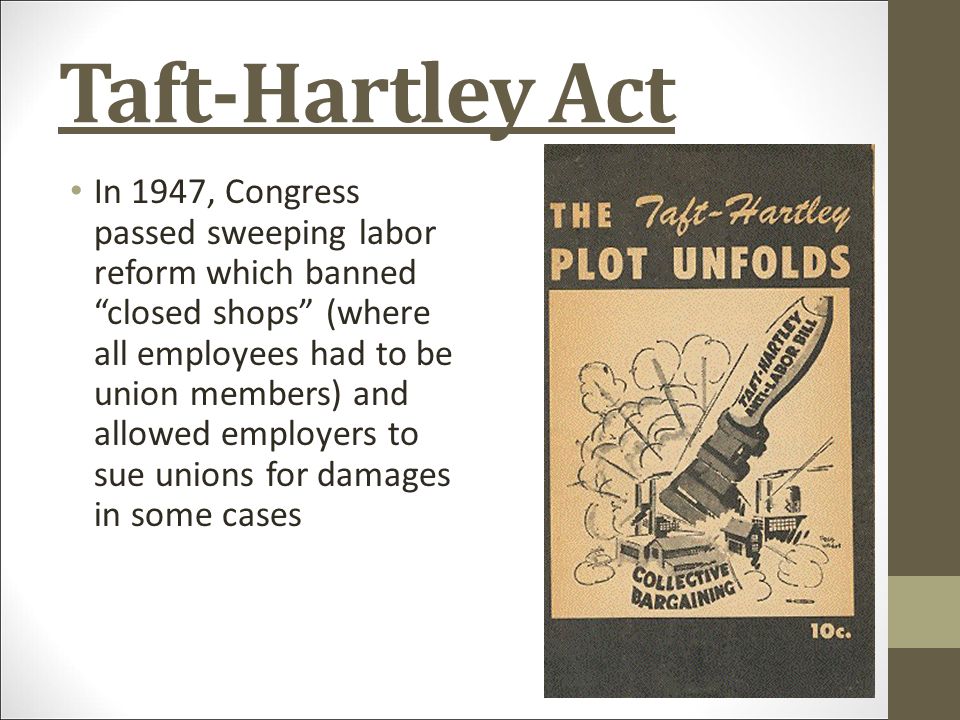
The passage of the Taft-Hartley Act in 1947 was, at its core, a corrective measure to curb the perceived imbalance of power created by the Wagner Act of 1935. Following a wave of post-World War II strikes, Congress sought to reintroduce a degree of equilibrium to the relationship between labor unions and management. For the financial professional, the significance lies in the restrictions placed on union activity and the subsequent standardization of multi-employer bargaining units.
Shifting the Burden of Liability
Before the enactment of this legislation, unions held significant leverage in negotiating industry-wide terms. Taft-Hartley fundamentally changed this by imposing “unfair labor practice” standards on unions and, crucially, regulating the administration of union health and welfare funds. By requiring that these funds be held in trust and administered by joint boards of trustees—equally represented by labor and management—the Act institutionalized a fiscal oversight structure that persists today. This mandate forced a move toward fiduciary responsibility, requiring employers to treat pension and health contributions as structured, audited, and strictly regulated financial obligations rather than discretionary payouts.
Impact on Multi-Employer Pension Plans
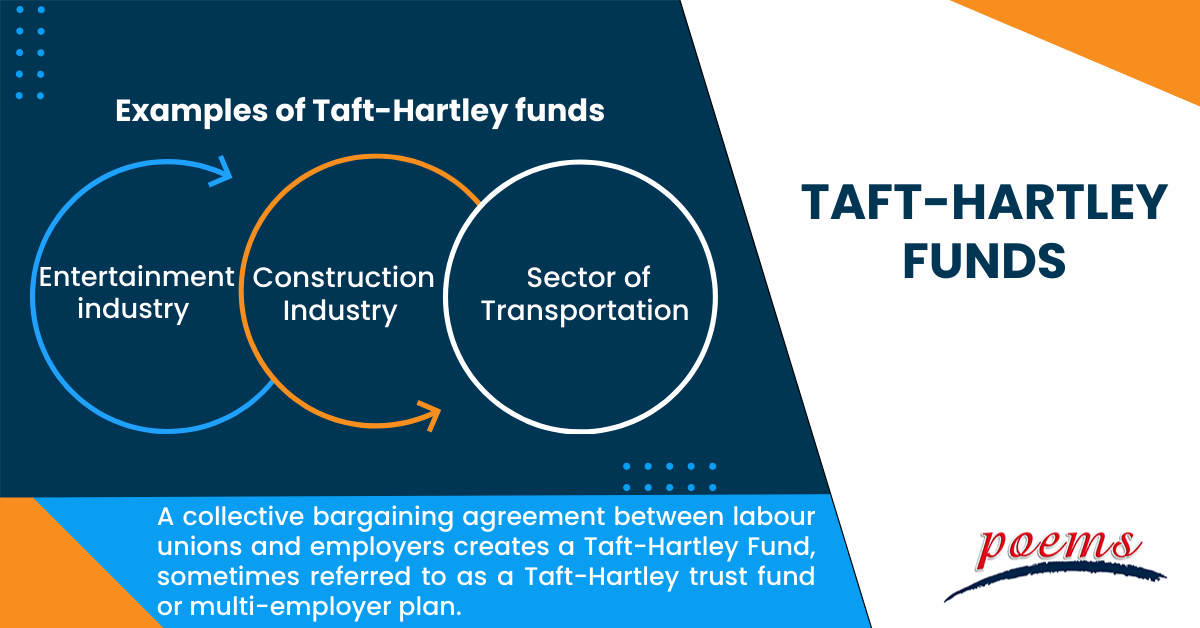
Perhaps the most enduring financial aspect of the Taft-Hartley framework is the multi-employer pension plan. In these arrangements, multiple employers within the same industry contribute to a single, pooled pension fund. For a business, this is a distinct financial structure. It allows companies to outsource the investment and administrative management of retirement benefits, but it also carries significant contingent liability risks. Because the plan is pooled, the financial health of the entire industry fund—and the specific obligations of a participating employer—are tethered to the collective performance of all contributors.
Navigating the Financial Realities of Multi-Employer Plans
For businesses operating under a Taft-Hartley agreement, financial planning is rarely simple. Unlike a standard 401(k) or a single-employer defined benefit plan, the Taft-Hartley model introduces a variable known as “withdrawal liability.” This is the financial “exit fee” an employer must pay if they cease contributing to a multi-employer pension fund.
Understanding Withdrawal Liability
Withdrawal liability is an accounting nightmare for many CFOs. If a business decides to leave a unionized sector or shut down a branch that was covered by a Taft-Hartley plan, the pension fund calculates the employer’s proportional share of the plan’s unfunded vested benefits. This can result in a sudden, massive liability appearing on the balance sheet, effectively acting as a debt obligation that can impact credit ratings, borrowing capacity, and the overall valuation of the firm.
Managing Fiduciary Risks and Reporting
Because Taft-Hartley plans are governed by the Employee Retirement Income Security Act (ERISA), the financial oversight requirements are stringent. Companies must account for their share of the pension plan’s financial status even if they do not manage the assets themselves. This creates a reliance on the actuarial reporting of the fund trustees. For a company’s internal finance team, monitoring the “funded status” of these plans is a critical component of risk management. A decline in the market value of the fund’s assets can lead to increased contribution requirements for the participating employers, effectively functioning as a mandatory, unplanned tax on payroll.
Strategic Financial Implications for Business Owners
The decision to enter into a collective bargaining agreement governed by Taft-Hartley is a strategic financial commitment that extends far beyond the immediate payroll cycle. It is a long-term capital allocation decision that influences a company’s cost structure for decades.
Long-Term Cost Predictability vs. Flexibility
The primary argument in favor of Taft-Hartley arrangements is the removal of the administrative burden of plan management. By pooling resources, smaller firms gain access to professional asset management and economies of scale that would be impossible to achieve individually. However, this comes at the cost of budgetary control. When an industry-wide fund faces a shortfall, the participating employers are often required to fill the gap. Consequently, a company’s labor costs can fluctuate due to investment market downturns or demographic shifts within the workforce, rather than solely based on the company’s own productivity or wage negotiations.
Evaluating Financial Exposure in M&A
When a company is undergoing a merger or acquisition, the Taft-Hartley status of the target company is one of the most critical due diligence items. An acquirer who is not careful may inadvertently inherit a multi-million dollar withdrawal liability. In the world of business finance, this is a “hidden” debt that does not show up as a standard loan but functions exactly like one in terms of cash flow impact. Advanced financial modeling for any firm in a unionized industry must include a stress test of all Taft-Hartley pension liabilities. This requires requesting the “Notice of Withdrawal Liability” estimates from the funds and conducting a sensitivity analysis on the fund’s projected funding ratios.
Future-Proofing Financial Health in a Unionized Landscape
As the economy shifts toward automation and digital integration, the traditional structures of Taft-Hartley plans face new challenges. The influx of technology into traditionally labor-intensive industries creates a mismatch between the number of active workers contributing to a fund and the number of retirees drawing from it.
Adapting to Structural Demographic Shifts
The financial viability of these funds relies on a steady stream of new, younger participants. In industries where technological disruption is shrinking the labor force, the “last man standing” in a multi-employer pool faces a significant financial risk. Companies must now look at their union participation not just as a labor strategy, but as a long-term hedge against industry volatility. Diversification of labor sources and a thorough understanding of the specific fund’s actuarial health are becoming standard prerequisites for modern risk management.

Strategic Financial Planning
For companies navigating the complexities of Taft-Hartley, the focus must shift from purely reactionary accounting to proactive financial strategy. This involves:
- Actuarial Monitoring: Regularly reviewing the annual reports and funding improvement plans (FIP) issued by the funds.
- Contractual Protections: Working closely with legal and financial counsel during collective bargaining to cap or manage potential contribution increases linked to pension underfunding.
- Internal Reserves: Setting aside liquid capital specifically to account for potential withdrawal liabilities, ensuring that a strategic pivot or business sale is not paralyzed by a sudden pension debt.
The Taft-Hartley Act remains a foundational pillar of American labor relations, but its influence on corporate finance is profound and often under-analyzed. It transforms labor unions into stakeholders in a company’s long-term financial health, and vice-versa. By treating these obligations as significant balance-sheet items rather than simple human resource expenses, businesses can better insulate themselves against the structural risks inherent in multi-employer pension participation. In an era of rapid economic change, the companies that succeed are those that view their union obligations through the lens of institutional finance, ensuring that their labor strategy supports, rather than compromises, their broader financial objectives.
aViewFromTheCave is a participant in the Amazon Services LLC Associates Program, an affiliate advertising program designed to provide a means for sites to earn advertising fees by advertising and linking to Amazon.com. Amazon, the Amazon logo, AmazonSupply, and the AmazonSupply logo are trademarks of Amazon.com, Inc. or its affiliates. As an Amazon Associate we earn affiliate commissions from qualifying purchases.