
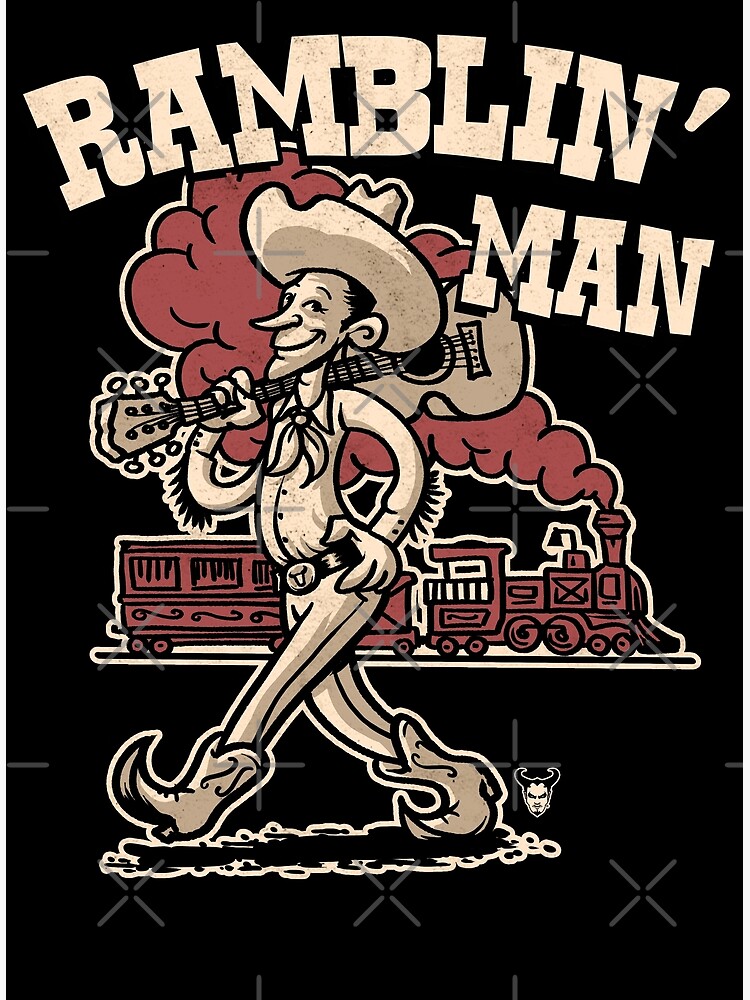
In an era of hyper-curated social media feeds, perfectly polished corporate headshots, and algorithmically optimized content, the concept of the “Ramblin’ Man” has undergone a profound transformation. Historically, the term conjured images of the restless traveler, the drifter who eschewed societal norms to chase horizons. Today, however, that archetype has been reclaimed by the world of personal branding. A “Ramblin’ Man” is no longer just a wanderer; it is a professional persona built on the pillars of intellectual curiosity, geographical fluidity, and the intentional curation of a non-linear career path.

For the modern professional, understanding how to integrate the spirit of the rambler into a corporate or creative identity is a powerful marketing move. It represents a pivot away from the rigid “ladder-climbing” narrative toward a more sustainable, story-driven approach to one’s career. By embracing the “rambling” nature of modern work—characterized by diverse skill sets, remote flexibility, and a commitment to perpetual learning—individuals can create a brand that is both magnetic and uniquely resilient.
The Evolution of the Professional Persona
The traditional professional brand was built on stability. You studied a subject, found a role in a company, and moved up the ranks for thirty years. Your brand was defined by your consistency and your adherence to a specific niche. However, the current landscape of the global economy has dismantled that model. We are living in a gig-based, project-driven, and highly volatile environment where the “Ramblin’ Man” approach—often mislabeled as “job-hopping” or “lack of focus”—is actually a competitive advantage.
From Static to Dynamic Identity
Your personal brand is no longer a static resume; it is a living, breathing narrative. When you adopt the “Ramblin’ Man” mindset, your brand becomes a collection of experiences rather than a singular title. Instead of defining yourself solely by your current job title, you define yourself by the underlying philosophy that connects your diverse roles. Are you a strategist who has worked in tech, then hospitality, then fintech? That isn’t a lack of focus; it is a breadth of perspective that allows you to spot patterns others miss.
The Value of Cross-Pollinated Knowledge
The core of this brand archetype is the ability to take insights from one industry and apply them to another. A rambler is, by definition, an explorer. In a marketing sense, this makes you a bridge-builder. You aren’t just selling your time; you are selling your capacity to synthesize disparate ideas. When you position your brand around this idea, you attract clients and employers who are looking for fresh thinking, not just another cog in the machine.
Architecting the Rambling Brand
Building a brand that embraces the “ramblin’” spirit requires a strategic shift in how you present your history. You must transition from a chronological list of achievements to a thematic narrative of evolution. The goal is to make your transition, curiosity, and adaptability the features of your brand, not the bugs.
Curating a Portfolio of Stories
If you look at the most influential figures in modern industry, they rarely have linear paths. Their brands are built on the “Why” behind their movements. When you articulate your own journey, don’t focus on the job titles—focus on the intellectual or professional problems you were solving at each stop. This turns your career path into a coherent story that suggests you are someone who actively seeks out challenges and gains knowledge from them.

Visual Identity and Digital Presence
The “Ramblin’ Man” aesthetic in digital branding leans toward the authentic and the experiential. This means moving away from overly sanitized stock photography and toward imagery that reflects your reality. It means sharing the “messy” parts of the process—the learning curves, the travel, the cross-industry collaboration. Your website and social platforms should function as a digital trail that shows where you’ve been and, more importantly, hints at where you are heading. It suggests a brand that is perpetually in motion and always ahead of the curve.
Intellectual Autonomy as a Marketing Asset
One of the most misunderstood aspects of this archetype is the idea that the rambler lacks loyalty. In truth, the modern professional who embodies this spirit possesses a higher form of loyalty: loyalty to their own growth and the impact they can create. This is highly attractive to companies and high-end clients who are tired of the “yes-man” culture.
Positioning Yourself as a Consultant, Not a Commodity
When you stop positioning yourself as someone looking for a “home,” you start positioning yourself as a nomadic expert. This shifts the power dynamic. You are a consultant, an advisor, or a specialist who brings a toolkit from various stops along the way. Your “rambling” is actually a rigorous program of professional development that you have curated yourself. By frames of reference, you demonstrate that your wisdom has been earned in the trenches of multiple environments, making you a safer bet for complex, multi-faceted projects.
The Power of Being Unpredictable
In a crowded market, predictability is the enemy of visibility. If your brand is “the standard professional,” you are fighting for space with thousands of others. If your brand is “the person who has solved X, Y, and Z by drawing on a non-linear background,” you are in a category of one. The “Ramblin’ Man” persona allows you to pivot when the market changes without having to “rebrand” from scratch. Because your brand is built on your curiosity and your methodology rather than your specific industry niche, you have the flexibility to go where the opportunity is, which is the ultimate form of professional security.
Maintaining the Narrative in a Fast-Paced World
Maintaining a brand that values movement and transition requires discipline. It is easy to be perceived as scattered if your narrative isn’t tightly controlled. You must ensure that every new “stop” on your journey is framed in a way that reinforces your core values.
The Narrative Thread
Always identify the “thread” that ties your experiences together. If you move from architecture to software UX design, the thread might be “human-centric space optimization.” If you move from education to enterprise sales, the thread might be “communicating complex information effectively.” As long as you maintain this thread, you can ramble as far as you want across industry lines, and your audience will see it as a natural, expert-led expansion of your capabilities.
Leveraging the “Outsider” Advantage
Lean into the perception of being an outsider. Outsiders have the permission to ask the questions that insiders are too afraid to ask. As a “Ramblin’ Man,” your brand should embrace this. Position yourself as the person who walks into a room, sees the inefficiencies that everyone else has stopped noticing, and offers a solution from a different perspective. That is the true value of the modern nomad: the ability to bring fresh air into stagnant corporate environments.
In the final analysis, being a “Ramblin’ Man” is about owning your trajectory. It is about recognizing that your diverse experiences are not distractions but the very foundation of your professional identity. When you market yourself through this lens, you stop chasing opportunities and start attracting them. You become a person of depth, experience, and adaptability—a brand that is built to last because it is built to move. Your career is not a static destination; it is an ongoing journey, and your brand is the map that tells the world exactly what you have learned along the way.
aViewFromTheCave is a participant in the Amazon Services LLC Associates Program, an affiliate advertising program designed to provide a means for sites to earn advertising fees by advertising and linking to Amazon.com. Amazon, the Amazon logo, AmazonSupply, and the AmazonSupply logo are trademarks of Amazon.com, Inc. or its affiliates. As an Amazon Associate we earn affiliate commissions from qualifying purchases.