
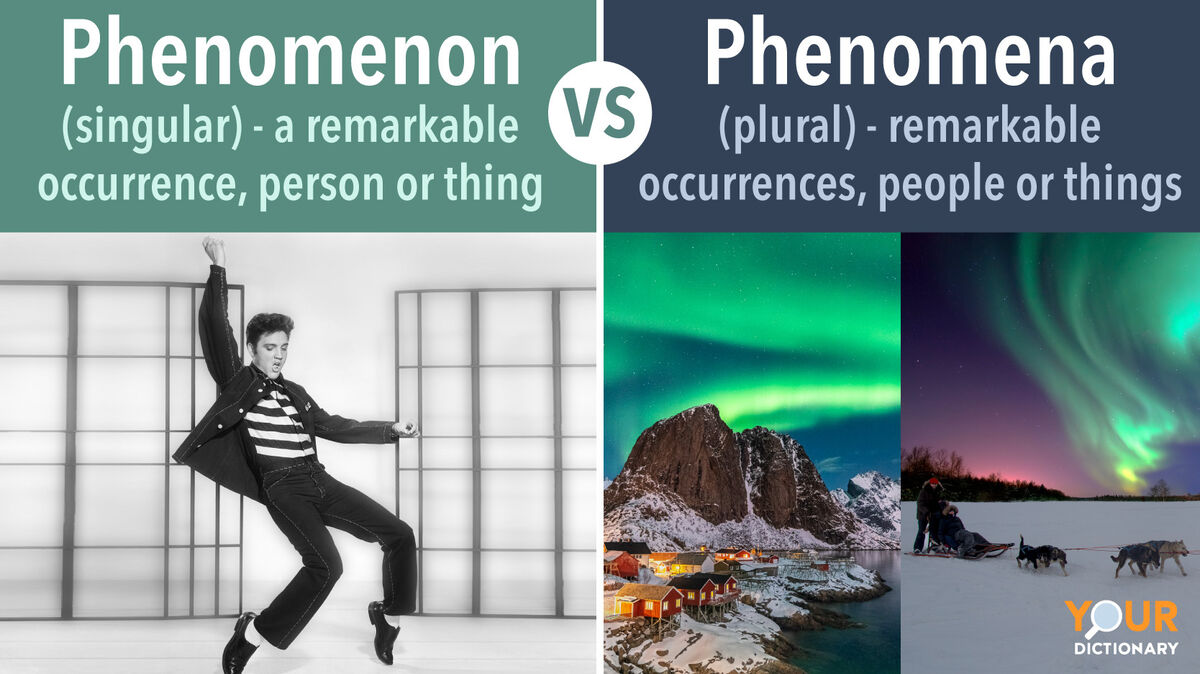
In the rapidly evolving landscape of modern technology, the term “phenomenon” occupies a unique space. While traditionally rooted in the physical sciences—describing observable events like magnetism or atmospheric light displays—today’s technological ecosystem treats digital disruptions, viral software trends, and emergent AI behaviors as the new “scientific” phenomena of our era. To understand the future of tech, we must treat these digital occurrences with the same analytical rigor once reserved for chemistry or physics.
The Evolution of Technological Phenomena
In the context of the digital age, a phenomenon is an observable, repeatable event within a technological ecosystem that often defies immediate explanation or follows non-linear growth patterns. Unlike a static piece of code, a technological phenomenon is dynamic; it involves the interaction between human behavior, algorithmic complexity, and hardware infrastructure.
From Static Code to Emergent Behavior
Traditionally, software was deterministic—input A led to output B. However, with the rise of machine learning and autonomous systems, we are witnessing the emergence of phenomena that developers did not explicitly program. When a Large Language Model begins to exhibit “reasoning” capabilities, or when a neural network identifies patterns invisible to the human eye, these are technological phenomena. They are not merely glitches; they are observable manifestations of complex systems reacting to vast datasets.
The Network Effect as a Physical Law
In tech, the “network effect” acts much like gravity does in physical science. It is a phenomenon where the value of a service increases exponentially as more users join. Think of platforms like social media giants or decentralized ledger technologies. Once they reach a “critical mass,” the growth trajectory changes fundamentally. This is a scientific observation of how digital systems scale—an uncontrollable, yet predictable, technological phenomenon that dominates market shares and defines the lifespan of an app.
Analyzing Digital Disruptions as Natural Events
When we observe a disruptive technology—be it the shift to generative AI or the rise of blockchain—we are watching a “technological phenomenon” unfold. Much like the transition of states in matter, these shifts occur when the existing infrastructure can no longer contain the energy of new innovations.
Phase Transitions in Software Development
The movement from centralized servers to cloud computing, and now to edge computing, mirrors phase transitions. A phenomenon in this context is the sudden realization that old methodologies are no longer efficient. We measure these phenomena through metrics: latency, throughput, and computational costs. When these metrics hit a breaking point, a “scientific” shift occurs, forcing the entire industry to adapt or face extinction.
Algorithmic Bias: An Observable Anomaly
One of the most critical phenomena currently under study in the tech industry is algorithmic bias. In a controlled scientific environment, bias is an error. In a live technological phenomenon, it is an emergent property of the data feeding the model. By categorizing bias as a phenomenon, we move away from blaming “bad code” and toward understanding the complex environmental factors—training data, weighting mechanisms, and human feedback loops—that produce skewed outcomes. This shift in perspective is essential for the future of AI governance.
Measuring the Unseen: Data as the New Microscope
Just as a telescope allows us to observe celestial phenomena, data analytics serves as our primary tool for observing technological phenomena. We cannot “see” an AI’s decision-making process in real-time, but we can visualize its decision pathways, heat maps, and loss functions.
The Role of Observability in DevOps
In modern software engineering, “observability” is the scientific approach to understanding what is happening inside a system based on its external outputs. A system is a “black box” until you implement logs, metrics, and traces. These tools turn mysterious system crashes—which are essentially technological phenomena—into data points that can be dissected, analyzed, and corrected.
Data Visualization and Pattern Recognition
The human brain is hardwired to look for patterns, but in the era of Big Data, we rely on machine learning models to identify phenomena that are too vast for human observation. For instance, cybersecurity professionals observe “traffic anomalies” that indicate a brute-force attack or a zero-day exploit. These are not random; they are observable, patterns-based phenomena that reveal the logic of the attacker. By viewing cyber threats as scientific phenomena, we can build better defensive systems that predict attacks before they fully materialize.
The Future of Tech: Anticipating New Phenomena
As we move toward quantum computing and decentralized autonomous organizations (DAOs), we are entering an era of even more complex technological phenomena. The quantum state, by its very nature, challenges our traditional understanding of binary logic, presenting a new frontier of observable, probabilistic occurrences.
Probabilistic Computing and Emergence
With quantum tech, we are moving from the era of “if/then” statements to “probability” statements. This is a fundamental change in the scientific bedrock of our devices. A quantum phenomenon is not a mistake; it is the fundamental nature of the system. Tech leaders must now train a workforce that understands probability as a foundational element, not just a mathematical curiosity.
Human-Computer Interaction as a Symbiotic Phenomenon
Finally, the most significant phenomenon of the next decade will be the integration of human cognition with machine intelligence. We are already seeing this in brain-computer interfaces and advanced neural integration. This creates a feedback loop that is, in itself, a scientific event. When a user’s thought process is directly mediated by an AI interface, the boundaries between the “natural” and the “technological” blur. Studying this as a phenomenon—observing how our cognitive patterns change when augmented by hardware—will be the defining scientific work of the 21st century.

Conclusion: The Scientific Mindset in Engineering
To be a successful technologist, entrepreneur, or developer today is to be a scientist of your own medium. Whether you are building an app, managing a cloud architecture, or fine-tuning an AI model, you are dealing with phenomena that operate under specific laws. By identifying these events—the viral growth of a new tool, the bias in a recommendation engine, or the performance bottlenecks of a distributed network—you gain the power to influence them.
We must stop viewing tech as a set of finished products and start viewing it as a living, breathing laboratory. By applying the principles of observation, hypothesis, and iterative testing, we can decode the phenomena that shape our digital lives. The future belongs to those who do not just use technology, but who actively seek to understand the underlying mechanics that make it work. Every software bug, every sudden surge in user traffic, and every breakthrough in machine learning is an invitation to explore a phenomenon. By documenting, analyzing, and respecting these digital occurrences, we refine the very tools that define our modern civilization. The phenomena are already here; it is up to us to interpret them.
aViewFromTheCave is a participant in the Amazon Services LLC Associates Program, an affiliate advertising program designed to provide a means for sites to earn advertising fees by advertising and linking to Amazon.com. Amazon, the Amazon logo, AmazonSupply, and the AmazonSupply logo are trademarks of Amazon.com, Inc. or its affiliates. As an Amazon Associate we earn affiliate commissions from qualifying purchases.