
In the evolving landscape of personal finance and alternative asset acquisition, the jewelry market has undergone a significant paradigm shift. For decades, the diamond industry maintained a near-monopoly on the concept of high-end engagement and investment-grade jewelry. However, the rise of the moissanite gemstone has disrupted this narrative, offering a compelling case study for the value-conscious consumer and the savvy investor looking to maximize their capital allocation. Understanding moissanite requires looking past the sparkle and examining the underlying economics of this lab-created marvel.
The Economic Valuation of Moissanite
To understand the financial implications of choosing moissanite, one must first distinguish between retail value and intrinsic asset value. Traditional gemstones like diamonds have historically commanded high prices due to supply control, high marketing expenditures, and perceived scarcity. Moissanite, conversely, represents a triumph of material science and supply-side efficiency.
Material Science as a Financial Advantage
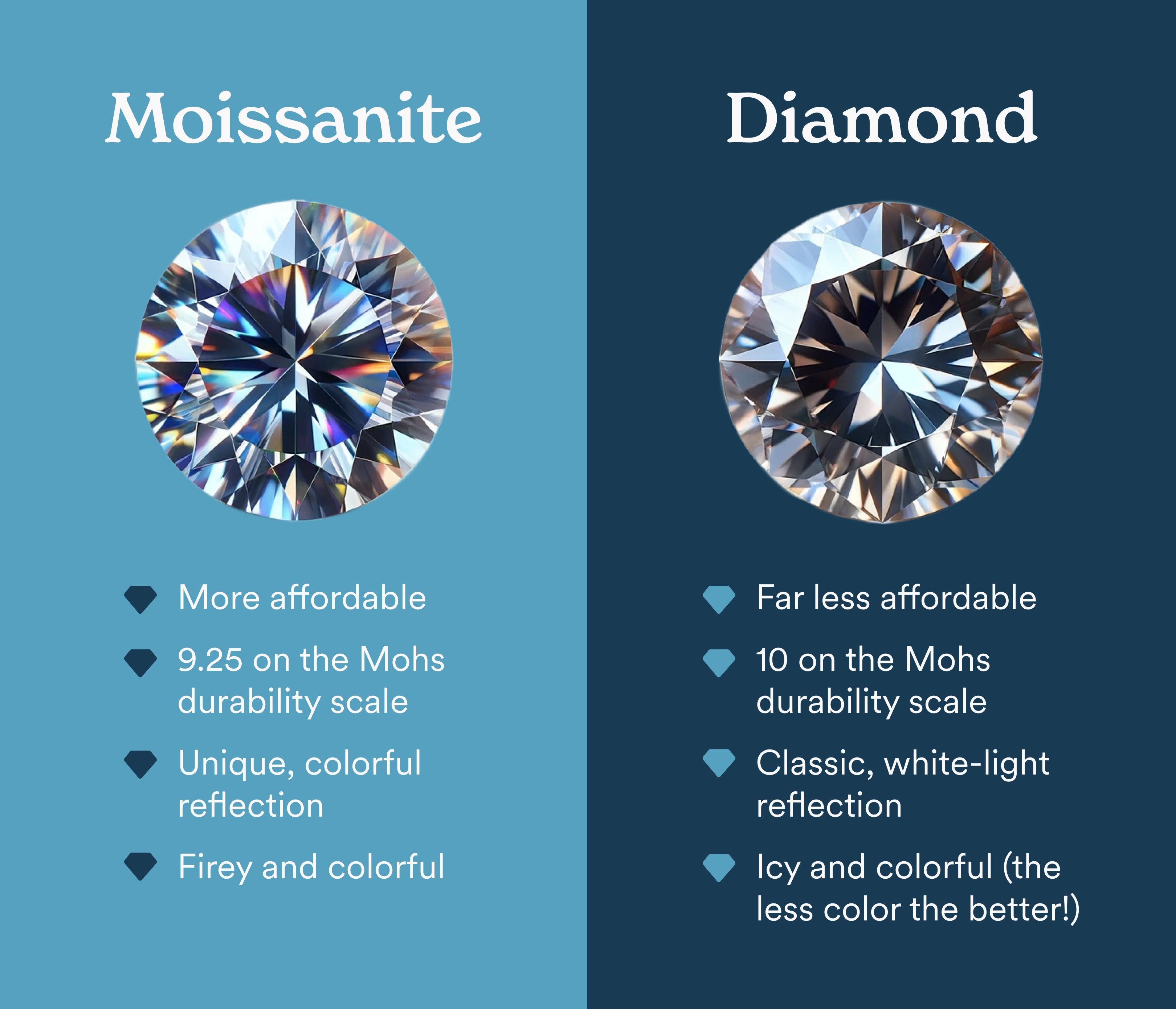
Moissanite is silicon carbide, a substance originally discovered in a meteor crater. Because natural moissanite is incredibly rare, virtually all stones available on the commercial market today are lab-created. This creates a highly controlled, sustainable, and transparent supply chain. From a financial perspective, the production cost of lab-grown material is significantly lower than the extraction cost of earth-mined stones. This cost efficiency is passed directly to the consumer, allowing for a much larger carat weight or higher quality clarity at a fraction of the price of a comparable diamond.
The Cost-Benefit Analysis of Jewelry Purchases
When assessing personal finance, many individuals fail to account for the depreciation inherent in jewelry. Retail jewelry often experiences a massive “markup” once it moves from a wholesale distributor to a storefront. By opting for moissanite, a consumer lowers their initial capital outlay. This is a classic example of “buying smart”—securing a high-aesthetic-value item while retaining more liquidity. The money saved by opting for moissanite over a diamond can be redirected into interest-bearing accounts, index funds, or high-yield investments, effectively turning a luxury purchase into a net-positive financial strategy.
Market Dynamics and the “Resale” Myth
A common objection in the discourse surrounding alternative gemstones is the notion of resale value. Financial advisors often warn that jewelry is a poor investment vehicle, regardless of the stone type. Recognizing this reality is critical to sound personal financial management.
Understanding Depreciating Assets
Whether one purchases a diamond or a moissanite, the likelihood of selling the stone for a profit on the secondary market is extremely low. Diamonds are often sold at a significant loss due to the inflated retail price. Because moissanite has a lower initial entry price, the absolute dollar amount lost through depreciation is mathematically smaller. When viewed through the lens of a long-term asset-holding strategy, the “loss” incurred on a moissanite purchase is negligible compared to the thousands of dollars one might lose on a mined diamond of equivalent visual appeal.

Strategic Capital Allocation
Savvy consumers are increasingly moving away from the idea of “jewelry as an investment” and toward the philosophy of “luxury as an expense.” When we categorize jewelry as a controlled expense rather than an investment, the economic benefit of moissanite becomes clear. By reducing the expense line item, the household budget remains healthier. This strategy aligns with lean personal finance principles: prioritize the aesthetic goal while minimizing the cash drag on one’s net worth.
Moissanite as a Case Study in Disruptive Consumerism
The rise of moissanite serves as an excellent case study in how technological disruption affects traditional markets. This shift is not merely about consumer preference; it is a fundamental change in how value is perceived and assigned to consumer goods.
Market Transparency and Informed Decisions
The market for moissanite is driven by information. Consumers today have access to online comparison tools, refractive index data, and hardness scales (the Mohs scale). Moissanite sits at a 9.25 on the Mohs scale, making it one of the hardest substances on earth, second only to diamond. Because the data is transparent, consumers are no longer susceptible to the artificial price floors maintained by traditional diamond cartels. This transparency empowers the buyer to negotiate from a position of strength and make decisions based on material specs rather than marketing-induced prestige.
Aligning Values with Financial Reality
For many, the move toward moissanite is also a move toward ethical and sustainable spending. In the modern business landscape, Environmental, Social, and Governance (ESG) criteria are increasingly important. While this is often discussed in corporate contexts, it applies equally to personal finance. Purchasing lab-grown moissanite removes the ethical concerns associated with traditional mining practices, meaning the consumer does not have to pay a “sustainability premium” to ensure their purchase aligns with their values. This efficiency is the cornerstone of modern, responsible consumer finance.
Long-Term Financial Planning and Luxury Spending
Integrating the purchase of gemstones into a personal financial plan requires a disciplined approach. Whether the goal is to set aside funds for an engagement ring or to acquire high-quality accessories, moissanite offers a pragmatic path forward.
Budgeting for Lifecycle Costs
When factoring in the total cost of ownership for jewelry, one must consider maintenance and insurance. Because moissanite is highly durable, the need for repairs or replacements due to damage is minimal. Furthermore, insurance premiums for jewelry are typically based on the appraised value. Because moissanite represents a lower appraised value than a diamond of similar size, the recurring annual cost for insurance is significantly lower. This is a hidden financial benefit that accrues over the lifetime of the piece, further solidifying the economic case for choosing lab-created stones.
The Opportunity Cost Perspective
Every dollar spent is a dollar that is no longer compounding in the market. If an individual is choosing between a $10,000 diamond and a $1,500 moissanite, the $8,500 difference, if invested in a low-cost S&P 500 index fund with an average annual return of 7%, would grow to over $16,700 in ten years. By choosing the moissanite, the consumer effectively “earns” the difference through the power of compound interest. This opportunity cost analysis is what differentiates the financially literate consumer from the casual buyer.

Final Financial Verdict
The moissanite gemstone is more than just a substitute for a diamond; it is an intelligent alternative for the modern individual who values both aesthetics and financial discipline. By embracing the objective reality of the gemstone’s durability, beauty, and price efficiency, consumers can maintain a high standard of living without compromising their long-term financial health. As the market for lab-grown materials continues to expand, moissanite stands out as a clear example of how technological progress and informed consumer behavior can effectively disrupt outdated pricing models, allowing for a more efficient and logical approach to personal spending.
aViewFromTheCave is a participant in the Amazon Services LLC Associates Program, an affiliate advertising program designed to provide a means for sites to earn advertising fees by advertising and linking to Amazon.com. Amazon, the Amazon logo, AmazonSupply, and the AmazonSupply logo are trademarks of Amazon.com, Inc. or its affiliates. As an Amazon Associate we earn affiliate commissions from qualifying purchases.