
Geometry is the language of structure, and within that language, certain principles govern how complex shapes interact and stabilize. Among these principles, the concept of a midsegment stands out as a fundamental bridge between simple line segments and the sophisticated geometric proofs used in architecture, engineering, and digital design. A midsegment is a line segment that connects the midpoints of two sides of a triangle. While the definition is simple, its implications are profound, serving as a cornerstone for understanding proportionality, symmetry, and parallel relationships in both theoretical and applied geometry.
The Mathematical Foundation of Midsegments
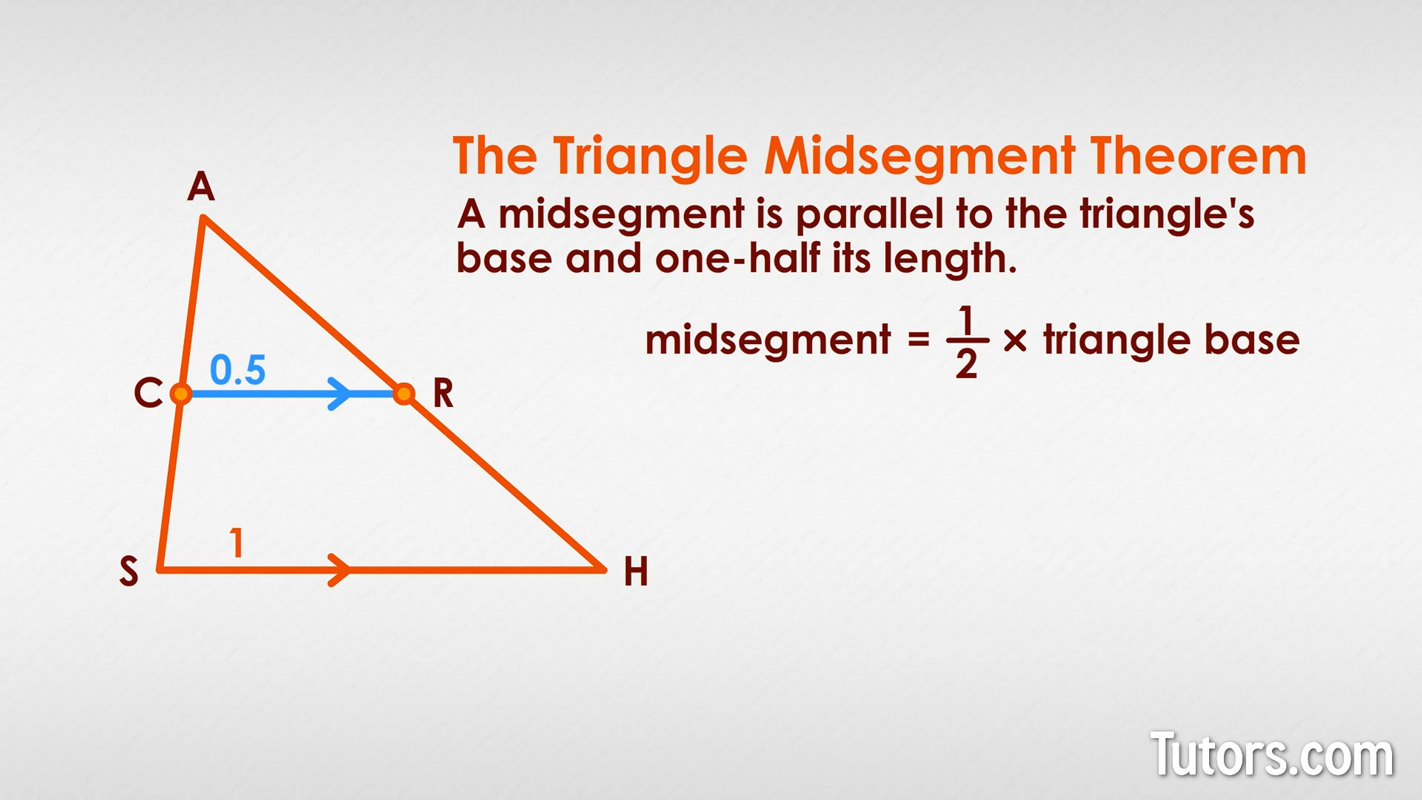
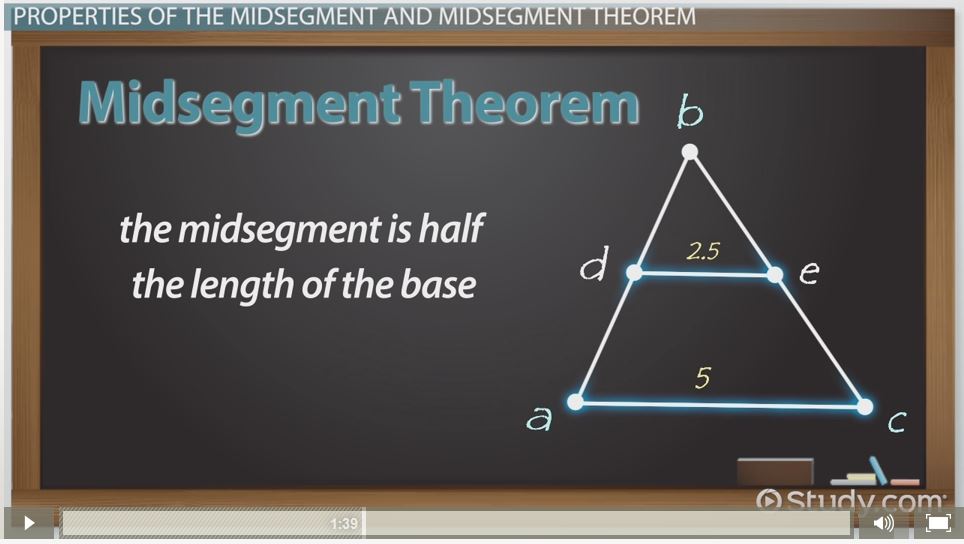
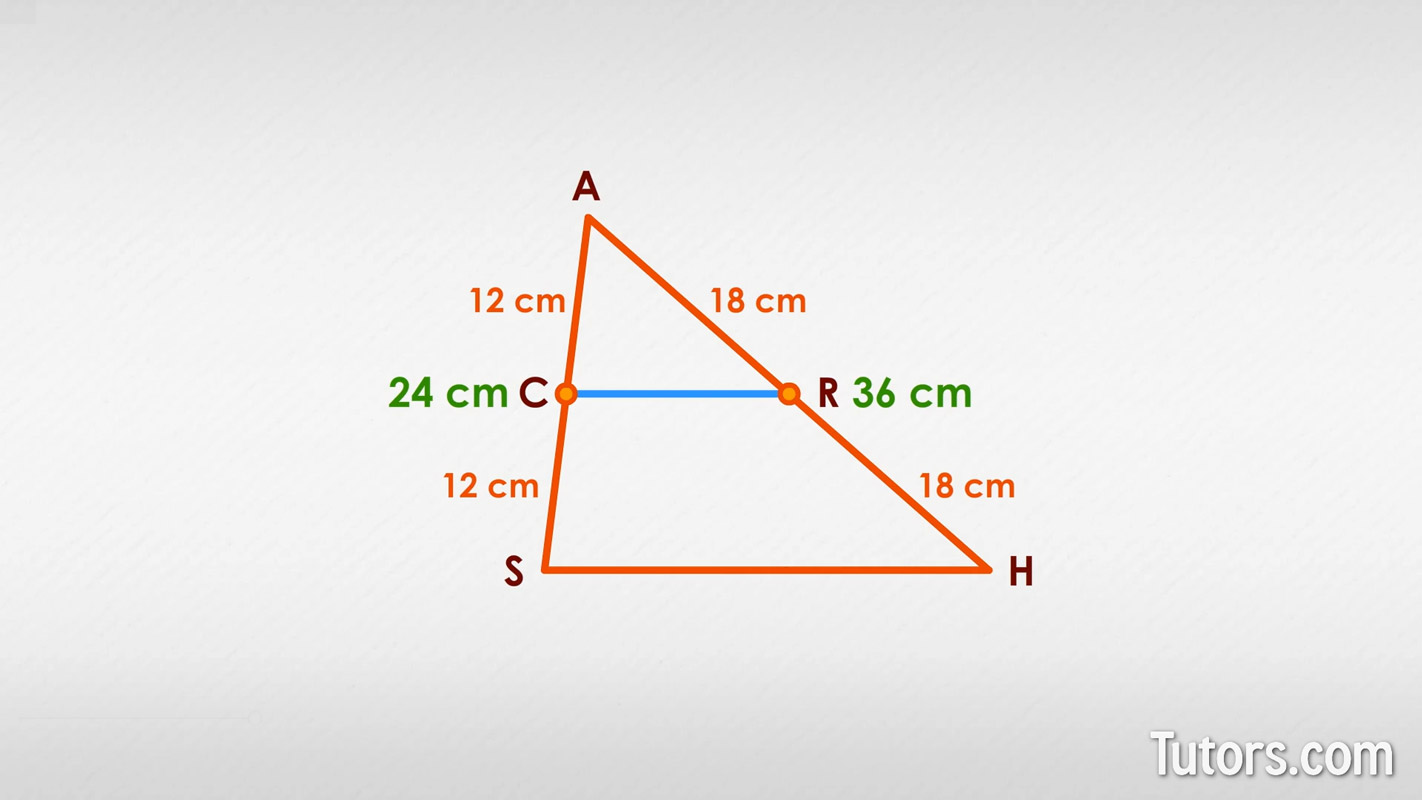
To truly understand what a midsegment is, one must look at the structural relationship between the segment itself and the base of the triangle it does not touch. The Midsegment Theorem is one of the most elegant proofs in geometry, asserting that the midsegment of a triangle is parallel to the third side and exactly half the length of that side.
The Geometric Relationship
Consider a triangle ABC. If you identify the midpoint D of segment AB and the midpoint E of segment AC, the line segment DE is the midsegment. The theorem dictates two immutable facts: DE is parallel to BC, and DE = ½BC. This relationship is not merely coincidental; it is a manifestation of the properties of similar triangles. Because the midsegment creates a smaller triangle (ADE) that is similar to the original triangle (ABC) by a scale factor of 1:2, all corresponding angles are congruent and all corresponding sides maintain that exact ratio.
Proving the Theorem
The verification of this theorem often relies on the coordinate plane. By placing a triangle on an X-Y axis, one can assign coordinates to vertices A, B, and C. Using the midpoint formula—(x1+x2)/2, (y1+y2)/2—the coordinates for D and E are easily determined. Calculating the slopes of DE and BC proves they are identical, confirming parallelism, while the distance formula confirms the length ratio. This mathematical certainty is what makes the midsegment a reliable tool in complex calculations.
Midsegments in Architecture and Structural Design
The geometry of the triangle is the basis for most structural integrity in human-made environments. Architects and structural engineers utilize the principles of the midsegment to create stability and aesthetic balance. Because a midsegment essentially creates a smaller, scaled-down version of the larger structure, it allows designers to distribute weight and stress across a frame with predictable results.
Truss Systems and Load Distribution
In roof trusses and bridge design, engineers must account for how forces are transferred from the apex of a structure to the foundation. When a truss is designed with midsegments or similar subdivisions, it creates a rigid geometry that resists deformation. By placing a cross-brace along the midsegment of a triangular frame, engineers can increase the load-bearing capacity without significantly increasing the weight of the structure. This is a classic application of geometric principles to ensure that materials are used efficiently while maximizing structural safety.
Aesthetic Symmetry and Proportion
Beyond utility, the midsegment provides a mathematical rule for achieving harmony in design. The “rule of half” inherent in the midsegment theorem is often visually pleasing to the human eye. In architectural drafting, using midsegments to define window placements, roof pitches, and decorative molding leads to a sense of order. When elements are aligned with the midsegments of a structure, the resulting building feels balanced and intentional, leveraging the subconscious human appreciation for geometric consistency.
The Role of Midsegments in Digital Modeling and Computer Graphics
In the digital realm, specifically within computer-aided design (CAD) and 3D modeling, the midsegment is a vital computational tool. Modern software relies on vertex manipulation to render shapes, and the midsegment is frequently used in subdivision surface modeling.
Subdivision and Mesh Refinement
When a 3D modeler creates a low-polygon mesh, the shape can look jagged or blocky. To improve the quality, the software employs subdivision algorithms. By identifying the midsegments of the polygons within the mesh and adding new vertices at those points, the software can “smooth” the shape. This process, known as subdivision surface modeling, effectively creates higher-fidelity models by recursively applying the midsegment principle to divide faces into smaller, more numerous triangles or quads.
Prototyping and Scaling
Digital prototyping relies heavily on scaling. Whether designing a small-scale component or a large-scale structural assembly, software engineers use the midpoint properties to scale objects linearly. If an engineer needs to modify a design to fit a specific envelope, they can use midsegment transformations to ensure that the proportions of the object remain consistent. This eliminates the risk of warping or distorting the shape, as the underlying geometric relationships defined by the midsegment remain constant regardless of the actual dimensions.
Midsegments in Practical Problem Solving
Beyond professional fields, the midsegment is a utility for everyday problem-solving, particularly in manual trades and craftsmanship. Woodworkers, tailors, and landscapers often use these concepts—sometimes intuitively—to ensure accuracy in their work.
Precision in Craftsmanship
A carpenter working on a gable roof uses the midsegment principle to ensure that the rafters are perfectly aligned. If the rafters are meant to meet a certain height, the midsegment serves as a visual guide for the placement of collar ties. By establishing the midpoints of the rafters and connecting them, the carpenter creates a horizontal line that is perfectly parallel to the roof’s floor (the base of the triangle), ensuring the roof will be level and the structure will not lean over time.
Navigational Calculations
In land surveying, the midsegment is used to determine inaccessible distances. Imagine trying to measure the width of a river or a plot of land that cannot be traversed. By creating a triangle on the reachable side of the landscape, a surveyor can measure the midsegment of that triangle and simply double it to determine the distance across the impassable area. This provides a safe, highly accurate method of distance estimation that has been used for centuries, from ancient land management to modern civil engineering.
Integrating Geometry into Modern Analytical Thinking
The study of the midsegment is more than a requirement for high school geometry; it is an exercise in deductive reasoning. It teaches the mind to look beyond the immediate appearance of a shape and identify the hidden relationships that govern its behavior. When we analyze a shape, we are performing a form of diagnostic thinking that translates directly into analytical skills required for high-level professional roles.
The transition from a simple geometric theorem to a foundational pillar of structural and digital architecture illustrates how basic mathematical truths remain relevant even as technology advances. As we continue to automate design processes and build more complex structures, the humble midsegment remains a critical constant. It is a reminder that in a world of complex data and intricate design, the most robust systems are often those built upon the most elegant, simple, and reliable mathematical relationships. By mastering the geometry of the triangle and the placement of its midsegments, one gains a sharper, more precise lens through which to view the physical and digital world.
aViewFromTheCave is a participant in the Amazon Services LLC Associates Program, an affiliate advertising program designed to provide a means for sites to earn advertising fees by advertising and linking to Amazon.com. Amazon, the Amazon logo, AmazonSupply, and the AmazonSupply logo are trademarks of Amazon.com, Inc. or its affiliates. As an Amazon Associate we earn affiliate commissions from qualifying purchases.