
In the realm of personal finance, travel is often categorized as a discretionary expense that can quickly erode a well-structured budget. However, for the astute financial planner, airfare is not a fixed cost but a variable market commodity. Mastering the art of finding the lowest airfare prices is less about “travel tips” and more about understanding market economics, leveraging financial tools, and executing strategic arbitrage. By treating flight acquisition as an investment decision, you can significantly reduce your travel overhead, allowing for greater capital allocation toward long-term savings or higher-quality experiences.

The Economics of Airfare: Understanding Dynamic Pricing and Market Volatility
To secure the lowest prices, one must first understand the financial framework upon which airlines build their pricing models. Unlike consumer goods with stable price tags, airfare is governed by “yield management,” a complex algorithmic process designed to extract the maximum amount of money from different segments of the market at any given time.
The Principles of Supply, Demand, and Fare Buckets
Airlines divide the seats on a single aircraft into various “fare buckets.” Each bucket has a different price point and set of restrictions. As the lower-priced buckets are exhausted by early-bird shoppers or budget-conscious travelers, the price automatically jumps to the next tier. From a financial perspective, your goal is to enter the market when the highest volume of low-tier buckets is available. This requires monitoring “load factors”—the percentage of seats filled—and understanding that airlines would rather sell a seat at a marginal profit than let it fly empty, which represents a total loss of potential revenue.
The Role of Yield Management Algorithms
Modern airlines use sophisticated AI to adjust prices in real-time based on historical data, competitor pricing, and even global economic shifts. For the financially savvy traveler, this means that “flat” pricing does not exist. Prices are influenced by the “booking curve,” which typically shows a U-shaped trajectory: high for early planners (hedging against uncertainty), lowest in the “Goldilocks zone,” and highest for last-minute business travelers who are price-insensitive. Recognizing these patterns allows you to time your “entry” into the market just as an investor times a stock purchase.
Leveraging Financial Tools and Credit Arbitrage
One of the most effective ways to find the lowest airfare—or effectively reduce the cost to zero—is through the strategic use of financial instruments. This is often referred to as “travel hacking,” but from a professional finance standpoint, it is simply the optimization of reward structures provided by banking institutions.
Maximizing Return on Spend via Credit Card Rewards
High-tier travel credit cards offer sign-up bonuses and accelerated earning rates on specific categories of spending. By treating your daily expenses as a vehicle for earning “points currency,” you can decouple the cost of travel from your cash flow. The true financial genius lies in calculating the “Cent Per Point” (CPP) value. If a flight costs $1,000 but can be purchased for 50,000 points, you are achieving a 2-cent-per-point valuation. If your cost to acquire those points was negligible through regular spending, your net airfare cost is effectively the opportunity cost of those points, which is often far lower than the retail cash price.
Utilizing Cashback Portals and Banking Incentives
Beyond points, the use of cashback portals and merchant offers can provide a secondary layer of savings. Financial platforms often provide targeted “offers” where spending a certain amount with an airline triggers a statement credit. When combined with a low base fare, these incentives can result in an “effective price” that is significantly lower than the market rate. Additionally, using “Price Protection” features found on certain premium credit cards can act as an insurance policy, refunding you the difference if the airfare drops shortly after your purchase.
Tactical Execution: Timing, Arbitrage, and Geo-Arbitrage
In finance, arbitrage is the simultaneous purchase and sale of an asset in different markets to exploit tiny differences in price. The aviation industry is rife with such opportunities for those who know where to look.
The “Goldilocks Window” and Booking Cycles
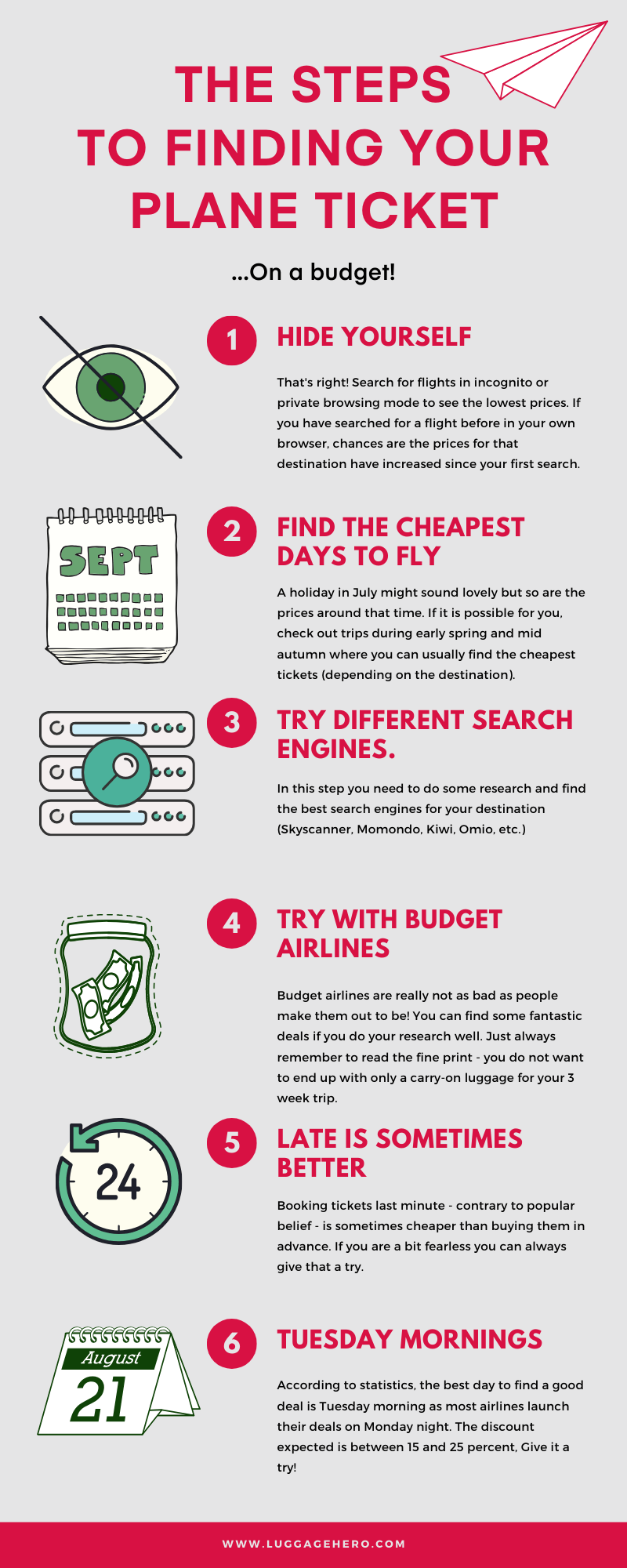
Data-driven financial analysis suggests that there is a specific window where the probability of hitting the lowest price is highest. For domestic flights, this is typically 1 to 3 months in advance; for international routes, 2 to 8 months. However, the “Tuesday at midnight” myth has been debunked by modern algorithms. Instead, focus on the “Day of Week” effect on travel itself. Flying on a Tuesday or Wednesday—days with the lowest demand from both business and leisure sectors—often yields a 15–25% discount compared to Friday or Sunday travel.
Strategic Geo-Arbitrage and Positioning Flights
Airfare is often priced based on the point of sale and the departing market’s purchasing power. This leads to two specific financial tactics:
- Currency Arbitrage: Occasionally, booking a flight on a version of an airline’s website intended for a different country (e.g., using the Colombian Peso version of an airline site for a domestic flight in South America) can result in a lower price due to exchange rate lags or local market promotions.
- Positioning Flights: If you live in a high-cost hub, it may be financially prudent to buy a cheap “positioning flight” to a major international gateway where long-haul competition is fiercer and prices are lower. For instance, flying from a small regional airport to London might be $1,200, but flying from a major hub like New York to London might be $450. If the flight to New York is only $150, you have saved $600 through simple geographic arbitrage.
Risk Management: Protecting Your Travel Capital
A low price is only a “deal” if the ticket remains valid and the travel occurs without a total loss of funds. Financial management of airfare must include a strategy for risk mitigation.
The Total Cost of Ownership (TCO) in Airfare
In corporate finance, the TCO includes all costs associated with an asset. When booking “Basic Economy” to save $50, you must calculate the potential additional costs: baggage fees, seat selection fees, and the lack of flexibility. If a more expensive “Main Cabin” ticket includes a bag and the ability to change the flight for free, the “expensive” ticket may actually be the lower-cost option in a high-variance environment. Always calculate the “all-in” price before determining which fare is truly the lowest.
Hedging with Travel Insurance and Refundable Options
For significant international trips, the airfare represents a capital outlay that should be protected. Utilizing credit cards that offer built-in trip cancellation and interruption insurance is a form of “hedging.” It protects your budget against unforeseen events like illness or carrier insolvency. Furthermore, since the COVID-19 pandemic, many airlines have moved toward “no change fee” models. Understanding the “re-faring” rules allows you to book a flight now and, if the price drops later, claim the difference as a future flight credit—effectively “shorting” the airline’s price volatility to your advantage.
The Value of Time vs. Money in Flight Selection
The final pillar of finding the lowest airfare is an honest assessment of your own “Internal Rate of Return” (IRR) on your time.
Analyzing the Layover Tax
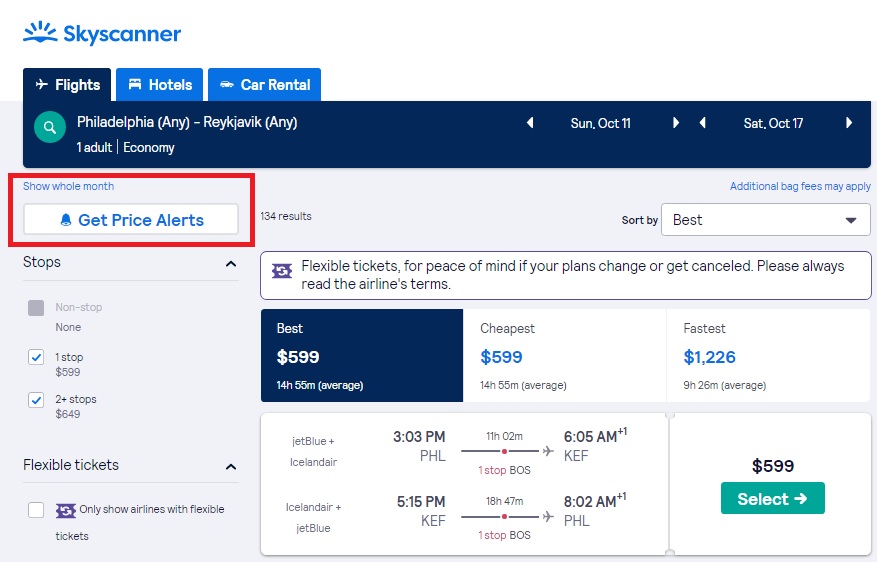
A flight with two stops might be $200 cheaper than a non-stop flight, but it may add 10 hours to your travel time. From a personal finance perspective, you are essentially “paying” yourself $20 per hour to sit in an airport. If your professional billable rate or the value you place on your leisure time is higher than $20 per hour, the “cheapest” flight is actually a poor financial decision. Efficient wealth management involves recognizing when to spend capital to preserve time, which is your most finite asset.
Using Technology as a Financial Research Tool
While this discussion is rooted in money, one cannot ignore the tools that facilitate these financial decisions. Aggregators and “price track” alerts act as your market analysts. Setting up automated alerts for specific routes is equivalent to setting a “limit order” in the stock market. You decide the price you are willing to pay, and the technology executes the notification when the market hits your target. This removes the emotional component of booking and ensures you are making a data-driven financial move.
In conclusion, finding the lowest airfare is not a matter of luck or “incognito tabs.” It is a disciplined financial practice. By understanding the underlying economics of the airline industry, leveraging the power of credit and rewards arbitrage, and applying rigorous risk management to your purchases, you can ensure that your travel remains a sustainable and optimized part of your broader financial portfolio. The money saved on a single flight might seem marginal, but compounded over a lifetime of travel, these strategies represent a significant preservation of wealth.
aViewFromTheCave is a participant in the Amazon Services LLC Associates Program, an affiliate advertising program designed to provide a means for sites to earn advertising fees by advertising and linking to Amazon.com. Amazon, the Amazon logo, AmazonSupply, and the AmazonSupply logo are trademarks of Amazon.com, Inc. or its affiliates. As an Amazon Associate we earn affiliate commissions from qualifying purchases.