
In the hyper-competitive landscape of modern academia and professional research, the currency of prestige is no longer measured solely by the number of papers published. Instead, the focus has shifted toward impact, reach, and sustained contribution. The h-index, a metric proposed by physicist Jorge E. Hirsch in 2005, has become the gold standard for quantifying an individual’s scientific output and the citation impact of their body of work. But for the ambitious researcher or the professional building a personal brand in the intellectual sphere, the question remains: what actually constitutes a “good” h-index, and how do you calibrate your career trajectory against it?
Decoding the Mechanics: What Defines the H-Index?
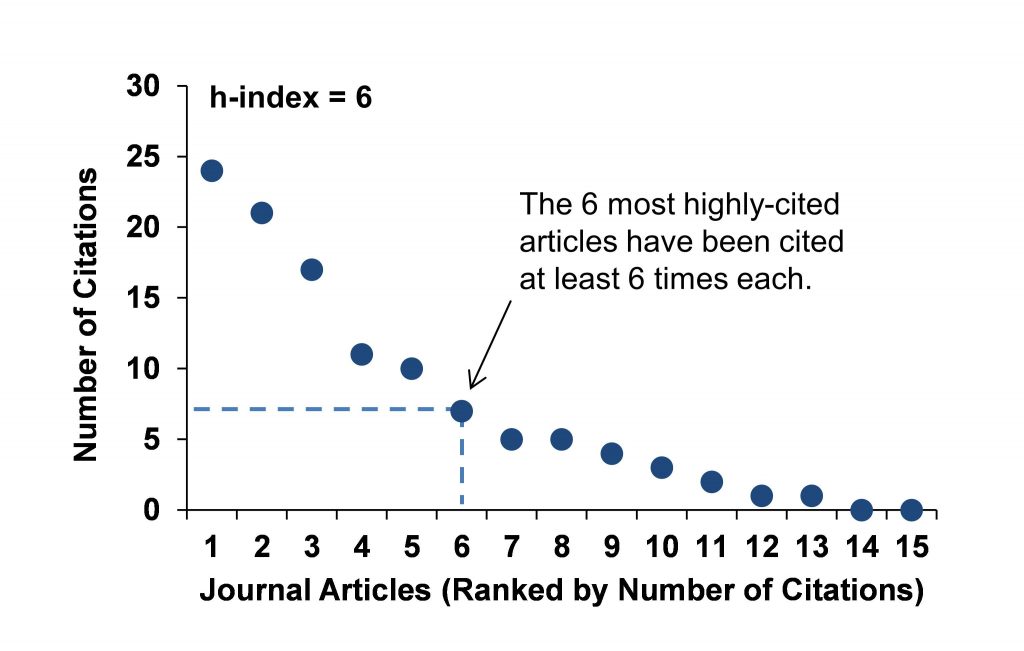
To understand what constitutes a “good” score, one must first grasp the mathematical simplicity behind the h-index. A researcher has an index of h if they have published h papers that have each been cited at least h times. For instance, an h-index of 10 means that you have published at least 10 papers that have received 10 or more citations each.
The Balancing Act of Quantity and Quality
The strength of the h-index lies in its ability to punish two extremes: it discourages “salami slicing” (the practice of breaking one research finding into multiple weak papers) and it penalizes the “one-hit wonder” (a researcher who publishes one highly cited paper but nothing else of note). Because the metric requires a consistent accumulation of significant citations across multiple publications, it forces a baseline of sustained quality.
Why Context Is the Only Metric That Matters
A common pitfall for those analyzing their h-index is comparing it against researchers in entirely different fields. In high-velocity disciplines such as Molecular Biology or Clinical Medicine, where citation cycles are rapid and publication volumes are high, an h-index of 20 might be considered moderate. Conversely, in fields like Mathematics or theoretical Philosophy, where citation speeds are slower and citation counts are generally lower, an h-index of 20 could place a researcher in the top tier of their discipline. Therefore, a “good” h-index is inherently relative to your specific niche and your career stage.
Benchmarking Success: The Stages of Career Development
To determine if your h-index is healthy, you must map it against your years of active research. A static number is rarely useful without the temporal component.
Early Career: Establishing the Foundation
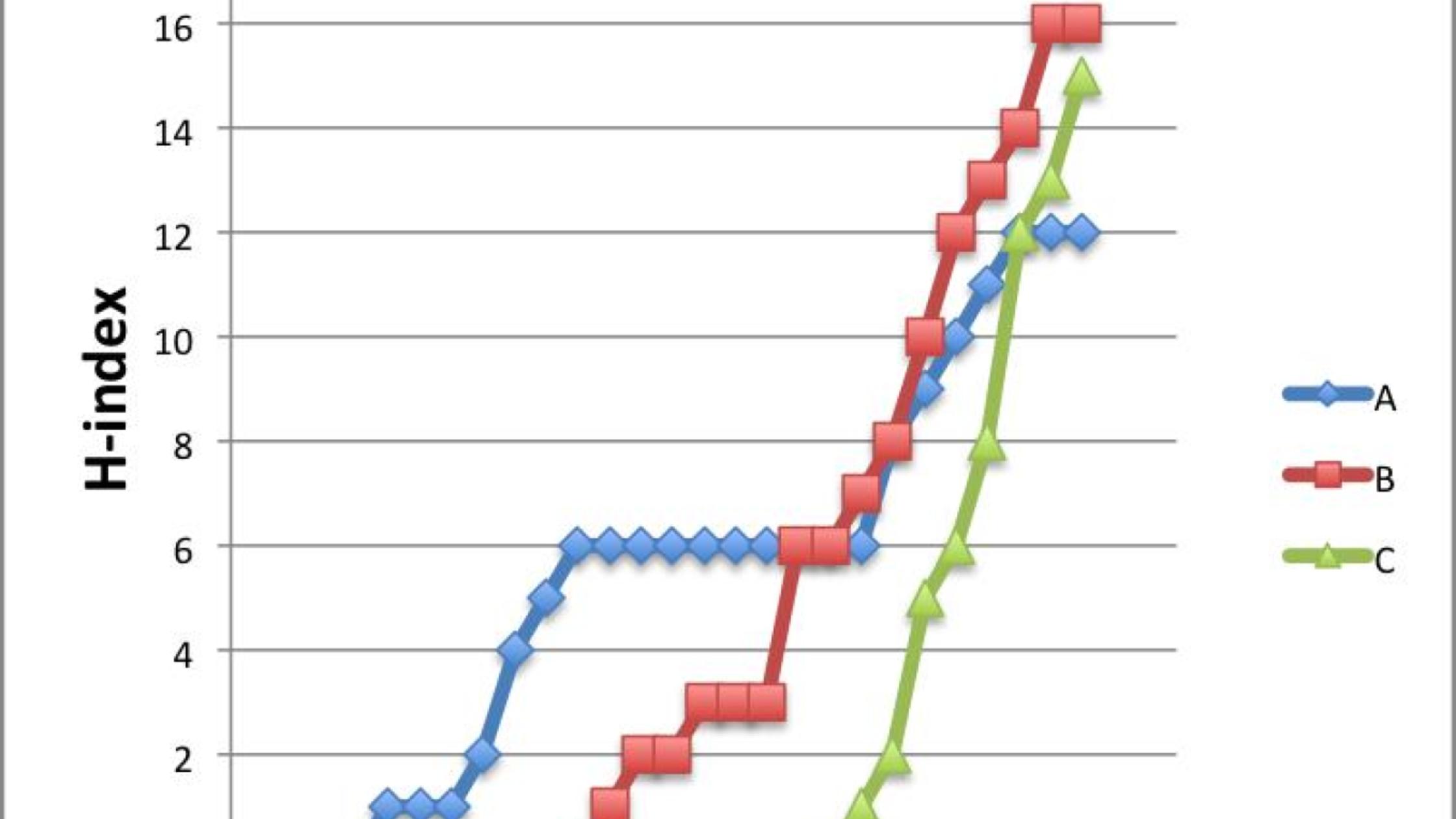
For those in the first five to seven years of their research career, an h-index is a developing asset. In this stage, the goal is not necessarily a high number, but a trajectory of growth. An h-index that climbs by 1 or 2 points annually indicates a healthy start. If you are finishing a PhD or a postdoctoral fellowship, an h-index of 3 to 5 is often considered a strong indicator of early success. It demonstrates that your early work is already being recognized and utilized by peers.
Mid-Career: Building Authority
As you transition into a permanent role, such as a tenure-track position or a lead research role, the expectations for your h-index rise. Mid-career researchers—typically those 10 to 15 years into their work—are often measured against the “standard” of their field. In many STEM fields, a mid-career researcher is often expected to have an h-index between 15 and 25. This range suggests that you have established a consistent line of inquiry that is regularly cited by the broader community.
Late Career: Establishing Legacy
For the veteran researcher or professor, the h-index becomes a measure of longevity and foundational influence. At this level, scores can climb into the 40s, 60s, or even 100s. While these numbers are impressive, they are often the result of decades of collaborative work and large-scale projects. By this stage, the h-index serves less as a performance review tool and more as a historical archive of one’s contribution to the evolution of a field.

The Strategic Path to Improving Your H-Index
While the h-index is a descriptive metric, researchers often wonder how they can improve it. It is vital to note that “gaming” the system—through self-citation or citation cartels—is counterproductive and ethically precarious. Instead, the focus should be on increasing the visibility and utility of your high-quality work.
Focusing on Publication Strategy
The most organic way to improve your h-index is to focus on publishing in high-impact journals that are indexed by major databases like Web of Science or Scopus. Research published in journals with a high impact factor is naturally seen by a wider audience, increasing the probability of being cited. Furthermore, choosing research topics that are currently at the frontier of your field—topics that are “hot” or currently receiving significant funding—tends to generate citations faster than niche, hyper-specialized work.
Leveraging Collaboration and Networking
Collaborative research often yields a higher h-index than solo work. When you co-author with established researchers, your work is exposed to their professional network and broader audience. Being part of a high-performing lab or a multi-institutional research team can significantly accelerate the frequency with which your work is cited. Collaboration also allows you to contribute to a wider array of projects, increasing the volume of your published output.
Improving Discoverability Through Digital Branding
In the modern era, you are not just a researcher; you are a brand. If your work cannot be easily found, it cannot be cited. Ensuring that you have a complete and updated Google Scholar profile, an ORCID ID to distinguish your work from others with similar names, and active participation on platforms like ResearchGate or academia.edu is essential. When you publish a paper, treat it as a product launch: share it on professional social networks, discuss the findings in relevant forums, and ensure the full text is accessible via open-access repositories if possible. Accessibility is the single greatest driver of citation frequency.
The Limitations of the Metric: When H-Index Isn’t Enough
While the h-index provides a useful summary of your research trajectory, it is far from perfect. Relying solely on this number can blind you to other forms of professional value.
The Bias Against Collaborative Efforts
The h-index does not account for the order of authorship. Whether you are the first author—the primary driver of the research—or the tenth author, the citation count for that paper is applied to your h-index equally. This can create a skewed perception of your contribution to a specific study.
The Neglect of Qualitative Impact
The h-index measures the quantity of citations, not the quality of the influence. A paper might be cited because it is groundbreaking, or it might be cited simply because it provides a method that everyone else uses. Furthermore, the h-index ignores non-traditional impacts: your influence on public policy, your contribution to patent development, or your role as a mentor to younger researchers. None of these “impacts” are captured by a citation count, yet they are often the most valuable parts of a professional career.
The Importance of a Balanced Portfolio
Do not let the pursuit of a higher h-index dictate your intellectual curiosity. If you only chase trends to maximize your score, you risk losing the depth of inquiry that defines true expertise. A “good” h-index is a useful milestone, but it is not the ultimate destination. The most successful professionals are those who balance the strategic need for citation metrics with the pursuit of challenging, fundamental research that changes the way we think about their field.
In conclusion, a good h-index is one that reflects an honest, growing body of work that is being recognized by your peers. It is a tool for self-reflection and a signpost for your career path, not a cage that limits the scope of your ambition. Focus on producing rigorous work, building a collaborative network, and ensuring your research is visible, and the metrics will naturally follow the quality of your output. When you look at your h-index, view it not as a final judgment, but as an ongoing story of your contribution to the global dialogue of knowledge.
aViewFromTheCave is a participant in the Amazon Services LLC Associates Program, an affiliate advertising program designed to provide a means for sites to earn advertising fees by advertising and linking to Amazon.com. Amazon, the Amazon logo, AmazonSupply, and the AmazonSupply logo are trademarks of Amazon.com, Inc. or its affiliates. As an Amazon Associate we earn affiliate commissions from qualifying purchases.