
Understanding the architecture of your paycheck can feel like deciphering a foreign language. Amidst the flurry of acronyms—FICA, FIT, SIT, and FUTA—it is easy to lose track of where your hard-earned money is actually going. While payroll taxes and income taxes both represent mandatory contributions to government coffers, they serve distinct purposes, are calculated using different methodologies, and impact your financial life in unique ways. Mastering these differences is essential for effective personal financial planning and business compliance.
The Core Functional Differences
To understand the distinction, one must first look at the intent behind the taxation. The fundamental difference lies in what these taxes fund and who is responsible for the burden of payment.

The Purpose of Income Taxes
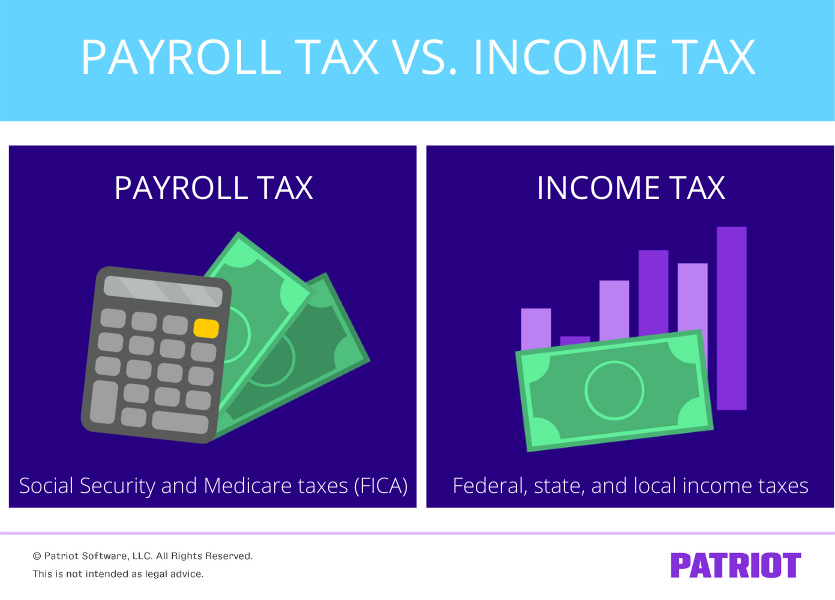
Income tax is a progressive tax levied by the federal government (and many state and local governments) on the total annual income of an individual or business. It is designed to be a general revenue generator. When you pay income tax, you are essentially contributing to the broad operating budget of the government. This money funds everything from national defense and infrastructure projects to social programs and international aid. Because it is a progressive system, the more you earn, the higher your marginal tax rate, theoretically ensuring that those with higher financial capacity contribute a larger percentage of their earnings.
The Purpose of Payroll Taxes
Payroll taxes are inherently different. They are “earmarked” taxes, meaning the revenue collected is specifically designated for funding Social Security and Medicare. Unlike income taxes, payroll taxes are not intended to fund the general discretionary spending of the government. Instead, they act as a social insurance premium, ensuring that workers contribute to the systems they will eventually rely on during retirement or in the event of disability or health issues in their senior years.
The Distribution of the Tax Burden
Another primary differentiator is how the cost is shared between the employer and the employee. This is where many employees get confused, as their pay stubs only reflect their personal contributions.
The Employer-Employee Split
For payroll taxes, specifically those mandated under the Federal Insurance Contributions Act (FICA), the burden is typically split. Employees see a 6.2% deduction for Social Security and a 1.45% deduction for Medicare on their pay stubs. However, employers are required to pay a matching 6.2% and 1.45% out of their own pockets. In effect, the government ensures the solvency of these programs by requiring the employer to act as both a collector and a co-contributor.
The Sole Responsibility of Income Taxes
Income tax is a liability that rests entirely on the earner. While an employer acts as a “withholding agent”—meaning they calculate, deduct, and remit the money to the IRS on your behalf—the tax is legally yours. If your employer fails to withhold enough throughout the year, or if you have significant non-wage income, the liability remains yours alone to settle. There is no “employer match” for income tax; it is a direct levy on your individual economic output.
Calculation Methodologies and Thresholds
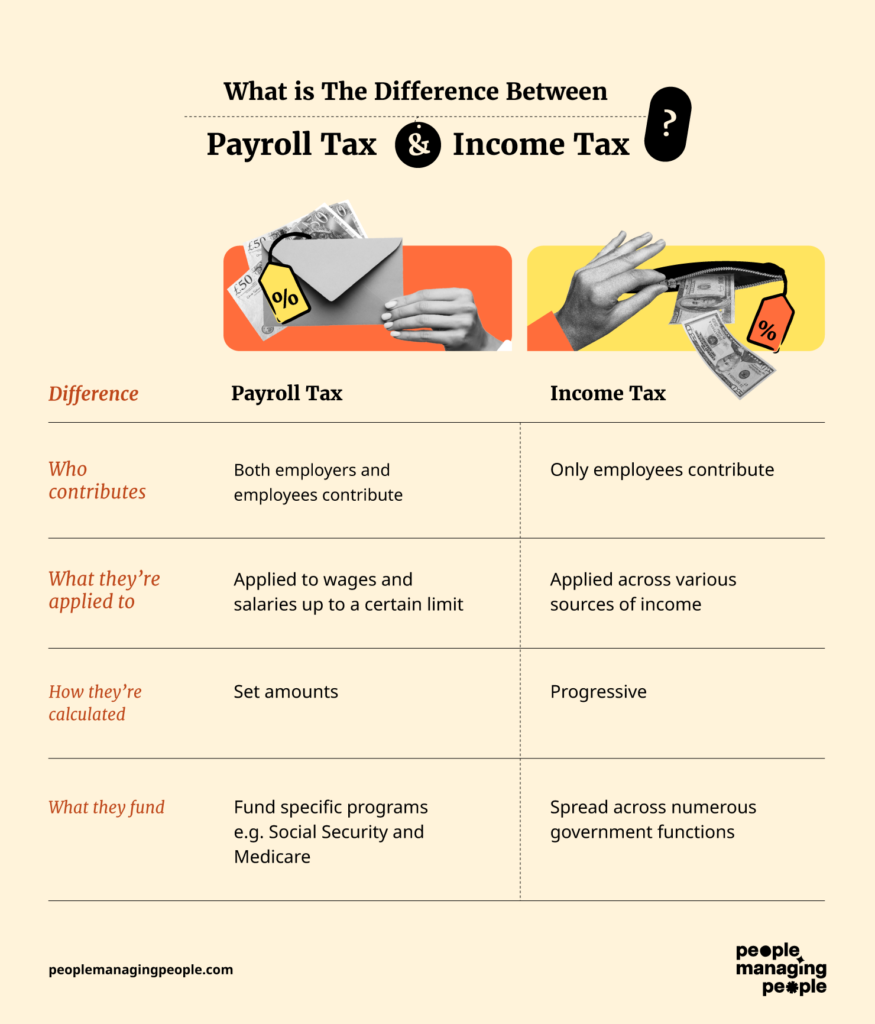
The math behind these two taxes is governed by very different rules. One is based on flat rates with specific limits, while the other is based on sliding scales and total annual earnings.
How Payroll Taxes Are Calculated
Payroll taxes are generally straightforward, utilizing a flat-rate percentage. For Social Security, there is a “wage base limit,” which changes annually. Once you earn above this threshold in a calendar year, you stop paying the Social Security portion of the payroll tax. This creates a “regressive” feel to the tax, as higher-income earners pay a smaller percentage of their total income toward Social Security compared to lower-income earners. Medicare, however, has no such wage base limit; in fact, high-income earners are often subject to an Additional Medicare Tax, making it a more progressive component of the payroll tax system.
How Income Taxes Are Calculated
Income tax relies on a system of tax brackets. Your total gross income is reduced by deductions (either the standard deduction or itemized deductions) to arrive at your “taxable income.” That amount is then applied to a series of tax brackets. For example, if you fall into the 22% bracket, it does not mean your entire income is taxed at 22%. Only the portion of your income that falls within that specific bracket is taxed at that rate. This allows for a more granular adjustment based on the taxpayer’s ability to pay, taking into account family size, filing status, and various tax credits.
Impact on Self-Employed Individuals
If you move from the role of a traditional employee to a freelancer or business owner, the distinction between payroll and income taxes becomes even more critical.
The Self-Employment Tax
When you are self-employed, you are essentially both the employee and the employer. Consequently, you are responsible for the full weight of the payroll tax. This is known as the Self-Employment Tax (SE Tax). You must pay the combined 12.4% for Social Security and 2.9% for Medicare. While this can feel like a heavy burden, the IRS does allow you to deduct the employer-equivalent portion of your self-employment tax when calculating your adjusted gross income, which provides a small buffer against the total tax liability.
Withholding vs. Quarterly Estimates
Employees are accustomed to having their income tax withheld automatically by their employer. Self-employed individuals do not have this luxury. They must manage their own cash flow to ensure they are making quarterly estimated tax payments. Failing to distinguish between what is needed for income tax and what is needed for the “employer” portion of payroll tax is a common pitfall that leaves many freelancers with a surprise bill at the end of the tax year.
Summary for Financial Planning
Recognizing these distinctions changes how you look at your total compensation package. When negotiating a salary, remember that your take-home pay is influenced by these two distinct tax streams.
Income taxes are highly sensitive to tax planning—things like contributing to a traditional 401(k) or an HSA can lower your taxable income, thereby reducing the amount of income tax you pay. Payroll taxes, however, are largely unavoidable for wage earners. Because they are tied to social safety nets, they are calculated based on your gross wages before most deductions.
By understanding that payroll taxes function as an insurance premium for your future and income taxes function as a contribution to the public good, you can better navigate the nuances of your financial life. Whether you are an employee reviewing your W-2 or a business owner managing payroll, clarity on these structures is the first step toward financial literacy and long-term stability. The complexity of the tax code is designed to capture revenue from various sources, but once you peel back the layers, the logic of the system becomes clear. You are paying into the infrastructure of your country through income tax and into the foundation of your own retirement and health security through payroll tax.
aViewFromTheCave is a participant in the Amazon Services LLC Associates Program, an affiliate advertising program designed to provide a means for sites to earn advertising fees by advertising and linking to Amazon.com. Amazon, the Amazon logo, AmazonSupply, and the AmazonSupply logo are trademarks of Amazon.com, Inc. or its affiliates. As an Amazon Associate we earn affiliate commissions from qualifying purchases.