
In the intricate world of musical notation, the symbols we see on a page are more than just artistic flourishes; they are the architectural blueprints of sound. Among the most fundamental of these symbols is the bass clef. Often referred to as the “F clef,” it serves as the essential gateway for musicians to navigate the lower registers of the sonic landscape. Whether you are a budding pianist, a dedicated bassist, or a composer arranging a symphony, understanding the bass clef is not merely an academic exercise—it is the prerequisite for unlocking the deeper, richer foundations of musical harmony.
The Anatomy and History of the Bass Clef
To understand the bass clef, one must first appreciate its visual and historical evolution. The symbol itself, characterized by a stylized “C” shape with two dots positioned to the right of the top and bottom lines of the staff, is not an arbitrary design. It is, in fact, a deeply stylized transformation of the letter “F.”
The Evolution of the F Clef
Historically, musical notation underwent centuries of experimentation before standardizing into the five-line staff we use today. The bass clef originated from the necessity to mark the location of the F below Middle C. In early medieval notation, scribes used specific letters to denote pitch. Over time, the letter “F” became increasingly ornate, eventually evolving into the distinct, sweeping curve that defines the modern bass clef. The two dots accompanying the symbol are the most critical aspect of its design; they flank the fourth line of the staff, identifying it as the line representing the F note.
Navigating the Grand Staff
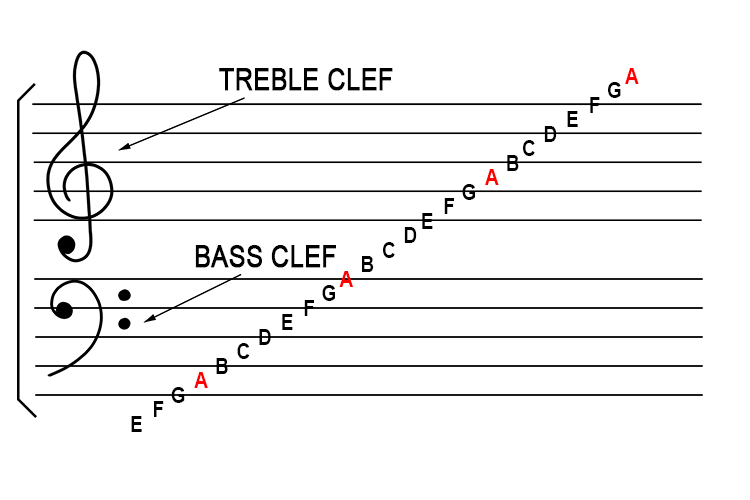
The bass clef does not exist in a vacuum; it acts as the lower partner to the treble clef. Together, these two clefs form what is known as the “Grand Staff,” which is commonly utilized in piano scores. The treble clef occupies the upper staff, typically housing notes played by the right hand, while the bass clef occupies the lower staff, reserved for the left hand. Middle C—the bridge between these two worlds—sits on an imaginary ledger line suspended directly between the two staves. This spatial relationship is what allows composers to write for the full spectrum of the piano’s eighty-eight keys, maintaining a visual consistency that governs Western music.
Mastering the Landscape: Reading the Bass Clef
Learning to read the bass clef is a rite of passage for every musician. While it may seem daunting to those accustomed to the treble clef, the system is highly logical once the anchor points are internalized. By focusing on the lines and spaces, a musician can effectively translate these symbols into physical motion.
The Lines and Spaces
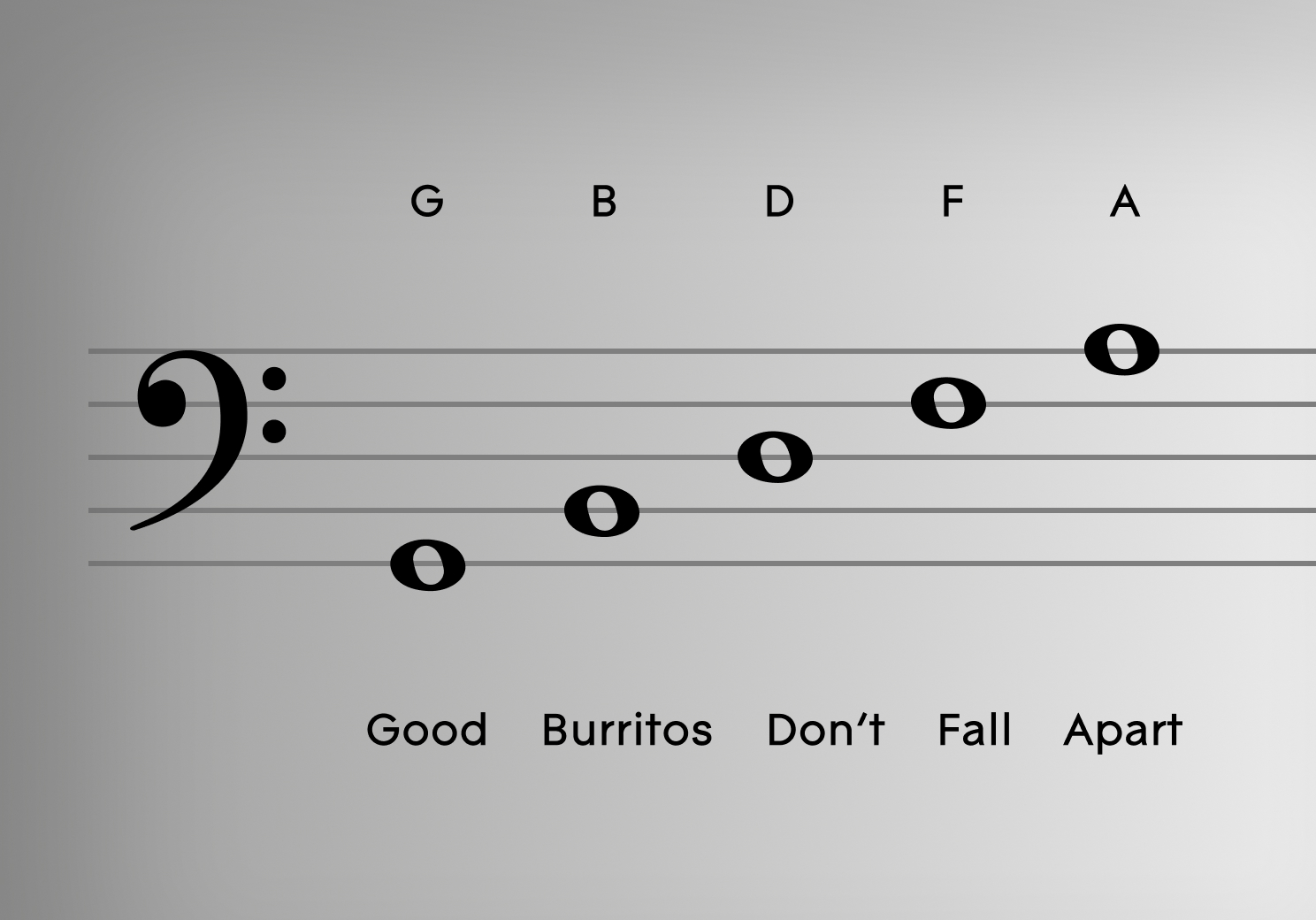
The lines of the bass clef staff, counting from the bottom up, represent the notes G, B, D, F, and A. Many beginners utilize mnemonics to internalize these pitches, such as the popular phrase “Good Boys Do Fine Always.” Conversely, the spaces between these lines represent the notes A, C, E, and G. By memorizing these fixed positions, the reader creates a mental map of the staff. When a note is placed on the second line from the bottom, for example, the brain immediately identifies it as a B. This cognitive shorthand is what eventually allows for the fluid, instantaneous translation of notation into performance.
Beyond the Staff: Ledger Lines
Music is not confined to the five lines of the staff. When a composition requires notes that fall above or below this range, musicians utilize ledger lines. These are small, temporary lines drawn above or below the staff to accommodate higher or lower pitches. In the bass clef, as notes descend, the ledger lines extend downward, allowing the composer to capture the deep, resonant frequencies of instruments like the cello, the tuba, or the lowest registers of the piano. Mastery of these extensions is essential for reading advanced classical works, where the composer utilizes the full expressive range of the instrument.
The Role of the Bass Clef in Instrumentation
The bass clef is the primary language of the rhythm section and the foundation of orchestral harmony. Different instruments rely on the bass clef to communicate their unique roles, ranging from the percussive attack of a bass guitar to the expansive, sweeping tones of a cello section.
The Foundation of Harmony
In a harmonic context, the bass clef dictates the root movement of a piece. In Western music, the lowest note being played—the bass line—often dictates the chord quality and the direction of the music. When a pianist reads a C major chord in the treble clef, the addition of a C in the bass clef grounds the harmony, providing the “weight” that defines the sound. Without the clarity provided by the bass clef, music would lose its structural anchor, resulting in a thin, ethereal sound that lacks the driving force necessary for compelling composition.
Instruments That Speak the Language
While the piano is perhaps the most common application of the bass clef, it is the primary clef for a wide array of instruments. The bass guitar, the double bass, the bassoon, the trombone, and the euphonium all operate primarily within the bass clef. Each of these instruments has a unique “voice,” yet they all share a common notation system that emphasizes low-frequency resonance. For an orchestrator, writing in the bass clef requires an acute awareness of acoustic properties—understanding that the instruments inhabiting this register often provide the rhythmic pulse and the structural scaffolding upon which the melody rests.
Educational Approaches to Fluency
Developing fluency in reading the bass clef is a process of pattern recognition and consistent practice. Whether you are a student or a self-taught enthusiast, the goal is to shift from analytical decoding to automatic reading.
Bridging the Gap Between Clefs
For those who primarily read treble clef, the most common hurdle is the tendency to “transpose” the bass clef notes using treble clef logic. To overcome this, it is recommended to treat the bass clef as a distinct visual language rather than a modification of the treble. One effective method is to engage in interval training. Instead of identifying every note by name, learn to recognize the distance between notes—the space between a G and a B, for instance—as a visual shape. This spatial awareness bypasses the need for constant note-naming, allowing the eyes to track lines and curves in real-time.
The Importance of Routine
Fluency is built through repetition. Integrating sight-reading exercises into daily practice sessions is vital. Start with simple melodies—hymns or folk songs—that reside entirely within the bass clef. As confidence grows, incorporate more complex rhythms and extended ledger lines. Furthermore, utilizing technology—such as sight-reading apps or digital notation software—can provide an interactive environment where the reader receives immediate feedback. By visualizing the note on a staff and hearing the corresponding tone, the musician reinforces the connection between the symbol and the sound.
The Future of Notation and Digital Literacy
In an era of digital audio workstations (DAWs) and MIDI sequencers, the traditional bass clef remains surprisingly resilient. Even as music production moves toward a more visual, grid-based aesthetic, the bass clef remains the industry standard for notation, preservation, and education.
Preservation and Composition
Digital notation software like Sibelius or Finale continues to uphold the importance of the bass clef as the definitive method for organizing low-frequency information. While modern producers may use “piano rolls” in their software, the actual sheet music shared between professional session musicians remains firmly rooted in the classical staff. The bass clef serves as a universal language that allows musicians from different backgrounds to collaborate, arrange, and perform without the need for high-tech intermediaries.

The Timelessness of the Symbol
Ultimately, the bass clef is a testament to the human desire to categorize and preserve the intangible. It is a symbol that has survived for centuries because it effectively captures the essence of the lower register. As music continues to evolve—incorporating new timbres, electronic textures, and cross-cultural scales—the bass clef will undoubtedly remain the bedrock of the staff. It reminds us that no matter how complex or digital the music of the future may become, the fundamental architecture of sound requires a point of origin. By mastering the bass clef, you are not just learning to read a series of dots on a page; you are learning to read the very earth upon which the house of music is built.
aViewFromTheCave is a participant in the Amazon Services LLC Associates Program, an affiliate advertising program designed to provide a means for sites to earn advertising fees by advertising and linking to Amazon.com. Amazon, the Amazon logo, AmazonSupply, and the AmazonSupply logo are trademarks of Amazon.com, Inc. or its affiliates. As an Amazon Associate we earn affiliate commissions from qualifying purchases.